avatarCarole Tansley

Free AI web copilot to create summaries, insights and extended knowledge, download it at here

22258

Abstract

meditation — rather than actively pursuing it as a goal. If you do the latter, you risk trying to “push the river” and manipulate your meditation, so that you can <i>feel better</i> without ever really getting to the root of your suffering.</p><h2 id="e885">The Four Noble Truths</h2><p id="1da9">A mindfulness approach understands suffering as a human condition that derives from the dissonance between <b>how things are </b>and <b>how we want things to be.</b></p><p id="2d4f">We need to realize that if we are in physical pain — or experiencing a difficult emotion such as anger — it is not the pain or the emotion itself that are the main causes of the suffering.</p><p id="b116">It is the attitude of <b>wanting the pain or the emotion to go away.</b></p><p id="bd5b">Before we see exactly how mindfulness meditation addresses this attitude, here are some general characteristics of the process that you need to accept:</p><ul><li>Reaching the true transformational potential through mindfulness meditation <b>takes time.</b></li><li>This transformation is <b>personally challenging</b> for most people.</li><li>Alleviating suffering comes together with <b>personal transformation in other areas</b>, which may radically change the way you relate to the world and to other people.</li></ul><p id="9d21">To explain the general mechanics of mindfulness meditation, I will draw on the Four Noble Truths of the traditional Buddhist doctrine. As <a href="http://www.andrewolendzki.org/">Andrew Olendzki</a>, a renowned expert in Buddhist psychology wrote in <a href="https://www.amazon.co.uk/Mindfulness-Psychotherapy-Second-Christopher-Germer/dp/1462528376/ref=sr_1_3?ie=UTF8&amp;qid=1544369690&amp;sr=8-3&amp;keywords=mindfulness+and+psychotherapy"><i>Mindfulness and Psychotherapy</i></a>:</p><p id="539e" type="7">“The four truths taught by the Buddha are considered noble because they help raise one’s understanding above the level of automatic response into the realm of transformation through wisdom.”</p><h2 id="c2fb">Suffering</h2><p id="73c6">Suffering is an inevitable part of the human condition. It may range from minor emotional discomfort to experiences of severe pain, illness, or aging. The point of departure to mindfulness meditation is <b>acknowledging your afflictions</b> with honesty and courage.</p><p id="b7b6">It all starts with the intention to no longer run away from your experiences and to be willing to see what is really going on. Instead of pushing away the discomfort, you choose to welcome and accept it as it is. Of course, acceptance is not going to appear overnight, but rather as a consequence of consistent practice.</p><p id="cb1c">It is important that you depart on this journey with an openness to experience whatever arises — be it pain, emotional discomfort, ruminating thoughts, or anything else. Your intention should be focused on <b>getting to know yourself</b>, rather than <b>fixing yourself</b>.</p><h2 id="298e">The origination of suffering</h2><p id="2734">As you will continue to observe your moment-to-moment experience — including your thoughts, emotions, bodily sensations, and the outer stimuli — two things will start happening over time.</p><p id="41f0">Firstly, you will become increasingly better in distinguishing between <b>your perceptions </b>and <b>reality</b>. For example: as you notice thoughts appearing in your head and remain their conscious witness (standing “outside” of them) rather than their unconscious actor (being entangled “inside” your thoughts), you will see it clearly that <b>your thoughts</b> are something very different from the <b>reality</b>. This will help you create a healthy distance between yourself and your experience — and, consequently, you will start freeing yourself from identifying with what is happening to you.</p><p id="f78e">You will grasp that <b>you are not your experience</b>.</p><p id="9e18">Secondly, as you become proficient in observing your moment-to-moment experience, you will notice a curious dissonance. On one hand, you will perceive yourself as physically present, safe, and without any substantial reason to suffer, here and now. Yet, at the same time, you will also be experiencing all different kinds of discomfort. This will inevitably lead you to see that the source of this discomfort is not in the outer circumstances — but in your own mind.</p><p id="524f">Very often, suffering stems from our lack of acceptance for how things are — and the desire for them to be different. From the moment you <b>experience it to be so, </b>rather than just read about it, you naturally <b>feel empowered</b> to work on adjusting your perception.</p><h2 id="eb9b">The cessation of suffering</h2><p id="e81f">Once you notice that the major source of discomfort is in the way you perceive yourself and your life, you will have no doubt that this can be changed. At some point, you will have experienced a moment of no resistance when, regardless of any unpleasantness or discomfort, you will be able to simply <i>let them be</i>.</p><p id="e00a">My own practice showed me that once you have had a glimpse of being at peace with your experience, regardless of its content, you are already “saved”. This was the <a href="https://tigerprints.clemson.edu/all_theses/2585/?utm_source=tigerprints.clemson.edu%2Fall_theses%2F2585&amp;utm_medium=PDF&amp;utm_campaign=PDFCoverPages"><i>point of no return</i></a> on my path of mindfulness, and I believe it to be a universal experience that has the power to change one’s life forever.</p><p id="8554">If you experience it even once, you know that <b>true equanimity is possible</b>. And what is even more profound — <b>it is up to you</b> whether you choose to practice the attitude of equanimity or not. This is the moment of taking charge of your experience, rather than allowing it to forever have you as a helpless victim.</p><p id="ae44">It is after this experiential shift — what I understand as “insight” — that the real work starts.</p><h2 id="6fe8">The path leading to the cessation of suffering</h2><p id="bb7f">The paths leading to the authentic and lasting diminishment of your suffering are many — even within the Buddhist tradition. What I am describing is a minimalistic path of embracing mindfulness meditation as a cornerstone of your life transformation.</p><p id="3534">Entering this path means that you commit yourself to meditate (i.e. making a deliberate effort to observe your experience) daily for the initial period of 8 weeks. This amount of time is a necessary minimum to allow authentic change to happen, and is widely accepted as the introductory timeframe in the mindfulness community — for example, <a href="https://en.wikipedia.org/wiki/Mindfulness-based_stress_reduction">MBSR</a> and <a href="http://www.mbct.com/">MBCT</a> programs usually last 8 weeks.</p><p id="4c96">It is highly possible that you will experience episodes of amplified suffering on the way. Some uncomfortable thoughts and feelings, old injury pains, and other forms of discomfort might be coming up as you direct your attention inwards. It is important that you stay alert and observe the discomfort to the best of your ability — but also, that you don’t downplay any real health threats, should they arise on the way.</p><p id="0317">As with any new adventure, your common sense will be the best compass.</p><p id="352d">It is also beneficial for you to maintain an attitude of <b>compassion</b> towards yourself. A big part of mindfulness meditation is akin to comforting a distraught child within you — i.e. unconditionally being with all your experiences, no matter how challenging.</p><p id="6ddd"><b><i>NOTE</i></b><i>:</i> <i>The approach to mindfulness meditation presented in this article is a 100% secular practice which doesn’t contradict any religion, and which receives a lot of interest from science. It is also widely applied in a medical and therapeutic setting. This means there are multiple resources — including case studies, research and the work of specialized organizations — that I encourage you to look into if you need more guidance. This article is, of course, limited by its volume and is nowhere near presenting all the nuances of mindfulness meditation.</i></p><h2 id="8ca2">The two main techniques of mindfulness meditation</h2><p id="5ead">With all the theoretical knowledge that we have gathered so far, we are now transiting to the more practical part. Let’s start with introducing you to the two main mindfulness meditation techniques and wrapping your head around using them in your daily practice.</p><p id="c2e1">According to what Andrew Olendzki writes in <i>Mindfulness and Psychotherapy</i>, there are two practices that are “<i>most prevalent in the earliest Buddhist teachings.” </i>These are also the two main types of mindfulness meditation used nowadays, that reinforce two <a href="https://tricycle.org/magazine/vipassana-meditation/"><i>“different mental skills, modes of functioning or qualities of consciousness.”</i></a></p><h2 id="8591">Practice no. 1: concentration, or focused attention</h2><p id="515c">This meditative practice is called <i>samatha </i>in Pali. The objective is for the practitioner to focus their attention on a single object — and <b>keep it there</b>. This <i>object</i> is usually the breath, as the <a href="https://www.unm.edu/~lkravitz/Article%20folder/Breathing.html">only visceral function of the body that can at the same time be controlled voluntarily</a>. This is why breathing is often referred to as the <i>connection between mind and body</i>.</p><p id="da0f">Focusing on the breath means that you locate a place in your body, where you can feel the breath most distinctly — e.g. nostrils, throat, chest or belly. Then, you do your best to <i>feel </i>the physical sensations in the chosen area.</p><p id="024c">However, focusing on the breath sometimes seems too uncomfortable for beginner meditators, and they may choose another object to keep their attention on — such as a mantra or an external object, e.g. flame of a candle. However, in the original Buddhist teachings, <a href="https://tricycle.org/magazine/vipassana-meditation/">beginning with the focus on the breath was essential</a>. Drawing on my personal experience, I also encourage you to pick the breath as your point of focus, because of two main reasons:</p><ol><li>It immediately connects you with your physical body.</li><li>It simplifies your practice — you don’t need an additional artifact, because you always have your breath with you.</li></ol><p id="a493">Regardless of the object you pick, the point of the <i>focused attention </i>technique is to train the mind to be able to stay concentrated on one thing for prolonged periods of time. Of course, for a big part of the exercise, your attention will most likely drift, you will get distracted, or lost in thought, etc. This is not wrong, but natural. What matters is that every time you find yourself not concentrating on your chosen object — you gently bring your attention back to where you intend it to be.</p><p id="8784">Andrew Olendzki says that:</p><p id="876b" type="7">“As the mind steadies on one aspect of the phenomenal field, it gains tranquillity, stability, and power.”</p><h2 id="c113">Practice no. 2: mindfulness, or open awareness</h2><p id="ac46">The Pali word for this practice is <i>vipassana</i>, which can be translated as <i>insight </i><a href="https://tricycle.org/magazine/vipassana-meditation/"><i>“a clear awareness of exactly what is happening as it happens.”</i></a> With this technique of mindfulness meditation, you allow your conscious attention to move from one object of awareness to another, as experiences are arising in your perceptual field.</p><p id="ab18">From moment to moment, you are training your mind to remain open to all the stimuli both inside and outside of you — such as bodily sensations, emotions, thoughts, sounds, smells, etc. You approach them all as valid phenomena, which don’t need to be judged, thought about and conceptualized. The only thing they “demand” from you is to be <i>perceived as they are happening.</i></p><p id="a26a">As you train your awareness with the <i>vipassana </i>practice, you gradually open the doors to become more and more aware of your direct experience. This is how you, slowly but steadily, <a href="https://tricycle.org/magazine/vipassana-meditation/"><i>“learn to see the truth of impermanence, unsatisfactoriness, and selflessness of phenomena.”</i></a><i> </i>You begin to see the<b> mechanics of suffering</b> — which unlocks the possibility to free yourself from it.</p><p id="c15e"><a href="https://tricycle.org/magazine/vipassana-meditation/">Bhante Henepola Gunaratana</a>, a Buddhist monk and the president of Bhavana Society, says that you should approach the <i>vipassana</i> practice with the following attitude if you want it to be productive:</p><p id="973e" type="7">“Never mind what I have been taught. Forget about theories and prejudices and stereotypes. I want to understand the true nature of life. I want to know what this experience of being alive really is. I want to apprehend the true and deepest qualities of life, and I don’t want to just accept somebody else’s explanation. I want to see it for myself.”</p><p id="4c03">Andrew Olendzki notes:</p><p id="101e" type="7">“When this practice is done in a sustained manner, it leads to insight into the subjective construction of experience and into the three characteristics of existence.” [i.e. impermanence, suffering and non-self]</p><h2 id="15a1">How to combine the two techniques in your practice?</h2><p id="54e7">Although you theoretically could settle for just one of the described techniques, I highly encourage you to combine both of them in your daily practice. Why?</p><p id="80b4">“Focused attention” is easier and more straightforward to practice — but it may leave you fixed on one aspect of your perception only, without opening you to experience deeper insights.</p><p id="6fd3">“Open awareness” is what allows you to experience insight — but without it being based on “concentration,” it’s very hard to sustain your mind to really <i>notice</i> things.</p><p id="2e43">Most mindfulness programs and teachers recommend combining the two types of practice, as one helping strengthen the other, and both of them creating what you may call <i>synergy</i> for your inner work. The question becomes: <b>how to combine them, and in what proportion?</b></p><p id="0cad">You may understand it in the following way. “Open awareness” is essentially your goal and a more “elaborate” practice that you want to eventually sink into your default <i>modus operandi. </i>Meanwhile, the “focused attention” meditation is a basic building block from which you construct lasting open awareness.</p><p id="c35d">My suggestion is that your practice goes through two stages over the course of the 8 weeks.</p><ol><li>In the first stage (1–2 weeks), you practice exclusively on the “focused attention” technique. This way you learn how to consciously wield your attention in the intended direction. You get your brain used to deliberate focus.</li><li>Once you feel that you are somewhat able to tame your attention, you start adding the “open awareness” exercise as the second part of your mindfulness meditation practice. Then, you gradually change the proportion of the “focused attention” technique. From the primary exercise it was in the beginning, you turn it into a “grounding exercise” which creates the foundation to practice “open awareness.”</li></ol><h2 id="66dc">FAQ</h2><h2 id="6149">1. How do I know when I am ready to start adding “open awareness” to my practice?</h2><p id="a414">There are two ways you can go about it. One is that at some point you will realize that the quality of your attention has somewhat improved, and while practicing “focused attention” your mind is more stable than in the beginning. Don’t expect to be able to keep your attention on the object throughout whole practice without fail — the progress will likely be much smaller than that. But as soon as you notice a new quality in your attention, you can start adding “open awareness”.</p><p id="bf33">Another way is to simply practice “focused attention” for two weeks straight, and then start adding “open awareness” as the second part of your meditation.</p><h2 id="ec3f">2. How is the role of the breath (or the object) different in “focused attention” and “open awareness”?</h2><p id="a4b8">When you are practicing “focused attention”, the role of the breath (or object) is absolutely central. It serves as your “training gear”, enabling you to exercise your attention like a muscle.</p><p id="7134">However, the breath is also very important when practicing “open awareness”. In that case, it is not the one focal point of your attention, since the goal of the practice is trying to take in <i>any </i>experience that arises. So the breath serves you more as an “anchor”<i> </i>to the present moment — something that happens always in the present, no matter where your attention is.</p><p id="264c" type="7">“We use breath as our focus. It serves as that vital reference point from which the mind wanders and is drawn back. Distraction cannot be seen as distraction unless there is some central focus to be distracted from. That is the frame of reference against which we can view the incessant changes and interruptions that go on all the time as a part of normal thinking.” — Bhante Henepola Gunaratana</p><h2 id="6ea1">3. How do I pick the moment to switch from “focused attention” to “open awareness” during my practice?</h2><p id="3500">That’s the point of the practice which is mostly up to you, as it is very hard to identify the right moment by someone other than you. But it is also not the most important aspect of your practice. The point is for your meditation to consist of both techniques, and as you become more experienced, you will be able to regulate the proportions rather intuitively.</p><p id="9262">The rule of thumb is this: use the “focused attention” for long enough to allow your mind to feel a little more grounded and stable than it was in the very beginning of the practice. Once you notice this happening, you can switch to “open awareness” anytime you wish.</p><h1 id="b4f3">Part II: the practical tutorial</h1><p id="3bbe">Now that you have a more precise idea of what you will be doing during your daily mindfulness meditation practice, we will get to practical tips. I want to help you design the “technicalities” of your practice so that it suits you and your circumstances.</p><p id="97af">Please keep in mind that the practice you are now creating for yourself will most likely not stay the same forever. Treat it as an “<a href="https://en.wikipedia.org/wiki/Minimum_viable_product">MVP version</a>” of the mindfulness meditation that you will (hopefully) continue far beyond the initial 8 weeks.</p><p id="887d">Note that this article doesn’t tackle the psychological processes of forming the habit itself. There are already so many <a href="https://betterhumans.coach.me/draft-how-to-hack-your-brain-to-achieve-consistency-that-lasts-7f5fdc520d28">brilliant guides on habit building</a> around that I feel it would be redundant for me to focus on that.</p><p id="d283">Now, without further delay, let’s design your mindfulness meditation practice.</p><h2 id="2382">The environment</h2><p id="1d43">Meditation always happens in a certain context, i.e. in an environment that surrounds you. It is worth the effort to make this environment as agreeable and supportive to your practice as possible.</p><h2 id="4a24">Your family, flatmates, and friends</h2><p id="105d">It is very likely that you share your living space with somebody. These people might or might not be interested in meditation themselves. It is easier if you are on the same page and you can count on them to support your new practice. But what if the idea is alien to them?</p><p id="6536">My standpoint in that latter case is: share only as much as needed to support your practice. It means that if you have your separate room that no one else enters, maybe you don’t even need to mention meditation. Many teachers advise not to share too much about your practice, especially in the beginning, and especially with people who might not understand what you are doing and why.</p><p id="e3f6">By telling others about your new mindfulness meditation practice, you run the risk of two things happening. One is that you might end up looking for approval from them — and, therefore, missing out on an opportunity to build your own authentic motivation. The other risk is that if you don’t get the “applause” that you’re expecting, you may easily become discouraged and ditch your practice altogether.</p><p id="fd5e">Only talk about your meditation when it is necessary — for example, if you need to make sure no one enters your room while you meditate. In that case, simply inform the people involved, in the plainest language possible, that this is the time you want to secure for yourself. You don’t even need to use the word “meditation” — you can call it “attention training” or “relaxation” if you think that will make it easier to communicate the message.</p><h2 id="2bf8">Meditation attribute</h2><p id="bd1e">It is important that your practice is deliberate — and therefore, that you know exactly when it starts and when it ends. You may, of course, mark these moments exclusively in your mind and/or by setting the timer (more on timing below). But you can also use a physical attribute if you this will help you distinguish between “meditation” and “non-meditation” time.</p><p id="eb66">Examples of such attributes can be:</p><ul><li>Lighting up a candle,</li><li>Wrapping yourself in a favorite scarf,</li><li>Preparing a warm drink to keep next to you to sip before and after meditation.</li></ul><p id="9119">The point of such an attribute is to give yourself a subtle cue that the meditation is “on”. <i>Subtle</i> is the key word here — that’s why I don’t recommend things like burning incense or playing background music. This is probably too much of a sensory distraction, and therefore might intrude y

Options

our meditation, rather than support it.</p><p id="22af">The key to finding a good attribute is for it to be discreet and not undermine your focus — but pronounced enough to help you mark the beginning and the end of your practice. However, using an attribute only seems useful for some people — you may find it completely unnecessary, and this is perfectly fine.</p><h2 id="ac29">Fixed time + fixed place = less distractions</h2><p id="c3cf">This part doesn’t need much explanation. It is pretty obvious that if you are introducing a new habit into your life — and you want to sustain it — it is much easier if you decide on a specific place and a specific time for it. Same thing, every day.</p><p id="8d01">Mindfulness meditation is no different. I highly encourage you to define the time, duration and space for your practice. You are looking for the following level of specificity: <i>“I will meditate for 15 minutes immediately after breakfast on the couch in my living room.”</i></p><p id="07d6">Note that in this example time is indicated in relation to some other activity — in that case, it must be something that you already <b>always</b> do. Alternatively, you may also say <i>“I will meditate at 7:20 a.m.”</i></p><p id="ed58">The purpose of committing to do the practice in a specific time and space is two-fold. Firstly, it is just easier for your brain to get used to the new activity if it happens in the same setting and the same moment of the day. Secondly, such commitment will push you to intuitively find the environment that is free of distractions and therefore makes it easier to meditate.</p><p id="3a22">However, sometimes distractions are impossible to avoid. Your flatmate might turn the TV on in their room, or there might be an ambulance passing by, or a particular smell coming through the window in the middle of your practice. Don’t think of them as “meditation spoilers” — they are a part of your practice and a great opportunity to exercise equanimity towards whatever arises.</p><p id="fe65">Last, but not least — make a commitment to meditate <b>every day</b>. This really makes a difference if you are serious about this work.</p><h2 id="5bbd">The tools</h2><p id="3f4d">Mindfulness meditation is a minimalistic practice — in the sense that you don’t <i>need</i> any object to do it. At the same time, there are some tools which you might use to make your meditation more convenient and fruitful.</p><h2 id="f275">Timer</h2><p id="cdf3">This is essential for me and the vast majority of the meditators I know. If you want to meditate for the same amount of time every day (which I recommend), this just makes it so much easier. You set an alarm to ring in 10, 17, or 30 minutes — and you don’t have to think about timing.</p><p id="d7b7">This is the only tool from this list that I strongly recommend, as something that supports consistency and helps you make mindfulness meditation an intrinsic part of your life.</p><p id="2074">The timer you choose isn’t important; it can be digital or analog. Being able to set an interval is helpful. In the practice below, you’ll be splitting your meditation time between two forms of meditation, so the interval allows you to set an alarm and move on to the second half — without interrupting your meditation to reset the timer. <a href="http://www.onlinemeditationtimer.com/">Online Meditation Timer</a> is just one free and easy choice that provides that capability.</p><h2 id="8b31">The object for the “focused attention” practice</h2><p id="81ee">This tool can be an external, physical object — as well as your breath or a body part. Again, sticking to your breath is highly recommended.</p><p id="5200">If you insist on choosing a different object, here are some guidelines to follow:</p><ul><li>Make sure that the object you choose is something of the right size so that your awareness is capable of holding it as a whole — and at the same time can easily be “filled” by it. For example: picking your whole body or the room you are in as an object is probably too big. But going for a toenail or the bottom-right corner of your notebook might be too small. Try something like the flame of a candle, your palm(s), the steady ticking of the clock in your room. Experiment and see what feels right.</li><li>Pick an object that’s rather neutral. Focusing on it shouldn’t generate extreme emotions in you. One of the main points of practicing “focused awareness” is to stabilize the mind. Therefore, picking a place in your body where you feel chronic pain, or a photograph of your ex-partner, is most likely not a good idea.</li><li>Pick an object that is not moving. This applies if you decided to pick an external, physical object. It should be something that sits still in one place. Avoid going around the house after your cat, for example.</li></ul><h2 id="f85c">Support your physical position</h2><p id="2070">Even though meditation in movement is absolutely possible, I recommend you start by being physically still. That will help your mind become at least a bit more still, too.</p><p id="f87d">This means that you basically have two options: sitting or lying down. Whatever you choose, make sure that the position doesn’t make you fall asleep.</p><p id="f878">The key is to be <b>comfortable and alert </b>at the same time.</p><p id="ebb1">Regardless of which position you choose, pick props that will help you maintain those two qualities. Sit on a chair or meditation pillow, cover yourself with a blanket or scarf, support your back if you need to. Take time to ensure the most optimal position — this is essential to facilitate your practice.</p><h2 id="d8c4">Meditation journal: hot or not?</h2><p id="6803">Until recently, I was very reluctant to keep a meditation journal. I guess I wanted to make a point that <b>mindfulness meditation is a complete practice in itself </b>— which it is. So you definitely don’t <i>need </i>to keep a journal.</p><p id="a97e">I am mentioning it here merely as a possible addition that may help you draw more insight from your practice. Since a few weeks I have been keeping a journal myself and I found it very useful. What I do is not elaborate at all — I just put a notebook next to me when I meditate, so I can reach for it immediately after my finishing alarm rings. Then I take literally 3–5 minutes to jot down whatever comes to mind.</p><p id="5c89">I discovered that putting my meditation experience into written word makes me realize more about what happened during my practice. It is the act of <i>naming my experience </i>that helps me make more sense of it.</p><p id="2c54">However, I know it only works for me because I genuinely<i> like </i>doing it. As you are just beginning your mindfulness adventure, you definitely don’t have to put this extra element to your practice — unless you simply feel like doing it.</p><h2 id="5b58">Audio guidance and apps</h2><p id="5a93">The 8-week program outlined below teaches you how to meditate on your own, without audio guidance.</p><p id="6ded">You are the one to choose whether you meditate with or without spoken guidance. All I can do is share my personal stance on that.</p><p id="28df">I believe that it is extremely valuable to learn how to meditate on your own right from the beginning. As you practice with your inner guidance only, you learn how to use your inner chatter to your advantage. You train your focus and intention to stand on their own from the very first meditation session. You also learn how to deal with your attention drifting away more quickly.</p><p id="5a68">Having said that, I am far from devaluing spoken guidance. I often used it myself in periods of chaos in my life, when my thoughts seemed impossible to be tamed and observed. Good guided meditation certainly helps to structure the practice. So if your mind feels absolutely uncontrollable to you, starting with audio and gradually letting go of it might be a more effective way.</p><p id="47dd">If you choose to practice with guidance, I recommend meditating with <a href="http://oxfordmindfulness.org/people/mark-williams/">Mark Williams</a>, an Oxford professor and co-creator of the MBCT (Mindfulness-based Cognitive Therapy) program. His guided meditations are very neat, straightforward and professional.</p><p id="cd6f"><a href="https://www.youtube.com/watch?v=fUeEnkjKyDs&amp;list=PLbTuZkZyHw9I7-YcOp27YgOVuo1tCJUFE"><b>Breathing anchor meditation</b></a> (“focused attention” practice)</p><p id="d418"><a href="https://www.youtube.com/watch?v=OFeTTgl_wAI&amp;list=PLbTuZkZyHw9I7-YcOp27YgOVuo1tCJUFE&amp;index=3"><b>Listening and thoughts meditation</b></a> (“open awareness” practice)</p><h2 id="e201">The mindset</h2><p id="c5ae">Your attitude towards meditation is very important. In fact, it may have a key influence on how your practice is going to unfold.</p><p id="07d0">It is tricky to give general “mindset advice” — because the utility of such advice ultimately depends on the “default” attitude of a specific person. The tips I am giving here are probably most suited for somebody raised in an environment that put a lot of emphasis on personal success, ambition, perfecting oneself, and competing with others.</p><h2 id="62cf">Take it easy on yourself</h2><p id="1088">Try not to approach meditation as yet another “healthy habit” to create or a skill to develop. Even though you should keep in mind that this practice will bring you benefits, try to look at it in a more easy-going manner. I know it is tricky to find a balance between discipline (which you need to establish a consistent meditation practice) and being gentle for yourself (which you need even more when you find yourself “failing” to pay attention). However, this balance is crucial.</p><p id="95c4">Some meditation teachers from East Asia conclude that European or American meditators often need a different kind of guidance than Asian participants. The western world trains its citizens in being disciplined and dutiful towards instructions. When this pairs up with discipline-oriented guidance in meditation, Westerners sometimes end up trying to execute rules too hard and hurt themselves.</p><p id="c1bc">This hurt may be caused by categorizing your efforts as either “successes” or “failures”. These categories are useless in meditation — try to let go of them. Instead, in each challenging moment, cultivate self-compassion, and recognize yourself for <a href="https://theascent.pub/the-4-ugly-lies-of-personal-growth-1e640e2588a8">doing the best you can with the cards you were dealt</a>.</p><h2 id="1f81">Drop your expectations</h2><p id="013c">The core of mindfulness meditation is allowing yourself to experience whatever naturally arises. There is nothing you <i>should</i> be experiencing here — there’s only that which <i>already is</i>.</p><p id="09fb">Try to detach from the expectations of what you <i>think</i> will change after you have meditated for 8 weeks. A good way to do it is to keep asking yourself: What outcome am I counting on when I sit down to meditate? Am I able to let go of that outcome in the name of experiencing whatever arises?</p><p id="3f4a">And if you really <i>must</i> expect something — expect that the change you are after will <i>take time</i>.</p><h2 id="0264">Remember that everything you experience is valid</h2><p id="7246">There is no “right” or “wrong” experience in meditation (or in life, for that matter). Everything and anything you notice during your practice is valid.</p><p id="73eb">Even if it is the ugliest of thoughts or the most painful of feelings — congratulate yourself that you registered it with your conscious awareness! Not everything you experience will make sense to you immediately — but don’t let that discourage you. In due time, your consistent observation of your inner world will start revealing a clearer image of your mental patterns, emotional reactions, and bodily sensations.</p><p id="6918">Your understanding of what is happening will be constructed over time.</p><h2 id="1d3b">Every experience is going to pass</h2><p id="4217">Even the most uncomfortable emotion and the most pleasurable of bodily sensations is not permanent. It is helpful to remember that. The awareness of impermanence helps you cultivate equanimity because it</p><ul><li>withholds you from running away from your discomfort and</li><li>supports non-attachment, particularly to pleasant experiences.</li></ul><h2 id="e959">The 8-week practice plan</h2><p id="2ff3">Decide how long you are going to meditate each day. I suggest 15 minutes per day minimum, though you can try up to 30 minutes per day maximum. Please be realistic and pick a duration that you can actually commit to. You will be using this duration for the entire 8 weeks — that is, you will meditate for 15 minutes every day.</p><p id="0937">As much as I am trying to structure the process for you, the meditation experience will still unfold very personally for you. I see this structure more like a rope for you to hold, so you don’t need to ponder “what should I be doing?” and can focus on the practice itself.</p><p id="b4cc">In reality, whatever you do with an honest intention of uncovering — rather than covering — your actual experience of body/thoughts/feelings will be beneficial for you. There’s virtually nothing that can go wrong here (with the previously noted exception of someone with a severe mental health condition).</p><p id="e39c">You will do two weeks of focused attention meditation first. For the next four weeks, you’ll do focused attention meditation followed by open awareness meditation (dividing your meditation period into two phases). In the last two weeks, you’ll have a choice—which I’ll go into below. Read on for instructions on how to set up and how to do both types of meditation.</p><h2 id="99b0">Starting each day of practice</h2><ul><li>Set the alarm to keep the time for you.</li><li>Make yourself comfortable in your chosen position. Take your time to find the right posture that will support you through your practice. Treat it as the “prequel” to meditation — move your limbs mindfully and gently begin to arrive in the present moment.</li><li>Allow yourself to completely settle and make an intention to commit to the meditation to the best of your ability, without ever punishing yourself for “not doing it well enough”.</li><li>Gently close your eyes, if that feels comfortable.</li><li>Take a moment to become present in your body and notice any predominant physical sensations that arise.</li></ul><h2 id="0bac">Weeks 1 and 2: focused attention meditation</h2><p id="cb3b">During the first two weeks, you will practice “focused attention” exclusively. Here’s how to do it step by step:</p><p id="24ee"><b>“Focused attention” meditation:</b></p><ul><li>Explore your body and find the point where you feel your breath more distinctly. It may be your nostrils, chest, belly — or any other place where the sensation of the breath is most vivid.</li><li>If you are focusing on an object other than the breath, simply bring your attention to it and let the object fill your awareness.</li><li>Notice the physical sensations that come with the breath (or perceiving the object). Explore the nuances of these sensations.</li><li>There is no need to conceptualize your experience by naming it. Try to focus on the direct felt-perception. Take it one moment at a time.</li><li>Don’t try to control your breath (or your perception of the object). Just let it unfold naturally, trying to place yourself in the position of a non-intervening observer.</li><li>When you notice your attention drifted away — notice what was it that you were thinking about, and gently bring your attention back to where you intended it to be.</li><li>Don’t worry about how often your mind wanders. If you manage to bring it back to the chosen focal point even once through your meditation, that’s already very good.</li><li>When the alarm rings, slowly open your eyes and thank yourself for having dedicated this time to meditation.</li></ul><h2 id="8076">Weeks 3, 4, 5, and 6: focused attention plus open awareness</h2><p id="692a">For the following four weeks, you’ll divide your 15-minute practice time in half. For the first half, you practice Focused Attention Meditation as described above. For the second half, you’ll practice Open Awareness Meditation.</p><p id="2893">Set your meditation timer for a 15 minute period with a 7-minute 30-second interval. For the first half of your meditation, simply meditate using the Focused Attention method you’ve been doing.</p><p id="ba5f">When the interval timer rings, take one last focused breath before gently opening up your awareness to let in other elements of your experience. Then begin Open Awareness meditation as follows:</p><p id="6582"><b>“Open awareness” meditation</b></p><ul><li>Gently expand your awareness. Let the breath become the steady background while allowing other experiences to mark themselves in your consciousness.</li><li>With care and attention, scan your body to notice any physical sensations that are already present. Acknowledge the feelings of contact with the ground you are sitting on and with the clothes you are wearing. See if you can notice any pain, discomfort, a sensation of warmth or cold, stiffness, tingling, etc.</li><li>Check on your emotions. Is there any predominant emotion right now? Is it pleasant, unpleasant or neutral? Where do you feel it in your body?</li><li>If there are thoughts appearing in your mind, give them your conscious attention, too. Remember that mindfulness meditation is not about switching “off” thinking. The point is to try to be aware of the thoughts without becoming carried away by them. You can picture your thoughts as clouds in the sky — your task is simply to notice them appear, and then to allow them to go away.</li><li>Open your awareness to what is happening in your immediate environment, too. Are there any sounds that you can hear, or aromas you can smell? When you perceive them, remind yourself that you don’t need to label these experience in any way. It is enough to focus on the raw sensation, without pondering on where it is coming from or what it means.</li><li>Observe the elements listed above (physical, emotional, mental, and external events) in an order that feels most natural to you. Try to take them in with an attitude of equanimity, without trying to manipulate your experience, but welcoming it exactly as it is. You don’t need to attach yourself to any of these perceptions. Soon, they are going to pass and give way to new ones.</li><li>Whenever you see yourself distracted from observing your moment-to-moment experience (e.g. lost in thought), use your breath to gently bring you back to the present and continue your simple task of witnessing what is happening.</li><li>When your practice comes to an end, gently open your eyes and give yourself thanks for dedicating time to practice mindfulness.</li></ul><h2 id="acee">Weeks 7 and 8</h2><p id="b43a">For the last two weeks, you have a choice about how to proceed:</p><ul><li>Continue the half and half practice you’ve been doing OR</li><li>If you feel like you have become more skilled in sustaining “open awareness” and you would like to explore this part of the practice more, shorten the “focused attention” practice time, or extend the “open awareness” practice time.</li></ul><p id="ca3d">It’s up to you to decide the proportions of Focused Attention to Open Awareness meditation.</p><p id="efc8">What is important is that your practice consists of <i>both</i> parts and lasts for a minimum of 15 minutes each day.</p><h2 id="beba">Continuation</h2><p id="8ca4">I hope that the practice we just designed together will serve you well during the initial 8 weeks of your mindfulness meditation practice. As a parting message, I ask you to put <b>consistency, patience, and compassion for yourself </b>before everything else during that period. With this attitude, your meditation will be perfect just the way it unfolds.</p><p id="71d1">Please also remember that the 8-week period is only an introduction to what comes later. For now, I ask you to focus on this relatively short time horizon and simply allow your practice to develop at its own pace. Chances are that after this period you will have established a relationship with yourself that will be of a radically different quality from the one you have now.</p><p id="d9fa">That means you will know much more about yourself and your needs. This new knowledge will serve as a springboard to take your practice further from there.</p><p id="b27e">I also encourage you to dig deeper, far beyond the content of this article. Mindfulness meditation is becoming of interest to many teachers, researchers, and writers these days, which means that the knowledge base and available support are already enormous — and still growing. For further reading, I particularly like Christopher Germer’s essay <i>Mindfulness. What is it? What does it matter?</i> published in <a href="https://www.amazon.co.uk/Mindfulness-Psychotherapy-Second-Christopher-Germer/dp/1462528376/ref=sr_1_3?ie=UTF8&amp;qid=1544369690&amp;sr=8-3&amp;keywords=mindfulness+and+psychotherapy"><i>Mindfulness and Psychotherapy</i></a>.</p><p id="9f87">You might also want to look for mindfulness professionals in your immediate environment, to receive guidance from a real person after you have come to the end of this 8-week experiment.</p><p id="55f5">But most of all, trust yourself in knowing what’s best for you. Nobody — not even the wisest of teachers — will ever be able to feel how it is to be in your skin. Only you can <i>feel </i>that. And as you practice mindfulness, you will become increasingly more in touch with who you are and what you need.</p><p id="5cf9">Remember that, in the end, you are the captain of this ship.</p><p id="d381">👉<code>The Better Humans publication is a part of a network of personal development tools. For daily inspiration and insight, <a href="https://www.w3schools.com/html/coachtony.medium.com/subscribe">subscribe to our newsletter</a>, and for your most important goals, <a href="https://coach.me/coaching?ref=DbvXq">find a personal coach</a>.</code>👈</p></article></body>

Contemplate

Keeping a Journal as an Addiction Recovery Tool

10 ways to journal your way to sobriety
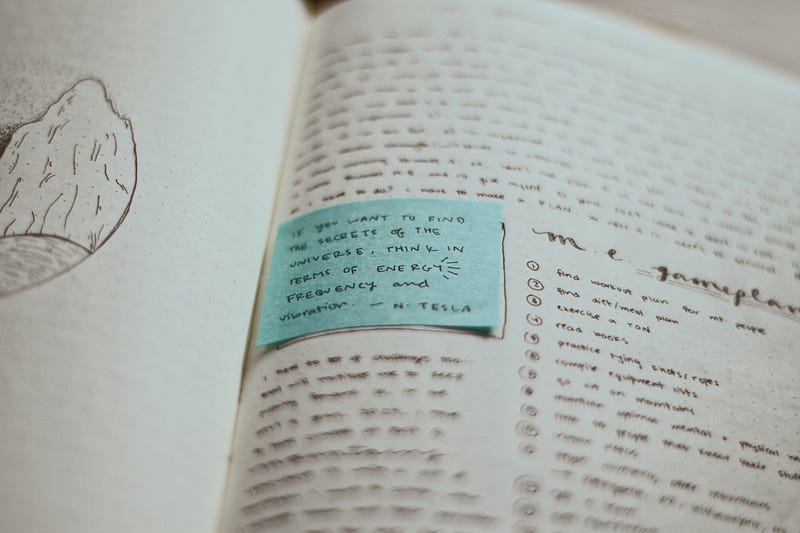
Photo by Noémi Macavei-Katócz on Unsplash

I know several people who have died as a result of their need for alcohol. And several who died addicted to one drink or another.

I like alcohol and have a glass or two of wine every day. Some would say this is alcohol dependence. So I’m not immune to what I see are the dangers of this behaviour.

So because I’m attuned to the dangers for myself, I read anything that comes across my path about alcohol dependency. And I’ve even joined the Australian movement called ‘Hello Sunday Morning’ which provides information and personal stories on their web site to support those with alcohol addiction problems.

Drinking to escape

Today I read Jacintha Field’s sobriety story in ‘Drinking to Escape’. It was the all-too-common tale of increasing alcohol dependency and its results. After her vodka intake went way beyond the norm, Jacintha ended up in hospital. Reflecting much later on the experience, she saw this personal crisis as:

a cry for help from someone who didn’t know her place in the world. It was self-hatred and an extremely dangerous way of living life. A person doesn’t get to that level of drinking unless they are trying to escape, trying to hide from their truth…I drank to escape. I drank to build confidence. I drank to run away from shit from my past that I wasn’t ready to deal with.

I drank to escape. I drank to build confidence. I drank to run away from shit from my past that I wasn’t ready to deal with.

How many of us want to run away from something? Most of us, probably. But do we really know what we are running away from and why we want to run? Again, most of us don’t. Jacintha has some wisdom to share on this:

We need to massage our insides by opening up and being vulnerable. We all have stuff that we haven’t dealt with. Some of it is small and some of it is not. We have so many ingrown beliefs; beliefs that can go as far back as high school or even primary school. We could have held on to hurt from someone who was having a bad day and said something to us.

We need to massage our insides by opening up and being vulnerable

I loved that comment ‘We have to massage our insides’. It says that we have to do it. And we all have a lot to open up to, even in a life called ‘normal’, if such a thing even exists.

Back to Jacintha again:

In order to deal with our stuff, we need to face it head on and then, … “Let it go”. That is not going to happen by drinking, or taking drugs, or working ourselves to the bone. In fact, writing ourselves off is just going to make it a million times worse. We need to find someone we trust — a counsellor, a psychologist, a friend, kinesiologist, Reiki master or even a chiropractor — to help us let go of things we are holding on to.

As I reflected on the sentiments expressed here, the last line caught my attention. How many people can afford a counsellor or a therapist to help us deal with our stuff? How many of us feel we could trust a stranger, a friend or a relative to help us face our stuff head on, stuff we can barely deal with ourselves?

Then a second thought occured to me. What could anyone on the addiction recovery journey do to help themselves?

What could anyone on the addiction recovery journey do to help themselves?

Then I remembered how I’ve used personal journaling as an inexpensive and easily available form of therapy. Such an activity has enable me to manage what at times have been huge levels of work and personal stress.

I’d had a good role model in this. As a child, I had watched my father deal with the grief of losing his 45-year-old wife and having to deal with three little girls on his own. I saw how he journaled to try and deal with both his grief and his sobriety journey.

It helped him in those early, grief-torn days, and as he continued beyond the time when recovery seems to have been achieved, it also helped him reduce the risk of relapse.

If you’re on the sobriety journey, journaling might just offer you a great way to track progress and increase your motivation towards wellness.

10 Ways you can benefit from journaling towards recovery

You can look forward to many benefits by keeping a journal to help in your sobriety journey:

1. Stream of consciousness writing can help you reduce stress

Often we increase our alcohol intake to help us deal with stress. By writing things down, you can reduce your stress levels by venting your inner feelings in an external form.

If just starting out in journaling, writing in a stream of consciousness style might be for you. Set a timer or choose a time and with pen and paper, just write down all the thoughts that come into your head.

This is rather like the Morning Pages that Julie Cameron writes about. She writes three pages of stream of consciousness and it really helps her get into the day.

As you write, don’t edit, check your spelling, punctuation or grammar. Just write.

2. Write down the things you can’t say to another person

You can say things to yourself that you might not be able to say to another person due to, say, trust issues.

Some people write letters they will never send. This is the sort of thing I have in mind:

Dear J, I can’t believe you didn’t back me up at the meeting. I am so sick of trusting you and having that trust abused. I will not be helping you out ever again. I never want to see you again. I am no longer your friend. You disgust me. C.

Go ahead, vent your spleen. The only judge of you will be you. And you will judge yourself on evidence produced by you and critically examined by you.

Let the letter sit in your journal forever and review it at a later time or tear it out and destroy it. It’s up to you.

3. De-tox yourself by vomiting onto the page

The act of expressing your feelings by writing them down on paper can feel extremely therapeutic. You’re making sense of things and de-toxing your life by vomiting the negativity onto the page. (But see the ‘Warnings’ section, below).

De-toxing also means looking after yourself physically and mentally. Keep an exercise, health or nutrition/diet journal and write about your great efforts at getting to, and maintaining, a healthy lifestyle.

4. Examine your understanding of stressful, alcohol-binging situations

Turning the microscope on your alcohol-fuelled thoughts, behaviours and feelings is one of the hardest parts of journaling.

But as you write, then review, your journal entries, you can track your thoughts, feelings and behaviours over time, analyze them for patterns, trends and themes, and learn a lot about who you are, what triggers you off in a particular direction and identify who you want to become.

You can ask yourself questions like: “Am I misunderstanding this situation giving me so much grief?’’ “ Is this misunderstanding causing me to drink (more)?”

There will also be a spiritual aspect to this. Track how your soul is managing the journey. Ask it. You may be surprised at the answers you get. Or maybe you won’t.

5. Get a clearer perspective

First you take a drink, then the drink takes a drink, then the drink takes you. F. Scott Fitzgerald, ‘The Great Gatsby’

By writing down your angst you will get a clearer perspective and perhaps be less likely to respond in a negative, self-abusive way based on your faulty interpretation of events.

Soon, as the fog clears, you will find that you are looking above the parapet and thinking about the future in a more positive way. You can begin to work on your self-abusive drinking behaviour.

I don’t need alcohol to see the world in its depths, I carry the sun in me. Lamine Pearlheart

Keep a gratitude journal to help as a catalyst to capture the good things and keep under wraps the negatives that will continue to emerge. This will help with the reframing process of seeing the good life.

6. Write down big, hairy goals, then shrink them to a manageable size

At this point, it’s good to plan some of your future by penciling in any big goals that begin to take shape in your mind. Getting down goals, even if they seem stupid, unachievable or lack clarity will increase your chances of moving forward into sobriety and mind/body recovery.

Then, when you think you’ve found a big, hairy goal you like the look of, Mel Robbins suggests you do some research for ten minutes each day to help you move towards your big hairy goals. One small thing a day. Ten minutes.

Learn, research, be a student about your topic. Master the art of getting started, then master the art of creating a continuum.

Master the art of getting started, then master the art of creating a continuum.

Mel advises that the little bits of progress you make every day will be helped if you note all your learning. This is where I think a learning journal would come in useful.

From your research, write down your learning about how to progress your big hairy goal, write down the small things you’ve learned, visualise success, overcome your fears and move closer to achieving your goal.

Allow yourself to imagine the steps to achieving your goal. Feel the emotions of each step achieved. Allow yourself to feel the excitement of achieving your overall goal. Jot down thoughts in your journal as you go through this process. Then review.

Regularly completing your learning journal can help you build a personal brand that doesn’t include being a drinker or a drunk.

7. Review, review, review.

Don’t live the same year 75 times and call it a life.

As you review your journal entries, you will be able to track your progress and soon you will begin to enjoy the nicer entries in your journal: the good things that are happening to you, to see changes in your attitude and thinking that you might not have noticed otherwise.

Don’t live the same year 75 times and call it a life

Review, review, review, then act on what you’ve found to get you closer to the life you deserve.

8. Celebrate your progress.

People of our time are losing the power of celebration…Celebration is an active state, an act of expressing reverence or appreciation. To be entertained is a passive state — it is to receive pleasure afforded by an amusing act or a spectacle…. Celebration is a confrontation, giving attention to the transcendent meaning of one’s actions.’ Abraham Joshua Heschel

Write up your joy at feeling good about yourself. Write up the small wins (‘Last night I didn’t have a drink’. ‘Today I got up an hour earlier and didn’t have a headache’). Celebrate!

9. Take a deep dive into the inner workings of you

As you work on your journal entries, you will go deeper into your inner workings.

Pimp this process. Develop your intuition. Link to the Divine. Relish your inner insights.

At times you have to leave the city of your comfort and go into the wilderness of your intuition. What you’ll discover will be wonderful. What you’ll discover is yourself. Alan Alda

10. Be excited as the ‘real’ you emerges

If you maintain your journal entries, you will begin to see the ‘real’ you emerging. Don’t be afraid of this. Let this discovery time keep you on course with a clear rejection of your alcohol dependence and allow you to feel compassion for the emerging person that is the real you.

Continually motivate yourself to keep on track by writing about your motivational journey.

What are you seeing of yourself now that the fog is clearing? Collect affirmations and quotes and feel good as you reflect on these sentiments.

As you develop confidence, read your journal entries and force yourself to take a critical perspective on your thoughts, assumptions, feelings, deeds and motivations. When you begin to do this, you are really ‘cooking with gas’.

Only a small portion of the population do this. You will be in the elite of those who do. Not for you the life-path of never examining your thoughts and flawed assumptions.

Not for you to let the drunk, false you influence your large and small decisions. Your journaling will be your power house preventing all of this.

All of these things can help you plan and act to re-build your life away from the crushing pressure of alcohol addiction.

Watch out for any excuses you might make not to keep a journal!

Don’t feel embarrassed when you first start your journal. Nobody will see what you’ve written. As you journal, you’ll make the inevitable grammar and spelling mistakes. It just doesn’t matter in the grand scheme things.

As you journal, you’ll make the inevitable grammar and spelling mistakes. It just doesn’t matter in the grand scheme things.

Don’t kid yourself you don’t have time to keep a journal. You’re not going to be spending hours every day writing (although you can if you want to and if it’s helping you). Do it on the bus, in a queue, or instead of banal Facebook time or inane Tik Tok video-watching. Pick up a pen and journal if you are craving a drink, and write about it.

Pick up a pen and journal if you are craving a drink, and write about it.

Don’t worry about having a topic or a starting sentence. Think about what you are feeling in the moment, then begin to write and keep going.

Keep your journal away from prying eyes. If you’re really worried, then ditch pen and paper for the password-protected, electronic kind. I like Day One. It’s so user-friendly, can be used across systems and has a free and premium version.

If you don’t like writing or feel you can’t write, then record your feelings in an audio or video journal. Evernote has a recording feature.

Warning: the hidden dangers in freewriting in your journal

I hope all of this sounds doable for you.

But I feel I must put in a warning for you if you are trying to kick an addiction and aim to try and use journaling as a way of helping you do this.

There are many things to watch, but I’ll just focus on the freewriting kind of journalling for now.

Kathleen (Kay) Adams LPC is a psychotherapist and clinical journal therapist in Denver, Colorado who has pioneered the use of writing as a tool in therapy, personal growth and human potential. (find her on www.journaltherapy.com and www.journalverse.com).

Kathleen found there are some dangers in freewriting for some people. She had started a new job as a journal therapist for a psychiatric program with patients who were diagnosed with severe post-traumatic stress disorder. In patient interviews, she asked if they wrote a journal and what benefits and difficulties they had found.

To her surprise, 88% of the patients said they wrote a journal (60% regularly and 28% intermittently). Unfortunately, 96% of the patients said they sometimes experienced painful outcomes when they wrote in their journals. These included depression, frightening images, migraines and headaches.

The stories they told me broke my heart. I wanted their writing to help them feel better. Instead, they felt worse than if they’d never written at all.

She looked at the composition of their writing and found that the journal technique of freewriting, also known as stream of consciousness writing or flow writing, had instigated these terrors.

By its nature, this technique is free from any defined structure. It is also free from containment. There are no limits; it can take minutes or hours, paragraphs or pages. The patients were Free Writing themselves into the abyss, and once there, they had no reliable way to get out.

Clearly, these patients were suffering from extreme post traumatic stress, but there is a warning here for all of us to take care when writing as a stream of consciousness.

At the very least, take care not to wander into the land of negative thinking. Try another type of journaling, such as gratitude or learning, to get you back on a more positive track.

Jacinta’s final message has meaning for us all:

You’re not fooling anyone by masking your problems. Don’t let one person’s bad day, or year, affect your human experience. You have the choice to change your beliefs and you can make that choice today.

Journaling regularly can help you make the kind of choices that are better for your physical and mental health with regard to alcohol. But we must also remember that people change slowly over time and it is easy to miss out on what has been achieved. So take your time and review, review, review your journal entries to find the real you. Then give yourself the gift of sobriety.

Sobriety was the greatest gift I ever gave myself. Rob Lowe

Start a journal today and begin to work your own way to the light.

Sobriety
Alcohol
Mental Health
Recovery
Addiction
Recommended from ReadMedium