
Indirect Benefits of Foreign Military Sales
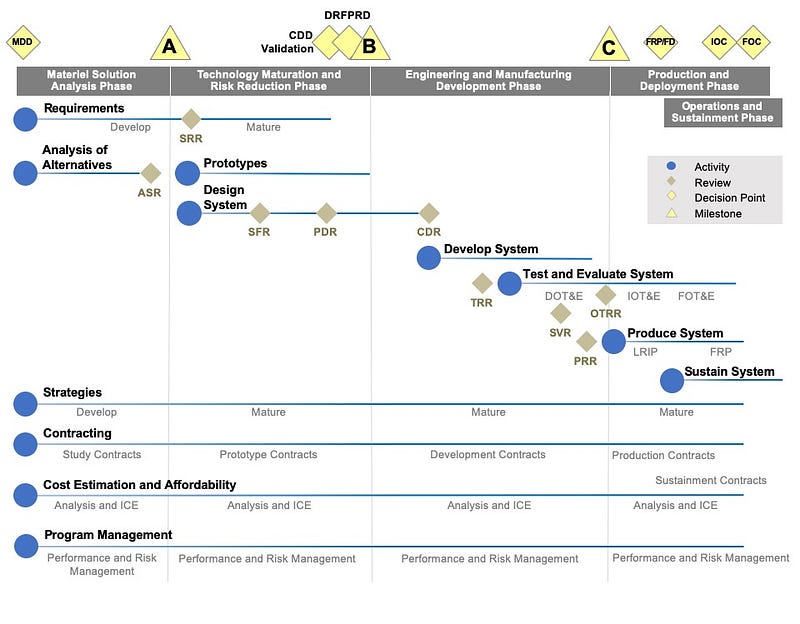
Selling machines of war evokes images like those from the movie “Lord of War” in which small arms are illegally transported to third-world countries where militants slaughter innocents and commit genocide. However, Foreign Military Sales is a well established process that involves the Department of State, the Department of Defense, and Congress and brings billions of dollars into the American economy.
Perhaps the most famous Foreign Military Sales story is that of the Iran-Contra affair, which happened in 1986 as I was only learning to read. From my limited understanding of the events, up to 1979 the US provided arms to Iran’s Shah Pahlavi. But after Americans were taken hostage at the American Embassy in Tehran, President Carter signed an arms embargo prohibiting such sales. Reagan’s administration, with hopes of keeping the Iranians from strengthening their ties to the Soviets, who would gladly sell equipment, secretly sold parts to the Ayatollah. This came after diplomatically urging other countries not to sell to Iran. Some of the funds from these sales were used to fund the anti-Sandinista Contras in Nicaragua hence the name. American military sales to Iran between 1950 and 2017 totalled $10,715,417,000 in 2022 USD according to the Defense Security Agency Historical Sales Book. (https://www.dsca.mil/resources/dsca-historical-sales-book)
My direct experience is limited to the Navy. Much of the naval shipbuilding process is sensitive but not classified. One item that is always classified is the Live Fire, Test and Evaluation (LFT&E) report. This report, in the case of ships, uses modeling to estimate damage to the hull or other areas from any number of possible missiles or torpedoes. If there is a impact location that does significant damage to your vessel, rendering it inoperable or not survivable, you certainly wouldn’t want other countries to know.
Test and Evaluation in the Department of the Navy is overseen by COMOPTEVFOR, Commander Operational Test and Evaluation Force. This independent branch of the Navy ensures that the military hierarchy cannot affect the judgement of the testers, who might otherwise build and put ships into service that would endanger sailors’ lives. All of these processes are highly controlled by Title 10 and DoDI 5000.02 and follow industry program management best practices tailored to Defense budgeting and acquisition.
When we provide military equipment to foreign militaries, we are providing them with equipment which have already assessed. This is not unlike knowing where the pressure points in the human body are that can bring down an opponent. Ayatollah Khomeini once courted the Reagan administration but then called America “The Great Satan”; you can’t always tell friends from enemies, and there may be value in knowing that your adversary is using equipment that you can best. How much easier analysis of capabilities for a military intelligence analyst must be when the equipment in question is actually equipment manufactured on your soil by your own defense industrial base.
About me:
Not a War Dog. A real human who spent years working in DoD Acquisition. Exposure to FMS brought me into the community.
References / Further Reading:
https://www.dau.edu/acquipedia/pages/ArticleContent.aspx?itemid=100


