
How to keep toxic ingredients out of your home
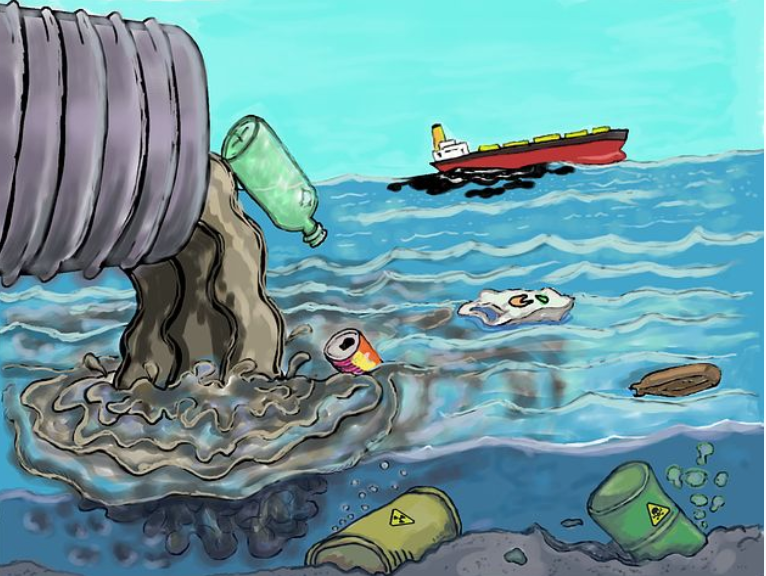
Any substance that has a toxic element to it has the potential to build up in the body. Sometimes this build-up happens quickly; sometimes it happens over time. Toxins are an insidious part of everyday life that can take on many forms. Until we become more aware of them, they will continue slipping past us with ease.
I cannot tell you why certain manufacturers think it’s okay to put harmful ingredients in our products, but clearly they do. You may recall how Johnson & Johnson recently paid out millions of dollars for failing to disclose an alleged cancer link to its baby powder.
With that in mind, you would expect every supermarket manager to be diligently checking each product for unsafe ingredients. I hate to be the bearer of bad news, but we live in a fallen world. Expecting a corporation to police its own income stream is at best naïve. It’s not until we face a major health crisis, that we begin to ask our own questions like how did we become sick and why?
The rest of this article will explain the how and the why along with easy to implement solutions to keep you well. Some of the following information you may be aware of, some of it will shock you to the core! You may choose to ignore these warnings if you wish, but from today it will be difficult to say you weren’t aware of them.
Let’s start with the body’s largest organ. What we put onto the skin goes into the skin, which in turn gets dumped into the bloodstream. Oils, cosmetics, bug sprays, creams, perfumes, underarm antiperspirants, yadda, yadda, yadda can all turn problematic, especially for those who aren’t feeling well, to begin with. No one forces us to use these products, yet as sure as night follows day, they slowly add to our overall toxic burden.
If our goal is to keep illness at bay, then perhaps we should begin by making life easier for our living, breathing skin. This protective layer is so vitally important that it’s considered by many to be the body’s third kidney.
Still not convinced, huh?
Okay, try this. Every day for the next week spraying perfume on a delicate living houseplant and watch as the leaves begin to curl up and die. Our skin is absorbent in the exact same way.
Skin is alive and intelligent but to add to the problem, we then restrict the skins ability to regulate itself by wrapping it in layers of manmade fibers. Go ahead; take a look to see if the shirt you are wearing has the potential to stifle the bodies largest organ. Here are a few common fibers that are known to affect the skin.
Polyester is made from synthetic polymers that come from esters of dihydric alcohol and terpthalic acid. If you are trying to let your skin breathe, polyester is perhaps one of the worst fabrics you can wear.
Teflon is increasingly being added to clothing because it makes it wrinkle-free. Most clothing labeled “no-iron” contains carcinogenic PFCs, but don’t take my word for it. Even the U.S. Environmental Protection Agency (EPA) recently announced that PFCs are cancer-causing compounds.
Acrylic fabrics are polycrylonitriles which, according to the EPA, have known carcinogenic qualities.
Rayon is treated with chemicals like caustic soda, ammonia, acetone, and sulphuric acid — all are believed to survive regular washing.
Nylon is made from petroleum and is often given a permanent chemical finish that can be harmful to the delicate skin. Many stain resistant and wrinkle-free fabrics are treated with perfluorinated chemicals (PFCs), like Teflon.

Tip — Whenever you catch yourself reading what Kim Kardashian is wearing you might want to spend an equal amount of time googling what you are wearing… just sayin’.
My goal here isn’t to make your life more difficult, it’s to first bring awareness and then offer you viable solutions. So what’s the alternative to manmade fibers?
Long before these manmade materials came along we all used natural fibers like cotton, hemp, or wool. These products remain easy to find and make a good replacement. Natural fibers allow the body to cool without leaching toxic chemicals onto the skin.
Will doing this one thing change your health? Perhaps not, but when we look at the information in this article as a whole, it has the potential to compound and become quite significant.
As we now move forward it might be helpful to grab a pen and paper to make side notes. The good news is that each of the following recommendations is easy to put in place. In most cases finding a solution is inexpensive. The much bigger problem is remaining blissfully unaware. We still have a lot of ground to cover so, without further ado, let’s go fish for answers. Ready?
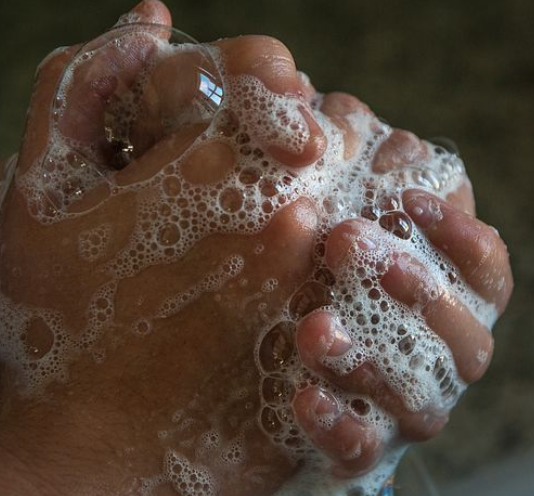
A good place to find toxins in any home is the kitchen. Anti-bacterial hand soap sounds good but it should be the very first thing you banish to the trash can. Antibacterial soaps contain agents such as triclosan and triclocarban. The dangers of these two agents are many and well documented. They are known endocrine disrupters that should have been banned years ago.
Better to use a regular bar of soap like the one Grandma used to use, but even then check the ingredients. The least toxic brands are usually found at your local health food store.
MEDICATIONS
Certain medications have life-saving qualities, no question about it. But for some, they may also cause a toxic reaction. If your health has become less robust recently then stop what you are doing (even reading this!) and go check the insert.
See if your symptoms match any of the known side effects. Know that any medication can cause a reaction. If you hit a match, bingo! Talk to your doctor to replace or reduce the dose.
WATER QUALITY
Water is water, right? Wrong. The quality of your drinking water can vary dramatically. Whatever else you have to save on, don’t allow the water you drink be a compromise. The human body (that’s you again) is made up of approximately 65% water, even more in infants. That’s a pretty big deal, especially if you are relying on someone else to do this step for you such as a municipal company.
If we know that water flows through more than half of the human body, then the quality of the water coming into your home is pretty important, right? Soft drinks and beer don’t count as water, but hey — nice try.
Bottled water is an improvement over soda for sure, but it really isn’t the best solution. You need quality water and so do your cells. Plastic bottles can leach Bisphenol-A (BPA) into the water you drink. BPA is a synthetic estrogen that can mess up your hormones and has even been linked to some cancers. It takes energy to make plastic, usually in the form of oil. At some point, when there is no clean water left to drink we will be forced to understand we can’t drink oil.
Don’t be fooled by the picture of a pristine mountain river on the label of the water bottle. Some water brands are simply filtered water. Which begs the question: why not cut out the middleman and invest in a good quality water filter for your house?
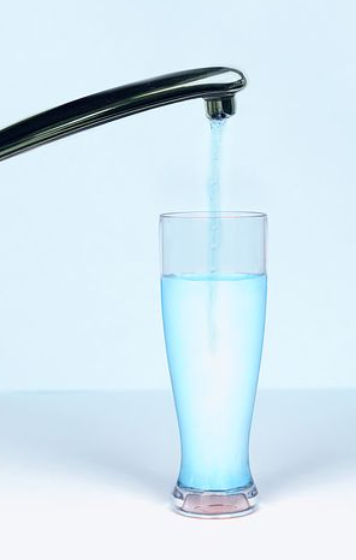
If your house doesn’t have a water filter, then your kidneys become that filter! Kidneys are ultra delicate organs and we should be protective of them.
Not all water filters are the same. Some will filter out more contaminants than others, just as some cost more than others. Depending on your situation an element of diligence will serve you well. But ANY filter is better than no filter!
There are lots of filters on the market and you need to find one that fits your budget today rather than waiting until tomorrow or next week. You can always upgrade later. Berkey manufactures a range of decent clean water filtration systems. They are quality built, simple in design, and effective at what they do.
I’m not endorsing any product here and you can buy whatever product you like so long as it works for you. Berkey filters aren’t the cheapest on the market but, over time, the cost of buying a good filter is offset by not having to buy plastic water bottles.
There are lots of different types of water filters out there, but you tend to get what you pay for. Reverse osmosis filters have become popular because they remove a whole range of impurities. While there are benefits to this kind of system, be aware that it typically employs a series of filters and you may need to restructure and re-mineralize the water.
You can sometimes do this by adding minerals back into the water and allowing a jug of filtered water to sit in the fridge overnight. Sometimes this can be done automatically during the filtration process. A Google search will yield lots of information about how to replace minerals that have been filtered out.
Whichever filter system you choose, be sure to look at it objectively. If a filter is doing its job correctly then it’s going to need replacing at some point, be sure to stay on top of this by writing the date of installation directly on the filter.
Yes, this all takes effort but clean water is critical to your and your family’s the health. Come on now, this is kinda important, let’s not pretend you didn’t hear me.

Imagine a healthy, goldfish swimming around in a glass bowl full of pristine water. In an ideal world, this is how our the fishes water should be. Now picture the same goldfish trapped in a plastic bowl full of unfiltered, dirty water. As it’s forced to use its delicate gills to breathe this represents the murky, toxic world we have made for ourselves.
Treat the earth well: it was not given to you by your parents, it was loaned to you by your children. — Ancient American Indian Proverb
If you want to kick this up a notch, you can test the quality of the water coming into your house. This is easy to do and relatively inexpensive. Simply Google a water specialist firm in your area. They will come out to your home, take a sample, and do the water test for you. If there’s a problem (and it usually is) a filter is the answer. To stay on top of things, make an effort to do this annually.
Make no mistake, illness isn’t cheap either. So it really boils down to how you prioritize things. Most people have a hobby that takes an equal amount of time, effort, and a certain amount of money. Am I right?
Tip — If you go with the Berkey water filter you can periodically test it by putting red food dye in the water. If the red dye bleeds through into the filtered water, you know the filters need replacing. Berkey filters allow minerals to pass through the filtered water; red dye doesn’t have any minerals so in theory none of that dye should come through to the water you drink.
MOLD
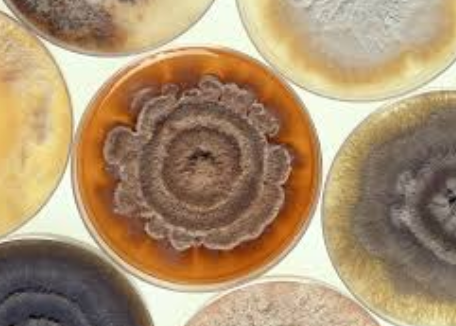
Once you have your water checked off the list, the single biggest potential problem now lurking in your house is hidden mold. And I’m not talking about the black stuff around the bathtub. What I’m referring to is a much bigger issue and potentially far more dangerous.
Mold that is obscured from view can unleash untold devastation because it’s not always obvious. In this situation, testing is essential. When we are exposed to hidden molds symptoms can range from brain fog to chronic fatigue and just about everything in between. Some people may even express anger or suffer from stubborn weight gain.
The idea here is to become your own detective. Start by asking yourself whether any health issues correspond with a recent house move. It pays to be vigilant, so water damage should be cleaned up quickly. But what lurks beneath carpets and behind sheetrock often goes unseen. If you are unsure, ask your neighbors if your street has flooded in the past.
Unless hidden mold is on your radar, it can make connecting these health dots a real challenge. Don’t be too quick to hand the responsibility of your health over to others. All too often, the last thing you family doctor will think to check is toxic mold. This is your fight.
Mold can build up anywhere there is the slightest moisture. Moisture could be coming from an unseen leaking pipe in the ceiling, wall, or under the floorboards. Be on the lookout for any tell-tale signs such as brown water marks on ceilings.
Keep an open mind and be aware that some people are far more sensitive to mold than others. Some toxic molds can affect people mentally as well as physically. The good news is once you pinpoint a mold problem, life gets a whole lot easier.
To help you do this, there is currently a test called an ERMI mold test. It’s an objective, standardized DNA based method of testing that will identify and quantify molds. At the time of writing, the test costs around $290. But again, think about lost work hours, doctor’s appointments, medications, or even failed relationships!
ALTERNATIVES
As we continue to shine the spotlight on toxins around the house, try to look at this process in a positive light. There is a very good chance that something I’m about to mention is stressing your system. Once we remove it, health automatically improves. Until we find that stressor, the smartest thing we can do is begin stacking the odds in your favor. We’ll do this by removing as many known toxic items from your environment as possible. Just keep reading, I promise I’ve done all the hard work for you.

Look below your kitchen sink. There you will find some of the deadliest of all household poisons. Many of these products contain carcinogenic ingredients. Carcinogenic simply means the substance or product has the potential to cause cancer. Let’s not forget this when you’re wiping down countertops with these harsh chemicals — the last place we need carcinogens is where we place our food!
I get it, we obviously need to clean our houses, but a less toxic option would be to use 3% hydrogen peroxide. You can buy this from any pharmacy. It’s inexpensive and does a stellar job at killing bacteria, especially on countertops.
3% HYDROGEN PEROXIDE
3%t hydrogen peroxide comes already diluted in the bottle. 3% percent hydrogen peroxide is quite a mild strength, it’s NOT going to burn holes in your clothes, (that would be a different strength altogether). 3% is the same stuff that’s sprayed on cuts and scrapes to clean them.
For now, let’s stick with household toxins found in the kitchen. Wooden cutting boards are said to trap 200x more toxic bacteria than your toilet seat. (Eew, now that’s nasty.) When you use 3% hydrogen peroxide on cutting boards, any bacteria left there will actually turn white and fizz. It also works pretty well if you get any meat/blood spills on the kitchen counter. When you hear the hydrogen peroxide fizz, it kinda lets you know that it’s doing the job.
You can use 3% hydrogen peroxide wherever you would a carcinogenic chemical. It’s generally much safer around food than any of the usual household cleaners found in the store. You can even gargle with 3% hydrogen peroxide … how many other things under your sink would you do that with?
Remember that the skin is super absorbent. Anytime you hear the word toxic try to also hear the word insidious. Those harsh toxic chemicals have the potential to build up over time.
Rather than use a harsh toilet cleaner, alcohol can be just as effective at killing bacteria. Simply turn a regular bottle of (cheap) vodka into a spray by pouring the vodka into a plastic spray bottle. Hey-presto, you now have an effective cleaner without any carcinogenic ingredients.

AIR
We like to think of air pollution as being an outdoor problem, but every time we let rip with that odor neutralizer we release a dangerous concoction of chemicals into the air. It is well documented that these chemicals hang around and irritate the lining of the lungs. If your house smells for any reason, simply open up a couple of windows, last time I checked, fresh air was still free!
If you are looking to improve the overall air quality in your home/office/ bedroom, then plants are an inexpensive way of doing it. NASA has done detailed scientific research in this area bringing ample credibility to the topic.
Tip- If you don’t have a green thumb, ask the sales assistant before you buy. Some plants are robust, others are picky. Getting this right in advance makes life just that little bit easier.
Our lungs are important, we need them to work optimally as they form a vital part of the detoxification system. It really doesn’t help to keep breathing in harsh chemicals. Spray disinfectants and bug sprays will irritate the delicate linings of the respiratory system.
When it comes to cleaning glass, vinegar and newspaper cleans best, and without toxic side effects. You can use regular baking powder with a squirt of lemon to clean just about everything else!
COOKING
Staying in the kitchen, here are a few more things to check off your list. Be especially aware of any nonstick pans. Teflon is polytetrafluoroethylene (or PTFE for short). As it heats up it releases toxic gasses that have been linked to organ failure, reproductive damage, cancer, and other harmful health effects. I know, right? Who makes this stuff?
Also, begin thinking about the oils you cook with. When cooking with the wrong oil at high temperature, free radicals are formed. As a rule of thumb, if your frying pan is producing smoke while you cook, you are producing free radicals.
Free radicals are highly reactive uncharged molecules. Free radicals cause damage by adversely altering lipids, proteins, and even DNA. In plain English, a free radical is very much like a drunk at a party, unless he quickly finds his partner (aka an antioxidant) he will roam from room to room kicking tables over. Once damage occurs everyone wants to know who invited the jerk to the party.
Technically speaking, your body produces a small amount of its own free radicals. As with most things, the problem only occurs when things get out of balance. If you have more free radicals than your body can effectively deal with, the imbalance manifests in numerous ways. Antioxidants are important because they help neutralize free radicals.
Prevention will always outperform cure so you might be better off cooking with something like avocado oil, clarified butter (ghee), or coconut oil. Generally speaking, these oils are much healthier for cooking because they are more resistant to heating. Oils to avoid at all costs are corn, canola, soybean, safflower, and sunflower. These oils have unstable fats, which not only make an abundance of free radicals they destroy the nutritional properties of your food.
POTS, PANS, AND DISHES
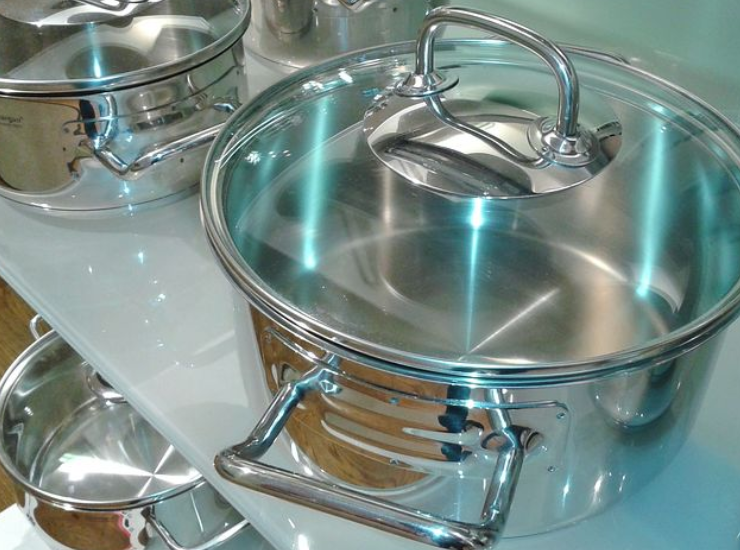
Aluminum saucepans were once quite popular. But we now know that trace amounts of aluminum can leach into the food as the pan heats up. When the amount of aluminum consumed exceeds the body’s capacity to excrete it, illness follows. An added concern is that recent research has found high accumulations of aluminum in the brains of Alzheimer’s patients. A good quality set of stainless steel pots and pans is a much better option.
LEAD
Lead is a known neurotoxin and dangerous heavy metal. Even in small amounts, lead causes a wide range of serious health problems. While we have all heard of the dangers of lead paint, few of us make the same connection with the dishes in our kitchen cupboard.
Brightly colored dishes may look pretty but are often covered in a glaze containing low levels of lead. Simple white dishes may serve you better.
Tip- Apple pectin can be a helpful ally in chelation of lead. At the correct dose, it can help pull the lead out of the body. Heavy metals are an interesting topic that I’ll be covering in more detail later.
As a side note, lead is also found in many cosmetics which when applied directly to the skin can be absorbed into the bloodstream.
It has to be said, that government agencies have done a remarkably good job at alerting people to the dangers of lead paint. Even to the point of handing out large fines to any contractor attempting to remove it without the correct safety equipment. The dangers of lead paint are real and far-reaching, and full credit where it’s due — bravo to the environmental agency.
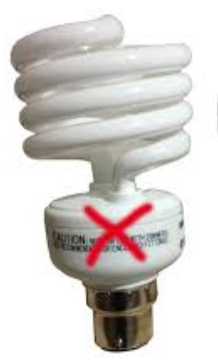
But if it’s the goal of the government to steer us away from danger, why stop at lead? Why isn’t the same level of attention being directed to other household toxic products such as the mercury found in light bulbs?
Many of these bulbs were pushed on the public as a way to save energy, they are now declared so toxic that some local dumps won’t take them. Check to see how many of those curly shaped light bulbs you have in your home and FFS be especially careful not to break one!
We have become so entwined with these toxic products that it’s no longer possible to completely avoid them all. But we can minimize our personal exposure to them.
BATHROOM
Most people start their day by brushing their teeth, taking a shower, and then rolling on some kind of underarm deodorant. Let’s take a closer look at these daily occurrences.
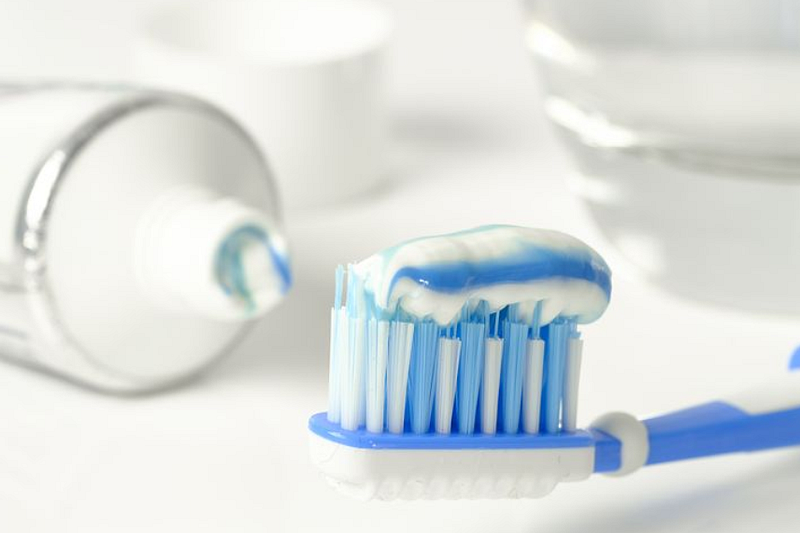
When it comes to oral hygiene, it’s hard to get away from fluoride. There is already so much controversy surrounding fluoride that I’m going to sidestep it all and leave you with this single thought …
To function optimally your thyroid needs iodine. There’s nothing too controversial about that statement until you realize that both iodine and fluoride appear on the same periodic table as halogens. This simply means that both fluoride and iodine are chemically similar; that’s a pretty big deal if you happen to be a thyroid.
The thyroid is a small butterfly-shaped organ located at the base of your neck, but don’t be fooled by its size. The thyroid performs a precise set of functions, one of which is to slowly release hormones that control the way your body uses energy. Some believe that fluoride has the ability to block iodine absorption.
Once the thyroid is compromised the whole body suffers. A daily and constant hit of fluoride may have the potential to cause fatigue, increased sensitivity to cold, heat, dry skin, and facial puffiness. These are just some of the symptoms of a poorly functioning thyroid.
Changing our hygiene and dental habits is as easy as changing our brand, most health food stores carry alternatives and playing it safe is the better option.
If enough of us make the switch, then perhaps corporations will begin to sit up and take notice. When it all seems too much, I like to think of it this way: we get to vote three times a day with the food we eat and maybe once a week with the toiletries we buy. Business follows the money, period.
Regular store bought shower gels and some soaps have toxic ingredients that can range from aluminum to parabens. In 2004, British cancer researcher Philippa Darbre Ph.D. found parabens present in malignant breast tumors. Parabens are well known to mimic/disrupt estrogen in the body and are found in many cosmetics. If our goal is to find lasting solutions, the first step must be to limit anything with a toxic element.
Grab your shower gel, deodorant, makeup, and anything else that comes into contact with your skin. Look at the label of ingredients; a quick Google search should shock you to the core.
Sadly, toxic chemicals are a relentless, integral part of our modern day existence (some call this progress) yet the ongoing damage to our world is profound. We can all do our bit to stop these toxic invaders from seeping into our homes by switching to greener brands.
OFF-GASSING
Like any good detective, we are searching for clues in every corner of the house and always keeping an open mind. It’s worth noting that new furniture, rugs, and plastics ALL have the potential to “off-gas” with dangerous chemicals. Off-gassing (also known as outgassing) refers to the release of airborne particulates or chemicals. This is something to be aware of in a small bedroom, especially for those with young children.
Fire retardants can be particularly problematic. These can be found on a mattress, pillows, and even your favorite armchair. As pillows are next to our face for long periods, try to replace them with the least toxic option. Again knowing the root cause of something can be halfway to finding the solution. You could also check for apps that help you uncover toxins in everyday household products. I know they are out there.
CARBON MONOXIDE
Let’s not forget our old friend carbon monoxide which can come to us at home (or at work) through a faulty furnace. Carbon monoxide is sometimes referred to as the silent killer and yet detectors are incredibly easy to install. Compared to death (always a bummer), detectors offer good value for money.
RADON
If your downturn in health coincided with a move to a new house, then hidden mold and a change in water quality are certainly suspects to check for. The other sleeping giant would be radon. Radon is a colorless, odorless, radioactive gas formed by the radioactive decay of the small amounts of uranium that occur naturally in all rocks and soils. Radon can lead to serious lung damage and is another known carcinogen.
If radon is found to be present in your house, the solution can be as simple as venting the air out from your basement. Sometimes installing a plastic membrane under the concrete may help. Again, the much bigger problem is being unaware of it. The possibility that radon could potentially be seeping up from your basement floor is real. The good news is that testing is relatively easy and inexpensive.
EMFs
Okay, last one. EMF stands for Electromagnetic Field which is a field of energy created by electrically charged objects. The most common sources for high electromagnetic fields include proximity to power lines, transformers, appliances, flaws in a building’s internal wiring system, and stray currents on utility pipes — sadly, it doesn’t end there.
Utility companies are now installing “smart” meters across the US which add to the frequency burden. So it seems our exposure to EMFs is going up by the day, especially as we demand better phone coverage and more Wi-Fi signals.
Wi-Fi and cellular phones have become an omnipresent part of our lives. I fear the allure of technology is too great for me to overcome in this paragraph. Although I did once hear someone say, “If trees gave off a Wi-Fi signal we would all be out planting them; too bad they only produce the oxygen we breathe.” Hence I haven’t owned a cell phone for the past fifteen years — although my wife seems to think it’s because I have no friends to call.

LAPTOPS AND FERTILITY
When using a laptop, it’s important to restrict direct contact between you and it. Ideally, keep your laptop on a desk, if that’s not an option, then at the very least place a buffer (like a thick book or cushion) underneath it. There is increasing evidence to suggests that laptops have the potential to cause fertility problems. To help limit your exposure special EMF protective mats can be purchased online. These types of mats fit neatly under the laptop to shield you from harmful radiation, they can also prove useful for children’s handheld devices.
EMF testing for the home is available in most areas and seeing your personal level of exposure on a meter gauge is a sobering experience. Half the battle is won if you know exactly where your highest EMF reading is coming from. Electric blankets can also be particularly problematic and should always be turned off at night.
To help defuse some of those electromagnetic fields one solution is to install a “grounding mat” in your home. Grounding mats can again be purchased online or you can make your own. They are pretty simple and inexpensive to make, there are lots of Youtube videos on the subject.
Are there more household toxins out there? Yup, lots, but with so much ground to cover the aim of this was never intended to be an all-encompassing list of possible household toxins, but rather a tool to highlight areas of concern.
On the upside, for those of us who are surrounded by neighbors, Wi-Fi routers it can be a perfect opportunity to mess with people. Simply name your Wi-Fi network something like, “Mobile Police Surveillance” or “Shut Your Damned Dog Up” or, my personal favorite. “Tell-my-Wi-Fi-Love-Her.” Or if you are feeling particularly fresh, “Tell-Your-Wi-Fi love her”. Lol.
What did we learn from this?
It’s essential to do whatever is within your power to reduce the flow of toxins coming into your home. We can influence the companies that make toxic products by buying from their green competitors.
Any house that suffered a flood in the past will have a higher susceptibility to mold and this type of mold isn’t always visible to the naked eye.
Any water filter is better than no filter. Without clean water all things die, sometimes this can happen slowly.
Homework: Check out this book