
Keep Swearing — It Makes You Stronger
Why swearing can be good for you, and how to create your own superpower swear word.
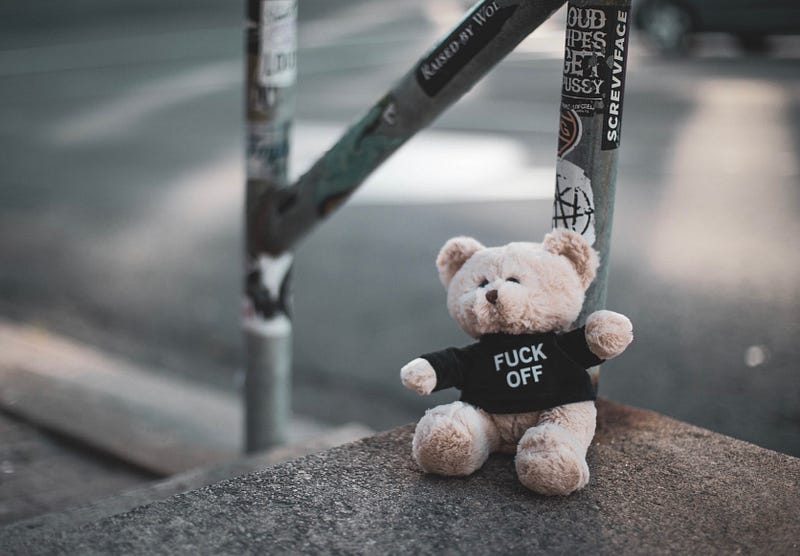
Whether they are the highest users of swear words or not, there are intellectual experts in this field — the field of swearing. They study the history of swear words; etymology, lexicographer, culture, impact…and benefits.
A note before you read this: if you are offended by profanity, even when not used to ‘swear’ or use offensively, I will take this chance to say: this article has a lot of it. None intended to offend. All for historical and educational purposes only.
History of swearing
Each swear word has its own history and etymology.
The words ‘fart’ and ‘shit’ are of the earliest recorded uses of profanity. Not a surprise, given the original meaning. The oldest recorded use of a ‘swear’ word is actually the c-word.
Before I share how swearing even started, it is only right to share the history of today’s most used, most censored, and most versatile swear word: fuck.
According to Melissa Mohr, an expert in swear words, the earliest recorded use of the word was associated with last names.
There’s a man called John Lefucker. A lot of people’s last names comes from their profession…. what did he do? Was he the original fuckboy? — Melissa Mohr
Other recorded last names were fuckbetter and fuckbythenavele. The meaning of the word has always been associated with sexual activity, so we can only guess as to whether it was a measure of pride or malice!
The f-word goes on to appear in poetry and in Shakespearean plays over centuries. According to HistoryExtra, there are several recorded uses of profanity in theatre in the 1500s and 1600s.
It is not until the late 1800s when we see it used as profanity. So, despite it being one of the oldest swear words, it’s one of the most recently used as one.
As for the history of profanity itself, it originates from religion.
It is bestowed upon from worship. From god. From the temple. From church. Whichever you relate to, if any. The first swearing ‘line’ crossed was the threshold of a temple. The origin of the word profanity refers to the use of religious words outside of their house of worship. Where they do not belong.
Fast forward, and swearing gained so much [holy] power, it changed the law.
In 1971, the US Supreme Court granted the right to use the word ‘fuck’. The word was officially added into protected speech under the First Amendment.
In other words, if you live in the USA, you have the god-given right to use ‘fuck’ in your speech.
Full circle.
The power of swearing: impact on mind and body
Swearing sets our heart racing. Literally.
When we swear, a few things happen:
- It activates our reptilian brain. This is the oldest and most intuitive part of our brain. An innate involuntary reaction. We are programmed to react to swearing.
- It turns on our fight-or-flight mechanism and pumps adrenaline into our bodies.
- Results: faster breathing, dilated pupils, higher heart rate, and even sweaty palms.
No wonder swearing is exciting.
Best result yet: it makes you 5% stronger, and 50% more tolerant to pain.
Research done by a team at Keele University in the UK concludes that swearing while exercising can increase your power. The British Psychological Society also released results on an increase in handgrip strength by 5% when swearing.
In a pain tolerance experiment, subjects were asked to stick their hands in ice, one group allowed to swear and another asked to do so — those who were able to spew out profanity were able to keep their hands in for 50% longer!
What we can learn from its history
To understand what we can learn from this, first, we need to understand why swearing even has this superpower impact on us.
It has nothing to do with the words, and everything to do with the fact they are forbidden. Our brains have been wired to see these words as ‘breaking the rules’ or violations of the norm. We have been trained not to use them.
When we do use them, it is adrenaline-producing. Like lying or breaking the law. It sets your body on alert.
Knowing this means we can create our own ‘power’ words.
You can try this safely at home. Make an innocent word forbidden if you have children around, train them to suppress it or view it as wrong, and they can suddenly activate a superpower when they use it.
The secret of creating a new superpower word.
That, plus the pleasure of knowing, swearing is good for you.


