
Kazuo Inamori: Human growth begins with three awakenings
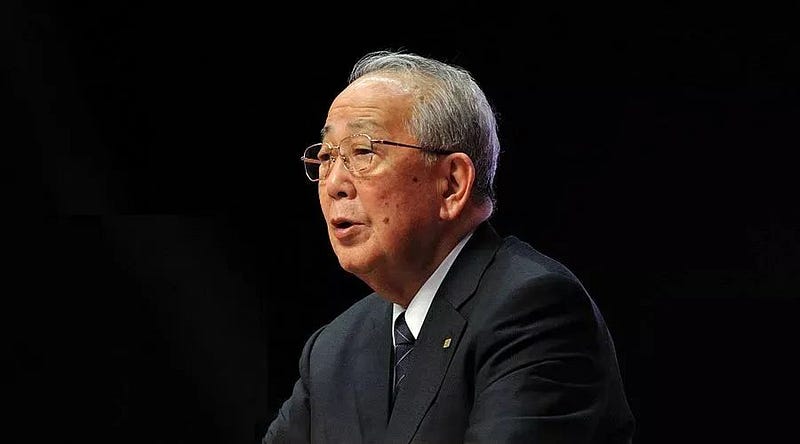
There was such a poor boy, who was born in the grassroots, had a mediocre education, and suffered from poverty and illness since childhood.
He just started from scratch, counterattacked all the way, and beat the bad cards out of the blue.
Not only did he create two Fortune 500 companies, he also turned the tide and saved JAL at the age of 78, creating one business miracle after another.
He is the “God of Japanese Management” — Kazuo Inamori.
Throughout the legendary life of Inamori Kazuo, you will find that his growth began with three decisive awakenings.
The first awakening: from fixed mindset to growth mindset.
When Kazuo Inamori just graduated, he worked for a ceramics production company that was on the verge of bankruptcy.
Corporate leaders often sigh and say, “I’m so unlucky.”
When unqualified products were returned by customers, he blamed the customers for being too demanding; when the research and development of new materials failed, he said that research and development was too difficult.
Other colleagues also followed suit and went about their lives while complaining.
Kazuo Inamori was deeply affected by it and wrote letters to express his sorrow to his family.
But he was scolded by his brother: “What future can a person who only cares about complaining have?”
This sentence suddenly woke up Inamori Kazuo, and he no longer complained with his colleagues.
Instead, he moved into the laboratory with his pots and pans and devoted himself to research work day and night.
After hundreds of failures, a miracle happened and he successfully developed a new material.
For a time, customers rushed to place orders.
In this way, he not only saved the endangered company, but also entered a virtuous circle in his life.
Stanford University psychologist Carol Dweck divides people’s thinking patterns into two types: fixed mindset and growth mindset.
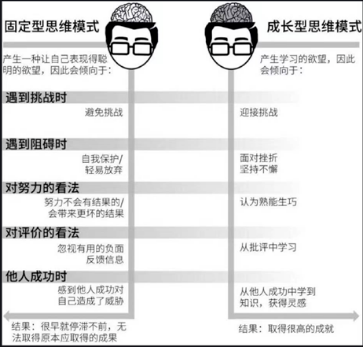
People with a fixed mindset will be timid and stop moving forward when encountering setbacks;
People with a growth mindset have a positive attitude, can reflect on themselves when encountering problems, and never give up.
Going from a fixed mindset to a growth mindset is the first awakening in life and a leap in mentality.
Mr. Jin Weichun, a famous newspaperman, founded “Business Weekly” in his early years.
After just one year of operation, the newspaper was in deep business crisis.
The company spent a lot of manpower and financial resources, and the circulation of the publications it published was pitifully low, resulting in it being unable to make ends meet.
During that time, there was a lot of dissatisfaction within the newspaper.
Some people think that the policy is bad, while others think that the quality of readers is too low and they only like to read superficial things…
Amidst the complaints, Jin Weichun is constantly reflecting on himself and thinking about how to change the status quo every day.
He constantly learned from his predecessors and learned from their experiences.
At the same time, we also hire a large number of excellent editors to continuously improve the style, making the articles readable while maintaining the depth of the content.
With his efforts, the newspaper came back to life and later became the largest magazine in Taiwan.
If a person wants to continue to improve, he must learn to adjust his thinking mode.
Get out of the “fixed mindset” and motivate yourself with a “growth mindset”.
Change “I can’t” into “I try my best” and “I can’t” into “I can learn”.
When you dare to challenge and constantly explore your potential strength, you will become more courageous and achieve rapid transformation.
The second awakening: from self-interested thinking to altruistic thinking.
Kazuo Inamori had bad luck until he was 27 years old.
However, just after he realized that “the essence of the universe is altruism”, the gears of fate began to turn.
In 1973, the world’s first oil crisis broke out, and many Japanese companies had no choice but to lay off employees in order to protect themselves.
Kyocera, founded by Kazuo Inamori, was also affected, with orders plummeting to one-tenth.
But Inamori Kazuo firmly stated that he would not fire any employee, including hourly workers.
“Finding employees when they are needed, and throwing them out onto the streets when they are no longer of use, is this what we should do?”
During that time, he let one-tenth of the people continue to work, and the rest studied or cleaned, but their wages were still paid.
The employees were also moved by Inamori Kazuo’s benevolence and offered suggestions to the company to help it survive the crisis.
Later, Kyocera not only successfully overcame the difficulties, but also stood out and grew into a Fortune 500 company.
Occasional success depends on luck, inevitable success depends on pattern.
From self-interested thinking to altruistic thinking is the second awakening in life and a change in the pattern.
Whether it is work or life, when you stand in other people’s shoes and actively offer help and understanding to others, you will feel much better.
Only if you are willing to hold an umbrella to protect others from the rain will others be willing to pave the way and build bridges for you.
Just like Kazuo Inamori said: As long as people have an altruistic heart and do altruistic things, their destiny will naturally improve.
Taking care of others in everything you do is actually fulfilling yourself.
When you know how to judge yourself and others and start to consider issues from the perspective of others, your picture will become broader and broader, and your life will become smoother and smoother.
The third awakening: from prisoner thinking to flexible thinking.
There is a story told in “Utopia”:
Many prisoners were locked in caves, staring intently at the phantoms on the walls.
These phantoms are artificially created, but the prisoners regard them as the real face of the world and immerse themselves in them.
Until one day, a prisoner escaped from the cave, discovered the real world outside, and quickly went back to tell his companions.
But his companions didn’t believe him at all. They regarded him as a traitor and killed him mercilessly.
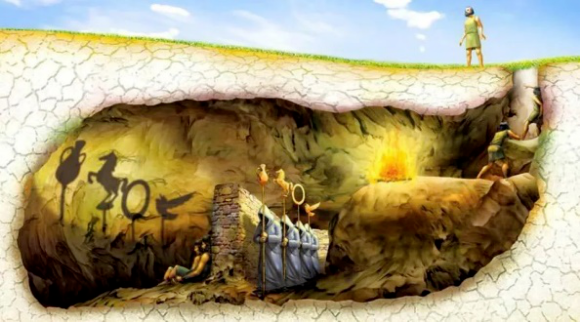
In fact, it was never the cave that trapped the prisoner, but the invisible cage in his mind.
In life, the reason why many people stagnate and reach dead ends when encountering problems is because their thinking is solidified and they fall into this kind of “prisoner thinking . “
But things are often not as bad as you think. Take the initiative to tear down the high wall in front of you, and you will find that there is also a turning point hidden in the crisis.
In the 1960s, Kyocera’s competitors were increasing, profits were declining, and the company was facing a crisis of stagnation.
The employees are focused on visiting more markets and competing for existing orders to improve performance, but they have achieved little success.
At a critical juncture, Inamori Kazuo made a bold decision.
He specializes in picking out orders that other companies can’t take, and even takes the initiative to propose product ideas to customers.
Customers are often very excited and immediately sign the contract.
But in fact, with Kyocera’s technology at the time, it was simply impossible to make such a product.
Faced with the employees’ confusion, Inamori explained:
“Other companies only accept what the existing technology can do, so we will accept what cannot be done. Since the technology is not enough, then we will do the opposite and use orders to force us to research new technologies.”
Under tremendous pressure, Kyocera’s R&D team continued to challenge new products and unknown areas, and overcame technical difficulties one after another.
Within a few years, Kyocera returned to the top of the industry.
The philosopher Schopenhauer said: The biggest prison in the world is human thinking.
When you encounter a bottleneck and reach a dead end, try to remind yourself: If the mountain cannot be overcome, I will go through it. If this road does not lead, change the other way.
Letting yourself advance from prisoner thinking to flexible thinking is the third awakening in life and an upgrade in thinking.
Life is a process of constant awakening and reinvention.
Depending on the degree of awakening, the realm reached will be different, and the direction of life will be very different.
If you want to transform yourself, you must wake yourself up early and change your mentality, structure, and thinking.
Every awakening you have will help you connect to a broader world and bring your life to a higher level.
Original source:Kazuo Inamori: Human growth begins with three awakenings