
Kazakhstan Hits the Brakes and Ukraine Upgrades the Stakes!
In an unexpected move that has political analysts scrambling to their war rooms, Kazakhstan, a long-time ally of Russia, has suspended the export of around 100 military-related products, including drones and specialized electronic components, to Moscow. This audacious act of distancing comes amidst the West’s stranglehold of sanctions on Russia over its ongoing invasion of Ukraine. In diplomatic corridors and chancelleries, the term “game-changer” is being cautiously whispered.
To the skeptics who’d argue that Kazakhstan’s decision may not hold water in the larger strategic scheme, let’s not forget that every bullet not fired and every intelligence drone not flown adds up. Kazakhstan’s embargo of high-tech components could very well hit where it hurts most – Russia’s military industrial complex, a segment already grappling with resource scarcity due to crippling sanctions. This event has shed light on the shifting dynamics within the Central Asian region, as states there begin to evaluate the high cost of their loyalties. It’s a stunning moment that also puts into sharp relief the escalating stakes on the other side of the front line.
Kazakhstan, once seen as a bedrock ally to Russia, has just rattled the Kremlin by suspending the export of drones, special equipment, and chips to Moscow. With Kazakh Deputy Trade Minister Khairat Turybayev officially confirming the halt on exporting 106 products to Russia, it’s more than a diplomatic slap. It’s a chokehold on resources that could translate into tangible setbacks on the battlefield for Russian forces. This development is especially noteworthy given Kazakhstan’s history of skirting around Western sanctions to aid Russia, a practice that seems to be coming to an end amidst international scrutiny and veiled threats of secondary sanctions from the West.
But as one door closes, another, rather futuristic, window opens – this time in Ukraine. With reports emerging of AI-powered drones called Saker Scouts that can autonomously target Russian military assets, the narrative of the Ukrainian defense seems to be fast forwarding into the realms of science fiction. Yet it’s as real as the cold steel of a Kalashnikov. Developed by the Ukrainian tech firm Saker, these AI-equipped marvels are capable of identifying and attacking 64 different types of Russian military assets, all while evading Russian jamming systems that have plagued conventional drones.
A quick heads-up: Medium’s been tweaking its algorithms and it’s getting trickier for my stories to land in your feed. So, if you enjoy my work, please make some noise! Hit that clap button, light up the highlights, or drop a comment. Every interaction helps keep the stories flowing. Thanks for your support!
On initial observation, it’s as if a smaller, less-equipped force is taking on a far mightier opponent, but with the twist that the underdog has advanced robotics and engineering degrees from MIT. The Saker Scouts aren’t merely flying cameras; they’re smart flying cameras, integrated into Ukraine’s Delta information distribution system, which itself processes intelligence data from multiple platforms. These drones can map enemy positions autonomously, slashing hundreds of man-hours usually required for data analysis. In the current fight where every minute counts, the deployment of such technology could very well redefine the balance of power.
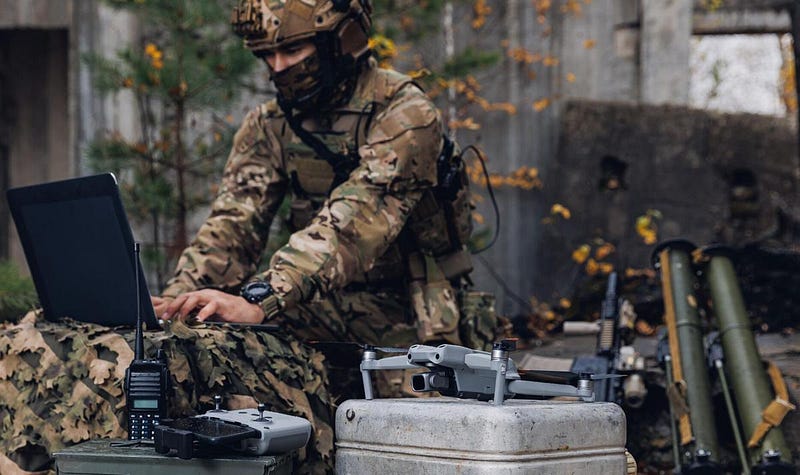
The ultimate objective here is to shorten the “kill chain,” the time between identifying a target and taking it down, to something that’s only possible with minimal human intervention. When the chain moves at the speed of machine learning, what could that mean for the future of warfare?
Still, every technological marvel comes with its caveats. No AI system is foolproof. Yet, in a battle for survival, where the enemy is at the gates, there’s little room for existential debate over the ethics of autonomous warfare. Ukraine may not have the luxury to consider the long-term implications. Its immediate priority? Winning the war at hand, by any means necessary.
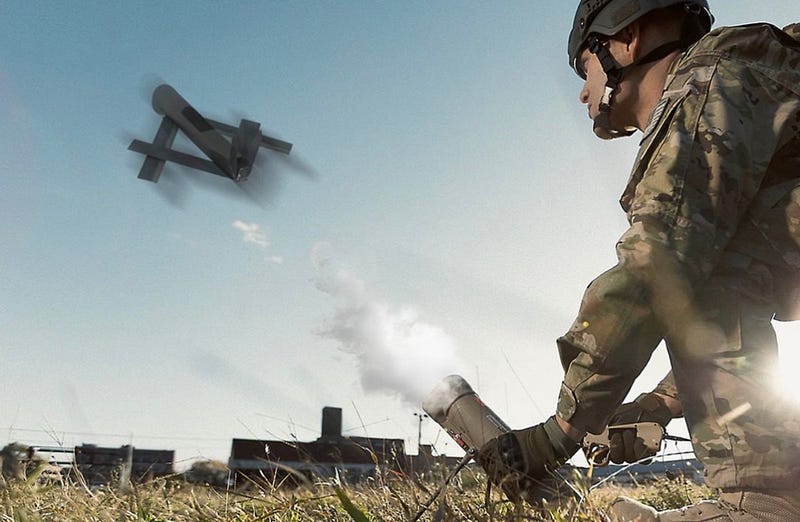
Now let’s delve deeper into the advancements that are quietly shaping the military landscape. The arrival of Switchblade drones on the conflict scene has been nothing short of revolutionary. Developed by the United States, these lethal unmanned systems are categorized as loitering munitions. Think of them as guided missiles with an added level of patience; they hover, they wait, and when a target presents itself, they strike with a level of precision that conventional artillery can only dream of. And they’re expendable, the drone’s hardware is sacrificed in the detonation, ensuring maximum impact upon target engagement.
It is being whispered in some circles that Ukraine is benefiting from a covert transfer of technology from the U.S., Washington has, after all, been increasingly vocal in its support for Ukraine, supplying everything from anti-tank missiles to military rations. But Switchblade technology would be an entirely different ballgame. It would signify not just material aid but a direct technology transfer of highly sophisticated weaponry. While official confirmation is pending, the rapid advancements in Ukraine’s drone capabilities do raise an eyebrow. Is Uncle Sam quietly offering more than “moral” support? Give a starving man a fish and you feed him for a day, teach a man to build highly sophisticated state of the art AI powered Kamikaze Drones and you’ll have a friend and ally forever. If the United States is indeed passing on sophisticated drone technology to Ukraine, Switchblade or otherwise, it’s more than a mere handout of military hardware.
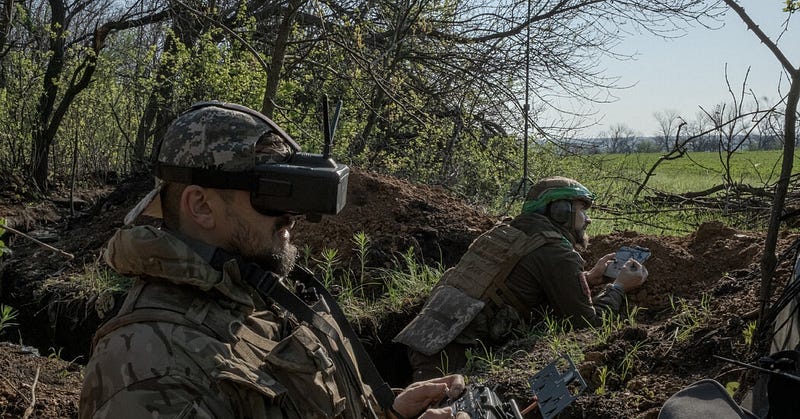
Think about it. Transferring technology isn’t just about immediate advantage; it’s about capacity-building, empowering the Ukrainian military-industrial complex to innovate, adapt, and ultimately stand on its own feet. The potential for Ukraine to not just be a consumer but a producer of next-level military technology could transform it into a significant player in the global arms market. It’s not just about surviving the current conflict; it’s about setting the stage for a self-reliant and assertive Ukraine on the global stage.
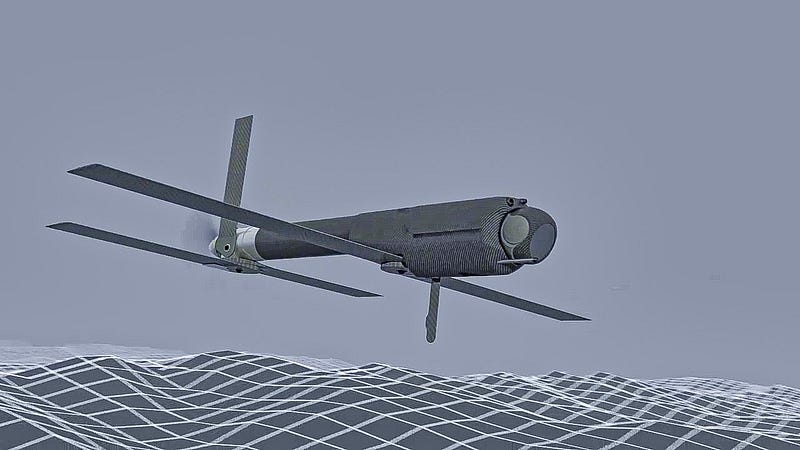
And we’re not just talking about the Ukrainian military being well-equipped; we’re talking about a shift in the balance of power. If the Ukrainian armed forces are indeed armed with a locally produced version of the kamikaze drone, they not only level the playing field but potentially tilt it in their favor. These drones would enable them to carry out precision strikes against fortified enemy positions with minimal collateral damage, a tactical capability that could drastically alter the course of the conflict.
In this new age when global superpowers seem to be perpetually in a stand-off, small, smart moves like these can ripple out to have unforeseen consequences. By taking advantage of cutting-edge technology and real-time analytics, Ukraine is managing to go toe-to-toe with a much larger opponent. Meanwhile, Kazakhstan’s policy shift is a clear signal that Moscow may be running out of friends, at least those willing to risk international pariah status for its benefit. It’s a precarious chessboard where each move, no matter how subtle, can tip the balance – and right now, it seems like Ukraine is the one saying “check.”
In summary, while Kazakhstan’s pivot creates ripples in Moscow’s power corridors, Ukraine’s embrace of AI warfare is bound to echo far and wide, challenging established doctrines and triggering new conversations around the ethics, and the very nature, of war. Today, the Ukrainian conflict serves as both a canvas and a catalyst for shifts that will shape the geopolitics of tomorrow. As I pen this, I can’t help but wonder: Are we witnessing not just a regional conflict, but a harbinger of a new world order? Feel free to share your thoughts in the comments.