Just In Case.
(A Few Notes on my Experiences with, and Understandings of, Societal and Systemic Racism and Sexism.)
By Gabriella Orlando Bregman
(NOTE: This article was written, anxiously, on August 12, 2020, during an extreme spike in violence against transgender and gender nonconforming people, and disproportionately affecting Black transgender women.)
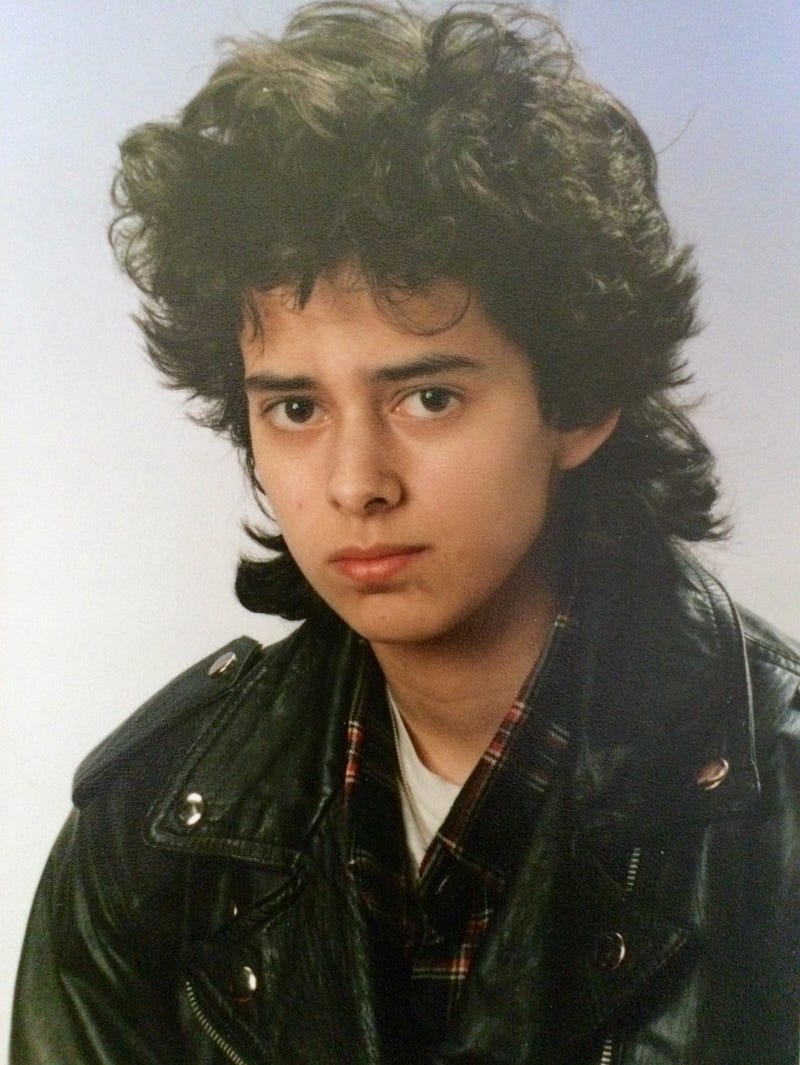
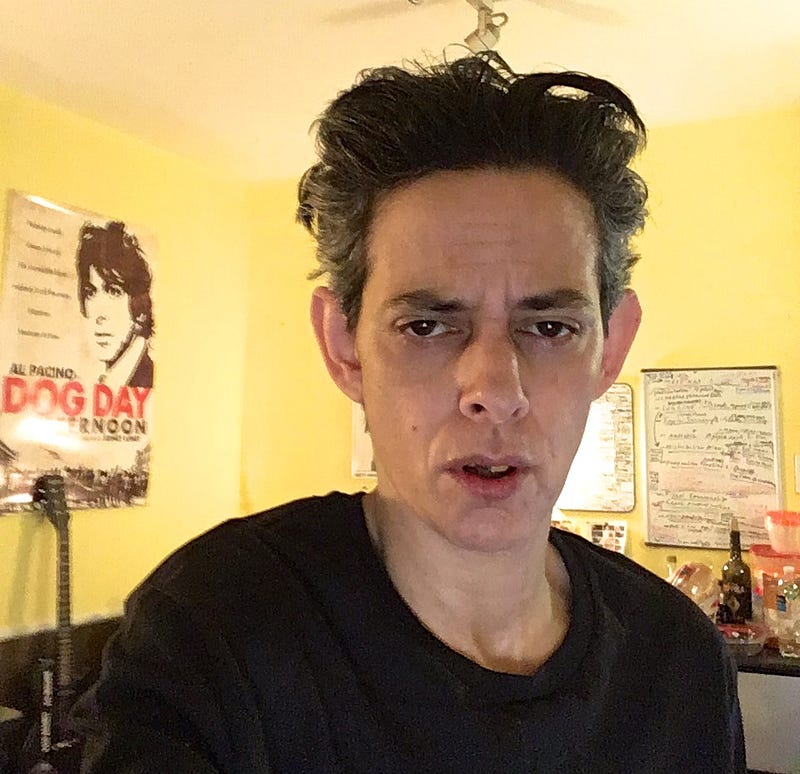
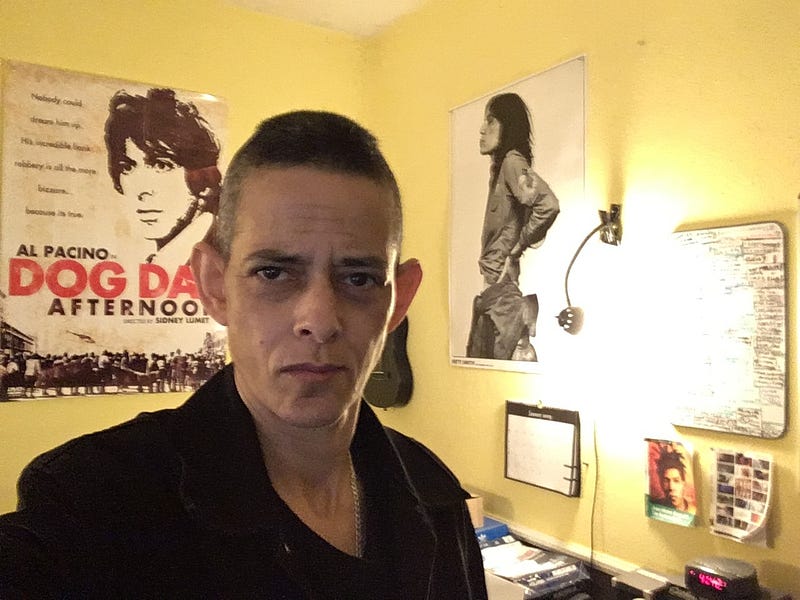
In the event of my death (or disappearance) they, the authorities, medical personnel, media, and anyone who would hear about it, will try to distort everything about me, my 47 years of living mostly purposefully as an artist on this earth, will be twisted around, both accidentally and viciously, and swiftly erased.
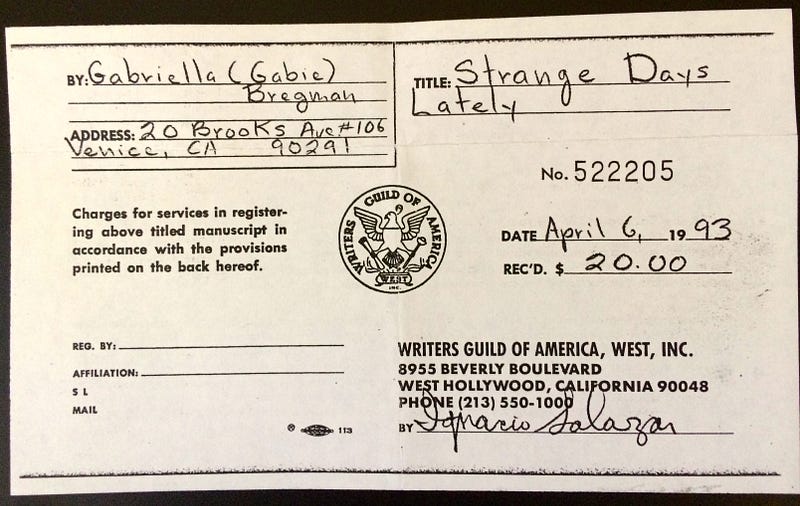
The evidence of this life, my endless stacks of manuscripts, screenplays, short plays, poetry, describing my life, my philosophical essays centered around the natural human right to self-ownership as well as my film theory essays, they would try to disappear, that’s actually a verb, and a scary one at that, to disappear, as in to disappear someone.
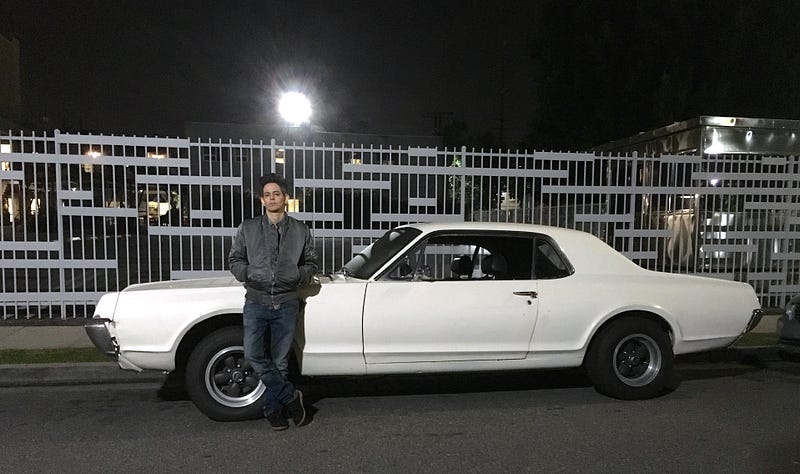
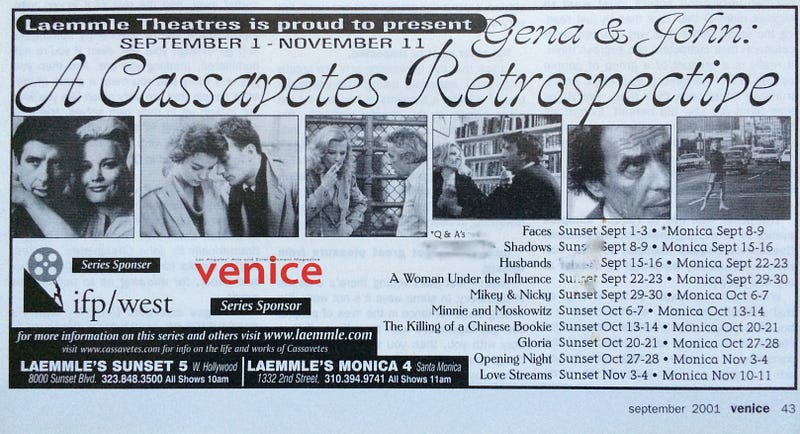
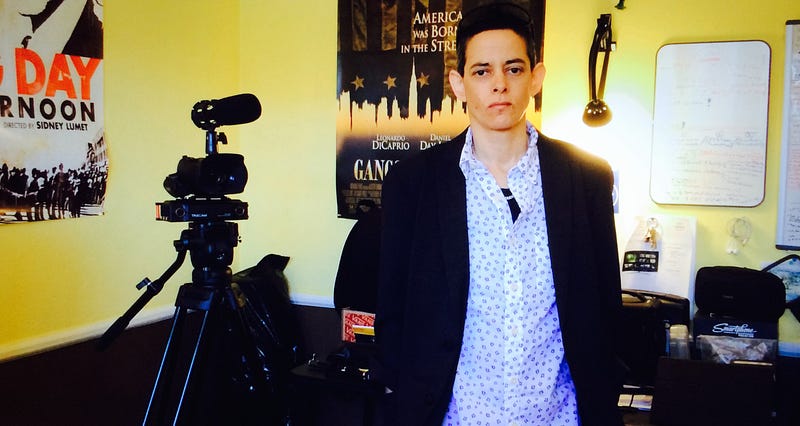
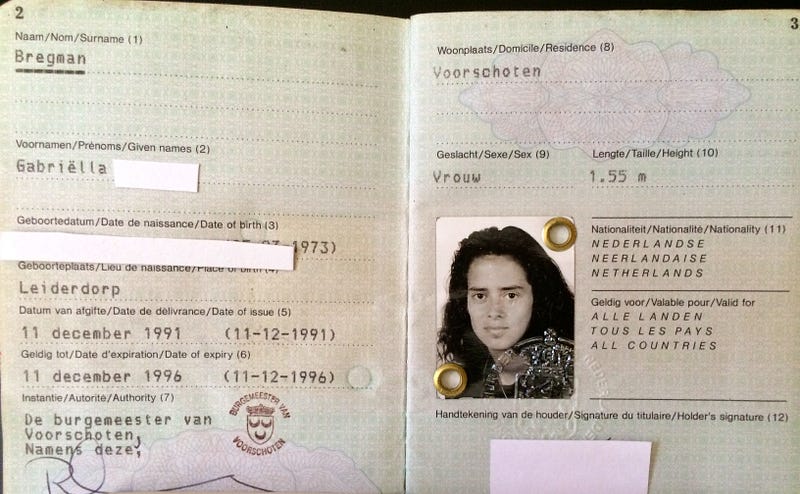
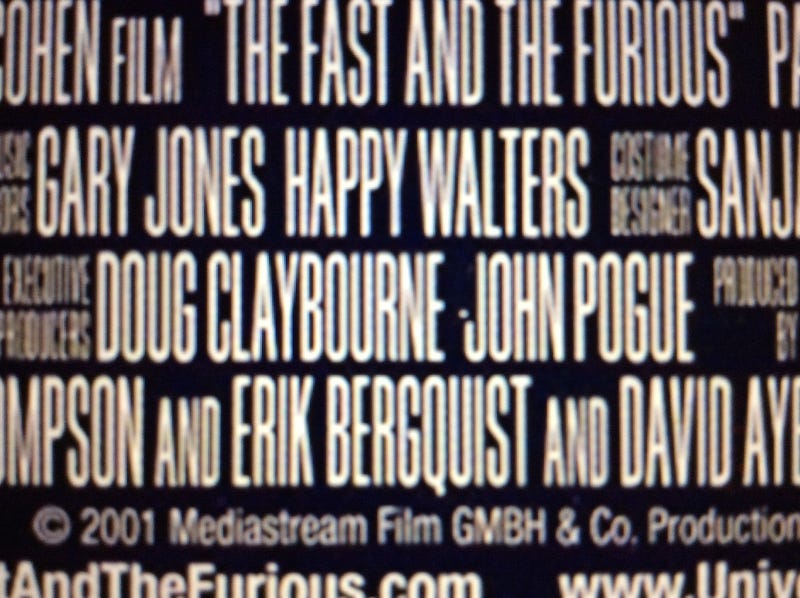
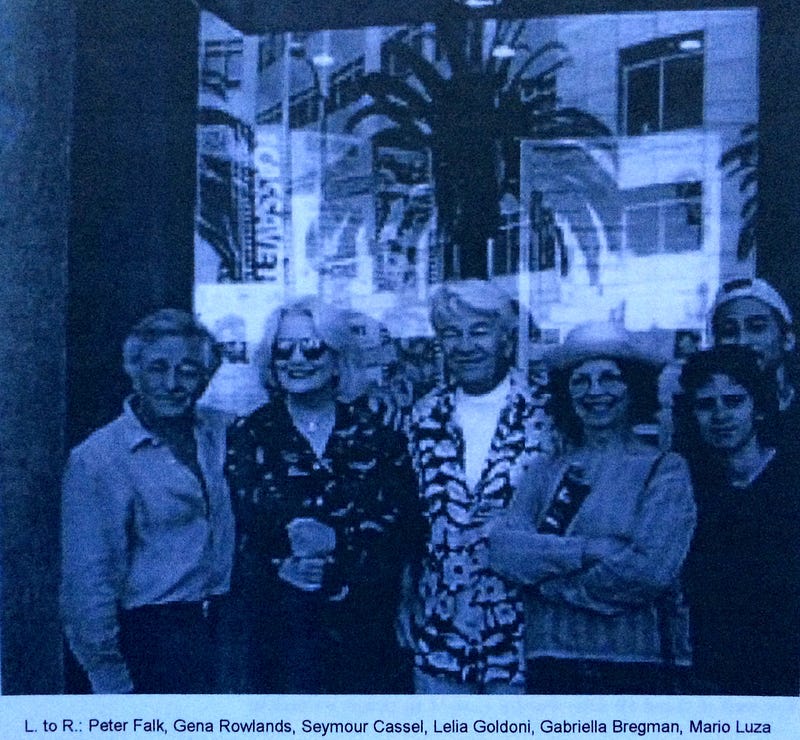
Along with the endless trail of social media posts, and articles on Medium, all the required documents proving I immigrated to the US legally, including Social Security number, along with my film footage, all personal and artististic photographs as well as family pictures, along with all family ties, especially the more accomplished ones like my famous great uncle Wim Sonneveld, my film education and work history, my John Cassavetes film retrospective even, my financial history, tax history and credit history, film business on paper, production office in Hollywood, my collection of books and films and music and clothes and muscle car, and everything else I gathered along the way, and along with my body even, (dead or alive really,) they will try to disappear.
If any questions should arise, if clues of evidence of my death make it to light, they will twist them around completely to make sure you will never find out how or why I died.
Anyone who they’d try to identify as my family, or not but who is my family either way, and anyone who has known me in the past or thinks to have known me, will most likely lie about me.
They, the powers-that-be, the system, and anyone under their influence and control, people in general, will try to make me disappear and erase every trace of my existence, and potential evidence of foul play, along with my work and message. I know this, because I have seen others like me go out like this, and because I have been treated like this on some level for most of my life.
And you might very likely never find a grave, in the US, and maybe not even a body. It would be up to my spouse and creative partner and a very select few others, to prevent this from happening. My own years of writing, and documenting myself, have been my only way from preventing my erasure.
The need to be acknowledged properly in death is actual proof that survival alone is never enough for human beings, though many people defend survival as if it’s an end goal. Rather, life itself is the real goal, and life extends itself into death in the form of a proper funeral, in the form of respecting a person’s wishes after they die, and holding them in your thoughts long after they’re gone.
No one wants their body and any memory or clue or motivation into their death and their life made to disappear, not as in forgotten gradually over time, which is kind of unavoidable, but abruptly erased, annihilated from the collective memory of the living altogether, annihilated from the history books, for anyone to ever find out, annihilated in life and in death.
You would almost think, from this description, that I could be someone rather special, someone of either great importance who’s real identity must be obscured for potentially political reasons, or someone who’s lived an extremely morally depraved life and who is punished for it in death, maybe even deserving of this kind of extreme treatment.
Yet this is what happens to many transgender and gender nonconforming people, I would not be an exception to the rule, for this is the rule really.
(This also happens to a lot of undocumented people, including during this Covid-19 pandemic. Just like with transgender people the lives and sometimes bodies, and authentic narratives of lived experiences, of undocumented immigrants remain hidden from the mainstream news and media, and get completely erased and twisted around for political gain of those in charge.
The people who actually live at the inter-sectioning identities of being both transgender and an immigrant in the US, whether completely with legal status, or as a legal-entry international student and spouse of a US citizen and Violence Against Women Act victim, but still out-of-status after nearly 30 years in the US like myself, or as an asylum seeker or refugee, are never really safe.)
I will not get into statistics too much, except say that the number of transgender people who were killed, murdered specifically for who they were, and which is unfortunately a rather common death for transgender people, is extremely and unusually high this year, even for transgender murder victim statistics.
The number of murder victims, disproportionally Black transgender women, is in well in the 20’s as of the time of this writing and we’re only in August. And these are only the ones that have been reported of course.
And I’m talking only the murder cases right now of course, the murders of transgender victims in the US, the obvious ones, where dead bodies were left behind, with evidence of murder written all over them, and where some people or evidence came forward with the authentic identities of these murder victims as transgender or gender nonconforming.
And so what to make of the countless slow murders of transgender people by society itself, in jails, in poverty, on the streets, truly primarily for who they were.
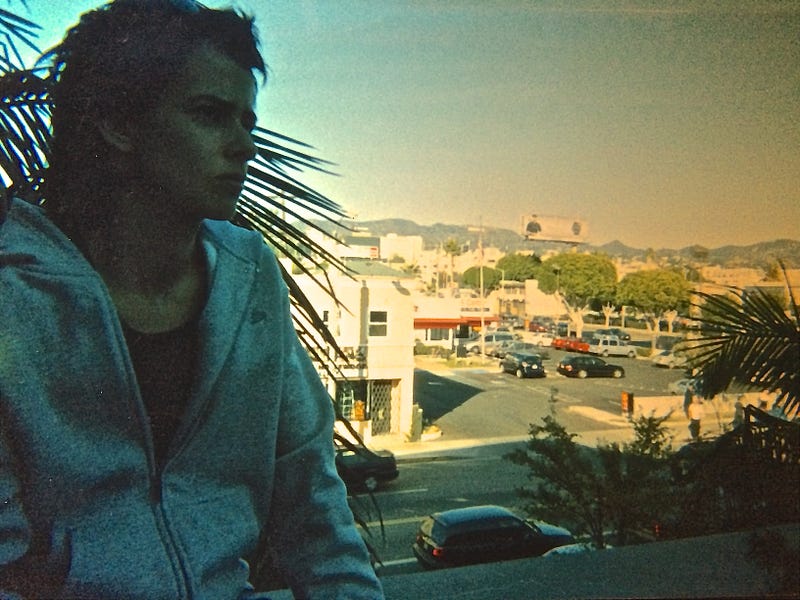
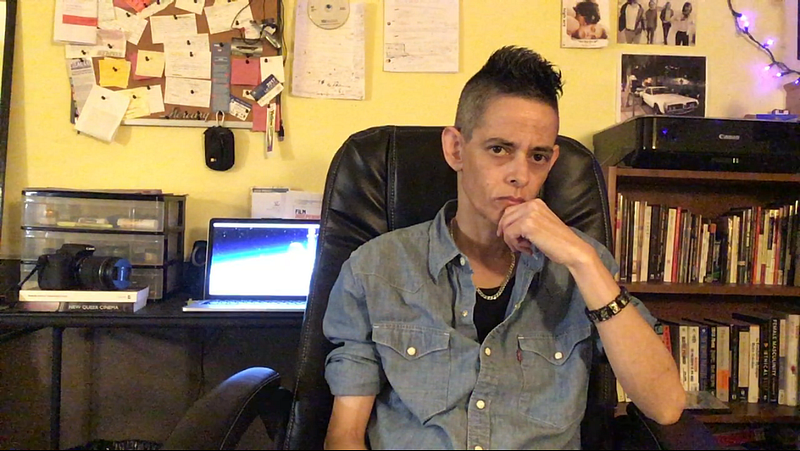
I think especially of Tony McDade. As a trans-masculine person myself the murder of Black transgender man Tony McDade (38) by Florida police affected me in particular, the circumstances around his death, a Black man killed by the cops, just like George Floyd, and literally just 2 days after the murder of George Floyd, whose death sparked off what might be the revolution Black and Brown and other minorities have been hoping for forever. And white people have been fearing forever.
But the specifics around this Black man’s death were and remain obscured, and his murderers, Tallahassee police officers, were not punished, not even identified, and were even made out to be the victims instead, through some loophole in Florida law. His Black life gets even less respect than that of a cisgender man like George Floyd, or even that of a Black cisgender woman, like Breonna Taylor, cisgender women already quite a few notches below cisgender men in the system.
The authorities, the media and his family alike dead-naming and mis-gendering him in death. His body buried with five bullet holes in it, in who knows what kind of clothes, and he certainly wore masculine clothes in life, and somehow called female in his obituary, as if no medical examination had ever taken place. As if no records of his medical history existed, as if no records of him identifying himself as male, and as Tony, existed, amongst his personal belongings, his social media, etc.
If I could find out some of the truth about Tony McDade, while not in Florida but California, and while not Black and not even American, and just through a few simple Google searches, besides a genuine interest, and particularly because I can relate to him to as a trans-masculine person, then really anyone who actually wanted to could have found these things out about him, and could bother to Say His Name as well.
Many people, during protests and on social media, have done so, but many more have not, and have specifically left his name, and those of other transgender and gender nonconforming people, out of conversation while mentioning the many cis-gender Black people who fell victim to police brutality and systemic racism.
I’m obviously not trying to center the larger issue of racism around transgender people but it’s just that transgender people still are mostly left out of any public and collective discussion around social justice and hardly get any media representation at all, and that while we are actually disproportionately affected.
And I also know that transgender women, and particularly Black and Of Color, are disproportionately affected within the transgender community itself and I certainly respect any and all attention they are getting.
But I must also point out that cis-gender people and sometimes even transgender women often leave us, trans-masculine people, out of any discussion altogether, often wrongly assuming trans-masculine people do not care or are not affected by the unequal treatment of women, or female-bodied individuals, or worse that we do not even exist at all.
People leave us, transgender men and trans-masculine people, out of discussions around all things that most cisgender women and some transgender women experience, like general misogyny of all sorts, sexual harassment, rape, lack of proper healthcare, unwanted pregnancies, abortion access, all things to do with bodily autonomy at all, ovarian cancer, and a host of other things I can’t think of right at this moment. And I do trust that you can mostly figure out on your own what applies to whom.
I will say that most transgender men are born with ovaries, and at some point probably looked female and were known as female socially and legally. And that many transgender women go through very similar sexual harassment as cisgender women, except way worse and in way more complicated ways, which transgender women can explain way better than me.
And on top, people leave us, transgender men and trans-masculine people, out of the general discussion around the things many cis-gender men experience, including one of the most negative and dangerous ones, racial profiling. And this is exactly what leaves a person like Tony McDade out of the general conversation altogether.
If Black people get disproportionally profiled, arrested and murdered, disproportionate to their overall population rate, compared to white people that is of course, and due to systemic racism exactly, and if transgender people get disproportionally killed, and with transgender people making up an even way smaller portion of the general population, then it should be pretty glaringly obvious where that leaves Black transgender people.
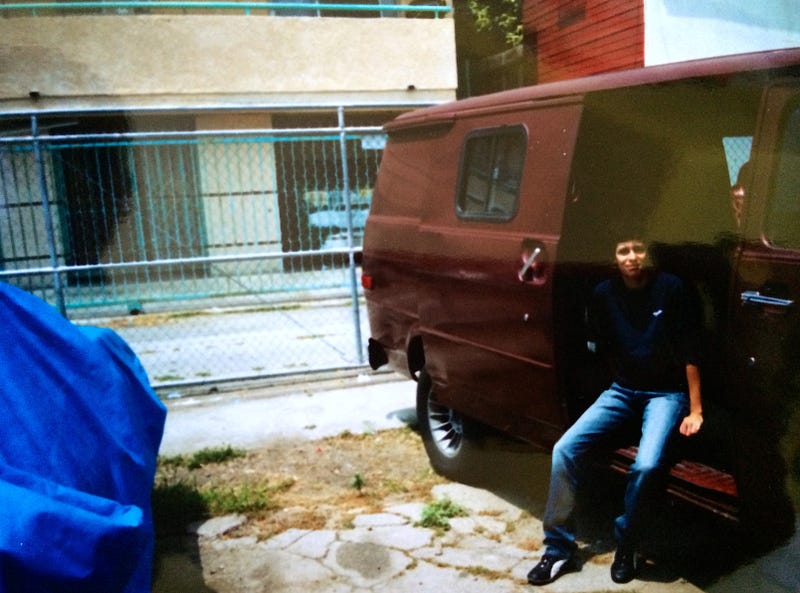
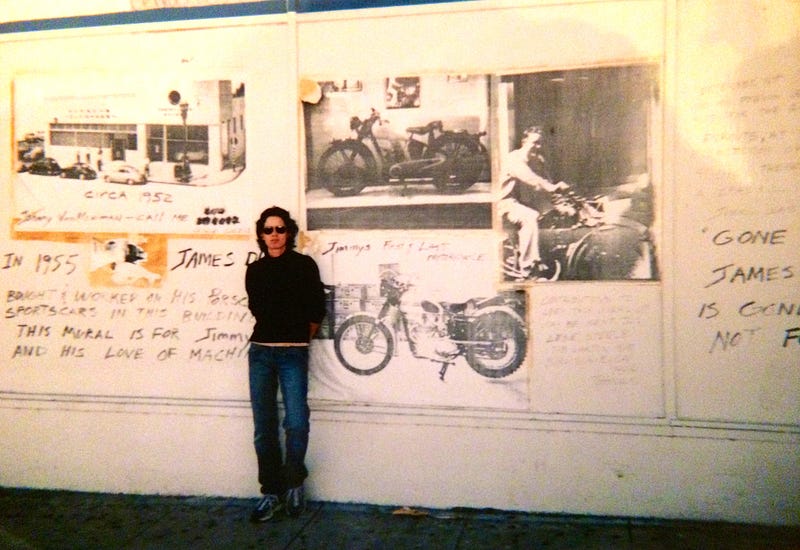
But just like they are the “most invisible” people in life, yet somehow visible enough to get murdered for it exactly, they are just as invisible again in death. Dead-named, mis-gendered, underreported, the very evidence and motivation for their murders thereby obscured in the process, since leaving out the possibility of a hate crime when not acknowledging an integral part of a person’s identity, and horribly disrespected and violated in death when their cases are closed without justice due to a supposed lack of motive and their bodies are buried and their lives are remembered as a different gender than what they knew themselves to be.
I also know I’m not even supposed to be angry at Tony McDade’s family. Who am I to judge a Black family who lost their loved one to police brutality in America. I do understand racism and sexism enough to know that the family are only victims as well, of the larger culprit that is the white patriarch system.
It’s only that I cannot deny that as a transgender person, this particularly stings, the idea that your own family would not properly respect your gender identity and your lived experience in death, as they clearly also could not have done in life. Many transgender people, regardless of race, could relate to this particular aspect of his death. It’s another a painful reminder of how my own family would react if I would die, under whatever circumstances.
And finally, this is also not to take away from the actual circumstances of Tony McDade’s death, a white systemic racist murder committed by the police against a Black man. After a 38 year life of considerable suffering under that same system, as a Black and transgender man.
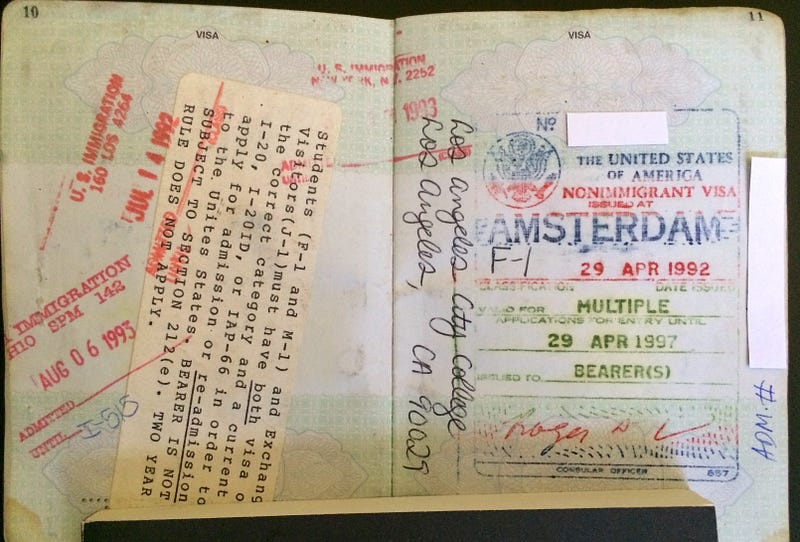
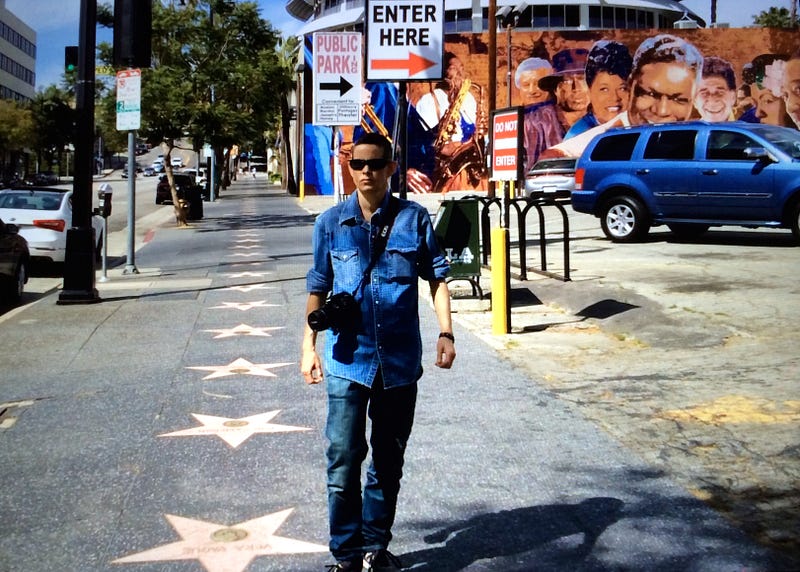
For a person who is transgender, and also an immigrant myself, (bi-racial white-Asian) from the Netherlands and still not an American, the idea of a funeral or a grave, in the US, in Los Angeles, where I’ve lived for most of my life, 28 years now, and where any family and friends, including my longtime US citizen spouse, could commemorate me, is at this point nearly impossible.
Under this near fascist administration still, with the months seemingly dragging on towards the elections in November, and with a global pandemic going on, and in full force in California, circumstances are not on my side and I may very well never become a US citizen before I die.
The idea of that, not having US citizenship before I die, on a personal level, isn’t the absolute worst part, for US citizenship is really secretly just “the great, white baptism,” as integration of a foreigner into American culture through accepting American, read Christian, not even Constitutional, values. All of this should be nothing new to a Western European really, we practically invented the system, or at least fine-tuned it and put it to use in a way the classic emperors could only dream of.
The US stepped “the system” up to such a large degree however, this policing and militarization and exploitation of not only the US itself but of the whole entire world, and in the name of democracy supposedly, that US citizens themselves do not realize that US citizenship has since long basically become a default setting in the overall system, not much different than being white or male or heterosexual or cisgender is the default setting in that same system, and with Western Europe only having become a sort of middle stop or weaker alternative to this great “American dream.”
Let me just restate this to be perfectly clear; in the white, hetero-normative patriarch system, where “Christian values” have also largely replaced any genuine quest for knowledge and science, US citizenship in particular has become the default citizenship and “dream,” (“the holy grail” if you will, designed by US government and policy and promoted by the media and Hollywood alike,) not just in the US itself, but in the whole world.
So not actually having US citizenship while living in the US as an immigrant, on a purely practical level, legally, financially, socially, etc., and under this pandemic specifically, has been pretty damn unnerving to say the least. Living without citizenship or legal status, as either entirely “undocumented,” for illegal entry asylum seeking immigrants, or as “out-of-status” for legal entry immigrants, in either case amounts to the feeling of “living in an open jail, and one which is about to close completely at given moment,” nothing less psychological torture by the US government. And during a global pandemic, it’s a death sentence.
When you move to a country specifically to study and to have a “career,” if you must consider filmmaking that, and that’s the way it is in Hollywood after all, then “hiding in the shadows,” as they actually call being under the radar as an undocumented person, the way an undocumented person is really supposed to do, is pretty counter-intuitive and impractical and entirely illogical towards the whole goal itself.
When on top of that you’re an artist who comes to the full realization that your need for supposed “fame and fortune” was really just the need to be visible so you can live your authentic transgender self, this whole immigration situation of mine is beyond ironic.
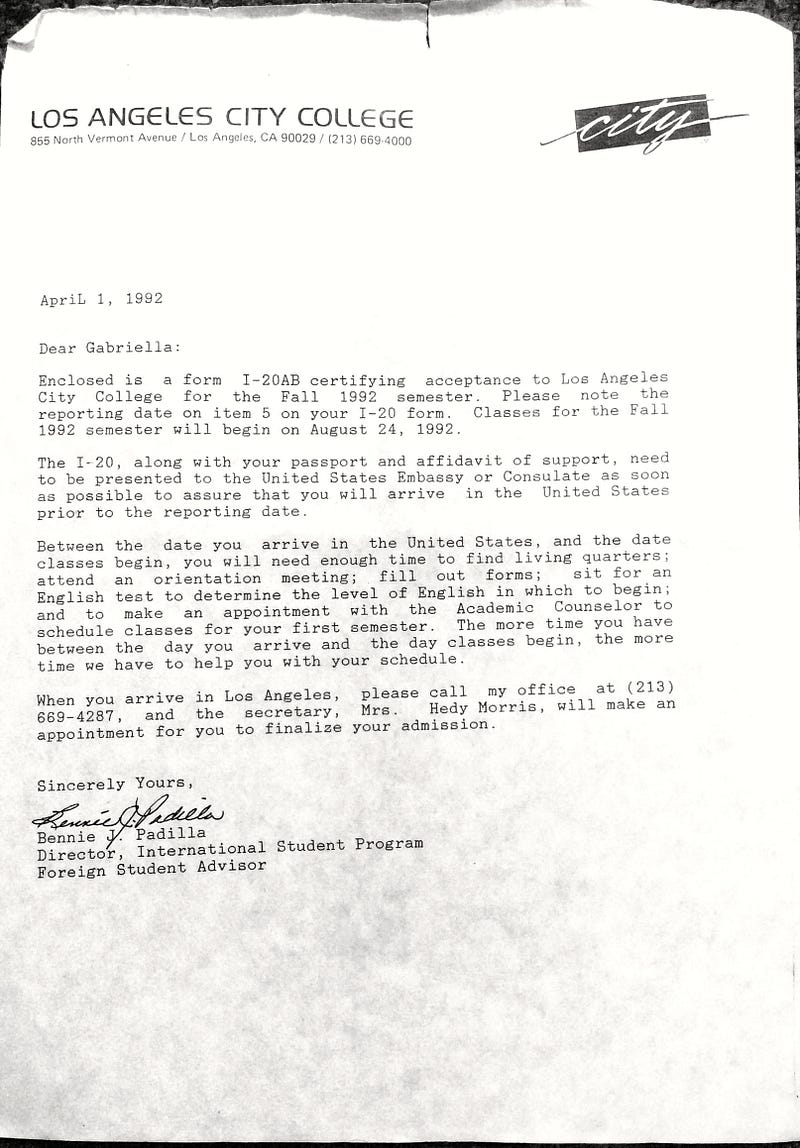
But once again, that is not the exception to the rule for transgender people but more often than not unfortunately the rule itself. Everything you are society claims you are not, and everything you are not, society claims you are, and if you don’t accept their cisgender rules they will murder you for it.
In hindsight immigration to the US from the Netherlands, through the filmmaking career path in Hollywood, was supposed to be an escape from the legal gender-binary and hetero-normative rule, which also applied in the Netherlands of course.
An artistic way out of mainstream society and what I’d considered “a 9 to 5 existence,” but which was on a deeper level, and only subconsciously known to me initially, a heterosexual patriarch ruled life, the life of my parents and everyone around us basically.
US immigration was supposed to be my road to freedom from this oppressive heterosexual system, moving to Hollywood was supposed to represent my own transition, my full actualization, the unleashing of my creative and professional potential as well as a chance to live a life as my authentic self.
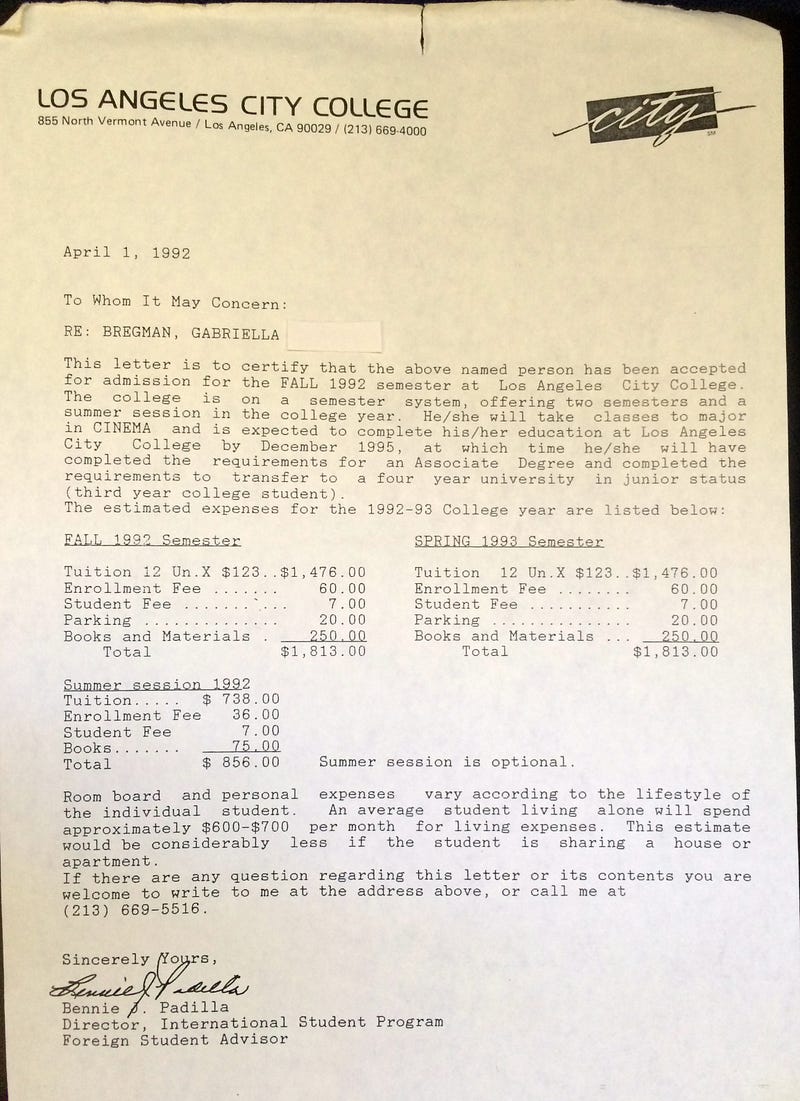
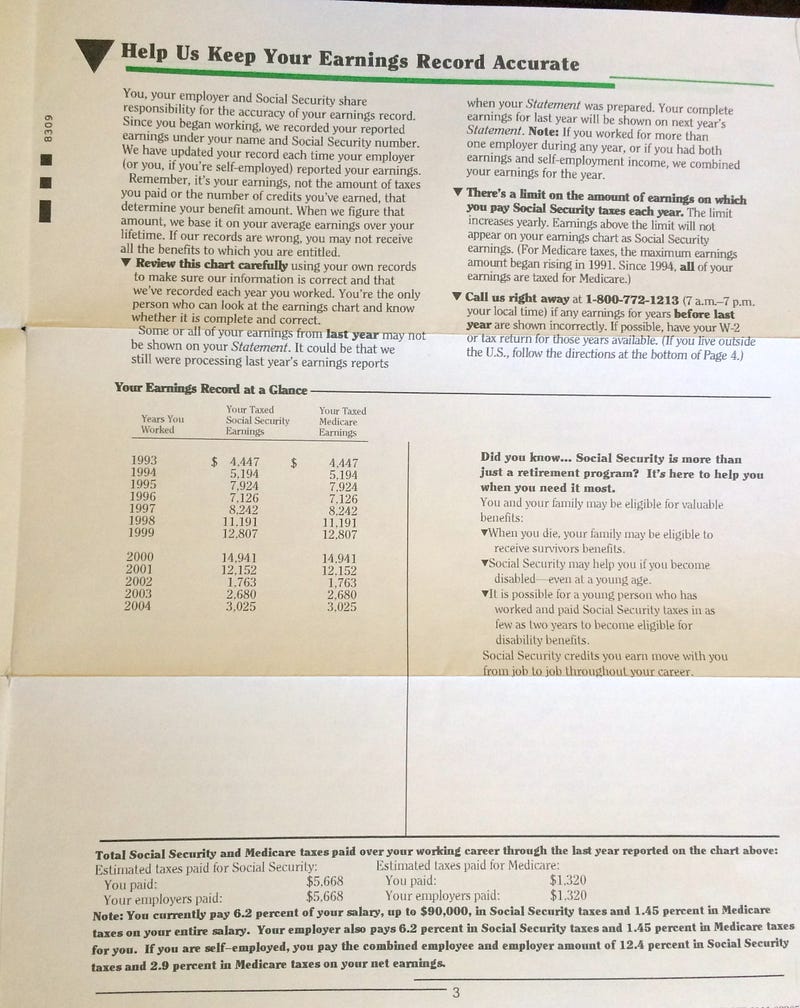
Those who might think I haven’t tried hard enough, after moving here legally from the Netherlands, after acceptance into Film School in Los Angeles, and after 28 years of living here, working in the film industry, or the independent fringes of it at least, and after paying income taxes on my real Social Security number for just as long, do not know me and clearly have no idea how the US immigration system actually operates and most likely wouldn’t honestly want to know.
For those who do actually care about the truth; the Violence Against Women Act of 1994, (instated at the time by current presidential candidate Joe Biden,) should have applied to my (or anyone else’s) forced marriages to US citizen men, as a trans-masculine gender nonconforming lesbian and a legal foreigner in the US, simply because VAWA should have covered LGBTQ people who are forced into heterosexual, hetero-normative marriages, including for immigration purposes, but of course it didn’t.
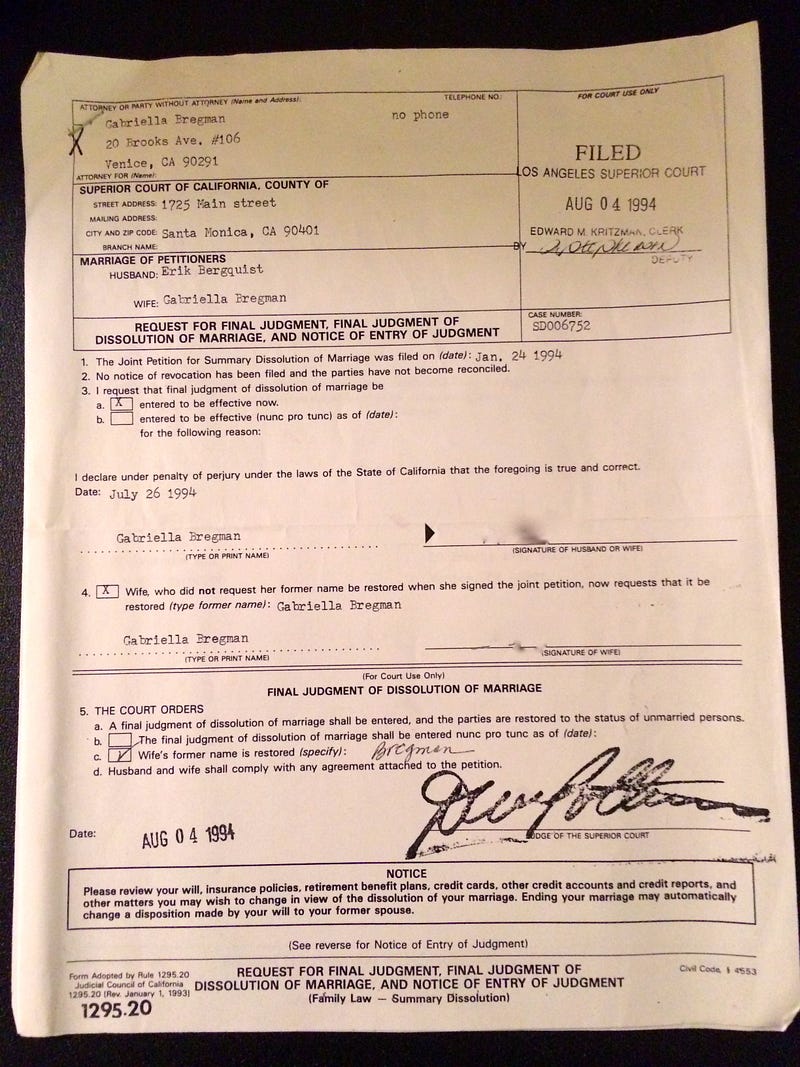
Two years later it would become federally illegal for LGBTQ people to be married in the US through the Defense Of Marriage Act (1996–2015,) including that of US citizens to foreigners, under DOMA Article 3.
And not that the options were readily available before that, but DOMA sealed any chance for LGBTQ marriage to become legal on a federal level in the US, and so by extension for any LGBTQ US citizen to be able to marry a person from another country, and all of that that was exactly the point. It was America’s anti-LGBTQ agenda, mixed in with the anti-immigration agenda.
The Violence Against Women Act, which normally would help international victims of US citizen spousal abuse by giving an alternative to US citizenship through spousal sponsorship by allowing self-sponsorship instead, and which has been indefinitely stalled by this current administration, still in 2020 doesn’t technically cover forced marriages, and so also still does not technically apply to LGBTQ people in forced heterosexual marital relationships.
A lot of people, due to their normally busy lives and work, tend to just get by on a variety of established news sources, investing the bare minimum of their time just to keep up with “what’s going on,” accepting most of it on face value without attempting any deeper investigation into particular political and societal issues on their own, and can therefore only see other people and their particular problems as very separate from their own, and very compartmentalized and fragmented, so no complete mental picture is ever formed of any potential victim’s true circumstances, until a film or documentary comes out on the subject maybe. So a lot of people simply don’t take the time to start recognizing connection and patterns in societal behavior.
They’ll have vague notions of human trafficking and sex trafficking but cannot understand how this also ties into the US’ “broken” immigration system. They’ll have certain notions about the necessity of consent in sexual relations but cannot recognize the extreme power imbalances in bi-national marriages, where the foreign spouse’s right to work and live somewhere is completely tied into their relationship to their US citizen spouse, whom the US immigration system has put entirely in charge of the whole sponsorship process, an expensive, several years long ordeal.
The vast majority of people in general oftentimes simply cannot or will not recognize inter-sectioning identities and the realities of a myriad of compounded problems for certain minorities.
People in general never really consider LGBTQ people can be victims of sexual violence, or rather, automatically assume’s everyone’s sexuality and gender by default to be heterosexual and cisgender, while LGBTQ are actually highly disproportionately affected by sexual harassment, assault and rape.
The media will often slant sexual violence to place fault with the mostly female victims, by bringing up misogynist things like supposed provocative dress and behavior.
And in response a whole army of women will take to social media to make sure it’s understood that women should be able to dress however they want without fearing for their safety, focusing usually exclusively on “provocative”/ very feminine clothes in particular as this is the implied problem of course, and in which they are absolutely right, but neither the media nor the majority of those women will even leave any room to listen or consider the positions of LGBTQ people in topics around sexual assault, like lesbians for instance.
The lesbian angle was almost completely overlooked and worked out of the whole Me Too movement, as if lesbians do not face sexual violence and workplace discrimination at the hands of men.
If the average heterosexual woman is tired of hearing how “the length of her skirt” and her “behavior towards men” caused her own rape, then what is a lesbian, and particularly a masculine lesbian, to make out of all of this?
Lesbians and transgender people are also usually left out of any abortion conversation as well. And where do transgender women come in in the Me Too conversation?
Not many people during the Me Too movement’s height could or would make any connection between violence against women and hate crimes, specifically anti-LGBTQ ones.
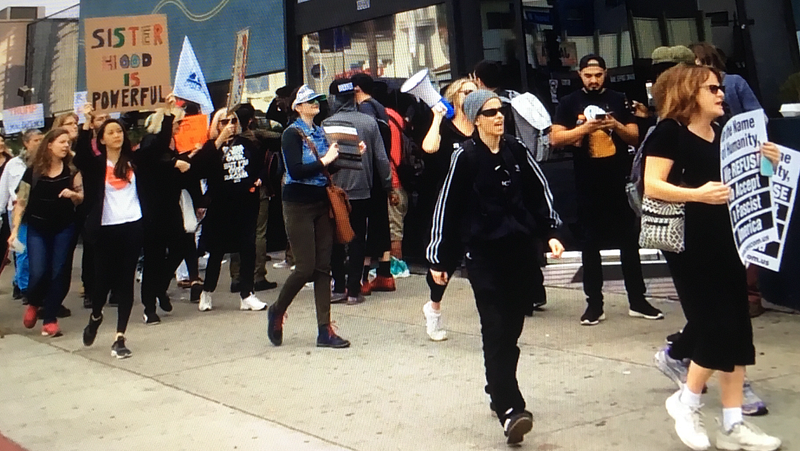
Consequently many queer women, lesbians, transgender women, gender nonconforming people, etc., could not comfortably and wholeheartedly march in the organized Women’s Marches in the last several years, nor have traditionally felt included in the corporate and male-dominated Pride marches, leaving the most marginalized people out of the long overdue gender discrimination and sexual violence conversations.
And so it is that in reality the murdered bodies of Black transgender women are surfacing everywhere in America at alarming and ever disproportionate rates, and during today’s anti-racism protests no less, but you would never know it from the news alone.
And the case against LGBTQ discrimination in the workplace has finally been ruled in LGBTQ Americans’ favor, as late as Pride Month of June in 2020.
So this actually also extends itself to US immigration family law sponsorship. Bi-national LGBTQ married couples who are currently in the process of family law sponsorship can now finally, (in 2020, a whole 5 years after the Defense Of Marriage Act went down in 2015,) also more easily prove their marriage to be “bona fide” to US immigration, because they can now much more openly show proof of employment without having to worry about getting fired from their jobs, technically legally speaking.
So that’s another major improvement for LGBTQ equality as it applies to immigration law, but US immigration itself is still and always largely a heterosexual, cis-normative and male-dominated affair.
— — — — — — — — — — — — — — — — — — — — — — — — — —
My creative partner, Mario Luza, and I are in post-production on our feature documentary, titled ‘The Queer Case for Individual Rights,’ the personal story of how my trans-masculine, gender nonconforming and lesbian identity exactly ended up compromising my legal immigration status for decades and derailed my chances for any potential filmmaking career after attending film school in the US in the early 1990s, (from the Netherlands.) The film is produced through film production company Bregman Films.
And I’m self-publishing two books still, ‘The Queer Case for Individual Rights and Other Essays,’ on which the documentary is more or less based, and ‘Notes for a New Independent Film Movement.’
The film criticism and theory publication The Auteur, to be launched on Medium later this year at medium.com/theauteur through our nonprofit film organization The Auteur.
My name is Gabriella Orlando Bregman, my pronouns are they/them.
All my work can be found at medium.com/@gabriellabregman
All Rights Reserved (2020)