
Just Add Water: Backyard Biodiversity Tip One
The first in a series of ten tips to improve biodiversity in your backyard.
There are countless benefits to reap from improving biodiversity in your backyard. Not only will it give you more opportunities to connect with nature, which is great for your mental health, it will also help your garden plants thrive and contribute to a healthier planet.
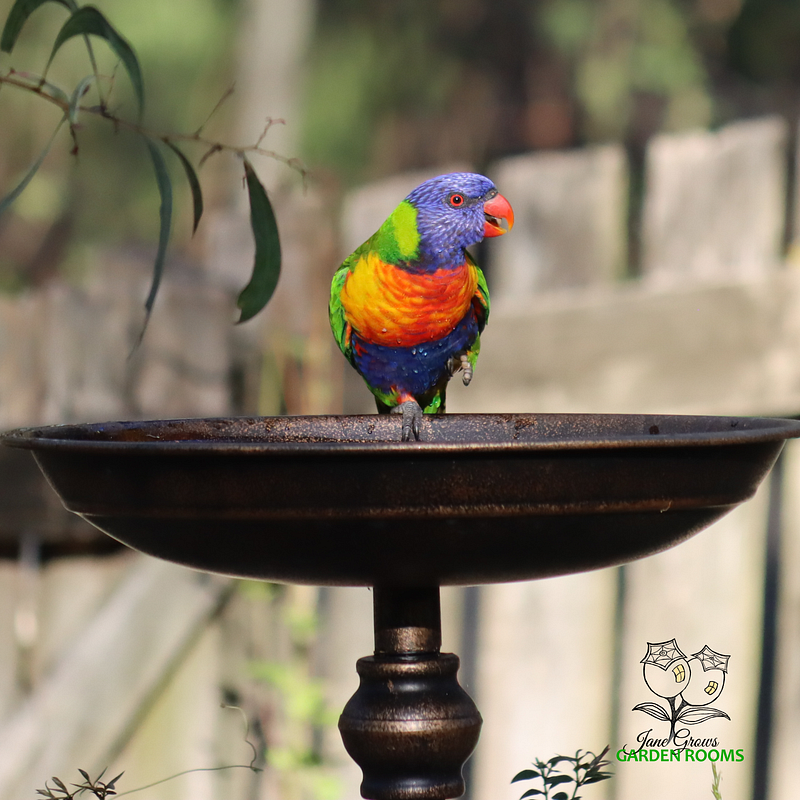
The first thing you can do to bring more biodiversity to your backyard is add water. Not everyone has the luxury of having enough land or the right kind of land for a dam or another big water feature, but there are lots of little ways that you can add water to your garden that will bring in the birds, the pollinators and other animals too.
Birdbaths
A birdbath is
· easy to add,
· easy to maintain and
· will help with pest control as well as delighting you with the antics of the birds.
We’ve had an issue with animals, I suspect possums, knocking over our birdbaths in the night so we’ve found a quick fix until we can replace them. I always add a sloping rock to the middle of the water so that insects can get out of the water easily.
The birds love having a bath and they usually stick around long enough to gobble up some grasshoppers, caterpillars and other insects that are attacking my plants. The plants around the birdbath also enjoy the splashes of water from the birds’ energetic bathing habits.
The hotter it gets, the more visitors we have. In the case of the shyer species, visits to the birdbath are our only observation opportunities.
Small ponds
Ponds can be:
- any size you have room for, from a jar to an inground masterpiece
- used to grow water-loving plants, and
- more than just fish habitat
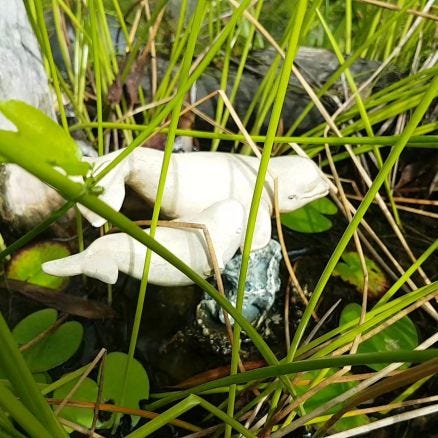
In the front yard, I have made a pond using a large ceramic pot. I trim back and tidy it up when the weather turns cold, but right now I am letting it be to avoid disturbing frogs.
The 65 centimetre height stops the Cane Toads from using it and also encourages dragonflies.
Trust me, if you have water you want dragonflies. Dragonflies eat mosquitoes at every stage of their own and the mosquitoes’ development.
One adult dragonfly can eat more than one hundred mosquitoes every day.
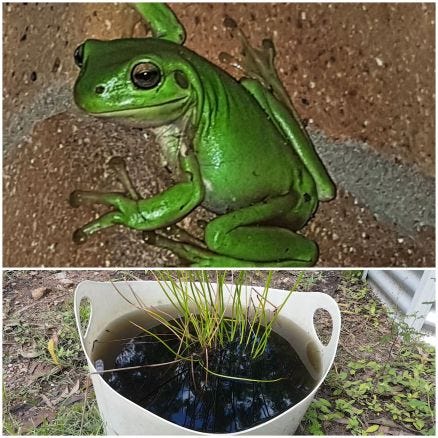
To encourage them further and provide habitat for frogs, I grow reeds in the pond as well as lily pads. I’ve added a large stick and the broad base of a palm leaf to give shelter to tree frogs. Crayfish eat the algae and Firetail Gudgeons complete the ecosystem and help keep mosquito larvae under control.
In my greenhouse I have a less aesthetically pleasing pond also containing Crayfish and Firetail Gudgeons. This was supposed to help the frogs breed but the Gudgeons are hungry and aggressive and eat the eggs before they hatch. If they do hatch, they get hunted and devoured by dragonfly larvae.
I use this pond to grow plants that like to sit in water like Vietnamese Mint (Persicaria odorata) and Brahmi Herb (Bacopa monnieri). I have added reeds and Woolly Frogmouth from my dam. The reeds have recently broken out of their plastic container and pushed a hole through the polystyrene. When I replace it, I will move the hungry Firetail Gudgeons to another pond, leaving this one for the frogs to use.
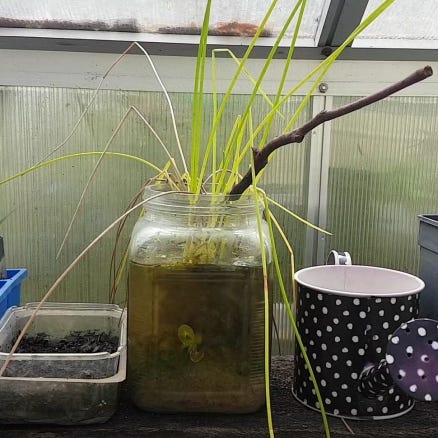
I also have a jar in my greenhouse which is rather full of algae right now. I am slowly replacing the water with clean water but I don’t want to disturb the dragonfly larvae which consistently populate its murky depths.
Final thoughts
With accessible water in your garden, you will reap the benefits through pest control, connection with nature and the pleasant aesthetics that water provides.
On a hot summer’s day, your garden might even be a lifeline for wildlife who would otherwise perish.
The next tip in this series is coming soon! Subscribe to get it straight to your inbox!
This story is adapted from a previously published YouTube transcript on the janegrowsgardenrooms blog.
Want to read the rest of the series? They’ll be added to this list as they are published: