
Jupiter and Its Galilean Moons
From NASA’s Astronomy Picture of the Day 8/21/2021
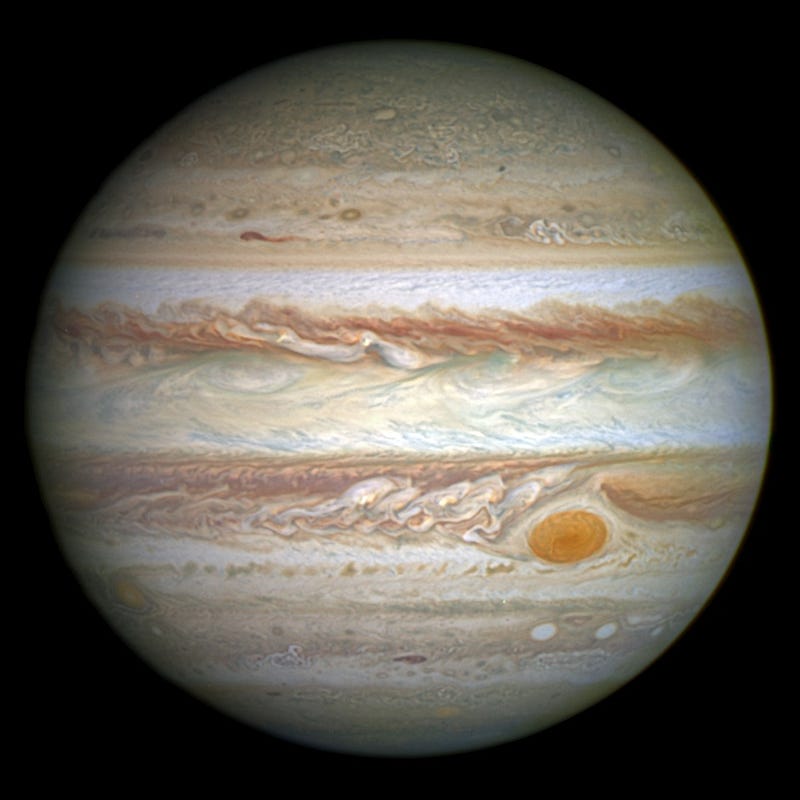
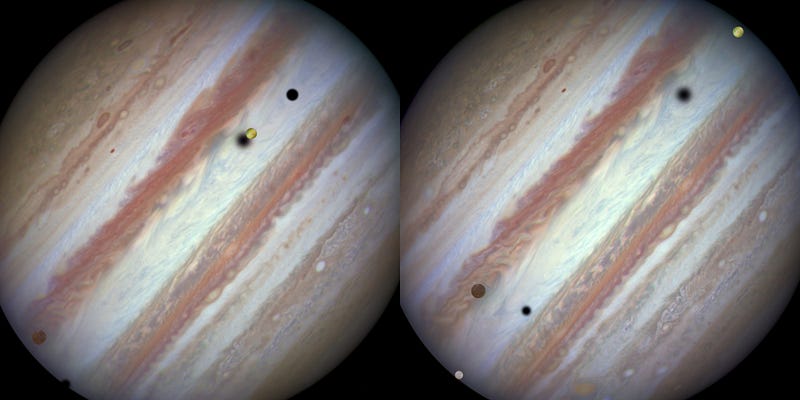
Since June 6, 1995, NASA has been posting an Astronomy Picture of the Day ranging from historical photos to photos of current events. August 21’s photo, was of the largest planet in our solar system, Jupiter with some wonderful transits of its moons. Please use their link to view the image of Jupiter and its transmitting moons for reference.
To understand transits, let’s think of a total solar eclipse where the moon passes between us and the Sun at just the right angle and the moon is just the right relative size to appear to cover the Sun, blocking its light. We see that spectacular event from certain places on Earth.
A transit is simply when a celestial body passes directly between a larger body and the observer. An eclipse is a type of transit. We see the inner planets (Venus and Mercury) transit the Sun as very small shadows moving across the Sun’s surface from our perspective. An observer on Mars could also potentially see the Earth transit the Sun and so forth.
However, transits are not limited solely to planets passing in front of the Sun. We also see it with moons of other planets such as the NASA Astronomy Picture of the Day for August 21st image of moons transiting Jupiter and the public domain picture below. The moons are passing between the Sun and Jupiter, casting their shadow onto Jupiter’s body. We sometimes also see certain shadows disappear as they orbit around Jupiter and pass in front of each other, blocking out each other’s shadows (occulting each other) as seen in the middle image of the NASA Astronomy Picture of the Day for August 21st image.
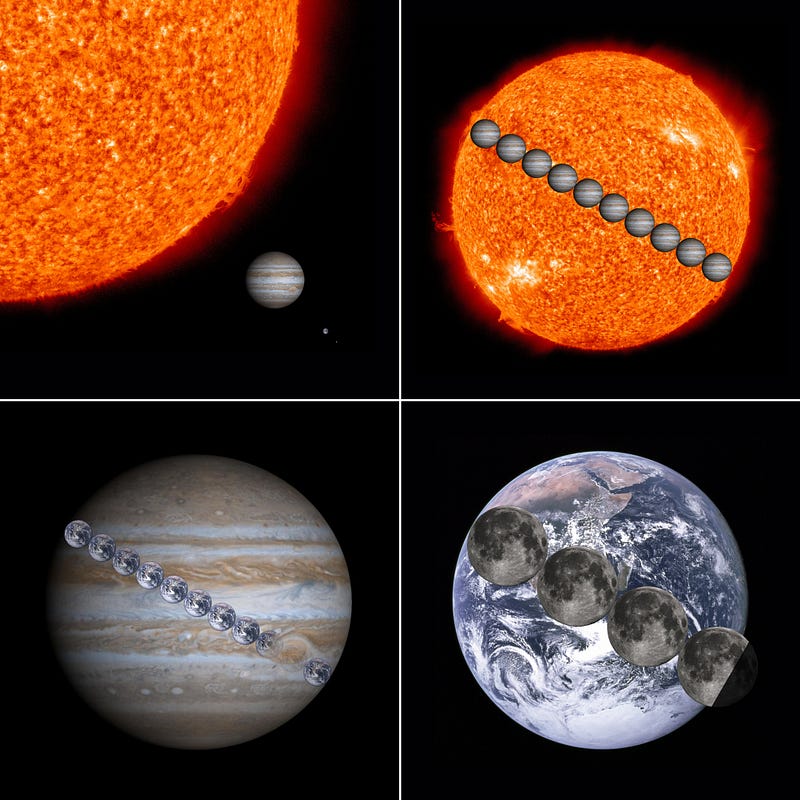
So, now that we’ve understood the image a little more, let’s briefly dive into Jupiter and the moons depicted here. Jupiter is the fifth planet from the Sun and the largest in our Solar System. In fact, 11 Earths could fit across Jupiter’s equator (center). In other words, if Earth was the size of a grape, Jupiter would be the size of a basketball.
Jupiter is the first of the gas giants, meaning it does not have a solid surface but is made up of gases (mainly Hydrogen and Helium) held tightly together. Jupiter has many storms, the biggest and most famous of which is the Great Red Spot at about twice the size of Earth that was first spotted over 150 years ago.
Jupiter has 79 official moons, though there are many more bodies that circle Jupiter that might officially be classified as moons in the future. In fact, an amateur astronomer just discovered a new moon this year, which would bring the total count to 80, once it is officially designated.
The four biggest moons, seen transiting Jupiter in the feature image, are known as the Galilean moons as they were discovered by Galileo. They are named Io, Europa, Ganymede, and Callisto and all are very different from each other.
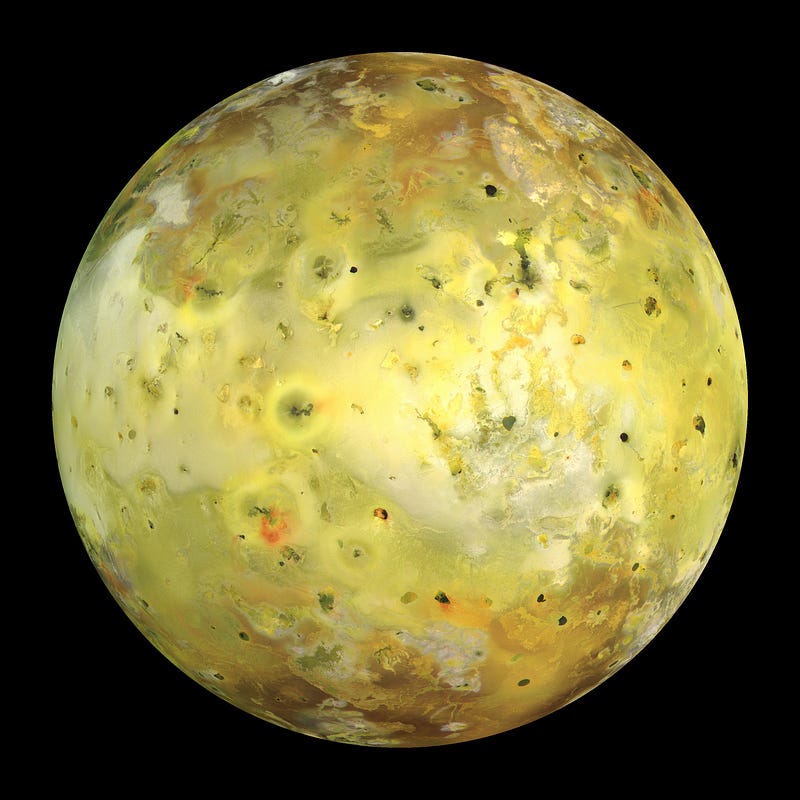
Io is actually the most volcanic body in the solar system and Jupiter’s third-largest moon. The force of Jupiter’s gravitational pull is literally pulling the moon apart and bringing magma to the surface. It also has tides due to Jupiter’s gravity.
On the other hand, Europa’s surface is primarily composed of water ice, meaning frozen H20 as opposed to other frozen elements such as methane. There is also evidence that there may be an ocean of water or slushy underneath, possibly twice as much water as Earth. It also might be a habitable moon for life.
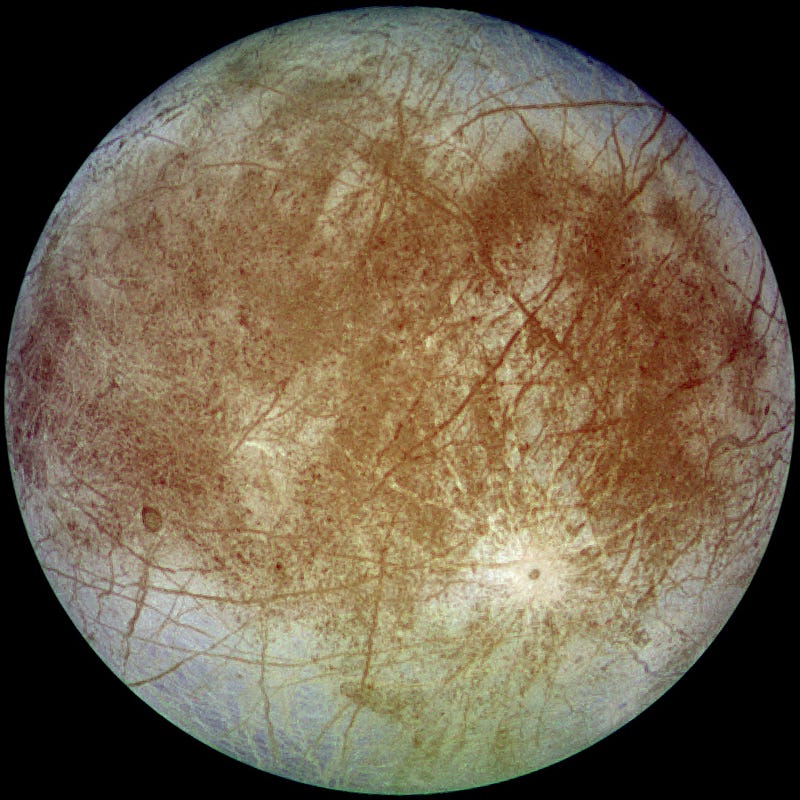
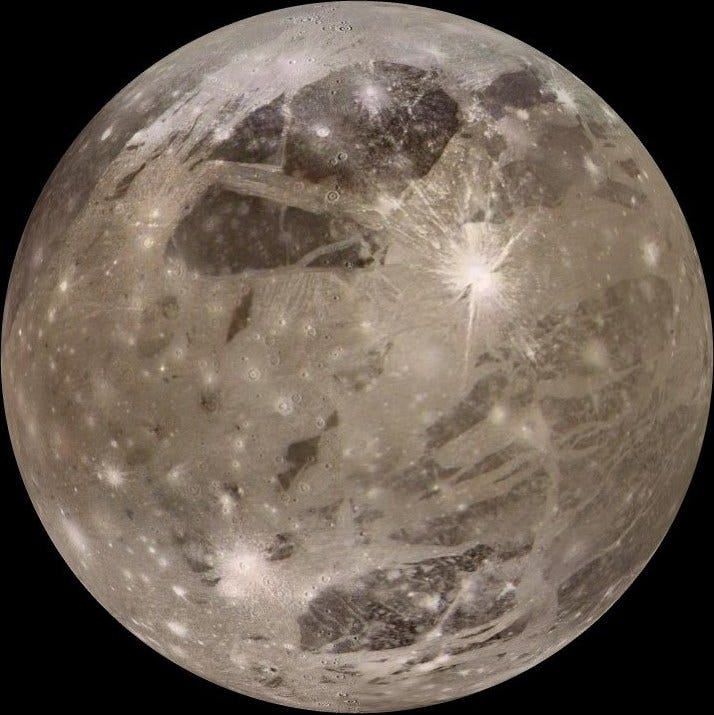
Ganymede is the largest moon in the solar system. It’s larger than the planet Mercury. Why is it a moon when it’s bigger than a planet? Because it orbits a planet versus the Sun.

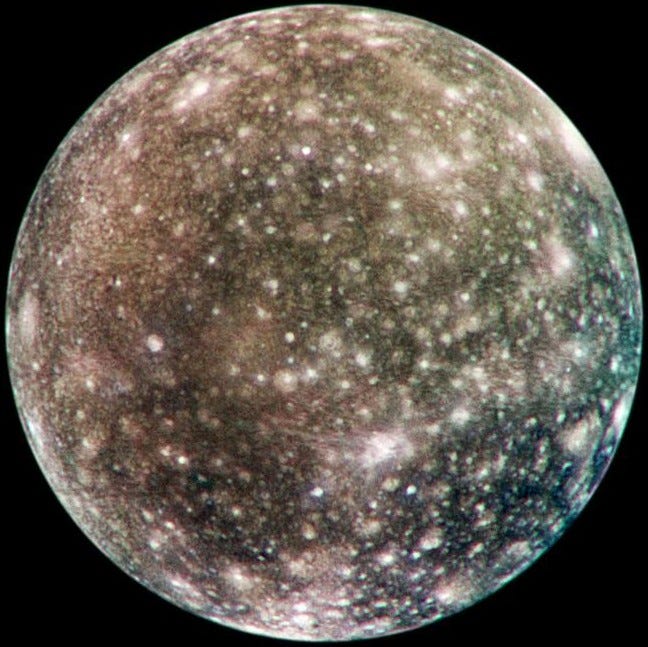
Callisto is marked by lots and lots of big craters from being impacted during the early formation of the solar system.
Jupiter is still visible (in addition to Saturn) for the rest of the month pretty much from sunset to sunrise, so be sure to check them out. If you’ve got a pair of binoculars, you will be able to see them in up to 10x magnification.
I hope you enjoyed this quick review of Jupiter and its Galilean moons inspired by the NASA Astronomy Picture of the Day. Keep an eye out for my Beginner’s Stargazing Guide coming out soon. I love talking about space so feel free to reach out with any questions or to simply “nerd out” with me.
If you liked this story and would like to see more from me, hit that follow button. If you are not a member, consider using my referral link below to sign up and see all of my stories. Using my referral link helps support my work specifically along with the other amazing writers on this platform.
References/ Further Exploration: