
July Monarch Meanderings
As a Monarch Conservationist for the last twenty years, I have a lot of practical experience in monitoring this iconic species. While many people learned about monarchs from me, some (usually those I don’t know personally) don’t want to hear what I have to say.
So far, the monarch population looks promising this year. Just today, my husband and I saw five monarch butterflies on our walk — even if two of them were the same and just flew into our field of vision at separate times, this is exponentially more than the number of monarch butterflies I saw all season last year — a total of five.
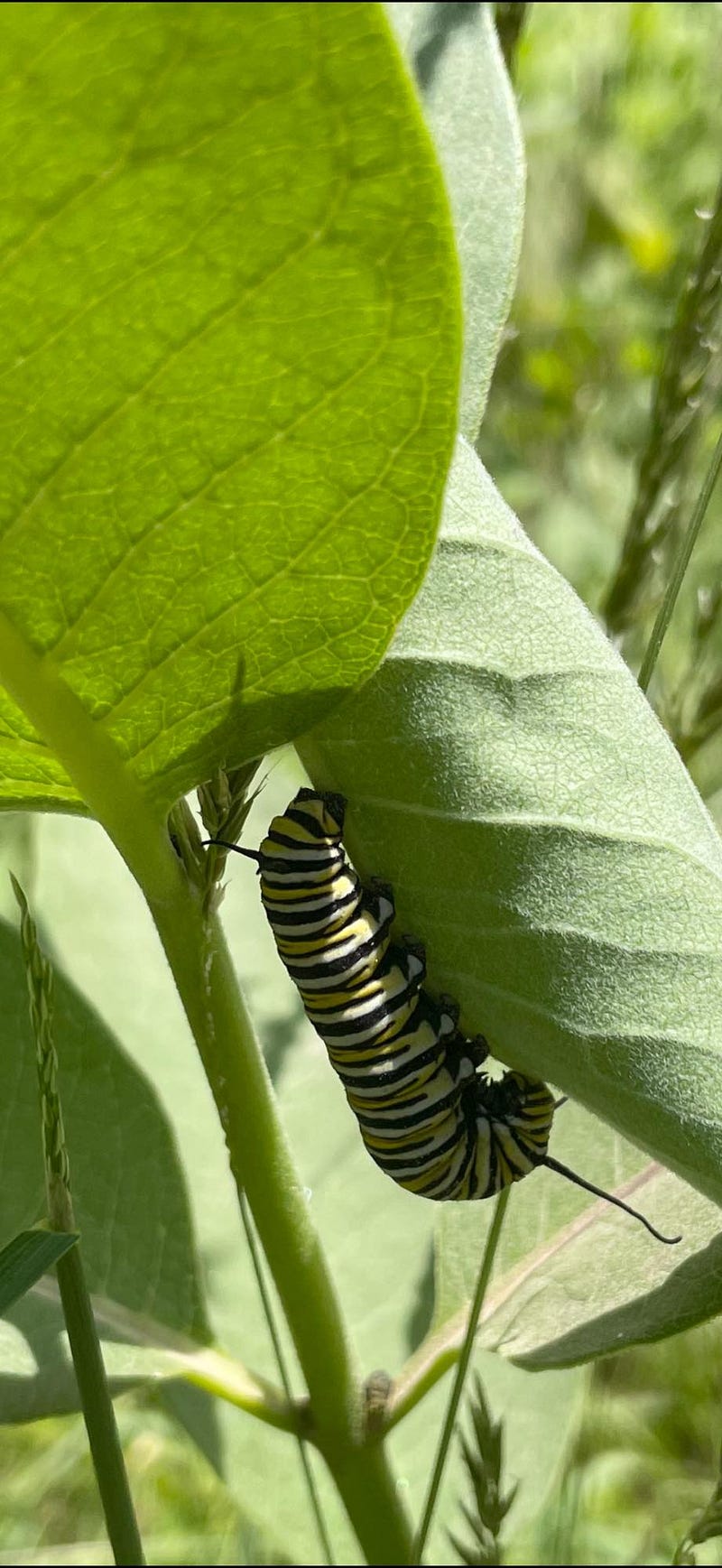
Milkweed is eaten by monarch caterpillars. This is evidenced by chewed leaves. While there is more evidence of larvae eating the milkweed this year, there is still a large portion of what is available not being consumed.
Still, I am optimistic.
What novice monarch enthusiasts do not realize is that after having several “boon” years in a row, it might be entirely natural to have a few years with fewer or even no monarch activity. In other words, just because you have a lot of eggs, larvae, chrysalises, and butterflies, don’t expect it to be that way each year. Having the habitat available, however, is extremely important.
The monarch habitat I created with host plants for both larvae and butterflies in my yard and at the school my boys attended allowed me to observe these natural fluctuations over the last twenty-plus years.
I’m not trying to toot my own horn, but I’ve studied monarchs for a long time — long before it was popular to be their advocate. I’ve read the science, kept up with the research and recommendations, heard experts speak, and taught fellow community members about the monarch's life cycle and habitat requirements. I’ve created monarch habitats at three homes and two schools, as well as helping friends and other interested parties create habitats in their own yards.
I love it when a friend sees a monarch and messages me that it made them think about me. I love it even more when someone I don’t know well messages me and asks for plant identification or advice about milkweed or monarchs. It happens every year and I relish it!
I consider myself a “lay” expert with some reliable scientific knowledge and expertise as an environmental educator and participant in citizen science. In truth, I wish I was a bonafide expert like Karen Oberhauser, previously of the University of Minnesota and now of the UW Arboretum in Madison, Wisconsin.
But, I’m not.
I do, however, tell it like it is based on experience AND knowledge I’ve gained over the years. My knowledge comes from reputable sources such as universities and monarch groups like Monarch Joint Venture, Monarch Watch, and Journey North. Making sure the information you share is based on truthful findings from reputable sources is essential.
My path was science-based, first in pediatric nursing, and then in natural resources, but not in entomology. However I got here, it works. While not a scientist, I still educate on scientific findings and help others conserve this iconic species.
Learning about our natural world and encountering species like the monarch, helps our youth love the earth and their place on it. I’ve been an instrumental part of that attachment for many — at least 600 students and certainly more community members.
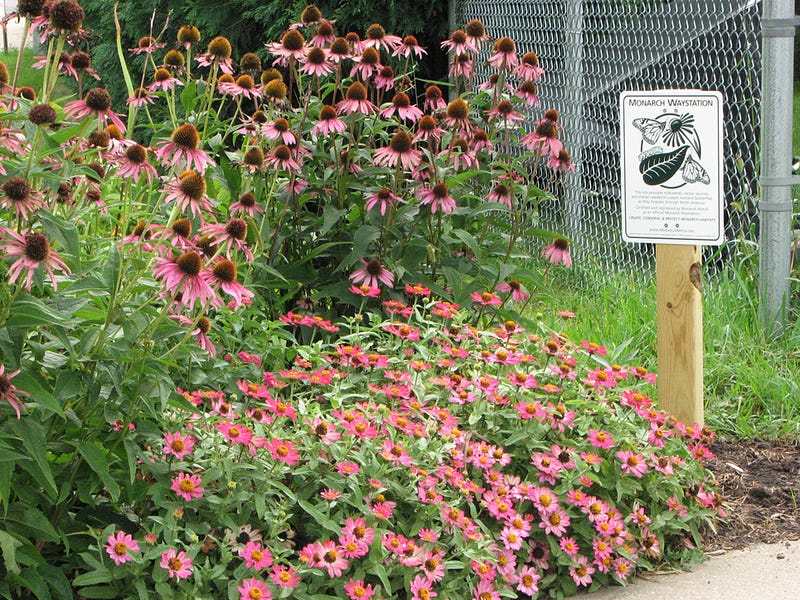
I’ve taken my role as an environmental educator and monarch conservationist seriously. Most of it has been as a volunteer, too.
The summer season is just starting for monarchs. But I feel optimistic. I just ordered tags from Monarch Watch. I tagged for six years and then didn’t do it last year. We moved and I didn’t see any point in ordering tags when I was not even seeing any butterflies.
I do now. I see more monarchs flying and flitting than I did a year ago. I want in on keeping this species awe-inspiring migration alive. I want to watch their amazing metamorphic life cycle again and again and again. I want to document their existence. I want to help.
Spreading correct information is one way to help. Providing habitat is another important contribution to the monarch's sustainability.
Milkweed
As many now know, milkweed is a sustaining plant for the monarch's life cycle. I’ve planted and grown mainly four types: common milkweed, rose milkweed, whorled milkweed, and butterfly weed.
However, I’ve encountered more species in the wild. These include poke milkweed, clasping milkweed, and a few others.
In our new yard, I only have two species of milkweed. They are butterfly weed and common milkweed. I have seeds for whorled milkweed and rose milkweed to add to our varieties.
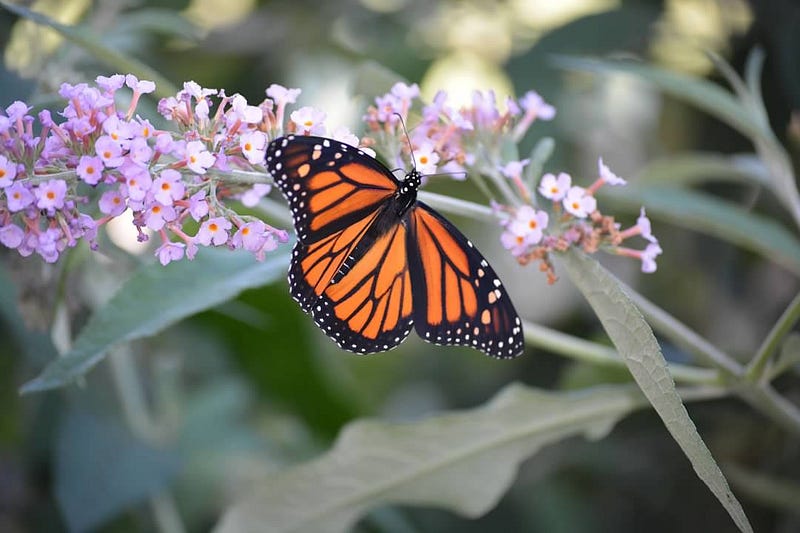
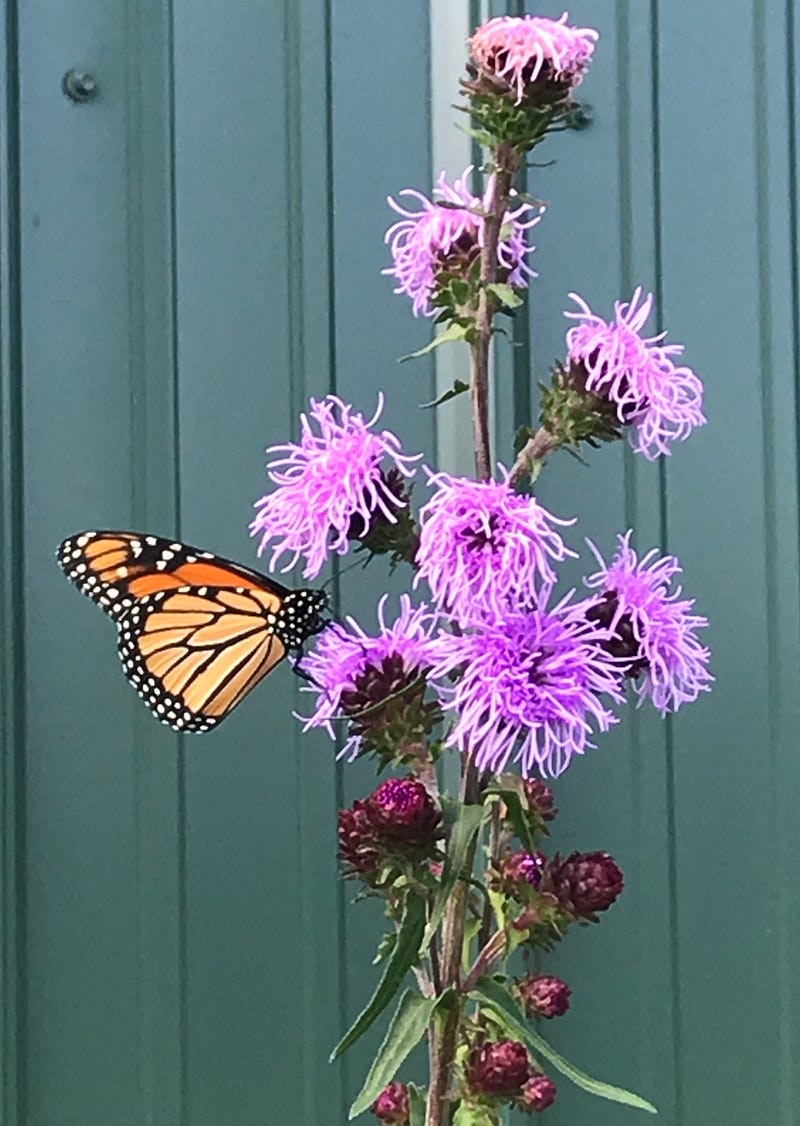
Milkweed is a host plant for monarchs. The adults lay their eggs and nectar on the flowers. The larvae eat the leaves of milkweed plants. Other host plants for the adults include those flowers that provide nectar and pollen. Some good options are the Rudbeckia species, Zinnia, Asters, and Liatris.
Bugs are bugging people.
When I hear people worried about finding bugs other than monarch caterpillars on the milkweed, I remind them or inform them that milkweed has an entire ecosystem that revolves around it.
And that ecosystem involves more than monarchs. Milkweed beetles, aphids, and even weevils thrive in and around milkweed. It is all part of nature’s plan. Eleven insects make the milkweed village their home (Agrawal, 2017).
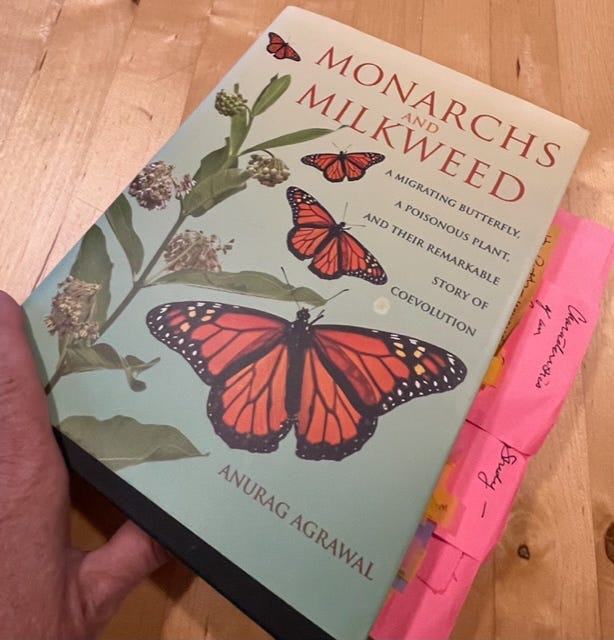
But people forget this and go to great lengths to “get rid” of these “bad” bugs. They pick them off or wash them off to “keep” the milkweed pristine for the monarch’s life cycle. The trouble is that these insects ALL evolved to live on this plant filled with poisons. They ALL call milkweed home.
Having aphids present does not mean there will be “less” for the monarch, the beetle, or the moth that feeds on Asclepias. Ecologists know this, why can’t lay people accept it?
I’ve informed a few people about the milkweed plant’s ecosystem and the insect community it supports. My suggestion that they leave well enough alone (stop washing aphids off) often falls on deaf ears.
My further suggestion is that they read Agarwal’s book, Monarchs and Milkweed (2017), shown above, for more information on the subject. We, as humans, don’t know — nor should we presume — the reason eleven insects evolved to live on milkweed. Nor should we presume our “help” is needed with regard to “who” is living on the plant.
Providing more milkweed plants should be our focus, not who resides in the “milkweed village.” It took millions of years of evolution to determine that — let’s not interfere.
So, when lay people start removing aphids or beetles or moths from their milkweed plants, I have a problem with it. I think they mean well but need more information. It is the information or resources that can be used that I strive to provide.
Below are some links to reputable pages on monarchs and some suggestions as to what to do about them — as well as whether they harm the monarch eggs or larvae.
I agree with the following quote:
“Nature has a way of fixing things if we move out of its way a little.” — by Happy Gardener in 2019.
When humans are egotistic enough to feel they can fix everything, even things in the natural world, there’s a problem. We need to remember that all organisms have a purpose, a community in which they live, and it might be better to just let nature take its course.
As for monarchs, plant more milkweed — native to your region — to help the species. This is the best possible course of action for many reasons and will even help control the dreaded aphids by providing a larger area on which they can feed. After all, we (humans and our drive for development) are a major reason we have less milkweed than we had in the past.
Journey North, Monarch Watch, and Monarch Joint Venture all were used in the writing of this article as resources. They all have active links in this piece. Agrawal’s book is a must if you are serious about learning about the relationship between Monarchs and Milkweed (2017). It can be found on Amazon.
I do not carry affiliate links for Amazon or any other site in my articles.
You can follow me if you find this article valuable, entertaining, or inspirational. Here’s how:
You can join Medium, here. By using my referral link, I will receive a portion of your membership subscription. You are then free to read all the Medium.com articles you want, from any author on the site! Thanks for your consideration!
Would you rather get my posts via email? You can get an email subscription to my page, here. Whenever I post on Medium, the article will arrive in your inbox! I appreciate your interest!


