
Julian Assange, the founder of WikiLeaks, was arrested by British police
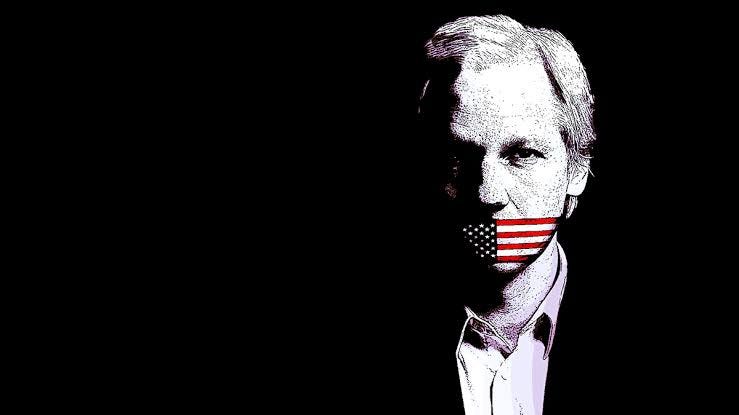
For several months, the rumor of an impending arrest rustled in the entourage of Julian Assange. It came to fruition on Thursday, April 11, when British police apprehended the founder of Wikileaks in the precincts of the Ecuadorian Embassy in London, where he has been a refugee since 2012.
According to a statement from the British police, it was the ambassador himself who "invited" the police to go to their premises. The President of Ecuador said at the same time that his country had withdrawn asylum to Julian Assange, which he had obtained in 2012.
Passage planned before a judge the site WikiLeaks, specializing in the publication of secret documents, is in the sights of a judicial procedure - a grand jury - in the United States. But it is a more minor offense that justified the arrest of Julian Assange, according to British police. In 2012, while the United Kingdom was considering a possible extradition to Sweden where Mr Assange was being sought in an investigation for rape and sexual assault, he had been granted asylum by the Ecuadorian government and had refugee in his embassy in London.
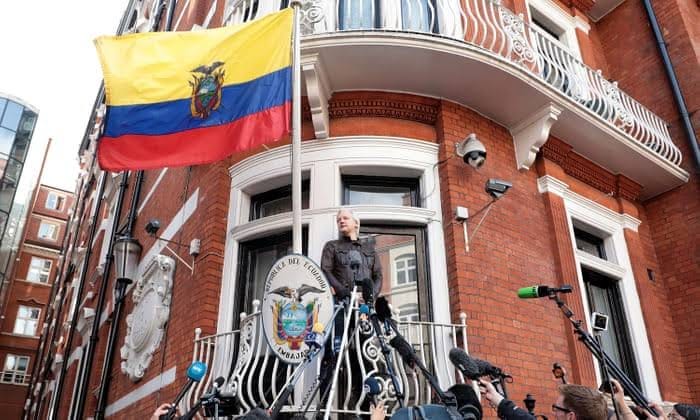
In doing so, Julian Assange had violated the conditions of his parole, which was recalled by the Metropolitan Police after the arrest. The British police had always said they were determined to arrest him on that basis. Julian Assange should now go before a British judge because of this offense, which could sentence him to a fine ranging from a fine to one year in prison. There is a possibility that Julian Assange might be set free soon. Over the years, relations between Mr. Assange and his hosts have become complicated. Quito had set up a complex surveillance system, which targeted not only Julian Assange but also his visitors. The situation deteriorated further with the election of Mr Moreno as head of Ecuador. Renowned more open to the United States than his predecessor Rafael Correa, the new Ecuadorian president did not hesitate to take sanctions against his hosts. Last year, Julian Assange’s Internet access was suddenly cut, after he published a series of messages supporting the independence of Catalonia.
The Embassy of Ecuador, located in a posh part of the British capital, was monitored by a police device twenty-four hours a day. Supporters of Julian Assange have repeatedly warned about the deterioration of his health. Living conditions judged as "arbitrary detention" in 2016 by a UN working group.
On the Swedish side, the legal situation of Julian Assange has partly been clarified, since a good part of the facts that were reproached to him are now prescribed, and the perspective of a trial in Sweden seems very unlikely. It is rather the prospect of extradition in the United States that worries Wikileaks' relatives, fearing that Washington has sent a secret request to London.
The CIA made his arrest a "priority" It must be said that Australian’s relations with the American authorities are fluctuating. Consecrated under the Obama administration - notably by Hillary Clinton, then head of the American diplomacy - he attracted the sympathy of the Trump clan during the 2016 presidential campaign, publishing on WikiLeaks the hacked emails of the campaign Hillary Clinton.
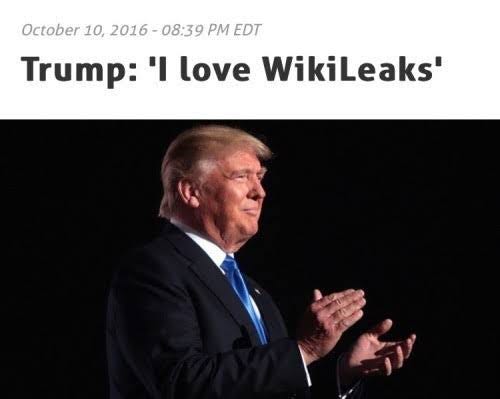
Donald Trump even said, at a meeting "I love WikiLeaks! ". But the release of confidential CIA documents the following year cooled the Republican camp, and threatened Julian Assange with threats from the CIA boss and US Justice Minister Jeff Sessions, who claimed his arrest was a "priority".
Special Prosecutor Robert Mueller’s investigation into the Russian interference in the US presidential election accuses WikiLeaks of directly communicating with Russian spies responsible for the theft and publication of confidential Democratic Party documents. The Democratic Party itself filed a complaint against WikiLeaks for the publication of these documents, prompting a wave of criticism that goes well beyond the support of WikiLeaks. The main organizations defending the freedom of the press denounced in this procedure a dangerous precedent.