Summary
"Journey to the Boundary Waters" is a poetic exploration of the rugged and mystical landscape of the Boundary Waters region, evoking the stark beauty and haunting solitude of nature.
Abstract
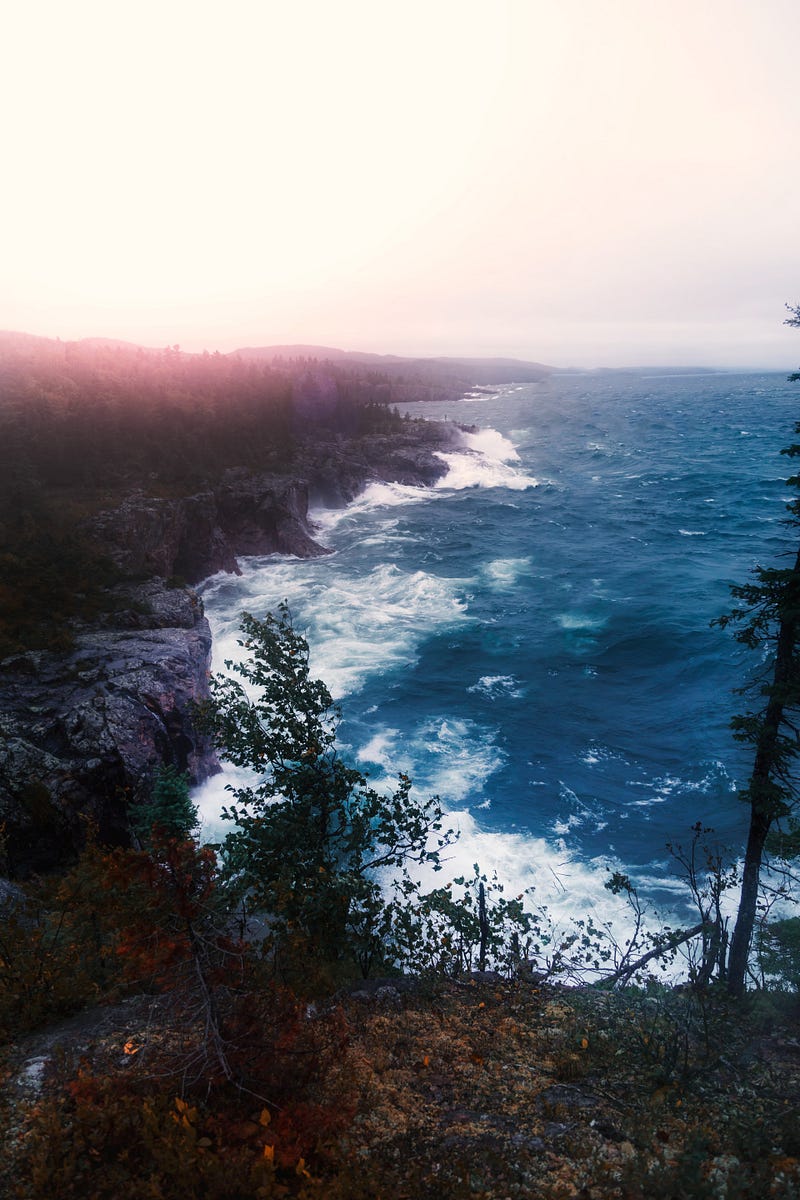
The web content presents a poem titled "Journey to the Boundary Waters," which paints a vivid picture of a wild and untamed natural environment. Through evocative imagery, the poem describes a scene where stone cliffs, ancient vines, and the relentless ocean meet the midnight sky. The narrative unfolds with the observer standing on a foggy shore, surrounded by the remnants of a fallen city, as the dawn breaks and the moon ghost dances on the horizon. The poem captures the essence of the untouched wilderness, the passage of time, and the raw emotions that such a landscape can evoke in a person. Accompanying the poem are captivating images that further immerse the reader in the atmosphere of the Boundary Waters, a region known for its serene beauty and the sense of timelessness it inspires.
Opinions
- The author, Arlo Hennings, conveys a deep appreciation for the natural world, particularly the Boundary Waters region.
- The poem suggests a reverence for the enduring and ancient qualities of the landscape, as seen in descriptions of "fossilized spears of stone" and "immortal stone face."
- There is an underlying theme of the interplay between the permanence of the natural world and the transient nature of human existence, highlighted by the contrast between the "towering walls" and the "fallen city."
- The use of personification, such as the "metallic mist" that "remains" and the "moon ghost" that "dances," imbues the landscape with a sense of life and movement.
- The imagery of the poem, coupled with the evocative photographs, suggests that the author views the Boundary Waters as a place of profound beauty and spiritual significance.