
Jordan Peterson Is an Atheist After All
He claims God is fiction
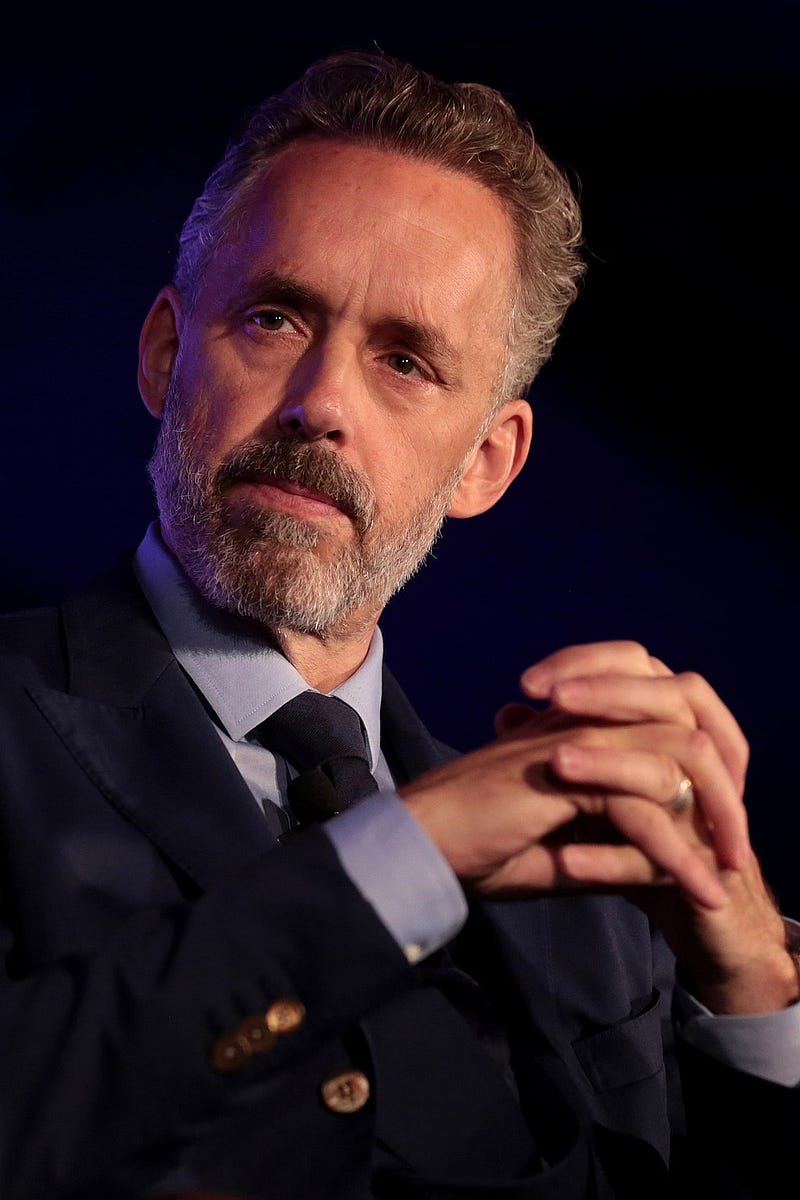
Jordan Peterson is a clinical psychologist, author, and professor emeritus at the University of Toronto. His YouTube channel has almost six million subscribers. He often speaks on controversial subjects such as politics and religion. I think it is fair to say that many Christians like him because he calls young people to go to church and argues that Western civilization is established on Judeo-Christian ethics. He also criticizes atheism for lacking a unifying ethical foundation for society.
From the description above, you might think he is most likely a Christian. Why else would he promote Christian faith and values the way he does publicly?
But curiously, he never directly says he is a Christian, even when pressed. His way of dodging questions about his personal belief vexes a lot of interviewers and debate opponents.
In one of his tweets in 2021, he says:
Do I believe in God? I act as if God exists.
Ok …
Fortunately, in one of his recent podcasts (link below), we can piece together whether he believes God exists or not. The answer is he does NOT.
In the podcast, he talks about the hierarchy of values. There are an infinite number of things we can perceive in the world. We can’t pay attention to all of them. We can only be selective. Such hierarchy helps us focus on what matters to us. An example he gives is a college student writing an essay. Why does he write it? To get a passing grade. Why? To get a degree. Why? To be an educated person. Why? To be a good person. Why do you want to be a good person? Eventually, we reach the top layer of the hierarchy, which Peterson calls “the divine place.”
He goes on to say, word for word:
That character at the top of the hierarchy of attention and action, that’s characterized as God. You can say, well, is that a fiction? It’s a fiction, but you have to retool your notion of fiction because fiction then becomes the deepest form of ethical abstraction and so it’s a meta truth rather than a falsehood.
He admits that God, or the concept of God, is fiction. According to the common usage of the term “fiction”, it describes something that is not real. Here is a dictionary definition:
1a. something invented by the imagination or feigned 2a. an assumption of a possibility as a fact irrespective of the question of its truth. 3. the action of feigning or of creating with the imagination.
Yet Peterson does not want to sound like he does not believe God exists, so he tries to change the word’s usual definition and focus on the “meta truth” the word brings out. For Peterson, “fiction” is where we draw ethical abstraction, so in that sense, it is not false.
But all this explanation is still confusing. When he calls God “fiction”, does he mean that even though God is not real, the ethical abstractions we extract from the concept of God remain true?
This interpretation is confirmed when we hear him talking bout the novels written by Dostoevsky.
When I read something like a novel by Dostoevsky, I think, well, is this true? And the answer is, well, those precise events never happened, so on that basis it’s not true, but then there is something wrong with that description because the characterizations in Dostoevsky are so true that in some sense they’ve never been surpassed.

We know that novels don’t portray events that actually happened. We also know that a work of fiction can portray profound truths about the world and humanity. So what Peterson says here makes sense.
What’s more revealing is that, in the podcast, Peterson is using the novel by Dostoevsky as an example to explain his understanding of the story of Exodus in the Bible.
Did the events in Exodus really happen? And our conclusion was, not only did they happen in a meta manner, they’re still happening. They happen with such a reality that they haven’t stopped happening.
So not only is he saying that God is fiction, but he is also saying that Bible stories are also fiction, just like novels by Dostoevsky.
Note that his characterization of God as fiction is not some sort of brain fart, where he fails to communicate what he means. No, he expresses this idea repeatedly in the podcast.
The highest place [of the hierarchy] is the divine place. … what should be in the divine place? .. It has to be something that you can look at the world through and it has to be something you act out … How do we characterize it? I would say we characterize that using fiction because fiction is the abstraction of hierarchies of attention prioritization and action. So we can say in the highest sense, in the biblical corpus, God is the ultimate fictional character.
Let me repeat what he said:
God is the ultimate fictional character.
— Jordan Peterson
To summarise, Peterson does not believe God is real. Instead, he believes that God is a fictional character. But this fictional character is unlike any other fictional character in that we find the ultimate ethical system in this God. The “meta truth” we draw from this fictional character serves as the foundation of Western civilization. Without monotheism, there is no moral foundation to hold society together, and no coherent way to construct hierarchy of values and goals.
So, according to Peterson, we should act as if God exists (though He does not, in reality, exists).
In short, Jordan Peterson is an atheist who adopts Christian values.
I will write another article in near future explaining why this combination of atheism and Christian values is bizarre and logically incompatible.
Further reading
If you are not a Medium member yet, please consider signing up using my referral link. I will get a small commission at no extra cost to you.


