
Joined to Centuries of Woodworking
Everything Old is New Again
For uncounted generations people have passed their trades and crafts down from the old and experienced to the young and eager. The industrial revolution dismantled this reality and remanufactured it, substituting interchangeable parts for hand fitted ones, and user manuals for traditional knowledge passed from teacher to student. Woodworkers once learned from journeymen, or if they were lucky, from masters. In the process they developed a carpenter’s eye capable of visualizing the increments of length rather than just transferring them from a measuring tape, hands that felt fine gradations of thickness with a well tutored finger, not a feeler gauge.
Preindustrial woodworking apprentices also learned to execute the joinery still revered by today’s woodworkers, using practical, well honed techniques and simple hand made tools. They acquired the skills necessary to produce work that rivals any fine furniture construction of the present. Today the knowledge of the old masters has been transferred into power tools, set up jigs, and fancy vises and clamps. In the process it has been effectively lost to the modern woodworker. Wouldn’t it be great though to resurrect an old master to stand at your elbow and walk you through the procedures developed by the weathered hands of a thousand years of joiners?
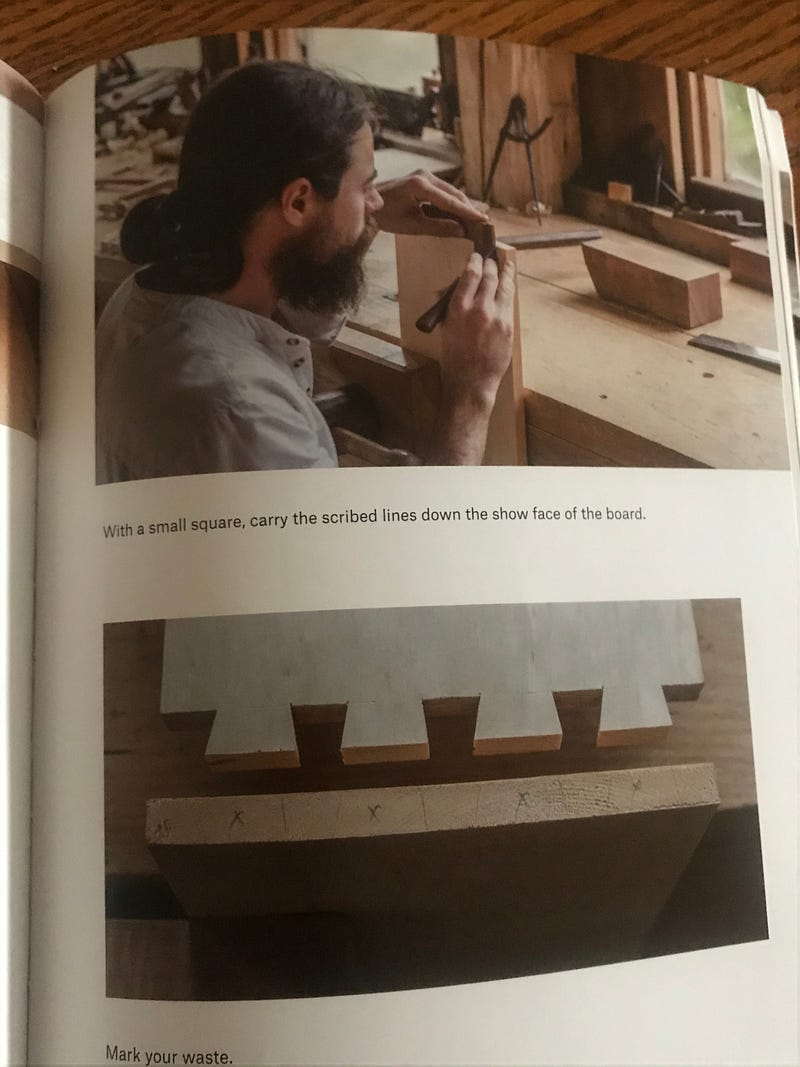
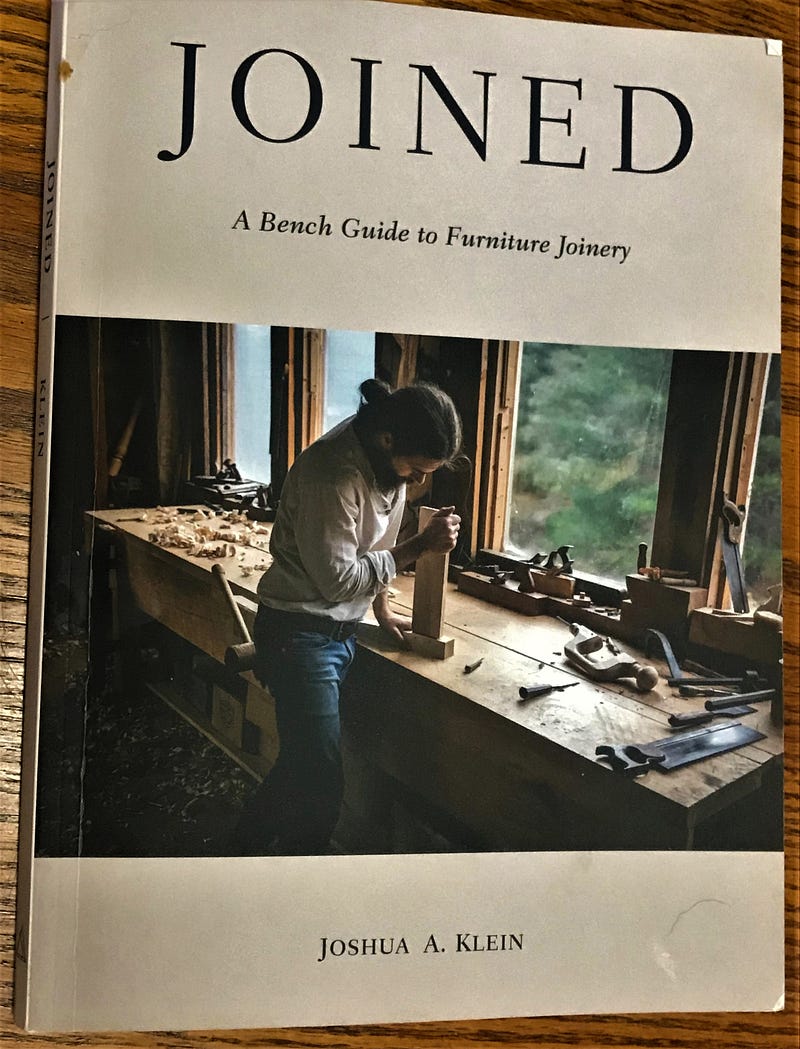
Joshua Klein’s book, JOINED, A Bench Guide to Furniture Joinery (Mortise and Tenon Inc. mortiseandtenonmag.com) can place that master’s hand on your shoulder to explain the marking and cutting of the table leg mortise and tenon, or the dovetailed drawer, showing you as you work how to build your own mastery of the timeless tools and techniques.
As Klein explains in his afterword the book is “not a collector’s volume that ought to be kept in pristine and as new condition. Nor is it meant for coffee table, nightstands, or armchairs. It’s meant for the shop.” As such it “features specialized binding that will lay flat on the bench and plenty of room in the margins for notes. Joined is designed to find a home in your workshop”.
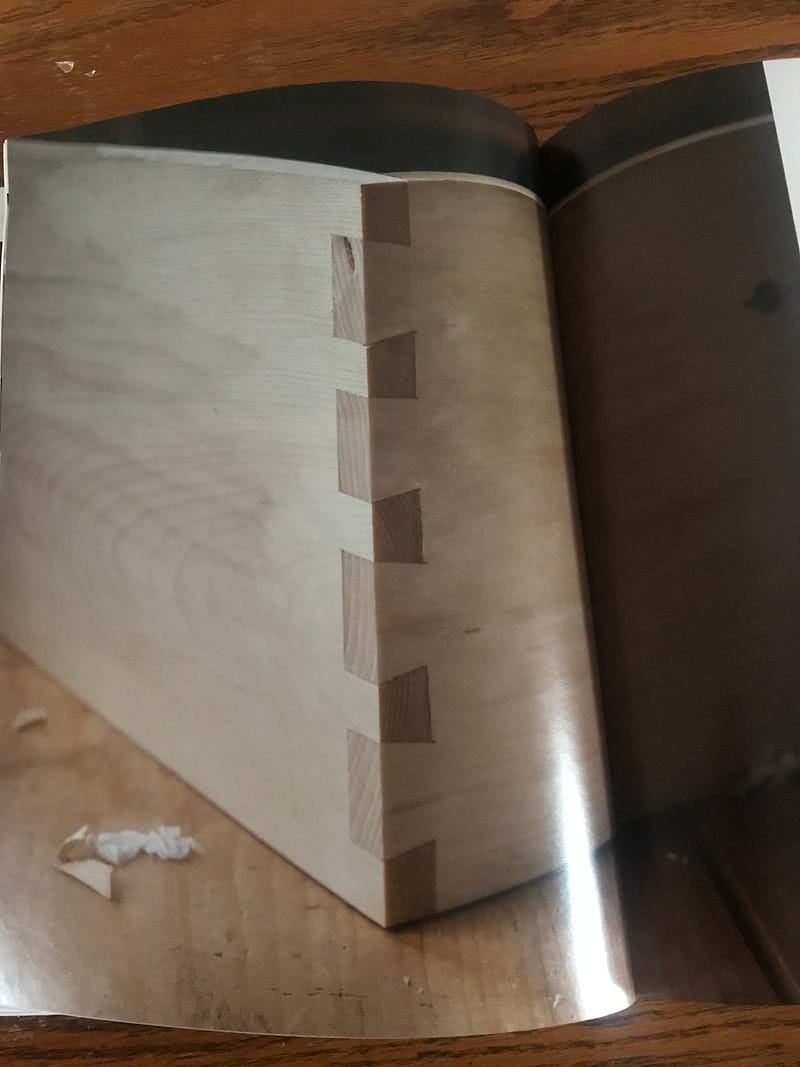
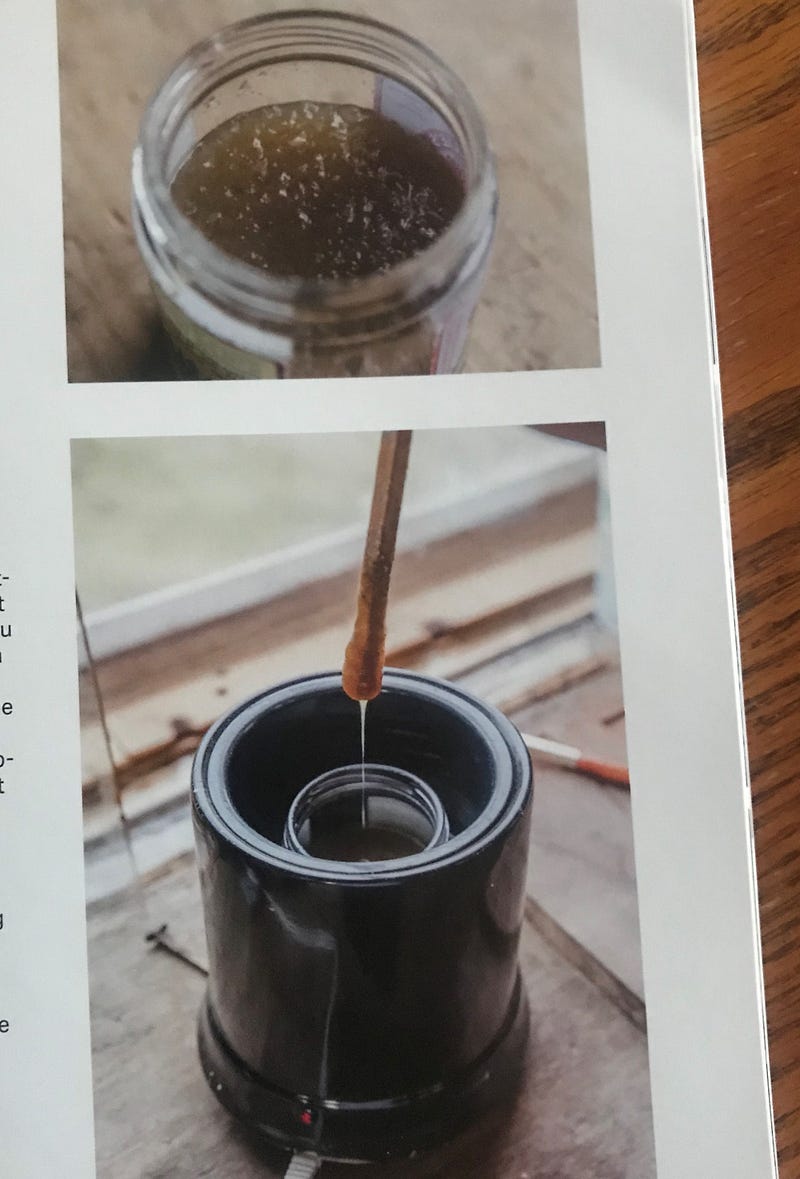
Klein has reversed engineered antique furniture, noting tell tale tool marks and layout lines that reveal the joiner’s process. He shows how an awareness of “sacred” faces and shoulders can free the woodworker from the tedium and wasted energy of milling surfaces that won’t be seen while still knocking out tight and polished joints for the owner and user to admire. He also explains the uses and advantages of using the joiner’s hide glue in furniture joints, the ways in which this traditional material outperforms today’s synthetic “stronger than wood” glues.
This is not a book for display; given its price point ($21 plus shipping) and sparse text, it’s not intended for pleasure reading. This book is a step by step tutorial that not only passes on the accumulated wisdom of the woodworker’s hand tool practices, but steers today’s woodworker toward their own acquired mastery. It also steers today’s chisel wielder toward the freedom that hand work can grant.
Routers and dovetail jigs, table saw dado stacks and tenon jigs can cut clean and perfect joints…in the ways that their design allows and within the limits imposed by their need for specifically dimensioned and milled wood stocks. Mastery of hand tool techniques, on the other hand, enables the woodworker to join parts of any dimension, using dovetails or tenons of any layout, with tools that cost a tenth or less of those of the power tools necessary to make similar joints.
Hand work may seem slower in practice than electrically powered carbide cutters, but it requires no set up, no test cuts, no ticklish tweaking to get the partner parts to fit with precision. Further, this kind of work can be executed with minimal noise and dust, literally in a back bedroom with no need for expensive dust collection systems, and need not disturb the neighbors.
As the author says, he’s not encouraging you to make practice joints, he wants you to make furniture. While it’s probably wise not to start out with your cherished curly maple or sold by the pound rosewood, there’s no reason not to lay the book open on the bench and plunge into a dove tail pine box or a round tenoned pine stool. I plan to do that soon;)