Summary
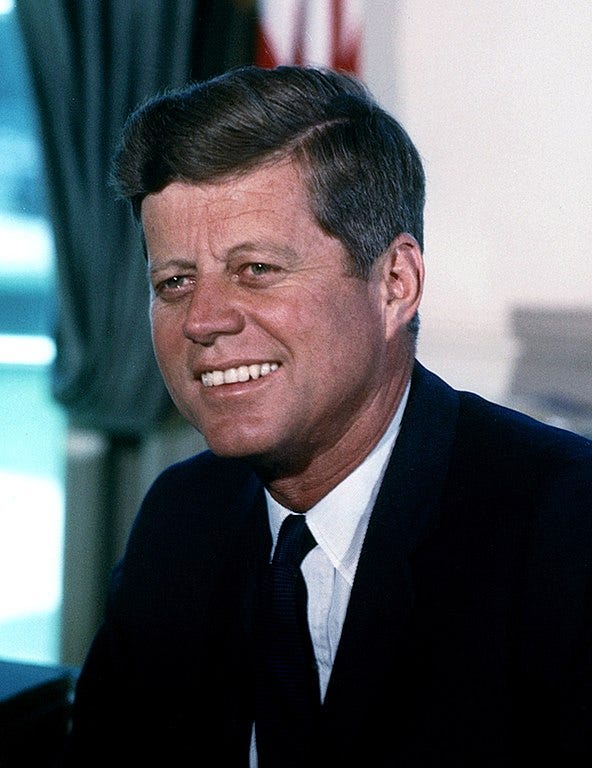
John F. Kennedy, a dyslexic individual who became the 35th President of the United States, overcame academic challenges to achieve significant political success, including navigating major historical events and inspiring his son who also had dyslexia.
Abstract
John F. Kennedy was born on May 29, 1917, in Massachusetts and was known for his struggles with academics due to dyslexia. Despite this, he attended prestigious institutions such as Princeton and Harvard. His service in the U.S. Navy during World War II led to acts of heroism that earned him the Navy and Marine Corps Medal and a Purple Heart. Kennedy's political career began with his election to the U.S. House of Representatives in 1946, followed by his service in the U.S. Senate in 1952. His presidency, which began in 1960, was marked by pivotal events like the Bay of Pigs Invasion, the Cuban Missile Crisis, and the initiation of the U.S. space race. Tragically, his life was cut short on November 22, 1963, when he was assassinated by Lee Harvey Oswald in Dallas. Kennedy's determination and resilience in the face of dyslexia were reflected in his achievements and influenced his son, who shared the same learning disability.
Opinions
- The content suggests that dyslexia did not hinder Kennedy's ability to excel in his academic and political pursuits, highlighting the potential for individuals with learning disabilities to achieve greatness.
- Kennedy's military service is portrayed as a defining moment that showcased his leadership and bravery, contributing to his public image and political appeal.
- The narrative emphasizes Kennedy's role in significant historical events, implying his influential and impactful presidency.
- The mention of Kennedy's son also being diagnosed with dyslexia implies a genetic component to the condition and suggests that Kennedy's success served as an inspiration for others with similar challenges.