
John Collier: Victorian Britain’s Darkest Artist
The horrors of the unconscious mind
Britain is not a country known for its great painters. In fact, I challenge my readers outside the UK to name one. J. M. W. Turner or John Constable are the likely choices for most people and that’s a fair claim. Both men are brilliant artists and Turner’s work especially comes alive when you stand before it. However, neither man is a patch on John Collier, one of my favourite painters, and I’m going to spend the next few minutes convincing you of his greatness.
Life
Life
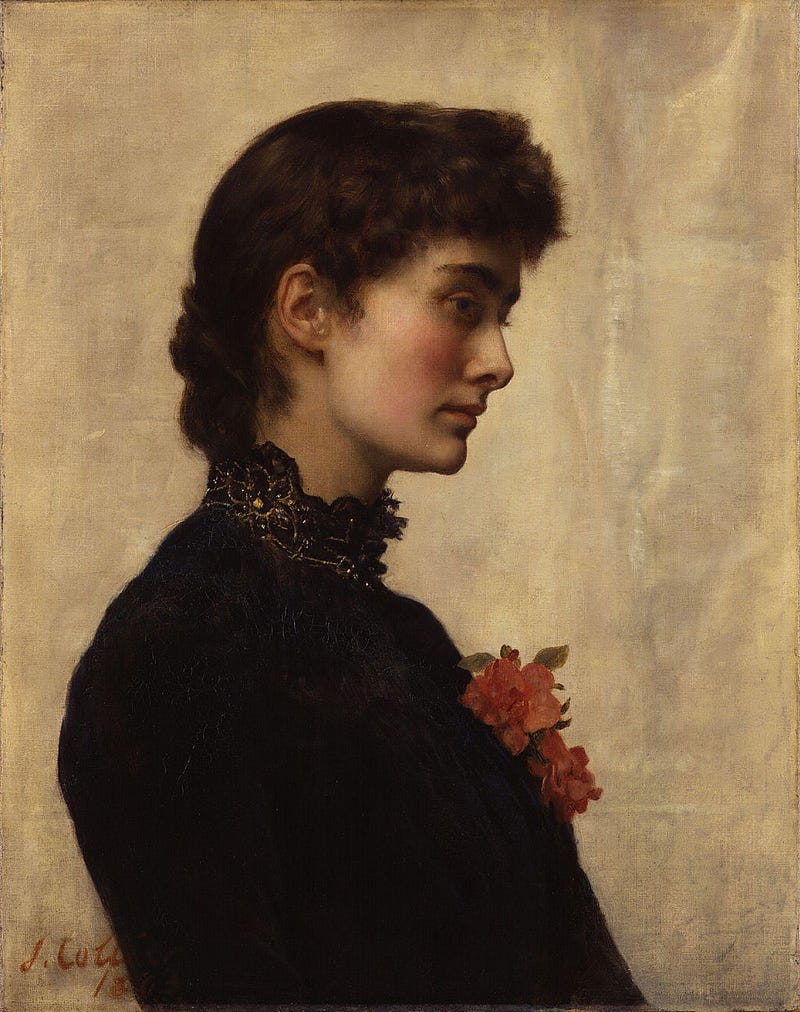
Art aficionados will have heard the name John Collier. How could they not considering his extensive catalogue from the late-Victorian and Edwardian eras? He has not had the same national staying power in people’s minds as Constable and Turner.
His grandfather was a prominent Quaker and Member of Parliament, and later made Lord of Monkswell, a county in Devon in the south of England. His early life in a successful family was unremarkable. He would marry twice, both times to the daughters of famed British biologist and ‘Darwin’s Bulldog’ Thomas Henry Huxley — the man who coined the term agnostic and likely influenced Collier’s own beliefs on religion. Had it not been for his remarkable skills with a brush, John Collier would have faded into history, a footnote in the family tree of minor English nobility. His skill though is beyond question.
The Darkness at the Heart of Man
I’ve tried for a long time to think what it was I loved about Collier’s work. Many of the scenes are mythological or depict real individuals such as Rudyard Kipling (author of the Jungle Book) or Charles Darwin, but many others depict people who are no longer recognisable to us today, field marshals, surgeons and the wives of rich men. Then, I compared his work to my other favourite English artist, John Martin, who paints epic, often biblical scenes with a roaring splash of vibrant colours that leave you awestruck.
It was there that I found my answer. Collier’s focus on the individual leaves no room to hide. You get lost in a Turner, Constable or Martin painting, but Collier’s work grabs you by the throat and forces you to look. Take the below Clytemnestra after the Murder (1882). For those that don’t know the myth, Clytemnestra is the wife of Agamemnon in the Iliad and mother of Iphigenia, the daughter that Agamemnon kills so that the Greeks can set sail and reach Troy. After returning home with a prisoner and concubine Cassandra, the oracle cursed to offer true prophecies but never be believed, both are murdered by his grief-stricken and near mad wife, Clytemnestra.
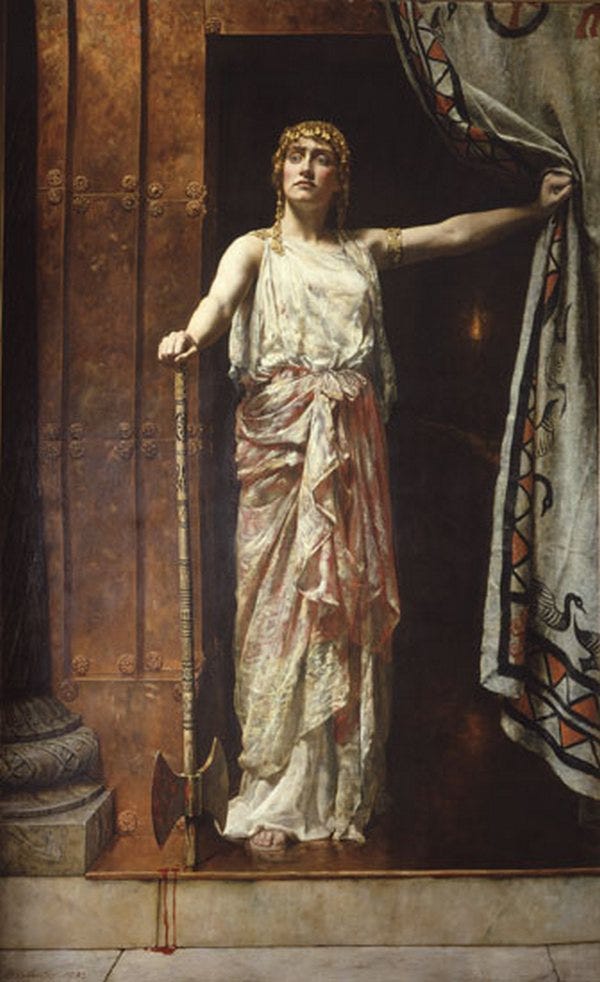
It is a horrific story, and it made for a horrific painting. Clytemnestra stands defiant, covered in blood, drawing the curtain aside, inviting us to peer into the darkness in search of her victims. But it’s the eyes that hint at what I think is a one of Collier’s greatest depictions in his work — madness, darkness and the unconscious mind. What Carl Jung would later call, the ‘shadow’, that repressed part of our minds liable to burst forth at any moment, especially in the restrained Victorian society of Collier. There is nothing romantic in Clytemnestra’s eyes, no tormented soul to grieve for. We are peering into the eyes of madness, a Lady Macbeth pushed over the edge. This is the raw unconscious mind.
This is what I love about Collier’s work and what makes him stand out. Though his subjects were not uncommon, famous individuals and mythology have been the bread and butter of artists for centuries, the unease he gives the viewer by the weaving of the unconscious mind into his paintings is electrifying. Lilith, 1887, (below) the first wife of Adam. She is coiled by the snake, who is presumably Satan, nude and almost caressing him with her cheek. To the deeply religious Victorians, this would have been scandalous, yet Collier depicts a woman enjoying her pleasures here. Lilith is shown to embrace her sin, her darkness, and relish in the gratification it gives her. The conscious gives way to the unconscious, the shadow rules.
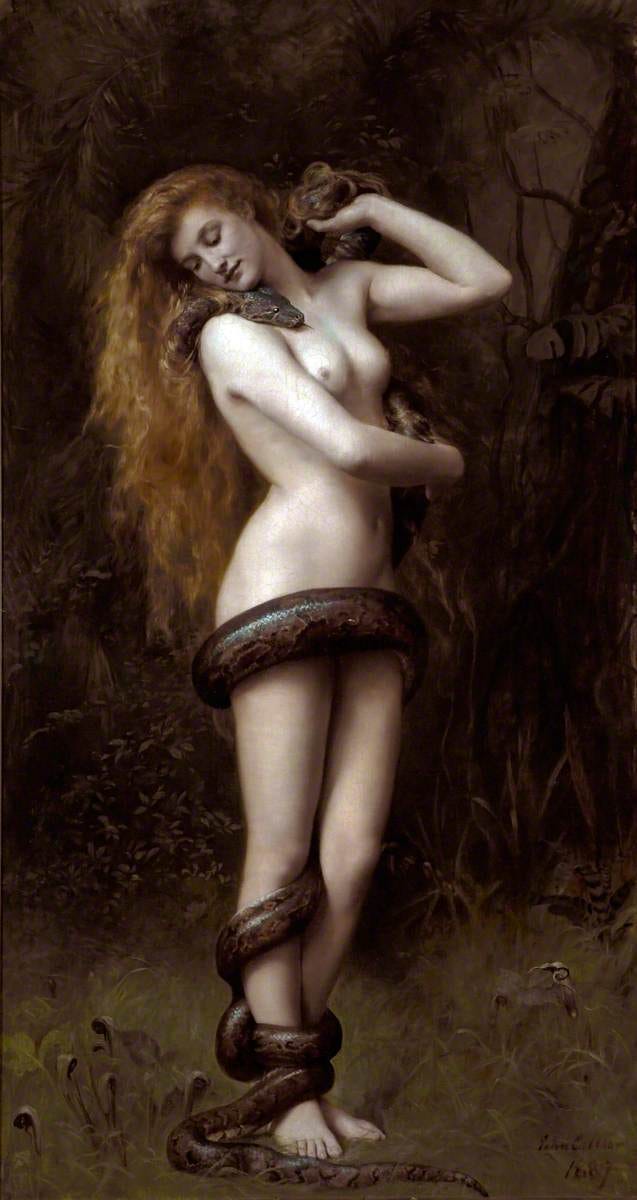
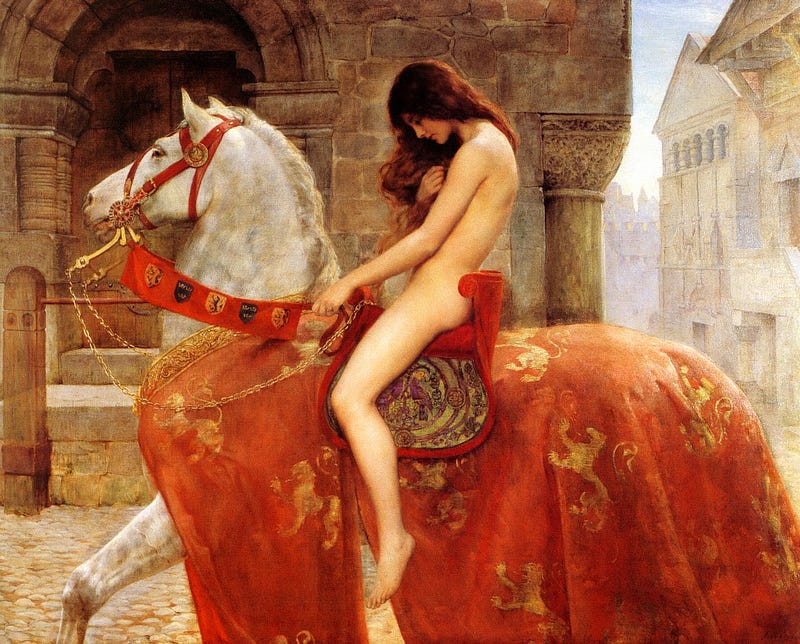
As we saw with Clytemnestra, unapologetic women are something of a theme for him. In Circe, (1885), the sorceress of the Odyssey, the titular woman is nude beside a tiger and leopard, alluring and enticing, curious about her observer and inviting you to approach, while the darkness lingers in the background, menacing you all the same. Lady Godiva, another quasi-mythical English figure — an English noblewoman who rode naked through her husband’s town in protest of his high taxing of the citizens — also shows these themes. Lady Godiva is caught off guard by the viewer, her shame finally overcoming her in her private moment, the unconscious recoiling at what she’s endured, yet she has defied her husband all the same.
#/media/File:CIRCE,_John_Collier_1885_-_Ger_Eenens_Collection_The_Netherlands.jpg)
Perhaps no two works show the unconscious so strongly as The Confession, 1902, and The Priestess at Delphi. Too vastly different subjects, yet both oozing menace and unease. The hellfire red of The Confession matches the devilish red of the Priestess of Delphi’s robe, the light from which reflects downward, giving her closed eyes an almost ember like quality. In The Confession, a man and woman seem resigned to something they’ve heard, shattered by unexpected news, while the priestess awaits her vision from the gods, the vapours of the temple creeping through the floor so that she can receive their words.
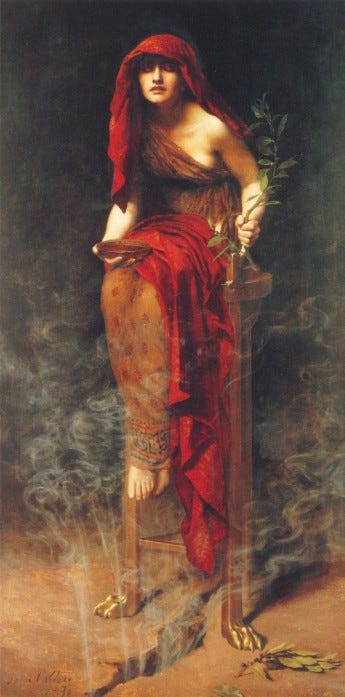
In a society shaken to its foundation by the work of Darwin, Nietzsche’s nihilism and Freud’s unconscious, is it any wonder that darkness haunts the canvases of Collier? Collier was himself an agnostic, following his father-in-law Huxley, be he was no fool. God had left a void in man, just as he had left a void in art and Collier filled that with the unconscious. His subjects are confronting and do not explain their actions, because by their very nature they cannot. The unconscious is not a rational being that expresses itself in neat Victorian prose. It lingers, repressed in the background of polite society, threatening us, until it bursts forth in the uncompromising stare of a Clytemnestra, the sensual evil of Lilith, the shame of Lady Godiva, or the incomprehension of a couple unable to bear anything but the dim glow of the firelight.
Collier captured more than the landscapes and people of his contemporaries and predecessors. He captured the unspeakable and unknowable face of us all.
Interested in learning even more on Art and History? Why not follow and sign up to my mailing list so you never miss one of my articles! And of course, check out the Collector for even more great articles. Thanks for reading and I’ll see you next time. Ciao!