
Jobs of the Future
Start building your legacy now
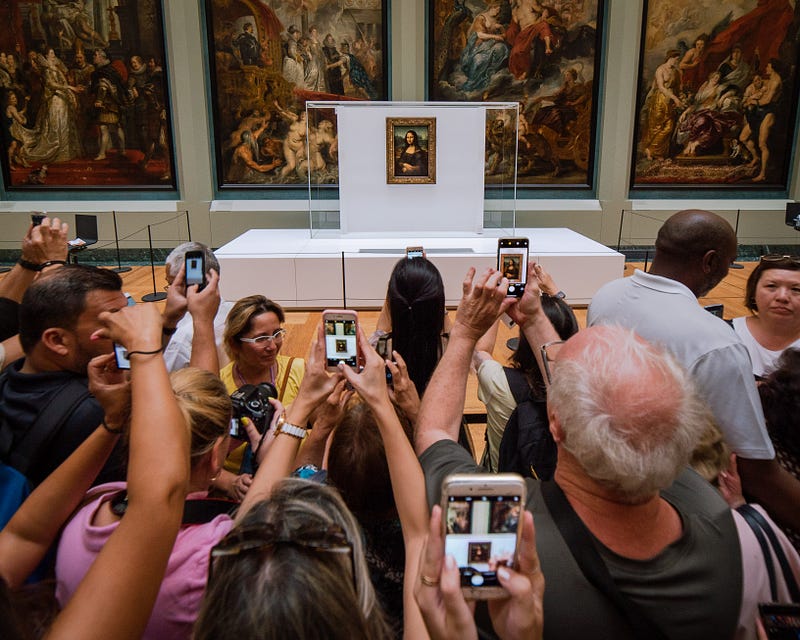
When you think Leonardo da Vinci you think timeless paintings like the Mona Lisa and The Last Supper. What you might not think about is how he got started.
In 1482 da Vinci sent a letter to the Duke of Milan. After all, The Duke was the head of the city and was loaded.
He headlined his Cover Letter with a flattering salutation — “Most Illustrious Lord.” A far cry from the typical “To Whom It May Concern.”
He emphasized numerous fields that he felt qualified for and outlined extremely specific skills that would be useful to the Duke. Surprisingly, he placed the skill that we know him best for, last.
Interesting strategy.
I always treated Cover letters as an afterthought. Something I whipped up as a prerequisite to press send. Shamelessly stringing banalities together that only echoed my resume resulting in zero responses.
Eventually, the desperation for a means to survive lowered my standards and was momentarily glad to take what I could get. Of course, this led to boredom or misery.
And it’s this stable exchange of manpower for salary has been the norm for a very long time. Until now. It’s changed more in the last 10 years than in the last 1000. How and where to get a job will never be the same again.
Three distinct things have fundamentally changed about jobs.
Flexibility Not Conformity
It used to be that you got a job right out of school. And you kept that job until you retired. Seniority secured your seat and experience increased your worth. Staying put was something to brag about.
Living in an industrial culture meant you had to drink the kool-aid. And that kool-aid transformed you into an obedient automaton. And as you’re well aware, no one drinks kool-aid anymore.
Portfolios, References, Testimonials
The problem with job interviews is that they’re trying to figure out if someone is good at job interviews.
Now we can show our work. We can create a legacy. A resume isn’t nearly as important as it used to be. Proof of consistent compliance printed on overpriced A4.
Whereas a body of work shows you know how to lead, organize, and create things that matter to people. That is your legacy, along with references and testimonials on Linkedin as verification.
What we’re beginning to see is something that is living and connected far more than a resume could be.
Platforms Like Slack Are Growing
If we’ve learned anything these past few months is that you don’t have to be in the building. Remote employment is growing.
It’s more efficient, less expensive, things happen faster and it is possible to create a work environment that doesn’t involve people being in the same room with each other.
On top of that, we’re seeing more and more companies outsourcing. My last company didn’t even have a payroll division. Companies will continue to outsource if the numbers indicate that there is no advantage to having that person inhouse.
So What Can We Do?
There are positive side effects of the gig economy.
Companies are realizing that there are only two types of employees. Replaceable cog-like employees that they should hire as fast and as inexpensively as they can.
And then the other kind of job. What Seth Godin describes as a linchpin job. A job for a special person doing special work. Work that has a huge return on investment if you do it with superb skill and effort.
You can acquire new skills in any area at any time. It’s something you can display. And skill is an opportunity. We see it right here on Medium with writers who’ve risen in the ranks due to their relentless effort of writing and submitting.
Do a project with someone. Overpromise and overdeliver. And over time people will come looking for you. Instead of you trying to figure out who the next Duke is.
Conclusion
The Duke ended up hiring da Vinci and put him in charge of a painting. We now recognize that famous painting as The Last Supper.
Be the 10x employee. The one who can add a zero, who can change the game, who can solve interesting problems. In this next decade, these employees are the ones companies will be seeking.
If that’s who you want to become then become that employee. Demonstrate that body of work and then maybe someday soon, someone will ask you to paint your last supper.