
The Reflective Eclectic
Job Satisfaction When the System is Rigged
By Navigating Around the Gervais Principle
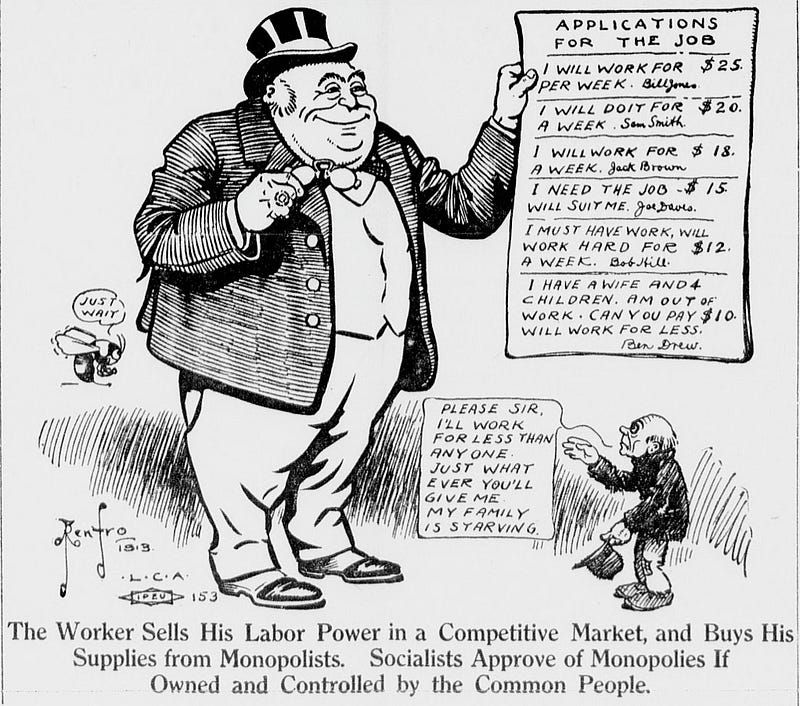
If you’re feeling you’re not getting anywhere at work, there is something you should know. At the top of any organization are sociopaths, at the bottom are losers, and in the middle are the clueless.
In a nutshell, that’s the Gervais Principle, named after Ricky Gervais, the creator of The Office, and coined by Venkatesh Rao, of the almost as popular blog, Ribbonfarm.
In case the Gervais Principle isn’t self-evident to you, let me explain. A sociopath with an idea recruits losers to do the work and a company is born. The losers accept a bad bargain for the sake of a steady paycheck. They know who cashes in big, and it’s not them, it’s the sociopaths at the top; so, they punch their clock, put in their time, but derive most of their satisfaction in life, if any, from what they do outside of work. The clueless, the middle managers or any hard worker, don’t acknowledge that the sociopaths are in bad faith. They believe they can get ahead by playing the game and busting their butts for the company. The sociopaths snicker, give the clueless a pittance more than the losers, and use the clueless to shield them from the people at the bottom who know the truth. The clueless believe they will rise in the organization, but they never will because they don’t understand how the game is played. It’s played according to the sociopath’s rules, not the rules in the employee handbook.
Folks from Wall Street, or any other rapacious, dog-eat-dog field readily agree that the Gervais Principle is an accurate summation of the firms in which they work. I’ve been employed by a few non-profit organizations that have proved to be headed by sociopaths and staffed by losers and clueless, as well. I can admit that I’ve been a loser, stuck in dead end jobs that weren’t going anywhere. While at a local health system, I was largely a member of the clueless, until I caught on to the game. Finally, I quit to go my own way, to private practice, taking a few of the local health system’s customers with me, as well as the skills they paid me to learn, thus becoming a small time sociopath with no losers or clueless to exploit.
If you agree with this characterization about organizations, what can you do about it? How is a person to behave if he wants to be successful, but also wants to sleep at night? True sociopaths don’t have any trouble sleeping, no matter who they screw; but, if you cannot be as ruthless as all that, what else can you do, but take your place in the ranks of the losers and clueless?
I think this is the place where we should turn down the hyperbole. The terms: sociopath, loser, and clueless, are amplified to help you understand the situation, but they don’t tell you what to do about it. Therefore, lets tone it down a little and reduce the heat. I don’t think, to be successful in an organization, you really need to be an actual, bona fide, clinically certified sociopath, with all the baggage that entails. I think it means that, to succeed in business, you have to be a businessman, to get rich, you’ve to be a capitalist, to prevail in office politics, you’ve got to study your Machiavelli. You’ve got to turn away from morals and ethics just a bit and trust that the market, with its blind hand, will sort things out.
The clueless are not entirely clueless, at least they don’t have to be, to be successful middle managers or satisfied hard workers. You should be able to love what you do and work hard at doing it for its own satisfaction, without being derided as clueless because the one percent reap most of the benefits. The prototypically clueless believe the lies the one percent makes them swallow: that they, too, will thrive in the same way the one percent thrives. Actual middle managers and hard workers know that its rigged, but take pleasure in work for its own sake.
When I’m on the soccer field, I put it all out there, I try my best, and do whatever I can do to bring my team victory; but, I’m not clueless because, when the game is over, I know it was just a game. I know that, even if we win, it doesn’t mean we’re all rich, famous, and get the hot chicks. If I score the winning goal, my teammates may hoist me on their shoulders for a celebration, but, by the end of the night, after so many beers, I can be as annoying to them as ever.
Nor are the losers really losers. Sure, they’ve accepted what one many may characterize, in a sociopathic frame of mind, as a bad bargain; but, is it, really? Your average worker, toiling in a factory, office, or school may never be the one percent, vacationing in Capri. They may not get the stock options, the inflated CEO pay, or the golden parachutes the sociopaths relish. Stuck in mindless, repetitive, and meaningless labor, it might be hard for them to find joy in what they do; but it doesn’t have to mean they are losers.
They are not entirely losers as long as they have an adequate, steady paycheck. I was a loser a few times; but every turn I took as one resulted in a net gain. While I worked in food service, I built my house. While I milked cows, I raised small children. While I sawed logs, I went to school at night. While I worked at that local health system and saw the groundbreaking mental health program I developed shut down by the bean counters, I did the grunt work of shrinking heads eight hours a day and wrote my first book. Loser, my ass.
So, you see, the Gervais Principle can illuminate many things about the organization in which you work. Just don’t take the terms too seriously.
Read more of The Reflective Eclectic and other stuff by Keith R Wilson


