
CHINESE FACE READING
Jing — Your Life Essence — How To Assess It & How To Preserve It Throughout A Vital Seniority
Do what you love
When the internet goes down, there’s that awful withdrawal and the now what? I dust off my external hard drive and plug it into my laptop.
Ah, the face reading webinar with Lillian Bridges. I’ll go with that.
My daughter, Hilarey is an acupuncturist. When she met Lillian a few years back, Lillian suggested that Hilarey take her face reading course; it goes hand in hand with Traditional Chinese Medicine and Five Elements Acupuncture, which Hilarey trained in.
Jing is your essence, your genetic endowment, your life energy. It indicates the strength of your physical constitution; you inherit it from both parents at the moment of conception.
Some are born with more, some are born with less.
Jing carries you through your life and is imperative for overall health, and for fulfilling those things that you choose to accomplish.
The important thing is not how much you’re born with, but how well you manage what Jing you have. While it’s fortunate to be born with plenty, those who are born with less often develop habits to conserve it, though some people without a lot of Jing can burn out by trying to keep up with those who have a lot.
Born with a lot? Sometimes these people take it for granted and live in ways that consume it.
Truly, it’s all about respecting what you have and living accordingly. What you’re born with is necessary to carry you through your entire life.
How much do you have in the first place? Indicators: lots of hair on the head; big, strong bones; wide hips; sturdy ankles, wrists; gap between the front teeth; a widow’s peak.
In face reading, another big indicator is the cartilage of the ear. “I always ask if I can touch the ear. I feel for the quality and strength of the cartilage. I bend the upper ear forward and back to see how stiff it is. The stiffer, the higher the quality of the physical Jing. And congratulations if it’s strong: you’ve got ten extra years of longevity based on the average lifespan,” says Lillian.
“If the cartilage of the ear is thin, soft, too pliable, it simply means that you are physically not as tough. You may not want to make your living as a farmer or construction worker or in any physically demanding way.” Lillian’s voice is young, melodic.
No need to despair if your constitution isn’t all that robust. Often people who haven’t a lot of Jing will have a strong spirit.
Lillian sees her spirit as the grace that carries her. How to test for it? Also on the ear, at the top, where the ear attaches to the head. Tug on it, it’s sensitive. The eyes will flare with Shen. It’s the strength of that point of attachment that indicates a strong spirit.
In the West, we don’t pay enough attention to how we live to preserve Jing. Once it’s gone, it’s gone.
Things that deplete Jing: not enough sleep; bad food — fast food, processed food — drugs, even prescription drugs should be used cautiously; alcohol; not enough exercise; too much exercise; not enough rest. People can use up a lifetime’s worth of Jing early in life such that they die young or are sickly in later years.
“Burn out is an indicator of the overuse of Jing. It’s the body’s way of saying let’s stop before we get really sick.
“With burn out, we’re often forced to slow down. But if we return to old ways, it’s likely that within a few years, we’ll come down with some real health challenge,” according to Lillian.
“Naps — why do we think naps are a sign of weakness? Actually, they are valuable and useful in Jing management.
Other things that dissipate Jing: Doing what you hate, living a life of compromise — in work, relationships.
An authentic life preserves and makes the most of Jing.
We were created by the Creator to be creative. Robert Stanley
One of the best ways to respect and extend Jing is by doing what you love. Use your talents. Even if you’re tired, you will draw energy from doing what gives you joy.
For Lillian, who was not blessed with a huge reservoir of Jing, one love is playing the piano. “I feel energy returning when I play, even though I’m not that good at it. I don’t practice enough.”
Another love is cooking. Even after a day of teaching, which saps her, she draws strength from preparing a meal.
Lillian had a client who loved to cook and she suggested that he open a restaurant. He said no, “If I did that, it would become a job. My nose isn’t long enough (an indicator of leadership). Besides, I have too much fire. I want to cook a lot of different things, not the same menu over and over.”
He was happy using his talent to replenish himself but knew that making a living at it would destroy his love for it.
For others, they can and possibly should make a living with their talents. One indicator is on the forehead, the Palace of Inheritance. This area indicates talents, gifts, and abilities bequeathed by the parents. The right side of the forehead is the mother, the left side, the father.
“Some foreheads are rounder, some are flatter.
“The rounder the forehead, the more important it is to use these ancestral gifts, even make a living with these talents.
“These abilities confer extra energy — they don’t use Jing that we’re born with but support and extend what we have.
“I can’t tell what the gifts are necessarily, but I can tell if someone is creative. What you see with these aptitudes is what the Chinese call wu wei — the ability to do without doing. Using these gifts is effortless, not only effortless, but it gives energy.
“Unblocking this ancestral Jing by using talents can even cure illnesses,” according to Lillian.
Another area that Lillian pays attention to is the philtrum, between the lower nose and the upper lip. It’s also called the Palace of Immortality.
We can become immortal in three ways, through:
- having children
- what we leave behind through creativity: music, art, writing, woodworking, gardening, problem solving
- enlightenment, or at least partial enlightenment where you’re known for spiritual teachings, which live beyond the physical self
From the philtrum, Lillian can tell how you’re managing your Jing. If the channel is broad where it begins under the nose, and narrower above the lip, this indicates having used a lot of Jing during younger years.
Wider at the bottom? This indicates that your most creative years are ahead.
The clarity of the two sides of the channel also indicate strength of Jing, along with the depth of the channel.
Often, women will have a horizontal line through the channel after menopause, but not always. This indicates the cessation of fertility. Or that line can come earlier through a lack of creativity.
Lines can change when we change. By becoming more creative, the strength and definition of the philtrum can improve. Lines can disappear.
So if you want to improve the quality and possibly the quantity of your life, the keys are creativity and using talents, along with leading an authentic life, one where the head and heart are congruent.
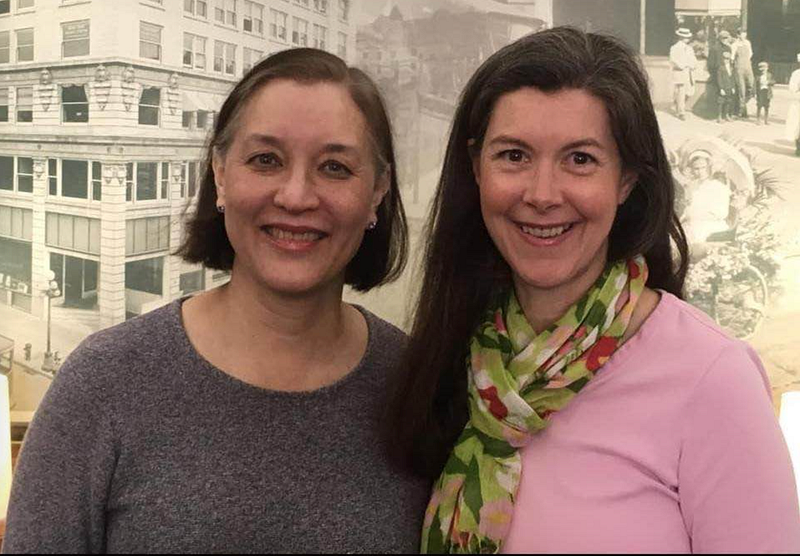
I had the good fortune to meet Lillian when Hilarey was taking classes from her in Seattle. I watched Hilarey’s sons while she was in class.
Lillian invited me drop by to be a subject for informal face reading practice, which was interesting and affirming, especially when a couple of women examined my ears. They really lit up: lots of Jing. And a strong spirit.
Later, Hilarey gifted me with a reading from Lillian, who encouraged me to tap into creativity even more.
And she told me that “you can’t help the people closest to you. You’ve very nurturing but better to nurture yourself now. You need your energy for your own pursuits.”
Spot on in regards to my codependency — indicated by vertical lines from the upper lip.
Though Lillian counseled me about giving at my own expense, it was advice she didn’t follow herself according to those who knew her best.
Lillian knew she didn’t have a lot of Jing, and that international travel to teach depleted her, but she said her strong spirit — Shen — carried her.
She told a story about a former husband who wanted to make sure she had enough for a good retirement. She laughed, saying she didn’t ever plan on retiring. She would work up to the very end.
And she did.
Lillian Pearl Bridges 1956–2021.
Thanks for reading. More from JonesPJ:
From Nicole Bray, points to ponder from many authors on spirituality. @braynicole1219