avatarChristian Baghai

Free AI web copilot to create summaries, insights and extended knowledge, download it at here

1477

Abstract

andom.com/wiki/General_Electric_YF120">NASA’s RTA project aims to bridge the gap between Mach 3 and Mach 5 flight regimes, integrating turbine-based combined cycle (TBCC) technologies</a>.</p><h1 id="80f8">Latest Variable Cycle Technology in Jet Engines</h1><p id="3539">Adaptive cycle engines, like GE’s XA100, are engineered to switch between high-thrust and high-efficiency modes, adapting to various flight conditions. <a href="https://military-history.fandom.com/wiki/General_Electric_YF120">This technology is poised to revolutionize military aviation, offering flexibility and performance enhancements</a>.</p><h1 id="966e">GE and Rolls-Royce F136 Engine Advancements</h1><p id="54c7">The F136 engine, an advanced turbofan developed for the Lockheed Martin F-35 Lightning II, was discontinued in 2011. <a href="https://military-history.fandom.com/wiki/General_Electric_YF120">However, its technological legacy continues to influence modern engine designs</a>.</p><h1 id="d17b">Integrated High Performance Turbine Engine Technology (IHPTET) Program Updates</h1><p id="b4f7">The IHPTET program, running from 1987 to 2005, aimed to double the performance capability of military turbine engines. <a href="https://military-history.fandom.com/wiki/General_Electric_YF120">Its developments have been employed in aircraft like the F-35 Joint Strike Fighter</a>.</p><h1 id="7976">Versatile Affordable Advanced Turbine Engines (VAATE) Progress</h1><p id="e4c2">The VAATE initiativ

Options

e seeks to improve engine thrust-to-weight ratios, reduce fuel consumption, and cut development and maintenance costs. It builds on the success of IHPTET and aims to maintain the U.S. <a href="https://military-history.fandom.com/wiki/General_Electric_YF120">lead in gas turbine propulsion</a>.</p><h1 id="c163">Adaptive Versatile Engine Technology (ADVENT) Program Developments</h1><p id="4631">The ADVENT program developed efficient adaptive cycle engines for next-generation military aircraft. <a href="https://military-history.fandom.com/wiki/General_Electric_YF120">It was succeeded by the Adaptive Engine Technology Demonstrator (AETD) and the Adaptive Engine Transition Program (AETP), focusing on engines for the F-35 and future fighters</a>.</p><h1 id="76b2">Adaptive Engine Technology Demonstrator (AETD) Updates</h1><p id="b774"><a href="https://military-history.fandom.com/wiki/General_Electric_YF120">Pratt & Whitney’s AETD program engine passed its initial design review, aiming for a 25% improvement in fuel efficiency and 10% in thrust levels compared to current combat aircraft engines</a>.</p><h1 id="99ef">Adaptive Engine Transition Program (AETP) Progress</h1><p id="a8c7"><a href="https://military-history.fandom.com/wiki/General_Electric_YF120">GE has completed its AETP effort with the XA100 adaptive cycle engine, which promises 30% more range and over 20% faster acceleration for the F-35, aligning with the Block 4 upgrades</a>.</p></article></body>

Jet Engines: The Evolution of Speed and Efficiency in the Skies
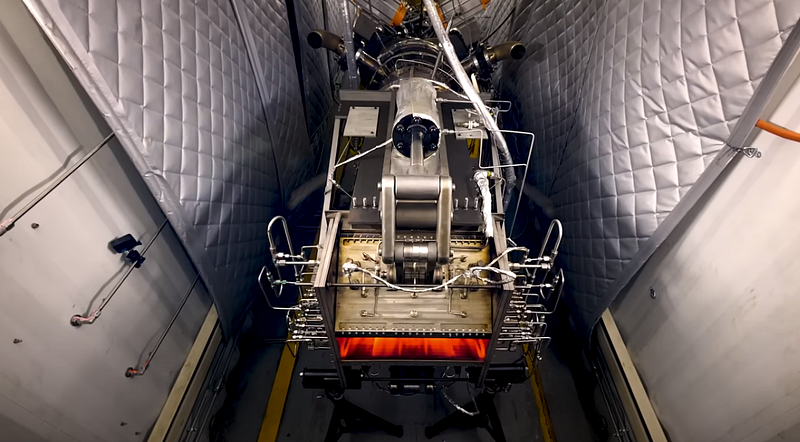
The landscape of jet engine technology is ever-evolving, with several programs pushing the boundaries of what’s possible. Here’s a look at the latest developments from key initiatives:

General Electric YF120 Engine Updates

The General Electric YF120, a variable cycle turbofan engine, was designed for the United States Air Force’s Advanced Tactical Fighter (ATF) project, which culminated in the F-22 Raptor.

Turbine-Based Combined Cycle (TBCC) Engine Developments

TBCC propulsion is a significant leap forward, combining turbojet engines with ramjets or scramjets to achieve hypersonic speeds. The Pratt and Whitney J58 engine, used on the SR-71 Blackbird, is a notable example of TBCC application. Recent efforts focus on overcoming the limitations of high-speed airbreathing propulsion systems.

Revolutionary Turbine Accelerator (RTA-1) Progress

NASA’s RTA project aims to bridge the gap between Mach 3 and Mach 5 flight regimes, integrating turbine-based combined cycle (TBCC) technologies.

Latest Variable Cycle Technology in Jet Engines

Adaptive cycle engines, like GE’s XA100, are engineered to switch between high-thrust and high-efficiency modes, adapting to various flight conditions. This technology is poised to revolutionize military aviation, offering flexibility and performance enhancements.

GE and Rolls-Royce F136 Engine Advancements

The F136 engine, an advanced turbofan developed for the Lockheed Martin F-35 Lightning II, was discontinued in 2011. However, its technological legacy continues to influence modern engine designs.

Integrated High Performance Turbine Engine Technology (IHPTET) Program Updates

The IHPTET program, running from 1987 to 2005, aimed to double the performance capability of military turbine engines. Its developments have been employed in aircraft like the F-35 Joint Strike Fighter.

Versatile Affordable Advanced Turbine Engines (VAATE) Progress

The VAATE initiative seeks to improve engine thrust-to-weight ratios, reduce fuel consumption, and cut development and maintenance costs. It builds on the success of IHPTET and aims to maintain the U.S. lead in gas turbine propulsion.

Adaptive Versatile Engine Technology (ADVENT) Program Developments

The ADVENT program developed efficient adaptive cycle engines for next-generation military aircraft. It was succeeded by the Adaptive Engine Technology Demonstrator (AETD) and the Adaptive Engine Transition Program (AETP), focusing on engines for the F-35 and future fighters.

Adaptive Engine Technology Demonstrator (AETD) Updates

Pratt & Whitney’s AETD program engine passed its initial design review, aiming for a 25% improvement in fuel efficiency and 10% in thrust levels compared to current combat aircraft engines.

Adaptive Engine Transition Program (AETP) Progress

GE has completed its AETP effort with the XA100 adaptive cycle engine, which promises 30% more range and over 20% faster acceleration for the F-35, aligning with the Block 4 upgrades.

Military
Aviation
Propulsion
Weapons
Technology
Recommended from ReadMedium