
Jerry Weintraub: How To Persist in the Face of Failure
A story about Elvis, a nobody, and the longest cold-calling campaign in history.
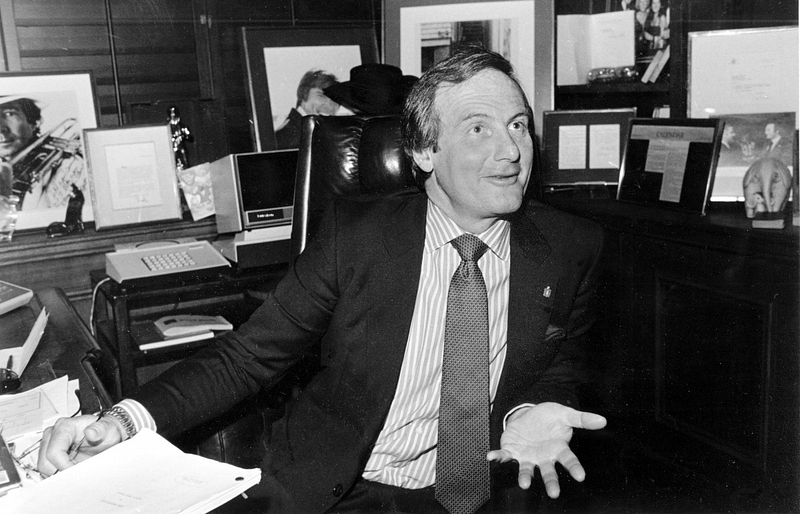
Jerry Weintraub was one of the most influential talent agents and film producers in the history of Hollywood.
You can thank him for any concert you’ve attended in a large arena, a concept he came up with in the 70s. He managed tours for Frank Sinatra, Bob Dylan and Neil Diamond.
But what can the late producer of the original Karate Kid and Ocean’s 11 teach you? What if you’re not in the show biz?
Well, no matter if you’re a writer, manager or art merchant, we all need one thing. Something without which, we’ll never reach our goals:
Persistence.
More than anything, persistence was the defining factor of Jerry’s life. My favorite line from his biography, When I Stop Talking, You’ll Know I’m Dead, is the following:
“The person who makes it is the person who keeps on going after everyone else has quit.”
…and no other story highlights it better than this one.
Calling the Colonel
In 1969, at 5 AM, Andreas Cornelis van Kuijk’s phone rings.
“Colonel Parker, this is Jerry Weintraub. I would like to take Elvis Presley on the road.”
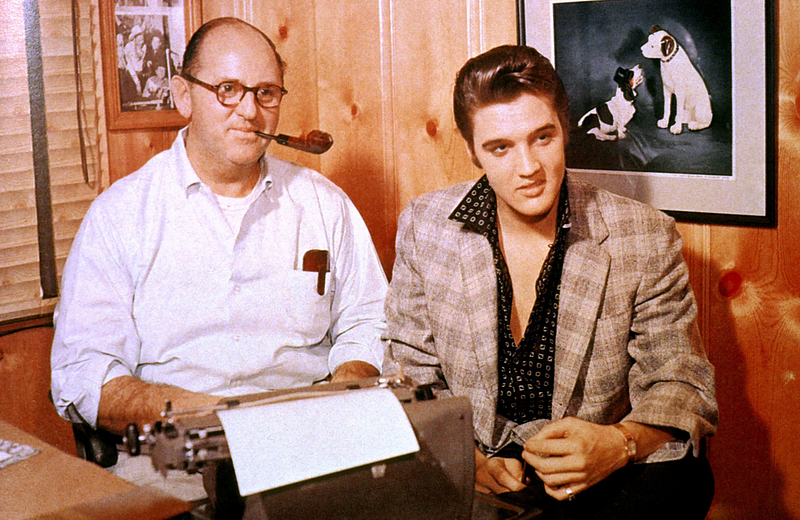
Colonel Tom Parker, as the Dutch-born talent manager is commonly known, manages the biggest star in the world at the time. Maybe ever. He’s caught off guard. So he takes his time.
“Who are you, son?”
“This is Jerry Weintraub. I have a strategy in mind, a way to take Elvis on the road that will mean a lot of money.”
Parker grins. He’s heard that before. He slowly turns the early morning cigar in his mouth.
“Look here, boy, in the first place, Elvis is not going on the road and, in the second, if he were to go on tour, which he’s not, it would not be you taking him. I’ve got guys lined up for that job, people we need to take care of.”
A clicking noise follows, then the dialling tone. Like the smoke of his cigar, the Colonel has vanished from the line.
Why Persistence?
We talk a lot about perseverance. True, it’s important to pick ourselves up when we fall down. The reason we need so much of it, though, is that we trip over every grain of sand.
Perseverance comes after failure. Maybe, if we persisted just a little bit longer before it happens, we’d already have arrived.
Jerry sure thought so:
If there’s one piece of advice I can give to young people, to kids trying to break out of Brooklyn and Kankakee, it’s this: persist, push, hang on, keep going, never give up. When the man says no, pretend you can’t hear him. Look confused, stammer, say, “Huh?”
Persistence — it’s a cliche, but it happens to work. The person who makes it is the person who keeps on going after everyone else has quit. This is more important than intelligence, pedigree, even connections.
Be dogged! Keep hitting that door until you bust it down! I have accomplished almost nothing on the first or second or even the third try — the breakthrough usually comes late, when everyone else has left the field.
Jerry’s chances of succeeding with that call were slim to begin with. He was staring failure in its blank, unimpressed face before he even picked up the phone. But that’s exactly what Jerry wanted.
A staring contest. And you know how to win those: by holding eye contact.
Intentions Are Just a Signal
The next morning, Jerry calls the Colonel again.
“What can I do for you, son?”
“Hello, Colonel, this is Jerry Weintraub. I want to take Elvis out on the road.”
“You don’t give up, do you, boy?”
“No, Colonel, not when I know I’m right.”
Once again, the Colonel hangs up. Only this time, he has a stern look on his face. Imagine his thoughts: Could he be serious? Who is this Weintraub guy? I wonder what his plan is.
The first call put Jerry on the map. The second sent a signal. A signal of intention.
But that’s not how it works, is it? Stephen R. Covey famously noted that we tend to judge only ourselves by our intentions. Others, however, aren’t so lucky. They have to convince us with their actions.
Reinforcing your intentions matters. It’s a signal that gets stronger over time. A signal of credibility, trust and reliability, both to yourself and whatever you’re trying to persist against.
But sooner or later, you have to back those intentions up with actions.
How soon? Well…
Give People a New Perspective to Judge From
Persistence is, above all, a promise to yourself. In Jerry’s case, he vowed that as long as the Colonel would pick up the phone, he’d keep calling.
So he kept calling. Every day. For a year. A year. When’s the last time you did something every day for a year?
‘I did not flip him in the course of one of those calls, but I had planted my name so deep in his brain he would never forget it. Whenever he thought of taking Elvis on tour, he thought of Jerry Weintraub.’
Looking at the situation from the Colonel’s perspective, he’s now in a tough spot. Even after 365 calls, all he can judge Jerry by is his name, his claim of having a strategy and his intentions. Strong intentions without a doubt, but still, just intentions.
However, under the pressure of so much intent, even the strongest eye starts to twitch. And so the Colonel opens the door. Just a crack.
“Do you still want to take my boy out on the road?”
“Yes, Colonel.”
“Well, I’ll be at the roulette table at the Hilton International Hotel in Vegas tomorrow at nine A.M. You meet me there with a check for a million dollars, and he’s yours.”
If nothing else, persistence opens people’s perspective. When they start entertaining the idea of a new reality, it’s your turn to show them just that.
The Action That Wins the Game
Back in 1969, $1,000,000 was real money. $6.8 million today. There were no VCs and no crowdfunding. Just Jerry and his phone.
I stayed up all night, getting turned down again and again, flying on coffee and adrenaline. “No,” “Don’t have it,” “Are you crazy?” “Who do you think I am?” “A million dollars? Ha, ha, ha!” “You’ve lost your mind,” “I will get back to you when my oil well hits” — these are the kinds of responses I was getting. I was desperate, running out of time.
Finally, late that night, I got a call back from an old friend.
A Seattle radio station owner, Lester Smith, eventually fronted the money in exchange for 50% of all of Jerry’s future earnings. No contracts. No proposals. No papers. He flew down to Vegas the same night.
I took the check out of my pocket, unfolded it, handed it to him. He looked at it for a moment, unlocked a safe, put the check inside, then said:
“Okay, Jerry, what do you want to do with my boy?”
“Take him out on the road.”
“Good! Let’s do it.”
When Jerry walked into the Colonel’s office, he was not just the only one who’d called for 365 days. He was also the only one with a check for a million dollars.
What better action than to be the last player in the game? That’s the definition of winning.
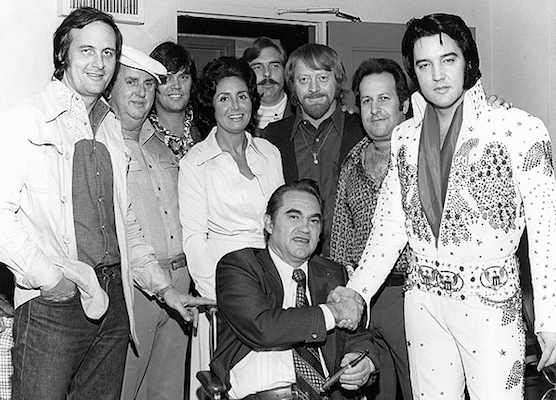
Three weeks later, Jerry took the King of Rock and Roll on tour. A tour that forever changed his life. Financially, career-wise, mentally.
Whatever game you’re trying to win, promise me you’ll start playing. Get into that staring contest. Show your intentions. Reinforce them. Persist.
Until you’re given an opportunity to back them up with actions.
Until you’re the one with the check.
Until you’re the last one standing.
The question Jerry left for us to answer is:
Who do you need to call?


