
Java Strings: Best Practices for Performance and Memory Optimization
Strings are central to Java programming, but improper handling can lead to performance and memory inefficiencies. This guide outlines modern best practices to optimize string usage in Java8 and above versions.
1. Prefer String Literals Over new String()
String Literal
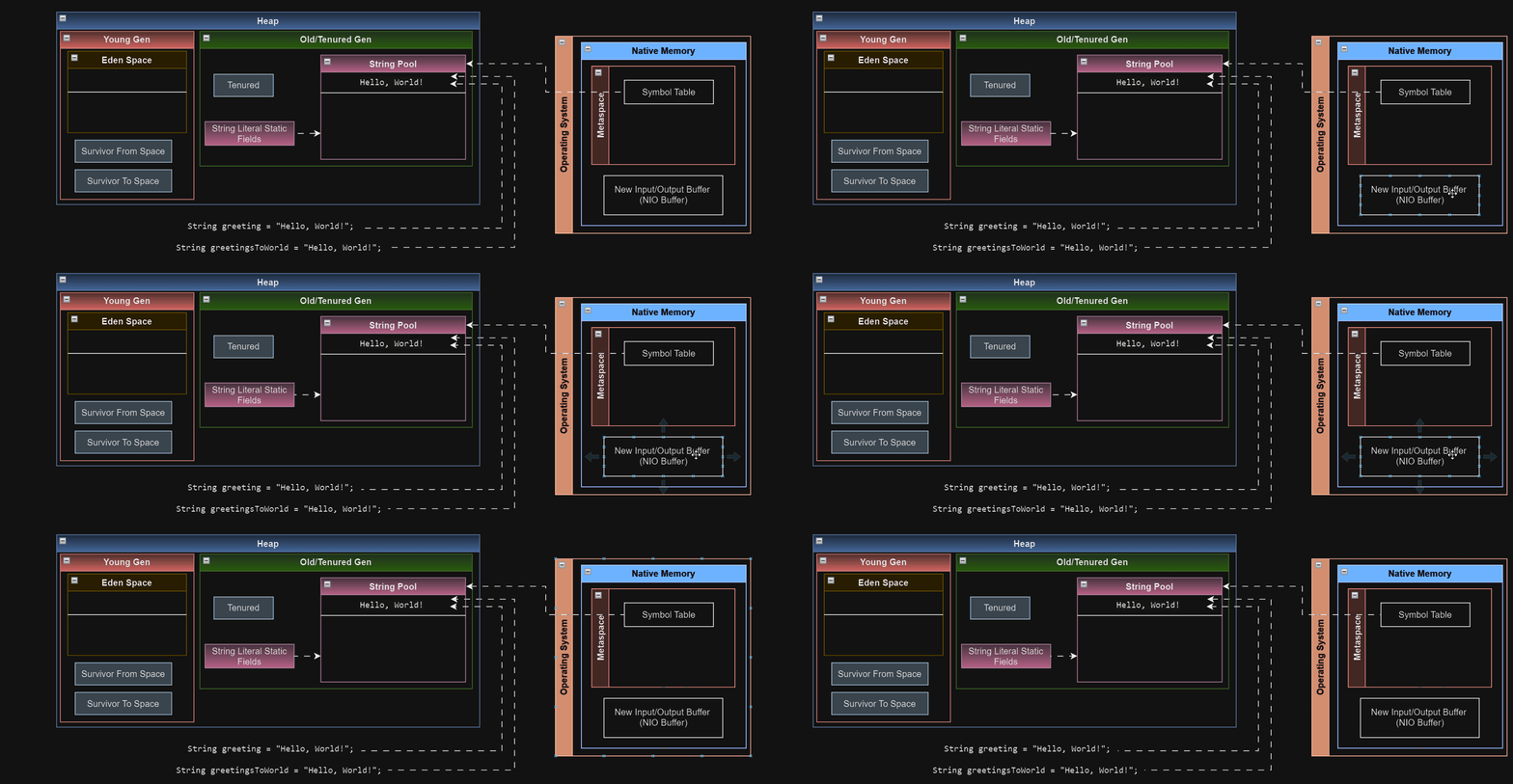
String greeting = "Hello, World!";String literals are stored in the JVM String Pool, reusing instances with the same value, thus saving memory and improving performance.
new String() Constructor
String greeting = new String("Hello, World!");This creates a new object in the heap, even if the string already exists in the pool, causing memory duplication.
Best Practice: Always prefer string literals to avoid unnecessary heap allocation and take advantage of the JVM’s string pooling mechanism.

2. When to Use new String()
There are specific use cases where creating a distinct string object with new String() is necessary:
2.1 Unique Object Creation
Ensures separate object identities, especially useful in APIs requiring reference comparisons (==), like:
String s1 = new String("Hello");
String s2 = new String("Hello");
System.out.println(s1 == s2); // false, different references
2.2 Security Concerns
Prevents sharing sensitive data when dealing with untrusted sources.
2.3 Cloning Strings
Ensures distinct copies in multithreaded environments or frameworks where objects may be modified at runtime.
2.4 Advanced Considerations for Distinct Object Identities
In some scenarios, APIs require distinct object identities, meaning that the object reference (==) matters, not just the value (equals()).
Common Use Cases:
- Reference-Based Comparisons: For APIs that rely on object references rather than value equality.
- Object Caching: Frameworks like Hibernate may cache based on object identity.
- Concurrency: Ensures thread safety by preventing shared mutable state.
- Identity Hashing: Objects stored in collections like
IdentityHashMaprely on reference-based hashing.
Example:
String s1 = new String("Hello");
String s2 = new String("Hello");
System.out.println(s1 == s2); // false, distinct objects
3. Understanding the String Pool and Symbol Table
3.1 String Pool:
- The String Pool is a JVM-managed space that stores and reuses string literals and interned strings. Starting from Java 7, the String Pool is part of the heap, specifically the Old/Tenured Generation, since string literals are typically long-lived.
- The size of the String Pool can be configured using the JVM flag
-XX:StringTableSize=<size>, which is useful for optimizing memory in applications that heavily use interned strings. The larger the pool, the more unique strings it can store without frequent rehashing.
3.2 Symbol Table:
- The Symbol Table is part of the Metaspace (native memory, not part of the heap) and contains metadata about class-level information, including interned strings and identifiers.
- It is crucial for managing the lifecycle of strings and ensuring efficient reuse by storing references to interned strings in the String Pool. This prevents the creation of duplicate string objects by ensuring that only one instance of a literal or interned string is stored in memory.
- The Symbol Table facilitates fast lookups of these strings, improving performance for string-heavy applications.
3.2.1 How Identical Strings Are Checked?
Hash Code Calculation:
- The JVM uses the
String.hashCode()method, which is based on the polynomial rolling hash function. This function calculates the hash code for the string using the formula:
h(s) = s[0] * 31^(n-1) + s[1] * 31^(n-2) + ... + s[n-1]
- Where
31is the multiplier,s[i]is the character at positioni, andnis the length of the string. This ensures a unique hash for strings with different content.
Symbol Table Lookup:
- The Symbol Table is typically implemented using a hash map (or similar hash-based structure) within Metaspace. The computed hash code from step 1 is used to look up the entry in this hash map.
- This lookup process is fast, as the hash map uses the hash code to index directly into the table and quickly retrieve a candidate string.
Content Comparison:
- If an entry is found with the same hash code, the JVM performs a character-by-character comparison of the two strings to ensure that their contents are identical.
- This step is necessary because different strings can theoretically produce the same hash code (hash collisions), and comparing each character ensures the two strings are truly identical.
String Pool (in Old Generation) reuses string literals and interned strings.
Symbol Table (in Metaspace) efficiently manages metadata and references to these strings, preventing duplication and optimizing memory usage.
4. String Pool Tuning for Performance Optimization
In memory-intensive applications, tuning the size of the string pool is crucial. In Java 8 and later, the pool size is dynamic, but you can explicitly set it using:
-XX:StringTableSize=<size>This can help optimize performance in applications that make heavy use of string interning.
5. String Interning
Java provides the intern() method to explicitly add a string to the pool, avoiding memory duplication. Example:
String s1 = new String("Hello").intern();
String s2 = "Hello";
System.out.println(s1 == s2); // true, same object
By interning s1, it is added to the pool, making s1 and s2 identical.

Conclusion
Efficient management of Java strings is critical to achieving optimal performance and memory usage. By preferring literals over new String(), understanding the JVM’s string pool, and knowing when to use string interning or distinct objects, you can build highly optimized Java applications.


