
Japanese People Eat Luxuriously, and That’s Why Healthy Eating is So Easy
Lessons from a foodie nation on how to eat well for life
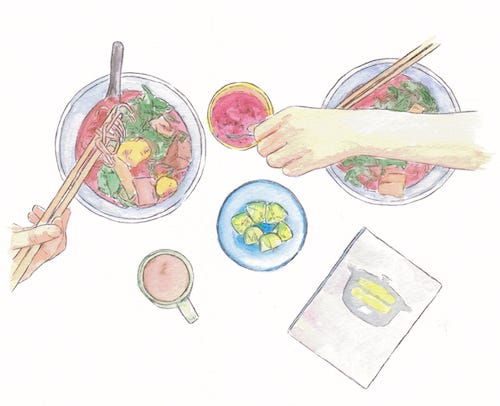
I was recently meeting with a friend for dinner in the U.S., and at the end of the meal the waiter came up to us and asked if we would like to see the dessert menu. I didn’t really have an opinion so I gestured to my friend that it was her choice. She laughed a little nervously and said, “Haha my friend probably wouldn’t approve, but can we please see it?”
I was confused — why wouldn’t I approve?
She said it was because she knew I was very health-conscious.
Oh.
Living healthfully and eating luxuriously are not mutually exclusive — it’s one and the same
There is a popular narrative in the dieting world, which has made many people equate living healthfully with a lifestyle that is highly restrictive. It associates meals of skinless chicken breast and steamed broccoli with discipline and control, whereas luxurious meals of creamy pastas or sweet desserts are associated with guilt, over-indulgence, and sometimes even laziness. But how could enjoying good food make anyone lazy?
Telling someone to eat stricter meals and to cut out desserts is usually well-meaning advice, but it’s not very useful for someone struggling with their health. I was surprised when my friend thought I didn’t approve of desserts, because I actually want to do the opposite where I want to help people design lives where they can enjoy the foods they love and never worry about the calories, while still living the healthiest life they could possibly imagine.
Because yes, the two ideas can and should coexist.
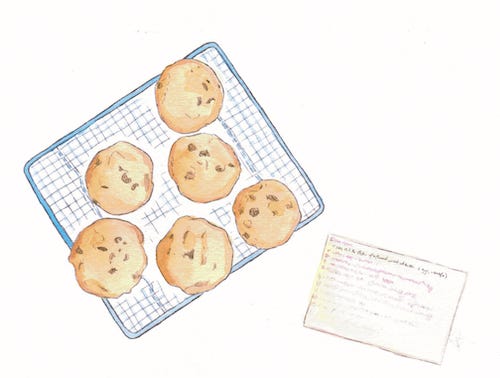
In Japan, people love love love their food
When you ask the question, “What do you want to be when you grow up?” to a Japanese classroom, chances are that quite a few of them would answer that they want to be a restaurateur or chef — in fact, pastry chef regularly tops the top three career choices for elementary school students, and is often the top 10 among high school girls.
It’s a foodie country. Bakeries and pastry shops in Japan are notorious for being consistent in delivering high quality, beautiful desserts, but even if you walk through any major station there are at least several vendors offering amazing desserts to buy on the spot. It’s customary to bring back sweets or artisanal local snacks to your friends whenever you go on a trip — often referred to as omiyage — , or if you are about to go into a meeting with a business partner you will often offer them some sort of wagashi or Japanese confectionery gift to share amiability.
But the fact that there is a big foodie culture in Japan does not mean that most of these people lead very unhealthy lives. Japan is a leader in longevity and has very low rates of obesity — the least among high-income developed nations at 4.3% — and has one of the lowest rates of mortality from heart disease among OECD member countries.
In fact, I would argue that Japan’s foodie culture is actually what keeps it so healthy, for three main reasons.
1. It helps you achieve consistency
Most diets fail not because the science behind diets is wrong, but because dieting is not a long-term solution. The common pattern is going on a diet for a few weeks or months and losing weight, but the minute we decide we want to eat ‘normally’ again, the weight creeps back.
It is much more effective to focus on a way of eating that doesn’t rely on deprivation, because it means we can keep up with it forever. There would be no weight to gain back, because you wouldn’t ever have to change what you eat.
This is the key to healthy eating for life.
2. You begin to measure food with quality, not quantity
When luxury meals are associated with quality rather than quantity, you redefine the feeling of treating yourself. It’s no longer associated with feelings of overstuffing yourself, but with taste and flavor.
It’s what allows Japanese food portions to stay moderate, because instead of demanding bigger portions, many Japanese consumers would rather demand food that is presented beautifully, is made with high quality ingredients, and is delicious.
Eating in moderation becomes not only easy, but natural.
3. You enjoy food slowly and gracefully
There are few Michelin-star restaurants where the average eating time is 30 minutes or less, because when meals are delicately balanced and carefully plated, we are psychologically primed to pay more attention and thus take our time.
There is no forced counting of the number of times we chew or trying to stay mindful of the flavors we taste — we are just naturally inclined to be mindful of the flavors and prolong the experience as long as possible.
Redefining luxury in the world of food can make healthy eating a pleasure
Eating healthfully and eating luxuriously should not be seen as two mutually exclusive lifestyles — they can be considered one and the same. For once you are able to combine a luxurious diet with a healthy one, then staying healthy for life is not a chore, but a wonderful pleasure of life.
Learn to be healthier, inspired by life in Japan:
I teach about health inspired by simple Japanese philosophies and lifestyle practices, so you can learn to find peace, fulfillment, strength, and health in your own body. Stay in the loop and get access to free resources: Sign up here!


