
An Exquisite Remedy for Life’s Fractures, Turning Brokenness into Brilliance
Discover the transformative Power of a Japanese restoration method and learn how I successfully applied this incredible philosophy to overcome a major setback in my life
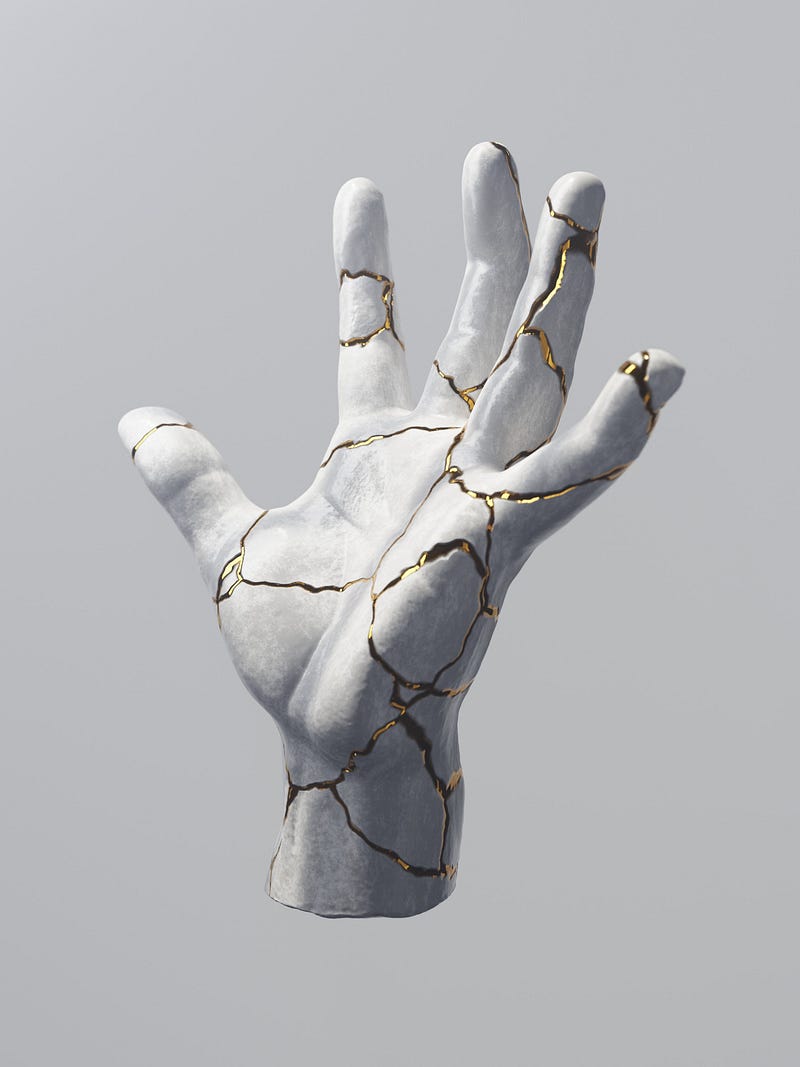
Do you have any areas in your life that you would like to see restored? Not only that but see become stronger and even more valuable than it was before you fixed it?
- Your Writing?
- Your Relationships?
- Your Friendships?
- Your Work?
- Your Heart?
- Your Mind?
- Your Body?
You’ll find value in exploring an age-old Japanese technique used for repairing pottery, adapting its principles to address the challenges in your life that appear damaged or in need of renewal. I personally embraced this profound philosophy to navigate a significant setback I encountered, a story I’ll be sharing shortly.
Firstly Let's Look at What the Philosophy is.
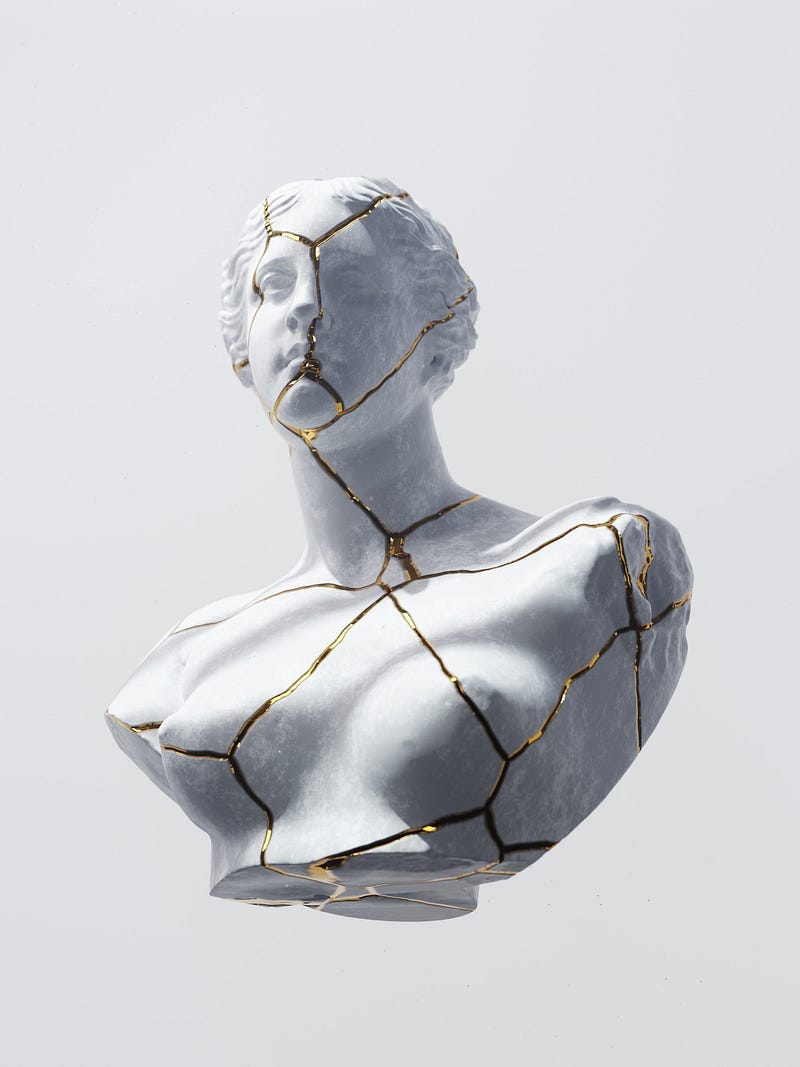
It’s called ‘Kintsugi’ and is a traditional Japanese art form that involves repairing broken pottery or ceramics using a special lacquer mixed with powdered gold, silver, or platinum.
The word “kintsugi” means “golden joinery” or “golden continuation ”in Japanese, depending on how you interpret the characters (金継ぎ).
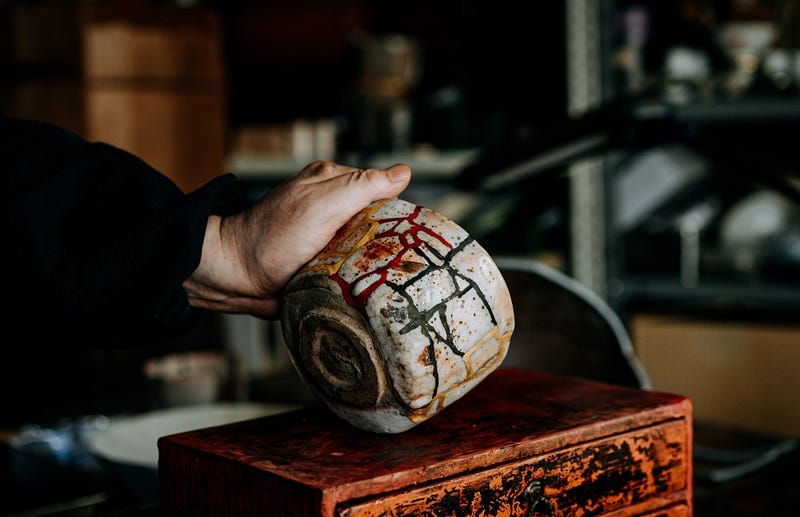
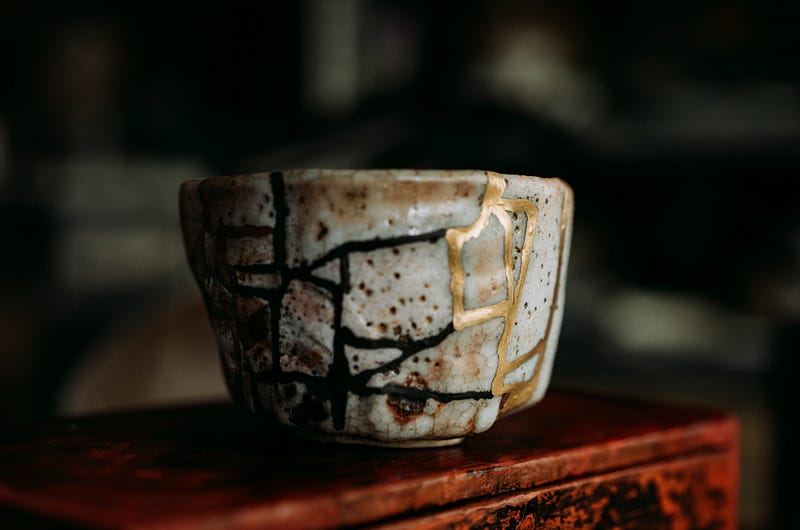
Kintsugi is not a new concept developed for modern times.
The technique of Kintsugi dates back to the 15th century when it was used to repair tea bowls and other ceramics that were damaged during daily use.
Rather than trying to hide the cracks or chips in the pottery like most of us would do, Kintsugi artists would use fillers like lacquer and gold mixture to create intricate designs that emphasize and celebrate the flaws in a piece.
In addition to the aesthetic appeal that it brings to restored pottery, Kintsugi also has a philosophical significance in Japanese culture.
The technique is often seen as a metaphor for the idea that beauty can emerge from imperfection and adversity.
By highlighting the cracks and flaws in a piece of pottery instead of hiding them, Kintsugi artists are able to transform something that might be considered broken or imperfect into a work of art that is even more valuable and beautiful than it was before.
That is the opposite of what we see in the West as usually things would be seen to depreciate once repaired. Think cars, think art*.
In fact, in the West, the depreciation factor of repaired items has such a devasting impact on the value of the piece that most insurance policies will not cover depreciation.
How the Process Can Help Heal and Mend Your Problems
Let’s look at some examples of how the concept of Kintsugi can be applied to real-life situations.
1. Your Relationships: Kintsugi can help mend and improve a relationship
Imagine your relationship as a delicate vessel that if not handled properly, can break or become cracked.
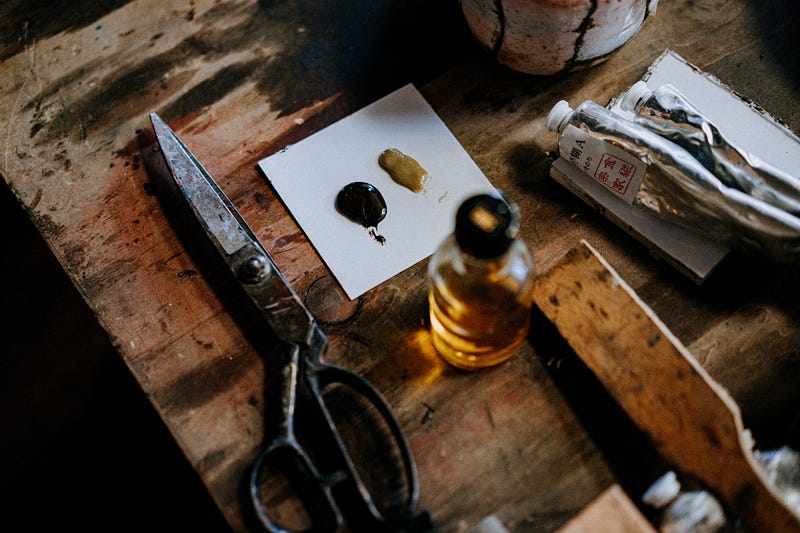
We know now that Kintsugi is about repairing broken pottery with gold or silver lacquer, celebrating the beauty of its scars. Similarly, you can apply the principles of Kintsugi to mend and strengthen your relationship.
- Embrace Imperfections: Just as Kintsugi embraces the imperfections of broken pottery, it’s important to accept that relationships are also susceptible to cracks and breaks. Acknowledge the flaws, disagreements, and challenges as opportunities for growth and understanding. Embrace the imperfections without despair, knowing that these issues can be mended and the beauty of your relationship will shine again.
- Communicate with Empathy: Communication is the golden thread that can repair the cracks in a relationship. Like the lacquer used in Kintsugi, empathy acts as the adhesive that holds you together. Practice active listening, express your emotions honestly, and seek to understand the perspective of your partner. Through compassionate communication, you can strengthen the bond between you just as the golden thread repairing pottery.
- Highlight Shared Values: In Kintsugi, the golden lines emphasize the uniqueness of each repaired piece. Similarly, in your relationship, focus on the shared values and strengths that brought you together. Reflect on the positive aspects of your connection, celebrate the moments of joy and harmony, and remind yourselves of the qualities that have come together to make your relationship special.
- Mend with Forgiveness: Just as Kintsugi repairs broken pottery, forgiveness can mend the fractures in a relationship. Let go of past hurts, resentments, and grudges. Cultivate forgiveness, both for yourself and your partner. Remember that forgiveness doesn’t mean forgetting, but rather choosing to move forward with love and understanding.
- Nurture Trust: Trust is the foundation upon which relationships are built. Like the meticulous repair process in Kintsugi, rebuilding trust takes time and patience. Be consistent in your actions, keep your promises, and demonstrate trustworthiness. Encourage open and honest communication, and show trust by being trustworthy yourself.
- Cultivate Growth Together: Kintsugi celebrates the transformative power of repair, and similarly, relationships can grow stronger through shared growth. Encourage personal and mutual development by supporting each other’s goals and aspirations. Engage in activities that promote connection and allow space for individual expression within the relationship.
- Practice Gratitude: Like the gold that makes repaired cracks in pottery beautiful, gratitude is a gold layer that enhances the beauty of a relationship. Express appreciation for your partner’s efforts, kindness, and presence. Focus on the positive aspects of your relationship and regularly acknowledge the things you are grateful for. This cultivates a sense of mutual respect, warmth and connection, strengthening the bond between you.
- Reflect and Learn: Kintsugi requires reflection and learning from the process of repair. Similarly, regularly reflect on your relationship dynamics, identifying areas for improvement and growth. Learn from past experiences, seek feedback from your partner, and be open to adapting your approach. This continuous reflection and learning can lead to a deeper and more resilient connection.
By applying the principles of Kintsugi to your relationship, embracing imperfections, communicating with empathy, highlighting shared values, mending with forgiveness, nurturing trust, cultivating growth together, practising gratitude, and reflecting and learning, you can mend the cracks and build a stronger, more beautiful bond.
Just like a beautifully repaired Kintsugi piece, your relationship can become a testament to the strength, resilience, and transformative power of love and understanding.
Reflecting on the beautifully repaired cracks in your relationship will help remind you of the fragility of what it is you both have. To remind you both of the importance of taking care and maintaining what a beautiful thing it is that you built, and then rebuilt together. To remind you that even in the future if more cracks surface in your relationship, you can heal them and make things better.
2. Your Writing: Applying the concept of Kintsugi to your Medium articles
In this next example, let’s take a look at using Kintsugi for the betterment of the articles you may have already published but need improvement.
Imagine your blog articles as delicate pieces of pottery, each with its own unique ideas and perspectives. Just like pottery, articles can sometimes break, be flawed, or lack a certain lustre. However, rather than discarding them, you can use the principles of Kintsugi to elevate and enhance their quality.
- Embrace Imperfections: Kintsugi teaches us to accept imperfections as part of the journey. Similarly, instead of being discouraged by any shortcomings in your articles, view them as opportunities for growth and improvement. Recognize that flaws are a natural part of the creative process.
- Highlight Uniqueness: Just as Kintsugi uses gold or silver to mend pottery, you can use your own unique voice and perspective to repair and enhance your articles. Introduce personal anecdotes, examples, or insights that make your content stand out. This way, you’re not just fixing the flaws but adding a touch of authenticity and character.
- Reinforce with Research: Like the lacquer used in Kintsugi, research can be the strong adhesive that holds your articles together. Conduct thorough research on your topic, gather reliable data, and incorporate supporting evidence to strengthen your arguments. This will provide a solid foundation for your repaired articles.
- Create Seamless Transitions: Kintsugi seamlessly connects broken pieces, ensuring a smooth flow. Similarly, pay attention to the structure and flow of your articles. Use clear headings, subheadings, and transitional phrases to guide your readers from one point to another. This way, you can mend any disjointed sections and improve the overall readability.
- Cultivate Engagement: Kintsugi celebrates the beauty of repaired pottery, just as you can celebrate the beauty of engagement with your readers. Encourage discussion and interaction by inviting comments, posing questions, or including calls to action. By fostering a sense of community, you can mend the gap between your articles and your readers, creating a stronger connection.
- Reflect and Iterate: Kintsugi is a reflective process, requiring careful consideration of each step. Similarly, after publishing your repaired articles, take the time to reflect on their performance. Analyze reader feedback, track engagement metrics, and identify areas for further improvement. Iterate your writing style, content structure, or topic selection based on these insights.
By applying the principles of Kintsugi to your blog articles, you can mend their flaws, enhance their uniqueness, and transform them into valuable pieces of content.
Embrace imperfections, add your personal touch, reinforce with research, create seamless transitions, cultivate engagement, and continuously iterate. In the end, your articles will shine brightly, just like a beautifully repaired Kintsugi masterpiece.
Your Body: My Personal Kintsugi (Internal). A Father-Son Journey of Strength and Healing:
Life often presents us with unforeseen challenges that test our resilience and spirit.
For my son and I, that challenge comes in the form of Osteogenesis Imperfecta, or ‘brittle bones.’ Fortunately, we are both type 1 and very mild (that’s him in the picture of our story below).
Yet with this, we have discovered a remarkable truth: every break we endure leads to newfound strength and beauty.
Did you know that after a bone breaks, it literally becomes stronger in the place it broke after healing?
When a bone breaks, the body goes into repair mode. It forms a clot and sends cells to the broken area, which produces new bone and cartilage.
Over time, this forms a soft callus that acts as a scaffold for new bone growth. As the healing continues, the bone undergoes remodelling, where the excess bone is removed and new bone is deposited.
This process takes several months to a year. The new bone starts off weaker but gradually becomes stronger than before the break.
This happens because the body adds more bone material during the remodelling phase.
A ‘before and after’ X-ray will show the bone is now thicker and stronger than before it broke.
How cool is that!?
Our journey together has not only deepened our father-son bond but also taught us the invaluable lessons of Kintsugi — the art of embracing imperfections and finding beauty in the process of healing.
My Personal Kintsugi (External):
In my younger years, I broke both my arms. One at 5, and one at 15. They both required operations leaving behind noticeable scars.
Those scars used to bother me greatly, and I was constantly self-conscious about them.
For a long time, I resorted to wearing skin-coloured surgical tape, attempting to conceal the raised and unsightly keloid scars.
However, as I entered adulthood and found myself in Japan, I chose to transform these scars into the most exquisite aspects of my physical being.
This led me on a remarkable journey I call ‘My 60 hours of Zen,’ during which I embarked on the creation of three-quarter Japanese-style tattoo sleeves.
These tattoos, designed for me and carefully crafted over numerous hours (60) became a canvas for incorporating my scars into their intricate patterns and I became ‘a living Kintsugi piece’.
The tattoos were designed to not cover, but compliment my scars, and even if I was given a ‘magical choice’ to have the ink and the scars all removed, I would never!
I think combined together they are more beautiful and valuable to me than beforehand. As in, the tattoos themselves would be incomplete without the scars.
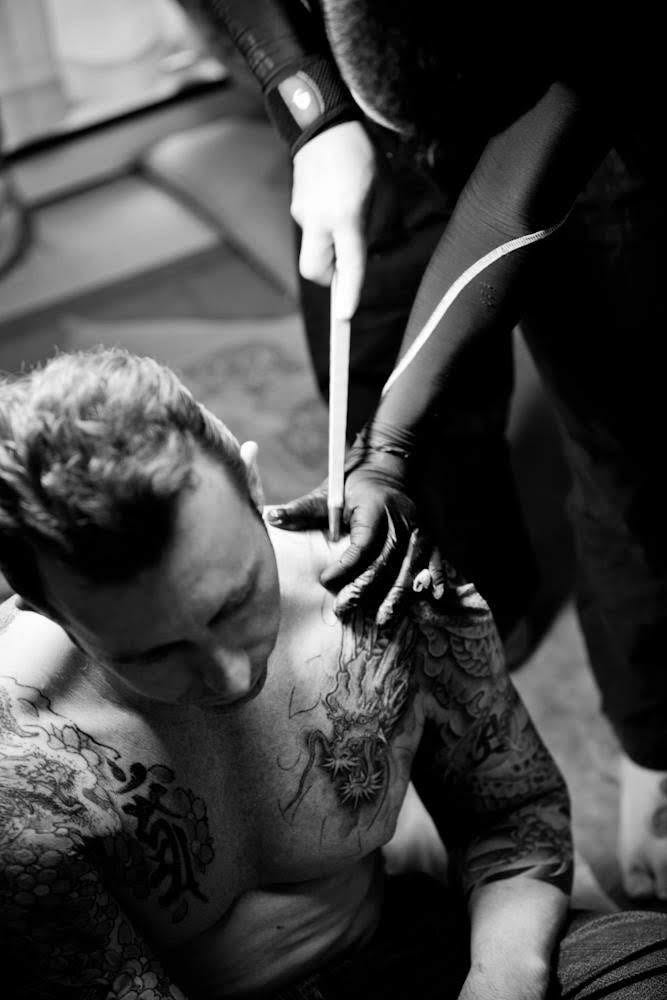
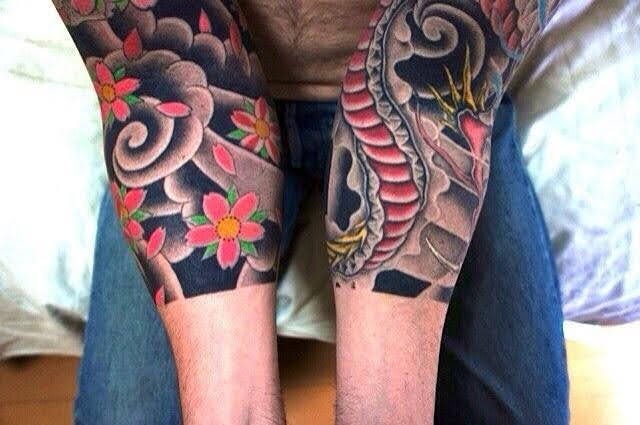
And thank you to fellow Mediumian Lucas Hawthorne for giving me the inspiration through their own journey to include this part of my story.
The Banksy Moment:
*When it comes to modern Art there has been a modern twist, as an incident in 2018 at Sotheby’s auction house in London rocked the Art world (that you may remember?). This event really does highlight the concept of damage and value.
The piece in question being auctioned was a spray-painted stencil artwork titled “Girl with Balloon,” one of Banksy’s most recognizable and iconic works.
As the hammer fell indicating the completion of the sale, so did the picture.
An alarm went off, and to the surprise of everyone present, the artwork began to self-destruct as a remotely activated shredder embedded within the frame of the artwork started to shred the bottom half of the painting.
The internal shredder seemed to have jammed and stopped halfway through the process. The shredded remains hung down like tassels from the frame, leaving the upper half of the artwork untouched.
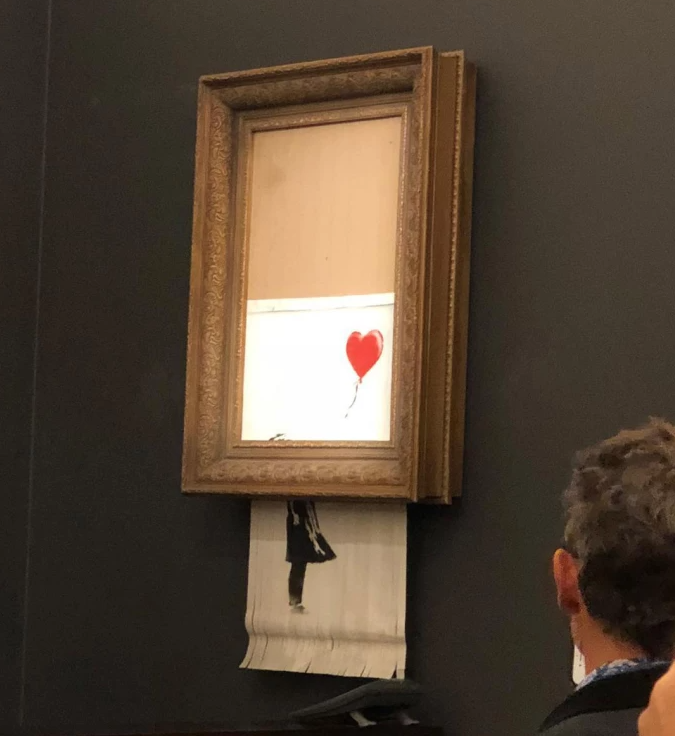
The stunt caught everyone off guard, including the auction house staff.
The partially shredded artwork created instant confusion, with audience members gasping and taking out their phones to document the unprecedented event.
Banksy himself later confirmed responsibility for the prank through an Instagram post, revealing that he had secretly built the shredder into the frame years earlier in anticipation of a future sale.
Contrary to Banksy’s intention of completely destroying the artwork, the unexpected act of destruction ended up increasing the piece’s value significantly.
The partially shredded “Girl with Balloon” was renamed “Love is in the Bin” following the incident, and its value skyrocketed. Sotheby’s, after consulting with the artwork’s buyer, decided to proceed with the sale, and the buyer ultimately agreed to keep the artwork in its altered state.
Many believed that the event had turned the piece into a new work of art, with the act of destruction becoming an integral part of its history.
Experts estimated that the value of the partially shredded artwork doubled or even tripled following the incident.
So it makes me wonder…
If an attempt was made to repair this piece of art, would it further increase its perceived value or lower it?
The valuation of anything is intrinsic so it would be interesting to see what the market would bear.
What Used to be the End can now be the Beginning:
So think about the issues in your life (work, relationships, hobbies) that are ‘broken’ or cracked and see if you can apply the lesson of Kintsugi to it.
Whatever it is, there are practical things you can do to address it.
Add a filler that will not only bring it back to life, and make things more beautiful than ever.
- Thank you The First for your suggestion of the Title. Greatly appreciated!