
Japanese Americans Who Overcame Racism To Find Success
Two American Pioneers, George Aratani and Paul Terasaki
Racism, hatred, and discrimination have become evident once again with the killing of George Floyd at the knee of a Minneapolis police officer in May 2020. Racism and police brutality against Black men have caused thousands of people to join in peaceful protests against racism. Unfortunately, Black people have had to endure racism for centuries. Although many Black people have become very successful in many fields, life is still difficult for many others because of racism which exists.
Chinese and Japanese immigrants who came to the United States in the 1800’s and the early 1900’s also faced racism on a regular basis. A lot of them and their children were able to persevere and overcome adversity to eventually find success.
Japanese immigrants thought it was important for their children to get a college education so that they could better themselves. Education was stressed to their children who were born in the United States and were American citizens. Some of the children were sent to the parents’ homeland of Japan to be educated. Most received their college degrees in the United States. Although they faced discrimination and racism, many of the young Japanese Americans were determined to receive a college education and find their own success in America.
When the United States entered World War II, Japanese Americans and immigrants from Japan faced even worse racism than they had previously experienced. They were immediately considered as the enemy. Two thirds of the population of Japanese descent by that time were American citizens, the children and grandchildren of the immigrants.
There were doctors, lawyers, and teachers among them. Although they had college degrees, it was difficult for them to find meaningful employment in their fields of study because of discrimination. Some of the Japanese immigrants and their American born children had achieved a measure of financial success before the war started. They lost it all during the war.
Racism and racial profiling happened with some of the Japanese community leaders being arrested by the FBI on the day of the bombing of Pearl Harbor, December 7, 1941. Sometimes their families did not know where they were taken for weeks or months. It became a very scary time for all those of Japanese heritage.
Their fears became reality after President Franklin D. Roosevelt signed Executive Order 9066 on February 19, 1942. This allowed for the military commander to remove any persons from certain designated areas. The order could have been used against others such as those of German and Italian heritage, but the racist action was only taken against those who were Japanese. It could have been used in Hawaii, but the military commander there deemed it was not necessary in the Islands.
The camps came into existence, and most of those of Japanese descent who lived on the west coast of the United States were put into the hastily built camps in remote and desolate areas of the country. The military did not wait for the camps to be ready before rounding up the Japanese people. They were placed first in temporary assembly centers which were generally race tracks or fairgrounds. They lived in horse stalls until they were moved to the crowded barracks in the ten camps which were established. Most were unjustly incarcerated for three or four years.
After the camp experience and the racism which the Japanese Americans endured, many came out of the camps to eventually make successful lives for themselves. When they left the camps, they were given a train ride or bus fare and $25 to start their lives over in the outside world. They had to persevere and not give up hope. It was not easy.
Some of those who had been imprisoned in the camps had an extremely difficult time, of course. There were some who overcame the hardships and became highly successful financially. I would like to tell you about two of the most successful Japanese American pioneers with whom I was privileged to become friends.
* * * * *
George Tetsuo Aratani was born on May 22, 1917, in Gardena, California. He was an American whose parents were immigrants from Japan. He became very successful as an entrepreneur who was the founder of Mikasa China and the owner of Kenwood Electronics Corporation.
The only child born to Setsuo and Yoshiko Aratani, George had two step siblings. The family moved to the San Fernando Valley and then to Guadalupe where he attended school. His father established some highly successful farming, manufacturing, and international trade companies. George was scouted by the Pittsburgh Pirates in high school, but a football injury changed any hope of becoming a professional athlete.
His parents sent George to Japan to pursue a college education. He attended Keio University in Tokyo and lived with his grandmother. His mother was staying in Japan when she became ill and died in December of 1935. George remained in Japan and continued to study at the Keio University law school.
George’s father remarried. George continued his studies in Japan until his father contracted tuberculosis in 1940. George returned to the United States and enrolled at Stanford University to finish his degree. However, his father passed away in April so George dropped out of school to help his stepmother run the Guadalupe Produce Company. He was 22 at the time.
Seeing all the anti-Japanese sentiment following the attack on Pearl Harbor, George transferred the company assets to the Nisei (second generation Americans of Japanese descent) executives in order to hopefully avoid losing the business. With the threat of incarceration, George was forced to leave the company in the hands of trustees of a separate business.
George and his stepmother were sent to the Tulare Assembly Center and then transferred to the camp at Gila River, Arizona. The business was lost. George Aratani’s biography, “An American Son: The Story of George Aratani,” details the losses his family suffered during the 1940s.
Because George was bilingual and fluent in Japanese, he was allowed to leave the camp in 1944 to serve at the U.S. Army Military Intelligence Service Language School. He taught Japanese to American soldiers. Before arriving at the Camp Savage school, he married Sakaye Inouye, who had been incarcerated at the nearby Poston camp.
After the war, George returned to California. He established an international trading company in 1946. He tried importing various products before finding a profitable market in Japanese-made chinaware. The Mikasa brand was founded in December 1957 and quickly became popular in the United States. George continued to expand his businesses and established Kenwood Electronics in 1961.
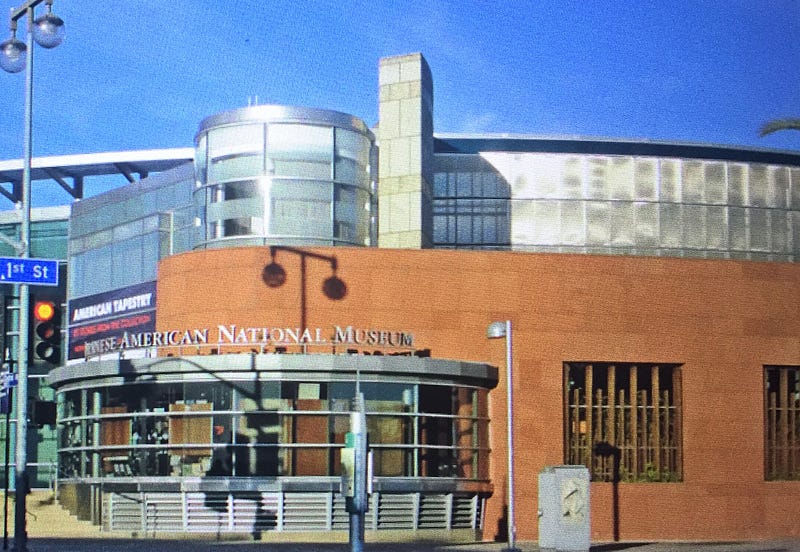
George focused most of his philanthropy on the Japanese American community. He helped found the Keiro Nursing Home in 1961, putting his home up for collateral on the initial loan. He helped with the restoration of historical buildings in Los Angeles’ Little Tokyo Japan Town. He was key to the establishment of the Japanese American Cultural and Community Center and the Japanese American National Museum which contains the George and Sakaye Aratani Central Hall, among others. In 2004, at UCLA, George and his wife endowed the United States’ first academic chair to study the World War II incarceration of Japanese Americans and their efforts to gain redress.
George Aratani spent his later years in the couple’s Hollywood Hills home built in 1958. He died February 19, 2013, at age 95.
It was my privilege to know George and to work with him on several projects where he provided funding. He supported the Japanese American Citizens League (JACL) with which I have also been heavily involved. He suggested and financially sponsored a National JACL Golf Tournament among other things.
* * * * *
Another great leader and philanthropist in the Japanese American community was Dr. Paul Ichiro Terasaki, who was born on September 10, 1929. He was an American scientist in the field of human organ transplant technology and professor emeritus of surgery at the UCLA School of Medicine.
Paul and his family were incarcerated at the Gila River War Relocation center in Arizona during World War II. He spent three years of high school there. After the war ended, they moved to Chicago where he graduated from Hyde Park High School. Paul enrolled at the University of Illinois at Navy Pier as a pre-med student for two years. The family moved to Southern California in 1948 where Paul transferred to UCLA and earned his Bachelors, Masters, and Ph.D degrees in Zoology.
Dr. Terasaki was hired by the UCLA Department of Surgery where he met Professor William Longmire, one of the founders of the UCLA School of Medicine. Dr. Longmire supported Dr. Terasaki in his research work and assisted him in obtaining a post-doctoral position in the laboratory of Nobel Laureate, Sir Peter Medawar, at the University College in London. That work set the tone for the future work that Dr. Terasaki did in transplantation.
Dr. Terasaki developed the micrototoxicity test in 1964 which was a tissue typing test for organ transplant donors and recipients. The test was adopted as the international standard for tissue testing. He and his corporation, One Lambda, played a critical role in the development of tissue testing and transplantation surgery.
Serving as a UCLA professor of surgery starting in 1969, Dr. Terasaki founded and directed the UCLA Tissue Typing Laboratory until his retirement from UCLA in 1999. He then established the Terasaki Foundation Laboratory.
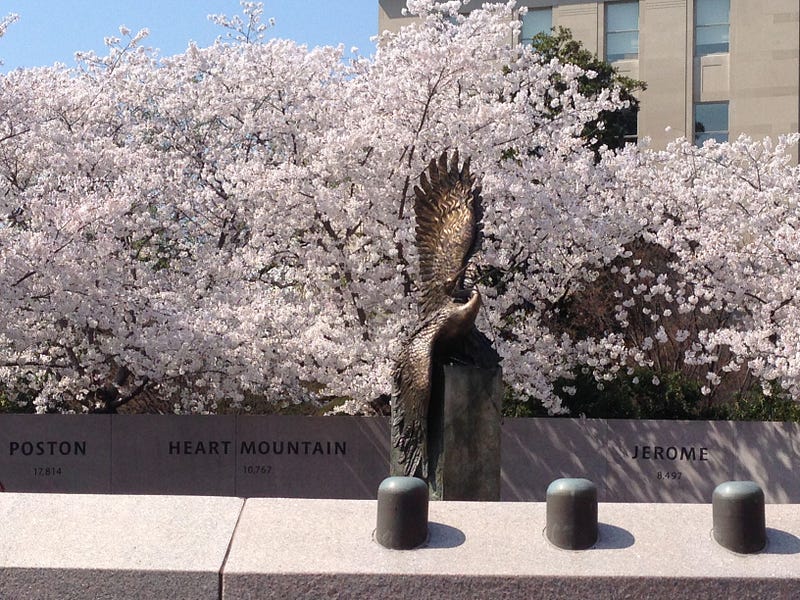
Dr. Terasaki and his artist wife, Hisako, have donated millions of dollars to UCLA, including toward the state of the art Terasaki Life Sciences Building. They were also committed to preserving the history of Japanese Americans in the United States and have generously contributed to the Japanese American National Museum in Los Angeles and the National Japanese American Memorial to Patriotism in Washington, D.C. He has contributed to many other worthy causes.
Among the many awards that Dr. Terasaki was given during his lifetime was the Order of the Sacred Treasure by the Emperor of Japan for his philanthropic work to promote a greater understanding of U.S.-Japan relations. He was awarded the UCLA Medal in 2012, the university’s highest honor.
Dr. Paul Terasaki and his wife had four children. He died on January 25, 2016, at his home in Beverly Hills. He was 86 years old.
I was able to see and visit with Dr. Terasaki at his home, at various events, and later in Washington, D.C. when he and his wife attended the Congressional Gold Medal Events which honored the Japanese American veterans of World War II.
What an honor to have known Dr. Paul Terasaki and George Aratani, two great Americans of Japanese heritage!
* * * * *
Conditions eventually improved for the Japanese Americans after the war’s end. It took hope and perseverance to not give up when darkness seemed to prevail. The stories of George Aratani and Paul Terasaki are ones of hope and light in the midst of racism and hatred. They were diligent and worked hard. They gave back to worthy causes after they found success. They established foundations and continue to give even after their passing.
* * * * *
I hope we can all learn from the examples of these two gentle giants who were instrumental in bringing a lot of good to the world in spite of the racism and discrimination which they faced. It is possible to rise above hardships to find success in this world. It takes a lot of hard work and determination, but it can be done. Success will come to those who fight for it. Work hard and consider others along the way to find joy in this life. Even if we are not millionaires, there will always be someone that we can help whether it be family, friends, neighbors, or strangers such as the homeless.
If they were here, George Aratani and Dr. Paul Terasaki would quite likely tell us to keep trying no matter what life throws at you. Believe in yourself and never give up. You can find success and happiness in this life. You need to keep working at it and endure to the end.
[Information on George Aratani and Dr. Paul Terasaki was taken from Wikipedia and other sources on the Internet as well as personal observation.]