
Japanese American Veterans Received The Congressional Gold Medal
Awarded for military service in World War II
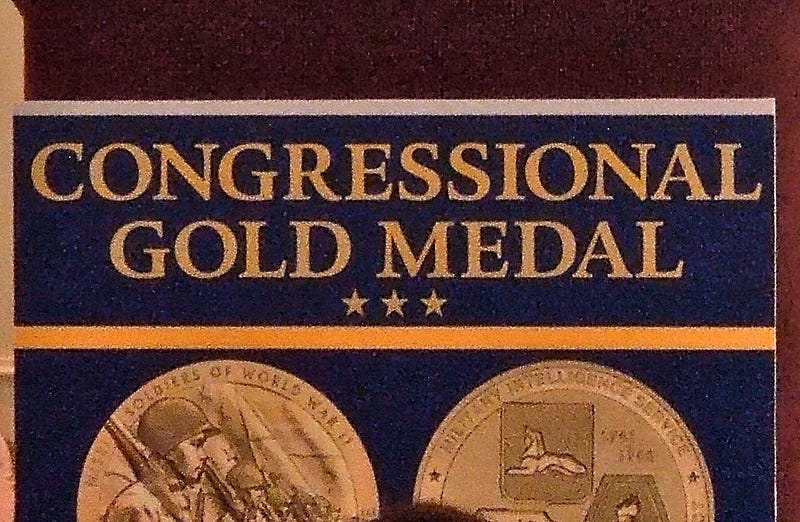
It was awarded more than sixty years after their service
The U.S. House of Representatives showed a rare case of bipartisanship when they voted unanimously with 411 votes to pass the Congressional Gold Medal Bill to collectively honor the Japanese American veterans of World War II. The bill was introduced in the House by Congressman Adam Schiff, a Democrat from California. Senator Barbara Boxer, also a Democrat of California, introduced the bill in the U.S. Senate. President Barack Obama signed the bill on October 4, 2010.
The official ceremony to award the Congressional Gold Medal was held at the Capitol. John Boehner, who was then the Speaker of the House of Representatives conducted. It was considered to be a rare moment of unity for the Democratic and Republican members of Congress as they praised the Japanese American veterans for their contributions and sacrifices during World War II. It was a great lesson that patiotism is beyond the bounds of color, race, and ethnicity.
As a member of the steering committee for the National Veterans Network (NVN) and as the National Executive Director/CEO of the Japanese American Citizens League (JACL) at that time, I was honored to be involved with this Congressional Gold Medal. Two of my staff members in Washington, D.C., Jean Shiraki and Phillip Ozaki who were Fellows for the JACL, were able to join with two veterans to visit members of Congress to gain support for the bill. These two young people, along with veterans Terry Shima and Grant Ichikawa, spent many hours visiting Capitol offices and telling stories of the Japanese American veterans to Senators and Representatives.
The bill awarded the Congressional Gold Medal collectively to the Japanese American veterans of World War II. This included members of the segregated unit of the 442nd Regimental Combat Team. These were mostly young Japanese Americans who had been incarcerated in the American concentration camps after the start of the war. They were joined by the 100th Battalion of Japanese Americans from Hawaii. The award also included the soldiers who served in the Military Intelligence Service (MIS) of the U.S. Army.
The various events of the Congressional Gold Medal ceremonies were attended by over 2,500 people. Around 300 of the veterans were there with family members and friends. The veterans were mostly in their eighties or nineties at the time of the ceremony, which took place in Washington, D.C. in November 2010.
Coordinating and planning for the Congressional Gold Medal ceremony was the NVN headed by Christine Sato-Yamazaki, executive director. Staff and members of the JACL and other Japanese American organizations were involved as well.
My oldest brother served in the MIS during World War II. His work was mostly secret so the family was not aware of exactly what he did. He was serving in the Pacific with the U.S. Army. After the war ended, he was with the Army in the occupation of Japan. He was ready to be discharged but extended his time to help the people of Japan recover from the ravages of the war. He died in the crash of a U.S. Army airplane in Japan before he could come home. I was a young child when he left to serve, and I was honored to receive the Congressional Gold Medal on his behalf.
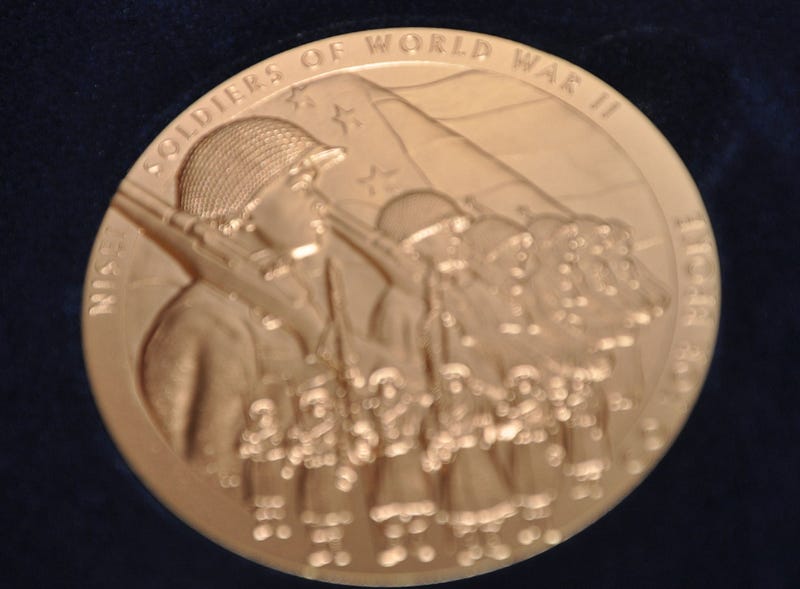
The Japanese American veterans of World War II helped provide a better life for those who came after them. Their efforts are often extolled as being an important part of ushering in the civi rights movement. President Harry S. Truman desegregated the US military after World War II. He praised the Japanese American veterans and told them that they had fought not only the enemy, but they had fought prejudice and had won.
These young people had shown great courage and dedication even when they and their families were being persecuted by being unjustly incarcerated in camps. They were willing to fight and die for freedom and the American way which had been denied them.
There are only a few remaining of the Japanese American veterans of World War II. We owe them a lot for being patriotic and loyal citizens of the United States of America. They were a great example for all people.
[Sources: The Japanese American Story As Told Through A Collection Of Speeches And Articles, www.thejapaneseamericanstory.com, www.nationalveteransnetwork.com]


