
January 6th Committee Names Legislative Conspirators
Emails include House members discussing plots to overturn the election
.jpg)
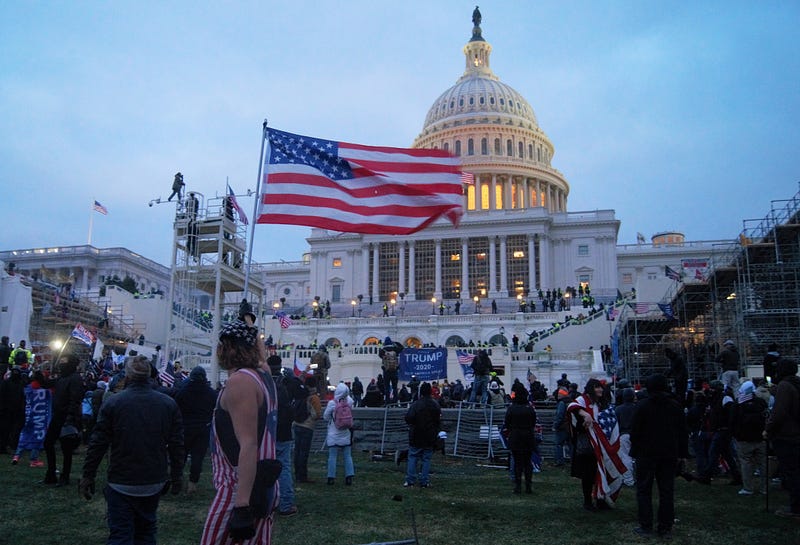
New evidence filed in federal court late Friday includes depositions from the Jan 6th select committee that show Donald Trump’s top allies in Congress were often present in meetings where strategies were discussed to prevent then-President-elect Joe Biden from taking office. These meetings included discussions to replace Justice Department leadership with new people who would raise doubts about the legitimacy of the election.
Lawmakers who attended the meetings, in person or by phone, included
- Matt Gaetz (R-Fla.)
- Louie Gohmert (R-Texas)
- Jim Jordan (R-Ohio)
- Scott Perry (R-Pa.)
- and numerous members of the House Freedom Caucus
All this is according to Cassidy Hutchinson, an aide to Mark Meadows who provided key testimony about the conversations and meetings Meadows had in December 2020. Hutchinson’s testimony matches evidence found in Meadows’ email.
The plots
The large cast of elected Republicans who enlisted in Trump’s last-ditch effort to cling to power traded theories about ways to push then-Vice President Mike Pence to single-handedly stop Biden’s election. They pushed the White House Counsel’s Office on the boundaries of the law regarding presidential electors. They also met with Pence’s staff to encourage the Vice President to take direct action on January 6th, when Congress convened to count electoral votes.
They felt that he had the authority to — pardon me if my phrasing isn’t correct on this, but — send votes back to the States or the electors back to the States. — Cathy Hutchinson
In the court filing, the select panel asked a federal court to throw out a lawsuit by Mark Meadows against the committee. In so doing, they revealed that Meadows turned over 2,319 text messages during a brief period of cooperation but withheld more than 1,000. As the committee describes his role,
[H]e was not acting as anything like a typical White House Chief of Staff advising the President on official matters of government policy. Mr. Meadows was playing a campaign role, attempting to facilitate a strategy that would have reversed the certified results of the 2020 election. — House General Counsel Doug Letter
Some Republican House members attended a Dec. 21 meeting where Rudy Giuliani, then the president’s personal lawyer, pushed for Pence to unilaterally refuse to count Biden’s electors and instead send the election back to various GOP-controlled state legislatures, where they would then replace Biden’s electors with Trump’s. Some of these lawmakers were also present in December meetings when members of the White House Counsel’s Office raised significant legal doubts about this plan.
The messages
Soon thereafter, text messages between Representative Perry and Meadows discussed replacing Justice Department leaders before January 6th with officials more sympathetic to Trump’s claims of voter fraud.
“Mark, just checking in as time continues to count down. 11 days to 1/6 and 25 days to inauguration,” Representative Perry texted the then-White House chief of staff on December 26th, asking him to get in touch with Justice Department official Jeffrey Clark. “We gotta get going!”
“I got it. I think I understand. Let me work on the deputy position,” Meadows responded.
Steven Engel, the former head of the Justice Department’s Office of Legal Counsel, indicated that Clark proposed on Jan. 3, 2021, that the Justice Department issue a legal advisory opinion regarding “the Vice President with respect to his authority when it comes to opening the votes as the President of the Senate on January 6th.”
“I shot down that idea,” according to Engel. “I said: ‘That’s an absurd idea.’”
A later message released by the committee shows that Meadows told Jordan in a text message that he still supported the efforts to send the election back to the states.
“I have pushed for this. Not sure it is going to happen,” Meadows told Jordan the morning of January 6th.
The committee’s depositions emphasized Meadows’ role as an unofficial campaign adviser, noting that he straddled the line between his official White House work and his effort to keep Trump in office. Hundreds of documents Meadows claimed to be privileged included contacts he had with Trump campaign lawyers, according to a privilege log provided by Meadows himself.
The implementation
The committee chronicled some of Meadows’ other activities in the final weeks before January 6th, including:
- Helping the campaign craft and distribute talking points about election fraud, in concert with allies like attorney Cleta Mitchell and campaign adviser Jason Miller. “This is what I prepared and sent to Sen Braun last night to help prepare him for ABC appearance this am,” Mitchell wrote on Jan. 6 to Meadows, who forwarded the email to Miller. “Can the WH press office get and start using??”
- Communicating with Georgia Secretary of State Raffensperger and his deputy Jason Fuchs around efforts to get Georgia officials to overturn the results in the state.
- Texting often with Perry about plans to install Clark as the new head of the Justice Department in order to cast doubt on the legitimacy of the election. In one exchange, Perry indicated he had sent separate messages to Meadows via Signal, and the two discussed a potential deputy for Clark.
- Meeting in his office with retired Army Col. Phil Waldron, who was pushing for Trump to invoke national security procedures as part of a plan to seize control of voting machines. Waldron later referenced the meeting in an email sent to Meadows’ Gmail account.
- Making a series of calls on January 6th from a secure “control car” in Trump’s motorcade.
The unknowns
Equally remarkable, with all these calls going back and forth, is who wasn’t called on or before January 6th. In the words of the committee, “It is also now clear that Mr. Trump never telephoned his Secretary of Defense that day to order deployment of National Guard, and never contacted any federal law enforcement agency to order security assistance to the Capitol Police.”
There is a seven-hour gap in Trump’s call logs for the day of the Capitol insurrection. Based on the testimony of the officials involved, we know he wasn’t talking to the Defense Department, the National Guard, or any federal law enforcement agency. It remains to be revealed how many calls — on that day and before — among pro-Trump conspirators included the president himself.