
10 Famous Writers and Their Desk Setups
Are you optimizing your space for success?
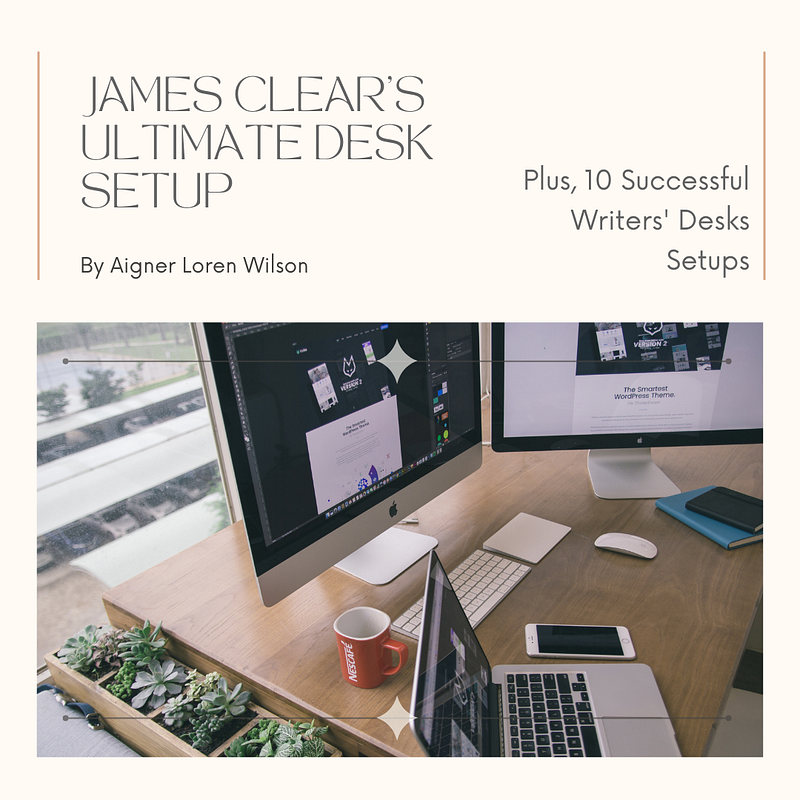
Desk for Success
When you sit down at your desk, does it make you happy? Productive? Calm? Or does it make you groan, feel disorderly, or out of synch with yourself and work? Your environment is important.
Even more so if you’re a creative.
Some writers have even been able to chart advances in their career or work to when they upgraded or transformed their desk setups. I’m one of them. I went from having no desk and writing in a no notebook whenever I felt like to having a full-fledged office with a pretty large desk and working as a full-time writer and editor.
James Clear stresses putting what is most important to you upfront on your desk. Want to write more? Keep your notebook open and your pen at the ready on your desk. Want to publish more? Have a list of the places you’re going to write for in a place where you’ll see it on your desk. Clear also advises resetting your setup after completing every task.
“Whenever you organize a space for its intended purpose, you are priming it to make the next action easy. This is one of the most practical and simple ways to improve your habits.” –James Clear
What’s important and necessary for my desk might not be the same for you. Then again, while doing research for this article, I realized that all writers' desks have pretty much the same three items arranged on them. As you go through the below writers and their writing tips, see if you can notice some similarities. Drop what you find in the comments!
10 Writers and Their Desk Setups
While there are some similarities to all of these writers' desks, each one is unique to the author. While they all may have artwork on the walls, which pictures they choose to surround themselves in is always different. Some desks are designed to accommodate authors’ disabilities like our first author, science fiction master Arthur C. Clarke. What is special and unique about your desks? For me, it’s my monster claws.
1. Arthur C. Clarke
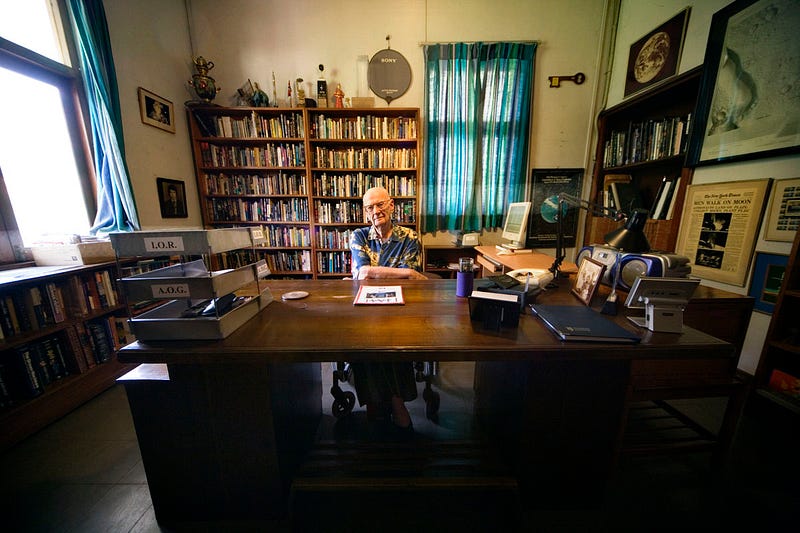
“It was, I believe, Hemingway who said ‘Writing is not a full-time occupation’. That’s true in more ways than one. You must live before you can write. And you must live while you are writing.”
– Arthur C Clarke, in 1984 essay titled ‘Writing to Sell’
Arthur C. Clarke is best known as an English science fiction writer and futurist whose works have been adapted into movies and TV series such as 2001: A Space Odyssey and Childhood’s End. He wrote over 300 books, articles, short stories, and more during his prolific career, and taking a look at his practice and desk, it’s no wonder. Clarke was known for laboring over a piece he was writing to the point of being considered a perfectionist. Though it is clear and orderly in the picture, I wonder what it looked like when he was in the full swing of projects.
2. Ray Bradbury
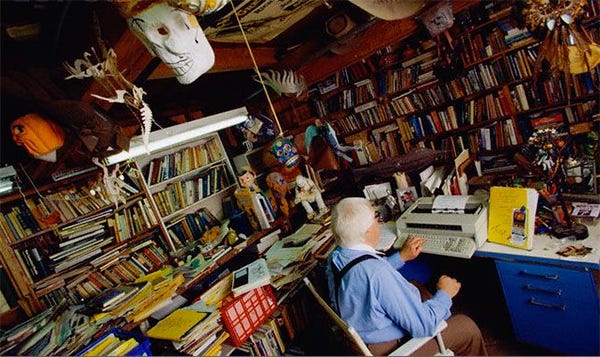
“If you want to create, you must be the most sublime fool that God ever turned out and sent rambling. You must write every single day of your life. You must read dreadful dumb books and glorious books, and let them wrestle in beautiful fights inside your head, vulgar one moment, brilliant the next. You must lurk in libraries and climb the stacks like ladders...” -Ray Bradbury as quoted in Advice to Writers, Jon Winokur, 2000
Ray Bradbury is another speculative fiction writer who reached mega acclaim over the years for his books, stories, and the adaptions that have resulted from them. Many readers in the American school system have been privileged enough to have encountered one of his most famous books Fahrenheit 451. That famous novel was originally written on a rented typewriter where Bradbury busted it out in 9 days in the UCLA Powell Library basement. For a writer who didn’t believe in schedules, Bradbury was still able to turn out knockout hit after knockout, publishing over 600 pieces of fiction. He believed in writing fast and often, get out and on to the page with all your emotion and none of your reason. And who could argue with a man who wrote something as beautifully haunting as Dandelion Wine?
3. Hayao Miyazaki
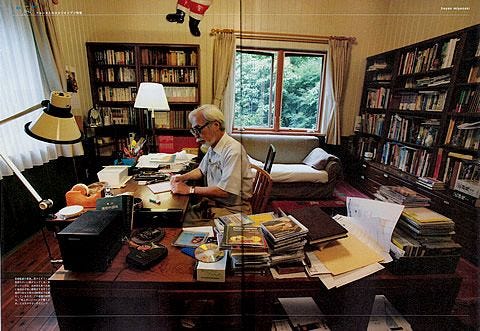
“My process is thinking, thinking and thinking — thinking about my stories for a long time.” -Hayao Miyazaki
Hayao Miyazaki is a Japanese animator, screenwriter, and author responsible for many titles from the acclaimed Studio Ghibli. Screenshots from 10 Years with Miyazaki have helped many creatives describe their process and feel just a little better about how chaotic creation can sometimes be. Despite how it may seem in the screenshots, Miyazaki is a very disciplined and hardworking creative whose process is one that many find—intensive and stressful. He works his stories into five parts, each approximately 20% of the story, with each part being represented through watercolors. He is also known for coming up with ideas as fast as he gets over them. His desk seems to reflect his process, which should be a note we each take from Miyazaki.
4. Toni Morrison
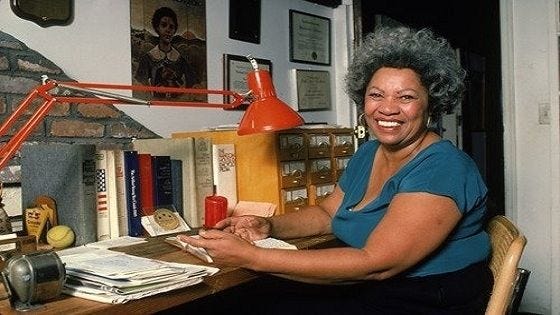
“Teaching is about taking things apart; writing is about putting things together.” –Toni Morrison
Another master storyteller on this list, Toni Morrison, best known for her literary work of art, The Bluest Eye. For writers out there who work full-time jobs alongside their writing, you’ll be happy to know Morrison was the same. Though she dreamed of having the freedom to write for hours uninterrupted, Morrison always had to find time in-between her other obligations and job to make room for writing. Most of the time she saved her writing for the early morning hours or weekends. Her desk was usually occupied with things besides writing like letters and books and small notes.
5. Tananarive Due
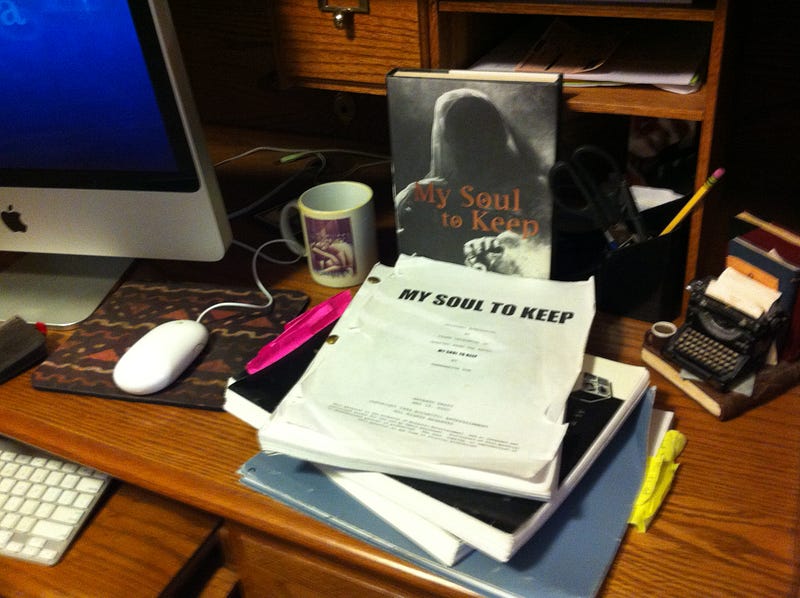
“I don’t think there is enough respect in general for the time it takes to write consistently good fiction. Too many people think they will master writing overnight, or that they are as good as they will ever be.” –Tananarive Due
Tananarive Due is a horror writer, screenwriter, and educator whose works include novels My Soul to Keep and The Good House among others. She is an outline writer. Though it helps her, outlining isn’t for everyone. For those who do like to outline, Due’s process may give you a new strategy. She prefers to get as detailed as possible, describing exactly how her stories will go from beginning to end. Some of her outlines are even over 20 pages long! Her orderly desk aligns well with that type of writing style.
6. R. L. Stine
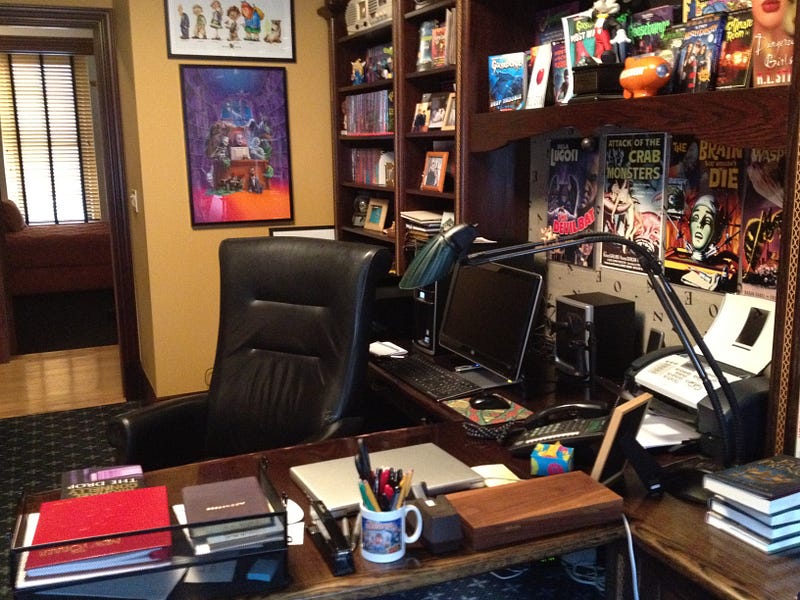
“The only lesson is, you gotta keep at it.” –R.L. Stine
R.L. Stine is most notably known as the author of the children’s and young reader horror series Goosebumps and the teen series Fear Street. Like Due above, Stine is a meticulous outliner. He prefers to do a chapter by chapter outline and needs to have a title for the book for him to actually go through with writing it. The title is key to him. That’s how he keeps his writing fun—he does all the hard work of plotting and planning beforehand. Like most full-time writers, Stine works throughout the week and tends to write about 10 pages a day.
7. N. K. Jemisin
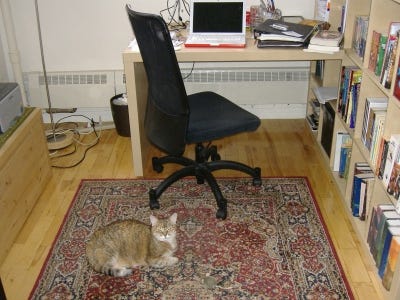
“We all have futures. We all have pasts. We all have stories. And we all, every single one of us, no matter who we are and no matter what’s been taken from us or what poison we’ve internalized or how hard we’ve had to work to expel it — we all get to dream.”
— N.K. Jemisin
Known as “The Most Celebrated Science Fiction and Fantasy Writer of Her Generation”, N.K. Jemisin is an acclaimed and best-selling author of speculative fiction. A visualizer, Jemisin gets her ideas for stories from vivid images and dreams that cling to her. She uses questions and exploration to dig into the images where she discovers her stories worlds. Another marker of her greatness is how deep she believes in research. She’s gone to the eye of volcanoes and traveled far to experience her imaginary worlds firsthand. Yet, her writing desk is as bare as can be as though, when she’s working, she’s in her work.
8. Chuck Wendig
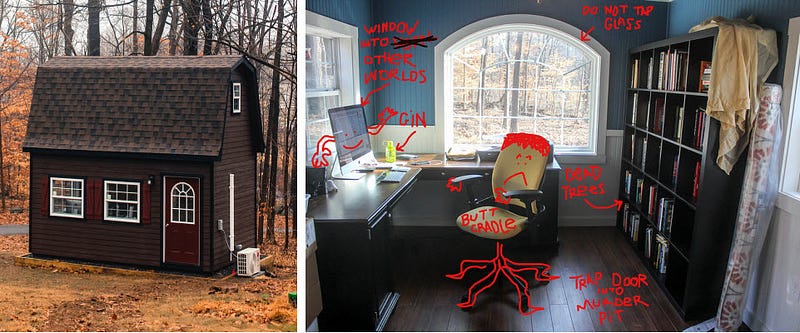
“Writers are made — forged, really, in a kiln of their own madness and insecurities — over the course of many, many moons. The writer you are when you begin is not the same as the writer you become.” –Chuck Wendig from 250 Things You Should Know About Writing
Chuck Wendig is an American speculative fiction author of several books including Wanderers, Blackbirds, and more. He’s kept a well-maintained and active blog, Terrible Minds, for a decade, I believe, where he shares writing advice, quirks, and more. He likes to start his writing workday with his family and a cup of coffee. His aim is to complete 3,000-words in a given workday, writing for an hour and taking 15 minute breaks in-between. Most days, he’s done writing work by early afternoon and moves into admin for the rest of the day. And he lives the writing dream and has a writing shed for his desk to keep him focused on work.
9. Neil Gaiman
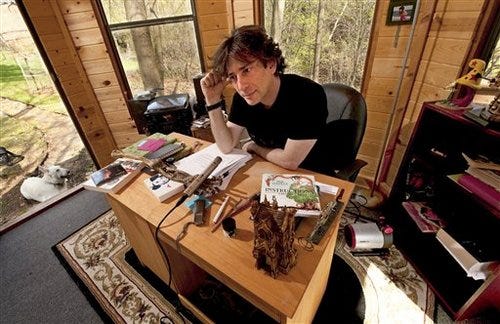
“‘And then what happened?’ Those words, I think, are the most important words there are for a storyteller. Anything you can do to keep people turning the pages is legitimate.” –Neil Gaiman
Neil Gaiman acclaimed and famed English writer of short stories, comics, nonfiction, films, and more. He writes a lot and has been for decades, crafting original and wonderful content for all ages. Unlike many on this list, Gaiman writes his first drafts by hand in a notebook before doing a second draft on the computer. He also believes in writing every day and finishing what you start. And like Wendig, he tends to have a separate writing shed where he does his work. Unlike most of the writers on this list, Gaiman doesn’t have a computer at his desk since he starts by hand.
10. Marissa Meyer
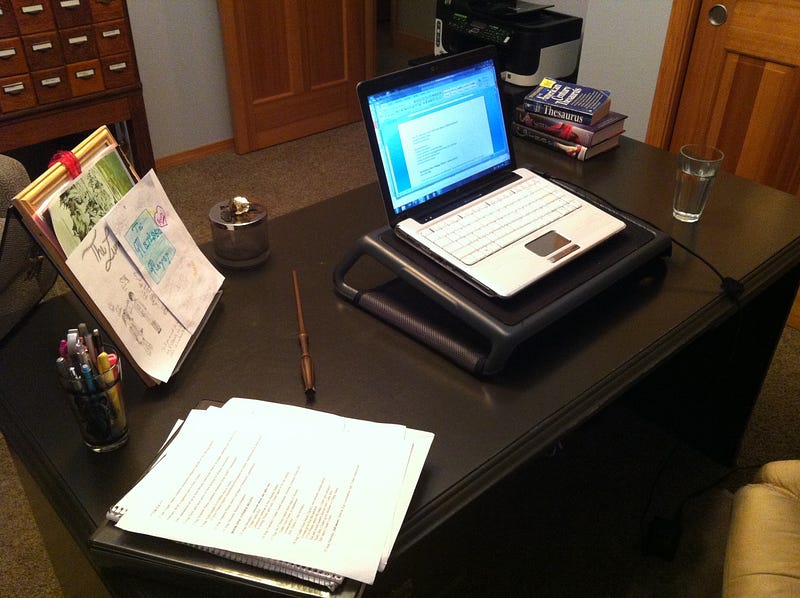
“No one starts out a brilliant writer or even a decent writer, and I think few writers ever reach a point where we’re like, ‘By golly, I am amazing.’ We are always learning. We are always striving to be better. We can always point out our own weaknesses and flaws, but we’re storytellers, so we keep writing and improving as much as we can.” –Marissa Meyer
Marissa Meyer is the American novelist behind the YA bestsellers Cinder. Like Wendig, Meyer keeps a blog that has a lot of useful tips and advice for writers. She’s detailed her full process on her blog which is extensive. She follows a nine-step process from brainstorming to tweaking the final draft before sending it to publishers. Read through her posts to see the full process. It’s great for writers who want to go the traditional publishing track.
A Writing Desk of One’s Own
I ask you again, dear reader, when you sit down at your desk, does it make you happy? Productive? Calm? Or does it make you groan, feel disorderly, or out of synch with yourself and work?
My first taste of a real writer’s desk was in my early to mid-twenties. I had just moved into a two-bedroom apartment with a good friend at the time. One of the bedrooms was a master. It had its own bathroom, but most importantly, a full walk-in closet that was big enough to fit an office in. I packed all my books, office chair, and desk into the small space and used it as my hideaway to write and create.
Many of my friends laughed at me, though, some thought it was pretty cool. It was my own special writing place. Since then, I’ve had other writing spaces and offices, but I always carry that space with me. No matter where I go, I can still shut the shutters and keep the world out to write.
My desk is everywhere. It knows no bounds. Though most days, I stay shackled to a real live L-shaped desk.
5 Keys to a Productive Desk
- Have multiple ways to write available
- Keep your desk and space filled with books
- Stay inspired with artwork and knickknacks
- Keep your most important tasks upfront
- Reset your desk at the end of each session
Further Reading
Aigner Loren Wilson is a queer Black SFWA, HWA, and Codex writer. Her work has appeared in or is forthcoming from WIRED, The Writer, Tordotcom, Fiyah, and she is a Hugo Award finalist for her editing. Along with her writing roles, she is also the guest editor for Fireside Fiction and Apparition Literary summer and winter issues. To check out her masterclasses, books, and games, visit her website.


