
Jack Dorsey Is Actually the Real Hero Social Media Companies Need Right Now
Banning Trump led him to the solution to social media’s future. His self-awareness sped up its implementation.
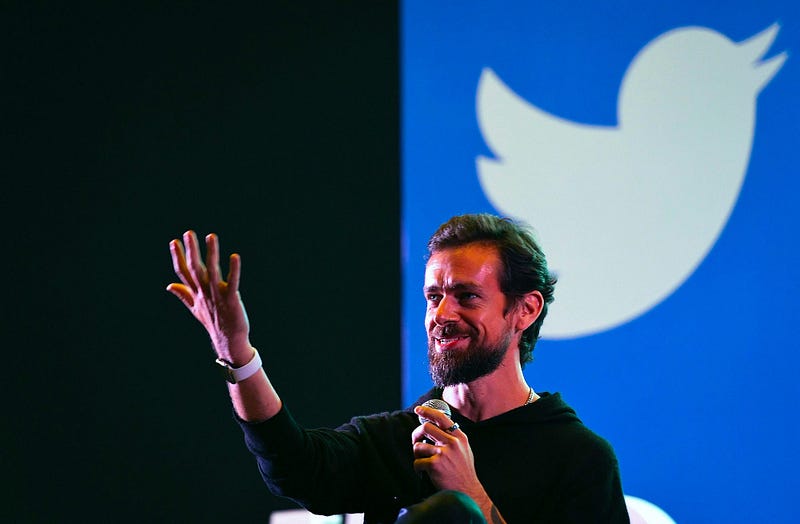
Censorship on social media is a huge problem.
I have experienced it multiple times over the last seven years as a writer on a variety of different platforms. When your content gets taken down, you feel terrible. You feel like you’ve been silenced. You feel like your opinion doesn’t matter. You feel stupid. You feel life is unfair.
When I got banned from one social media platform (accidentally) during the U.S. election, it hurt. I posted one sentence about the leader I hoped would win the U.S. election. Minutes later, I was banned.
There was automation in place to prevent people from manipulating the election results, and I’d been caught in its fiery path. Thankfully, I got my account back quickly with a genuine apology. It taught me to be extremely careful of commenting on elections in the future.
When Trump was banned from many social media platforms, I had two thoughts: 1) “Take that, you evil dictator!”, and 2) “I feel your pain.”
It’s strange to dislike someone so much, and then simultaneously feel empathy for their situation.
The Curious Case of Jack Dorsey
People have taken to social media with pitchforks. They metaphorically want Jack’s blood. On the one hand, he silenced the President of the United States. On the other hand, he prevented more violence and false election claims from being spread. I hadn’t made up my mind on Jack. Then Jack took to Twitter.
What did he do that got my attention? Jack showed radical self-awareness in a tweet thread. He brilliantly articulated the problem from both sides.
He dared to agree with his critics. Jack said, “All this can’t erode a free and open global internet.” He understood his company’s actions were harmful, even though it’s not in his own financial interests, or in the interests of protecting his ego, to do so. I had tingles down my spine. The hair on the back of my neck stood taller than the Empire State Building. What was so great?
Jack understands intimately the inevitable downfall of social media. He’s already preparing for the future.
The New Model of the Internet, According to Jack
Jack admits the current model of social media is broken. So what’s the answer? A decentralized solution.
Jack points to the technology that underpins the digital currency, Bitcoin, as a way to solve the issue of censorship on the internet. The internet was designed to be open and free.
Imagine this for a moment.
The major technology companies we use are owned by the users. Developers who write code are rewarded for the societal impact their code has on global citizens and the true value it creates, rather than a per hour salary. Any country, anywhere on the planet, can access the same online service. Financial services are no longer a status symbol of the elite. Each of us can invest our money, without missing huge amounts of information needed to make an informed decision. Access to money and banking is no longer determined by the color of your skin or what race you are.
Jack is helping to solve the issue of financial inclusion. But he can’t turn his back on social media, and his recent tweets are a demonstration of that fact. The answer for Jack, though, lies in his obsession with blockchain and Bitcoin. The concept of Bitcoin can also prevent social media censorship.
Jack’s Grand Plan for Twitter to Prevent Another Trump Moment
Jack isn’t waiting for another Trump moment. Jack announced this:
Twitter is funding a small independent team of up to five open source architects, engineers, and designers to develop an open and decentralized standard for social media. The goal is for Twitter to ultimately be a client of this standard.
Jack is taking the concept of a decentralized technology like Bitcoin and applying it to Twitter. He is taking a social media tool that can be weaponized and able to spread misinformation about election results and changing it forever.
Jack is demonstrating true leadership, leading by example, and going first.
What Jack is effectively doing is handing one of the most powerful social media platforms back to the users of the internet to moderate. How it will look is yet to be determined. But if a democratic approach can work for Bitcoin — which has no billionaire founder, no venture capital involvement, and no company office — then perhaps it can work for social media.
Before you attack Jack Dorsey, dare to notice his self-awareness as being part of the solution. Put yourself in Jack’s shoes. He didn’t intend his social media platform to incite violence. And he’s got the guts to do something about it and admit change is needed.
A decentralized social media is going to be life-changing for all of us. The internet is going back to its roots. It’s a moment in history to be proud of how far we’ve come, not to be outraged.
Web 3.0 will be decentralized, therefore becoming democratic once again, and allow users to take back ownership of their data.


