
Jabbr.ai — Computer Vision for Combat Sports
Counting Punch and Combat stats with AI in real-time!
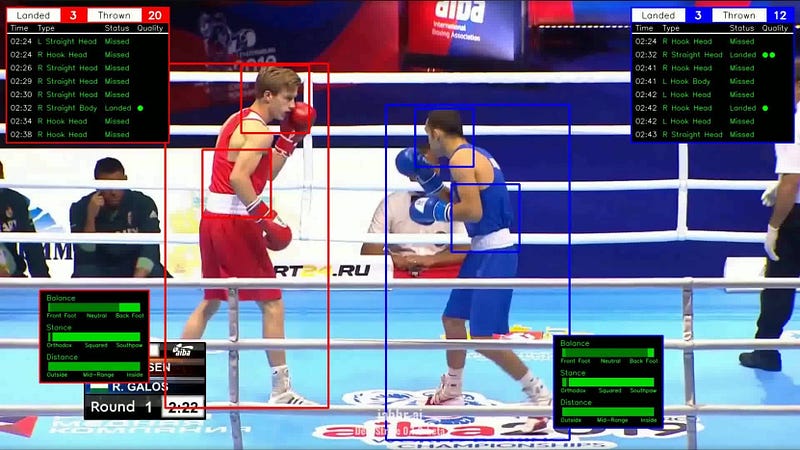
The world of sports has always sought technology to improve the experience of spectators and athletes at every event. Today, artificial intelligence (AI) is revolutionizing sports practice. Whether it’s athletes looking for data to push their limits, coaches researching algorithms to improve their strategies, or referees trying to make the right decision every time, the use of artificial intelligence is on the rise. Jabbr.ai understands this and is now trying to introduce artificial intelligence into the world of combat sports. We will see how AI is currently applied in sports in general and how Jabbr.ai brings new opportunities to the world of punches and kicks.
Disclaimer: This article is not sponsored by Jabbr.ai, but comes from my own initiative following my interest in the project.
How to use Computer Vision in Sports?
The Viewer Experience
Computer Vision changes the fan experience, whether they are watching the game live in the stadium or on a screen at home. Cameras now know where to focus, automatically finding the action instead of simply offering a panoramic view of the whole pitch, and broadcasters can enhance the fan experience.
Also, clubs can monitor fans during the games and analyze their emotions, which they can use to build statistics about fan engagement, helping them understand if they need to improve the fan experience.
Referee Decisions
Was a penalty not whistled? A missed foul? An unfairly awarded point? How many times have we, sports fans, regretted a referee’s decision because he was in the wrong place or because he made an error in judgment? Using computer vision, you can detect offsides, outs, goals, photo finishes, or unfair moves, and more using 3D simulation and video inspection. Technology is here to ensure every choice is the right one and avoid controversial decisions.
Opposition analysis
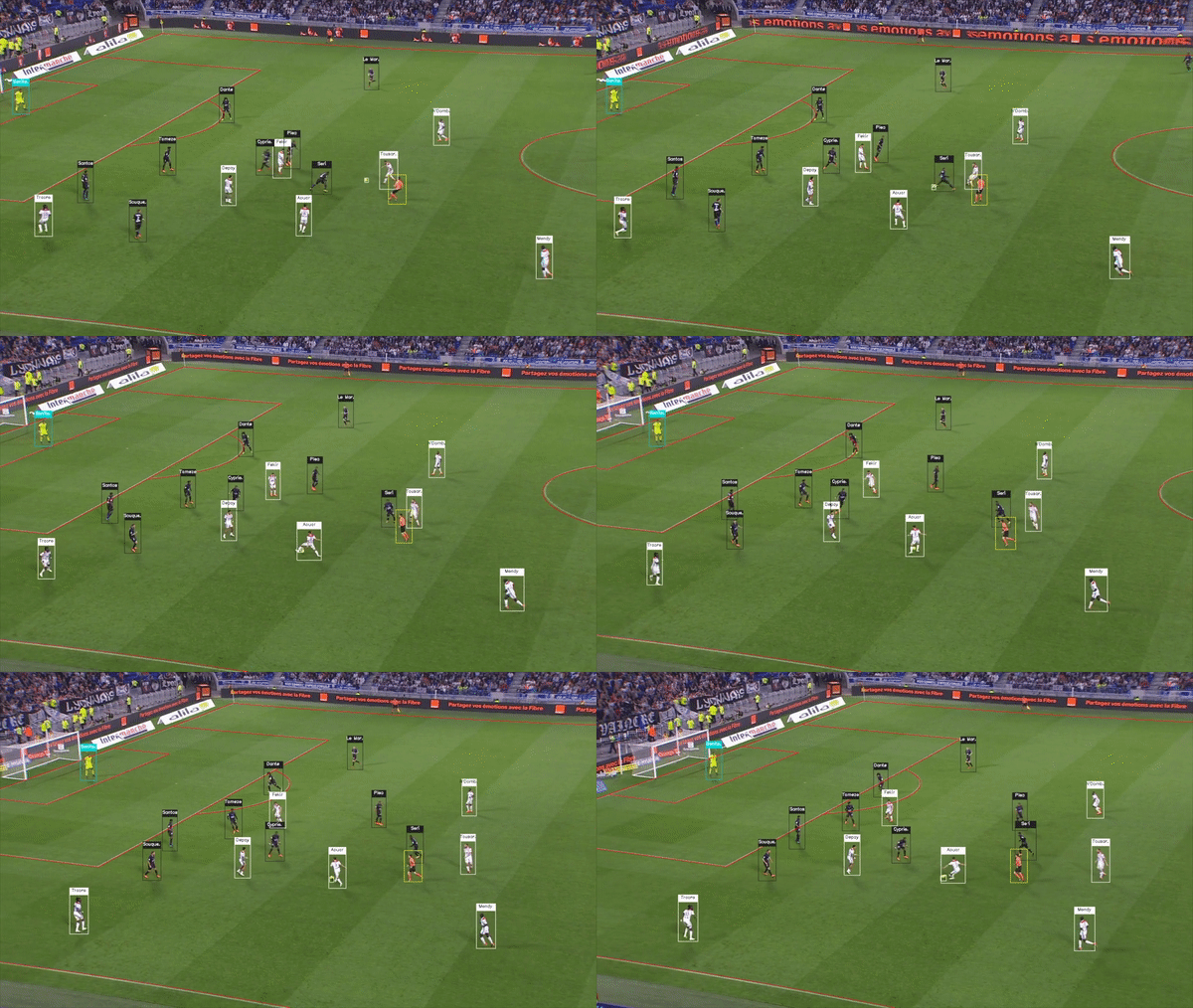
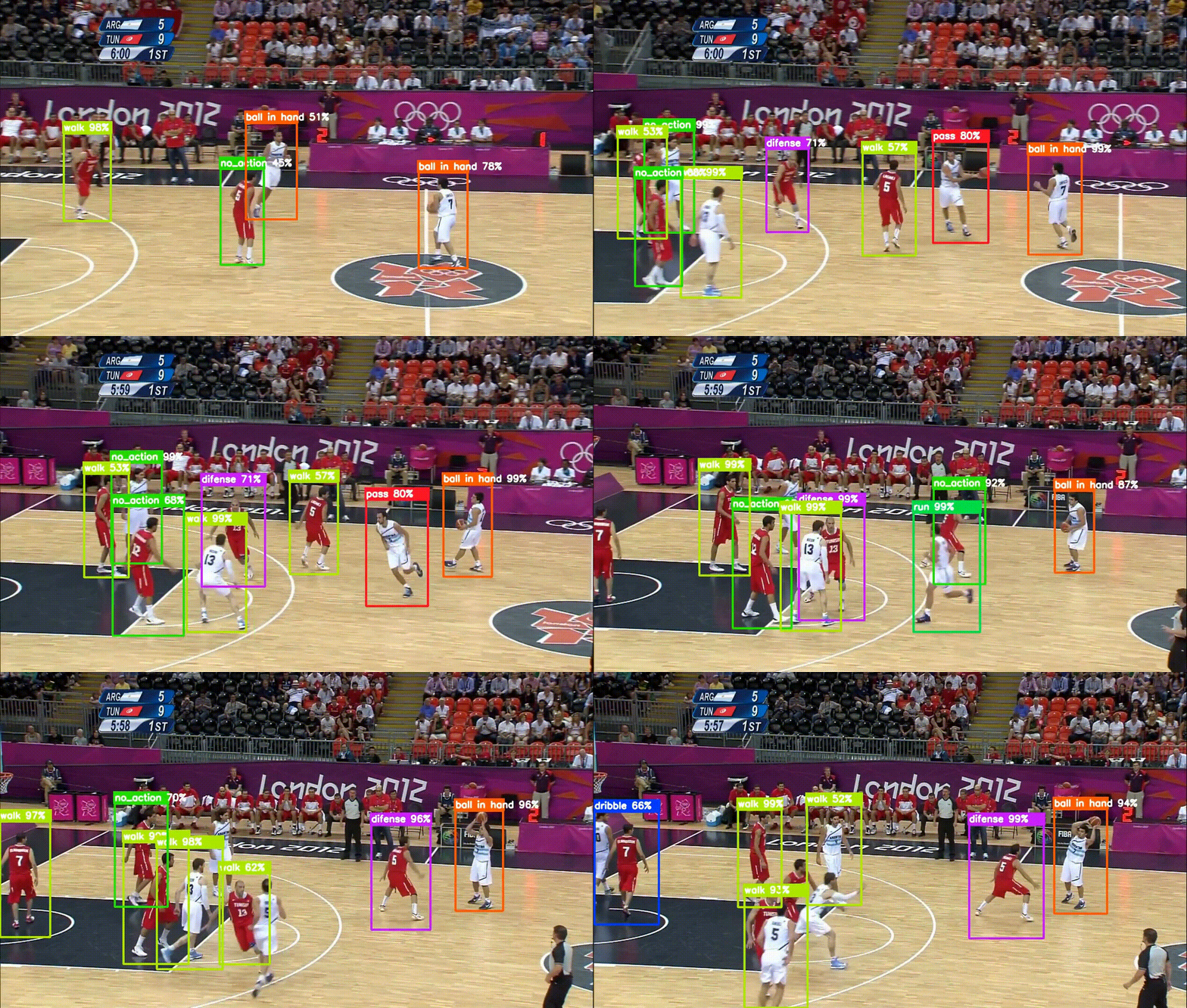
Players need to be able to learn from mistakes to make improvements. There is a lot of information to take into account when observing an athlete playing a sport: the way they move, jump, run, turn, throw, and hit. That’s why automatic sports analysis and insight-based analysis are essential to the training process. The quantity and variety of this data have led to the development and success of numerous applications in this field, allowing athletes and trainers to improve and optimize performance. With Object Recognition algorithms, you are able to follow an athlete and highlight any weaknesses in their technique and then remove bad habits. Such an analysis helps athletes to maintain high physical and mental performance, optimal efficiency during training, and even improve their results during games. It also helps them detect early signs of fatigue or stress, and prevent joint injuries and cardiovascular problems.
Challenges and data
The most popular computer vision tasks in sports include player and ball tracking, pose estimation for injury prevention, segmentation for differentiating the background from players, and more.
A system that can fully automate the video analysis of sports by tracking and labeling players remains a challenge because optical tracking systems can't yet handle the varying body posture of a person during sports exercises, as well as the partial or complete occlusion of players by equipment or other players during collisions or interactions.
In many sports, AI is already well implemented. In soccer, basketball, or baseball, it is easily possible to find datasets on Open-source platforms like Kaggle.
Jabbr.ai, the punching AI company
Jabbr.ai was founded in 2021 and its mission is to make it accessible to anyone with a smartphone to advanced martial arts performance analysis and video production.
Jabbr’s team is currently developing DeepStrike, a complete solution that is able to aggregate 50 metrics for each boxer during a fight thanks to millions of data points. DeepStrike can detect punches thrown, and landed, but also the punches’ quality. Apart from sparring, he can detect the boxer’s footwork, balance, and stance.
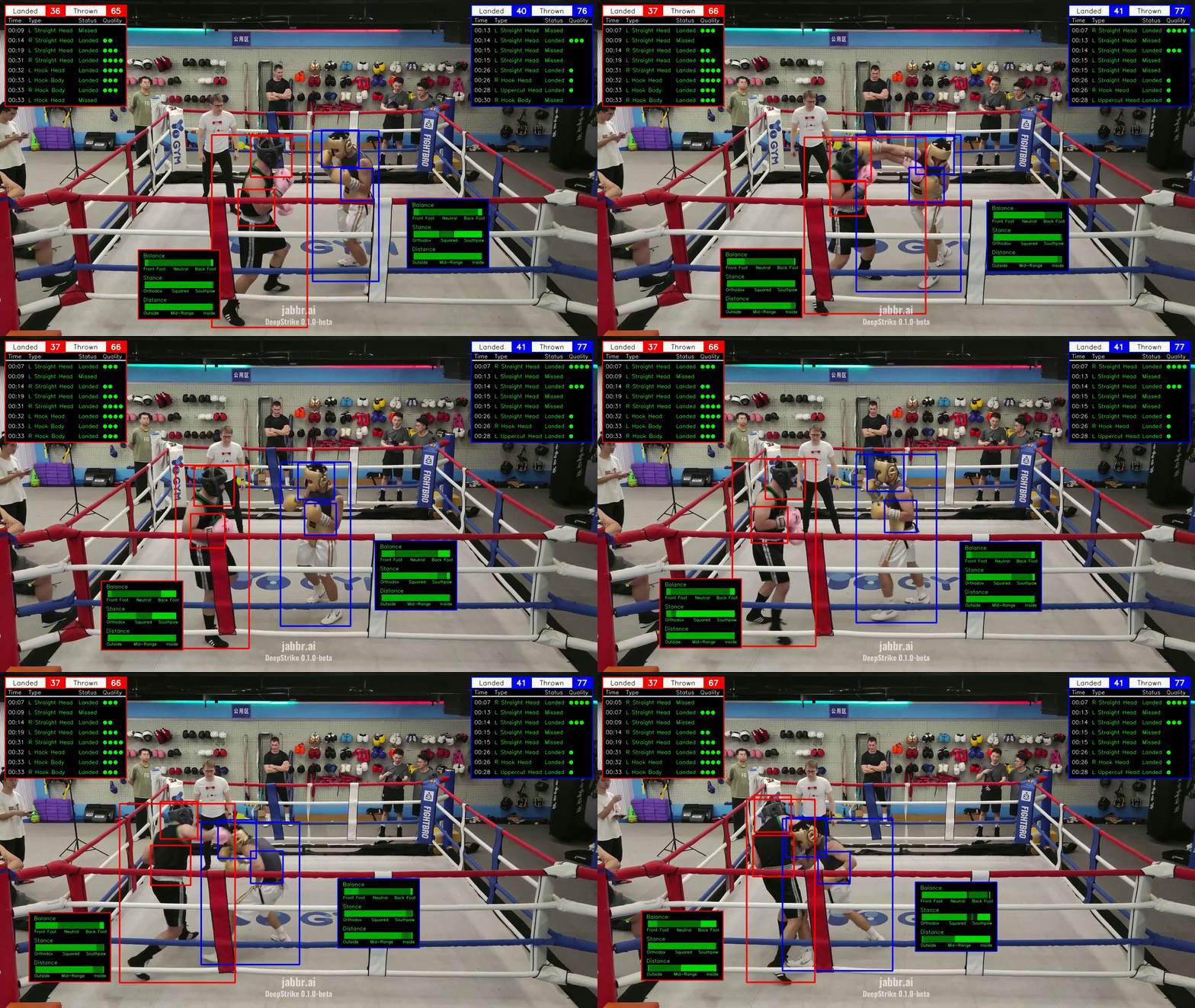
“As a lifelong fan of boxing, I’d grown increasingly frustrated with corruption in the sport, as well as the lack of analytical video tools that have become standard in other sports.” — Allan Svejstrup Nielsen, Jabbr.ai Founder
Jabbr.ai and DeepStrike contribute to the world of boxing and combat sports in several aspects:
- First of all, for the fighters, it is a complementary help to prepare for a fight and improve their technique. Indeed, the data complete the athlete’s instinct and the trainer’s learning.
- Then, these statistics bring a completely neutral look and an impartial judgment. DeepStrike could therefore contribute to reducing corruption and unfair decisions in the world of combat sports. In general, these sports are very scandalous because they generate a lot of money and attract bad people.
- Specialists and fans alike will always enjoy having a bit more context around the fight, appreciating the additional commentary and numbers.
- This data can be extremely valuable to avoid health hazards related to the sport or identify what kind of injury might have serious effects. Ultimately, this could help trigger emergency care when needed.
There are 500 million boxing fans in the world. Jabbr.ai brings a lot of promise and innovation in a field where opportunities are numerous and demanded by practitioners. For the moment, DeepStrike remains in the development phase and it is not yet possible to test the solution by oneself. Let’s hope that the Jabbr.ai team will soon propose us an SDK or an API to have a more advanced opinion on the solution!
I hope, through this article, to have highlighted the opportunities that Computer Vision currently offers in all sports, and how it can change the world of combat sports through its analysis. And you, what do you think about Jabbr.ai and AI in boxing?
Don’t hesitate to give me your opinion in the comments!
🚀- Thomas G.
If you enjoyed what you read today, consider signing up for $5/month or $50/year for unlimited articles.
Thanks for reading this article! Leave a comment below if you have any questions.
If you liked this article, here are some other articles you may enjoy:
More content at PlainEnglish.io.
Sign up for our free weekly newsletter. Follow us on Twitter, LinkedIn, YouTube, and Discord.
Build awareness and adoption for your tech startup with Circuit.