
Izmir: A Little Turkish Treat
A lesser-known tourist destination.
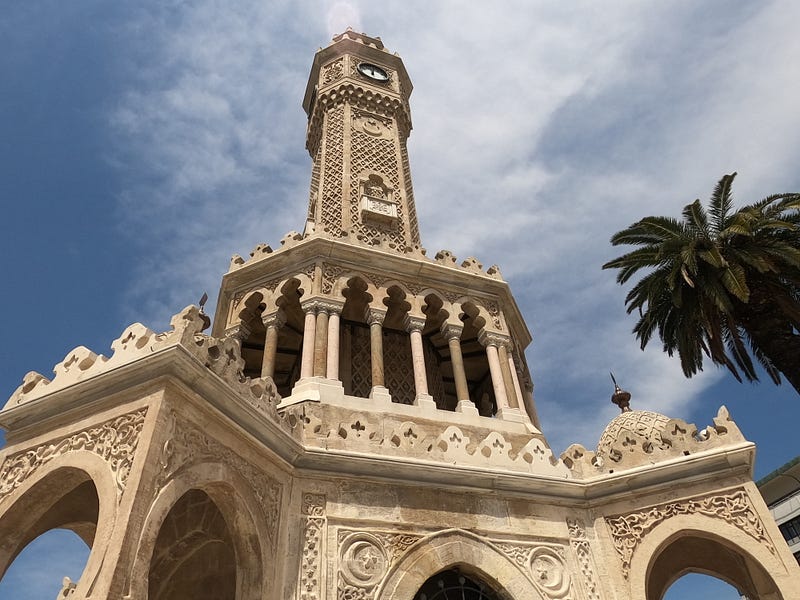
Izmir is the most progressive city in Turkey, but don’t take my word for it, ask any Turkish person and they’ll tell you so.
It was on the advice from Turkish friends that I booked a month’s accommodation in Izmir, and I’m so glad that I did. Not only is the city filled with historical beauty, good food, and entertainment, but it’s also really close to some of Turkey’s greatest attractions.
Let’s begin in the city.
Attractions
Dario Moreno Street and the Historical Elevator (Asansör)
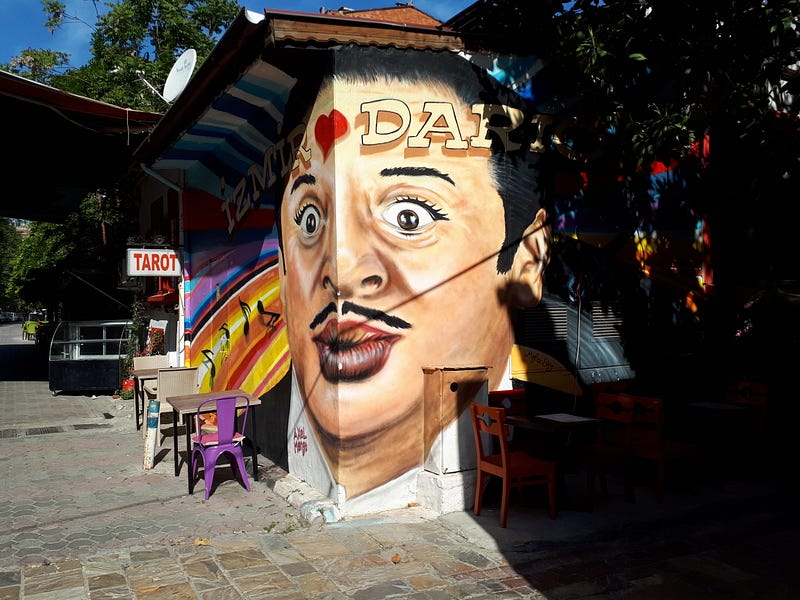
Dario Moreno was a Turkish singer born to Jewish parents in Western Turkey. After a traumatic childhood, he rose to iconic status in the country, particularly in the Izmir region where his music is widely loved. The city honoured him with his own street which is lined with arty and slightly eccentric cafés and restaurants, as well as this wonderful colourful portrait.
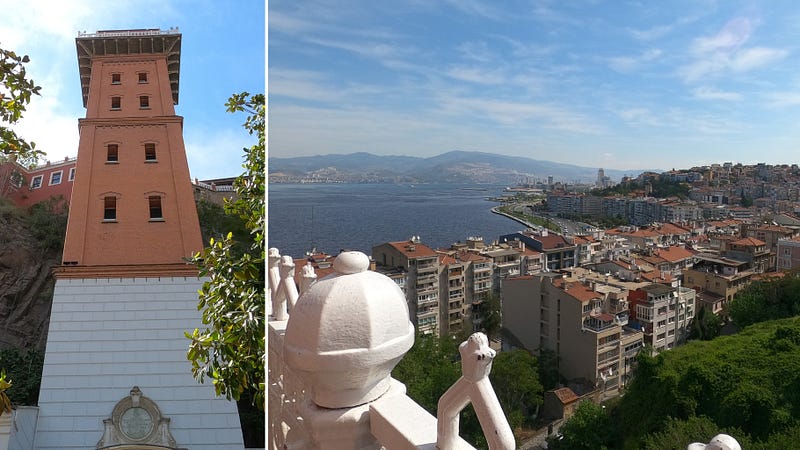
At the end of Dario Moreno Street is the historical elevator, or asansör, which was built to alleviate climbing the 155 stairs between two major districts, and it narrows as it climbs. Some of Dario’s greatest hits greet you as you ascend. The view from the top is spectacular and can’t be beaten on a sunny Izmir day (of which there are plenty).
Konak Square, Clock Tower, and Mosque
Walking through Konak square where you can buy bird seed to feed the pigeons, you’ll find the Konak Clock Tower. It is stunning and was built by a French architect for the 25th anniversary of Ottoman Sultan Abdülhamid II’s enthronement.
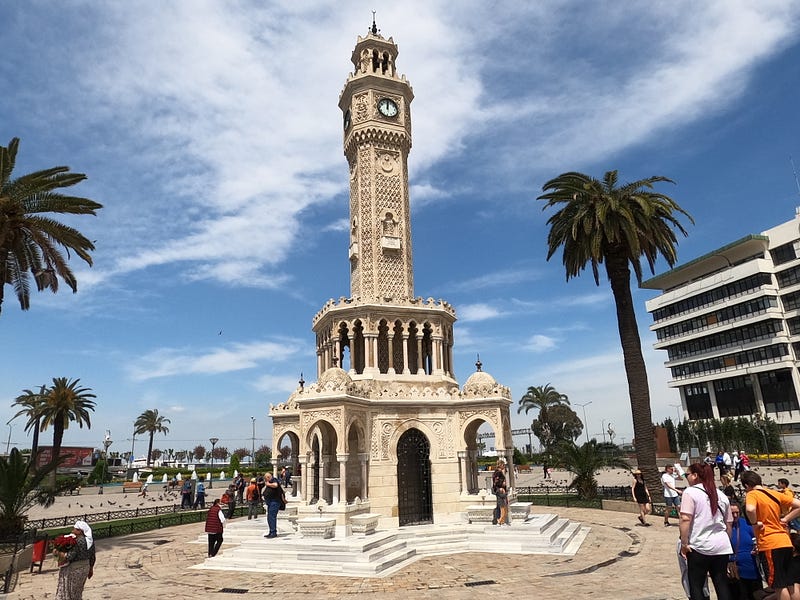
This clock tower stands proudly as the symbol of Izmir and I couldn’t resist buying a souvenir of one which now sits just as proudly atop the piano in my apartment.
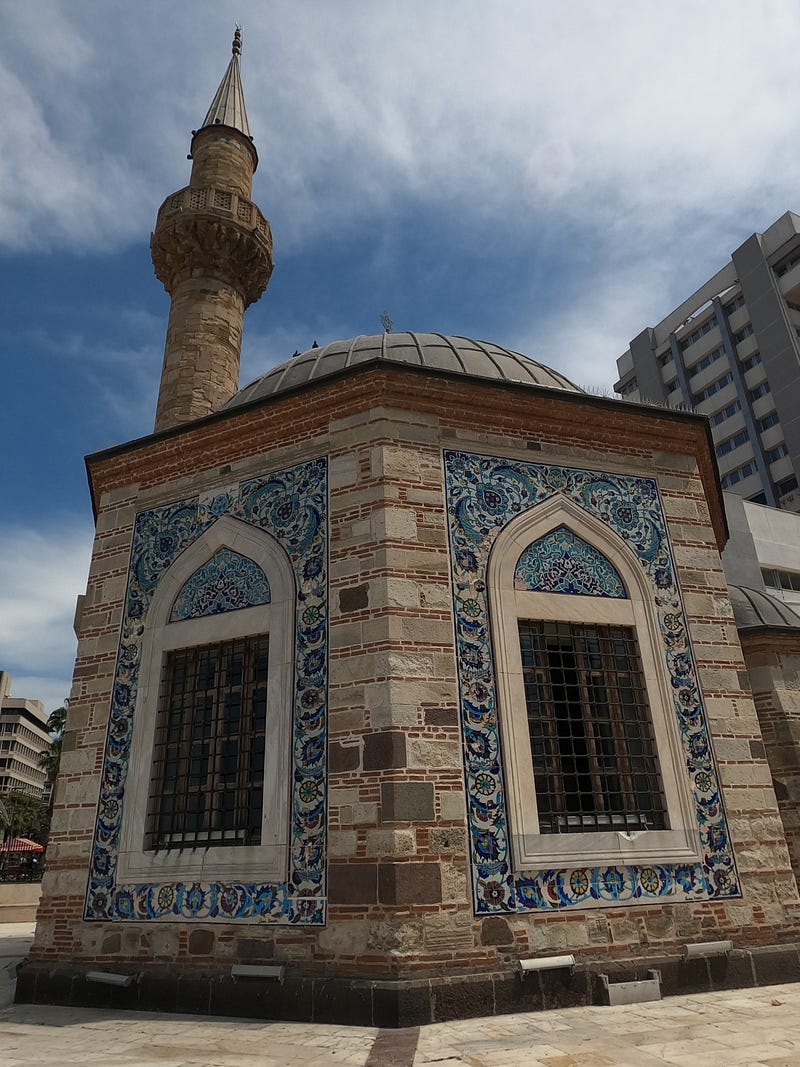
A few steps from the clock is the Konak Mosque, another exquisite building. The mosque is a distinctive octagonal shape, and despite being quite small, is a well-known landmark in Izmir, probably due in some respect to the exquisite tiles that adorn the sides.
Kemeraltı Çarşısı (Bazaar)
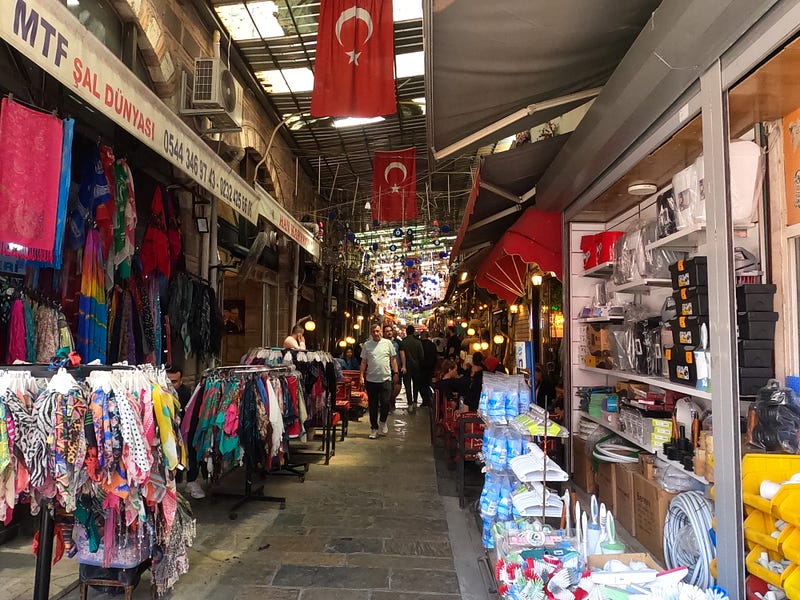
Konak square leads on to Kemeraltı Çarşısı, or bazaar, where you can find almost anything you need. From different types of artwork to Nazar amulets to drive away evil. From leather products to souvenirs. From Turkish wedding dresses and paraphernalia to prayer beads. From herbs and spices to coffee beans and grinds, everything is available — including a myriad of restaurants and cafés.
You can get lost in there for hours.
Smyrna Agora Ancient City
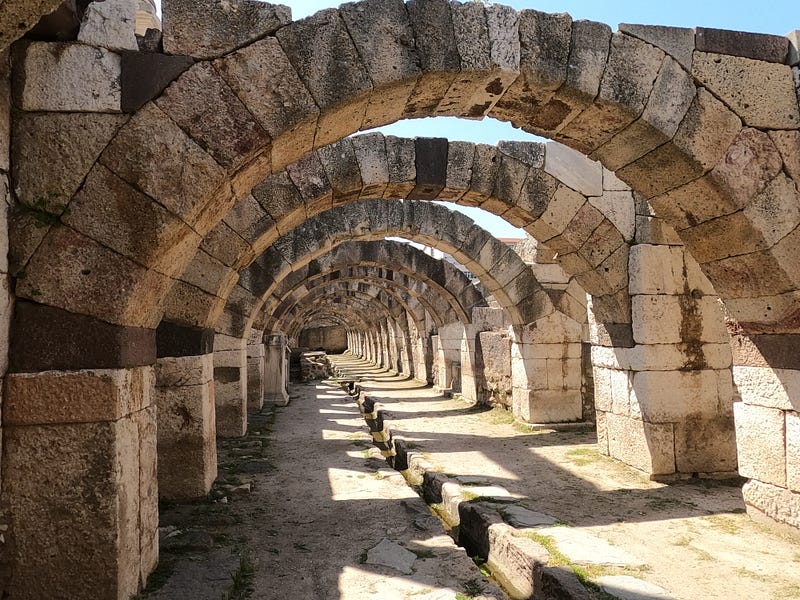
Nestled in the heart of Izmir city is the Agora of Smyrna. With an entry fee of forty lira, I figured it was a bargain until I realized that the basement of the Basilica was the only thing open during the current renovations.
An agora was a central public space in ancient Greek city-states and the basilica hosted commercial and judicial affairs during the Roman Imperial Period. Water from above sources flows through the ditch under the stone arches and was stored in cisterns and used in the workshops of the agora.
I thought that these arches were magnificent.
Ferries
As I had spent a fair amount of time taking the ferries in Istanbul, I had to try one in Izmir and so I headed off to Bostanlı station to watch the sunset and the Super Blood Flower Full Moon rise.
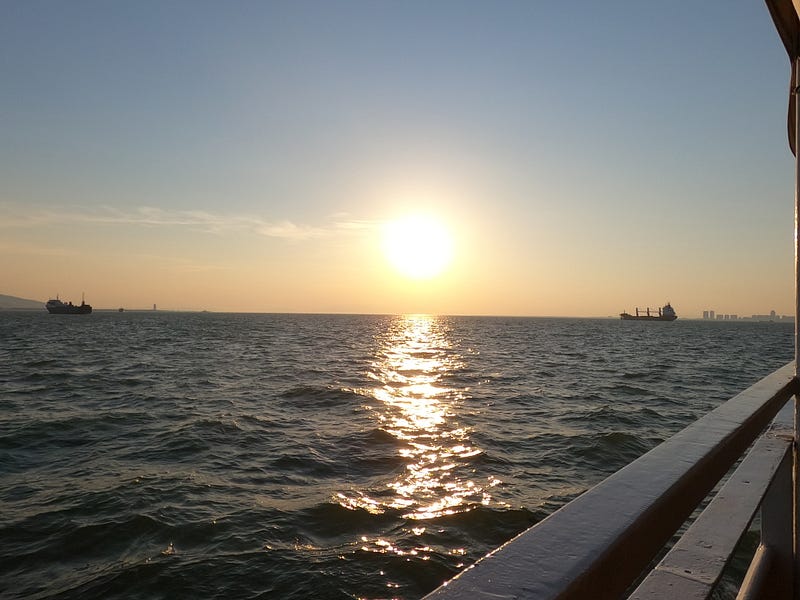
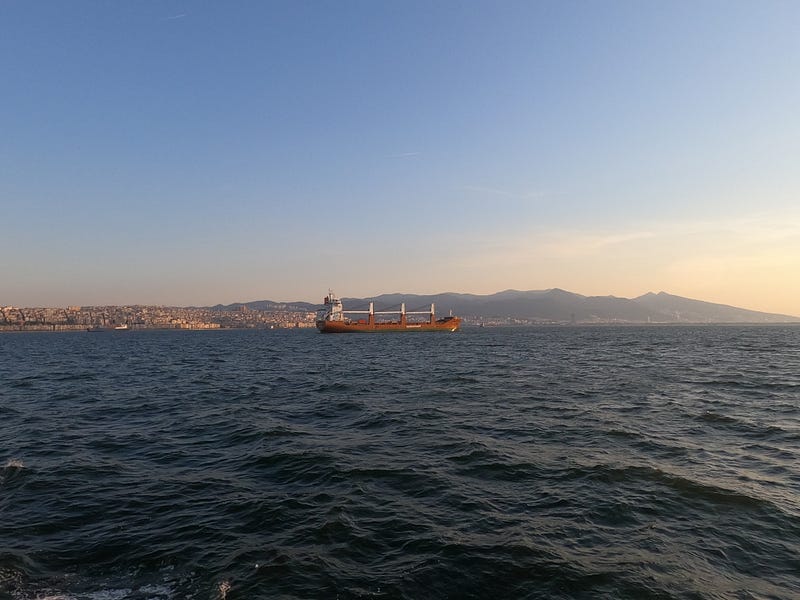
I took the ferry just before sunset and then wandered along the breakfront through the many parks, past the dolphin statue as well as the Atatürk monument, and on to another ferry station where I waited for the full moon to rise.
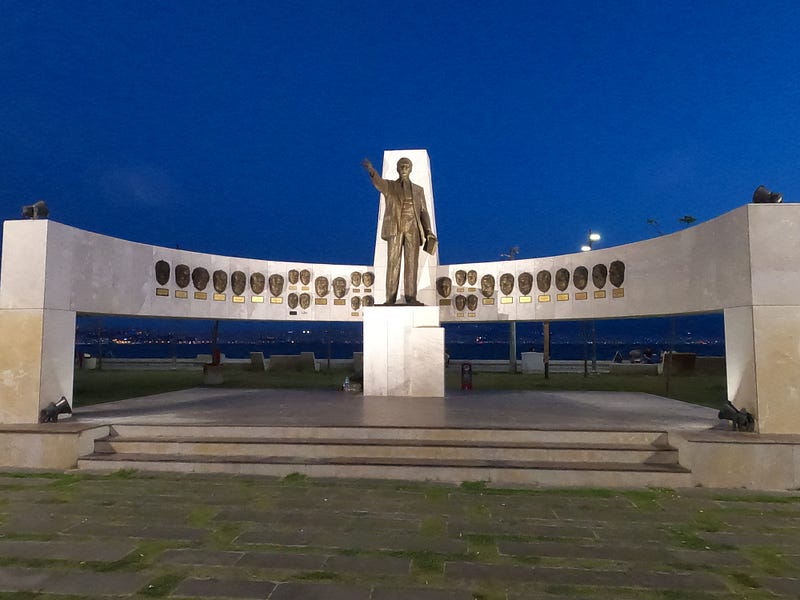
Unfortunately, in my haste to catch the ferry back to Konak, I missed seeing the splendor of the full moon as it broke behind one of the tall buildings in the Izmir city skyline. Peering at it through the glass of the ferry station I marvelled at the size and managed to catch more of the beauty as we chugged back across the Aegean inlet to Konak.
Food and Drink
Rakı
Alsancak is the most popular place in Izmir for food, drink, and entertainment, and it is where I learned to drink Rakı with my Airbnb host. Many head to the popular area after a quick drink or layabout on the Alsancak Çimler, the grassy bank that overlooks the Aegean Sea.
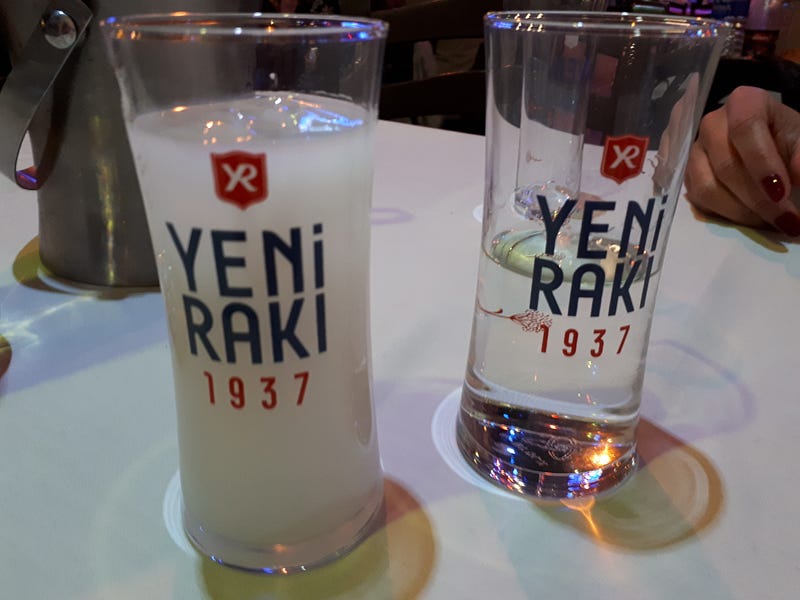
Rakı can be drunk two ways — without water (on the right) which is for die-hard Rakı drinkers, and the more common way (on the left) with water to dilute it somewhat, giving it this murky colour.
Rakı is really strong and has an overpowering aniseed flavour that many Turks love. My take on it is that one needs to be raised drinking the beverage to truly enjoy and appreciate it.
There are two gustatory treats that Izmir is known for: boyoz and the Izmir bomba or bombası.
Boyoz
Boyoz is a traditional Jewish pastry made of flour, oil, tahini, and sometimes filled with meat, cheese, or spinach. They’re a unique flavour but somewhere in the recesses of my mind, I know that I’ve eaten something similar — I just can’t for the life of me figure out where.
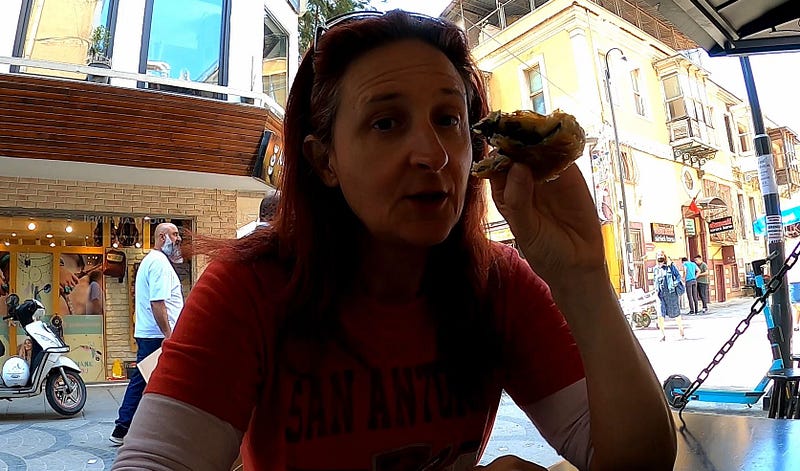
They were interesting but nothing spectacular — at least from the perspective of my tastebuds.
Izmir Bomba (Bombası)
Izmir Bomba or bombası are little chocolate bombs that give you a supreme sugar high!
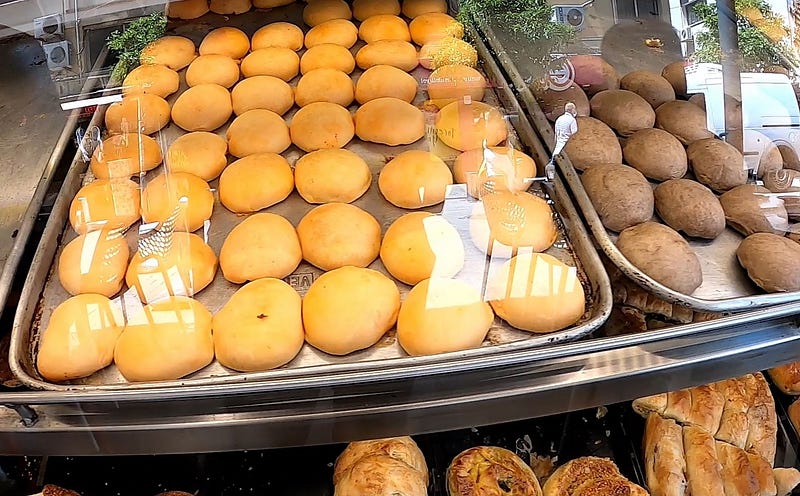
The crispy outer dough houses a gooey (traditionally) chocolate spread inside, but white chocolate and caramel are also on offer. They’re pretty yummy and the sugar will send you flying through the Alsancak.
Kızlarağası Hani
Deep in the heart of Kemeraltı Çarşısı you will find Kızlarağası Hani, also known as the secret garden. Kızlarağası Hani is actually an inn with the lower floor filled with shops and the upper accommodation.
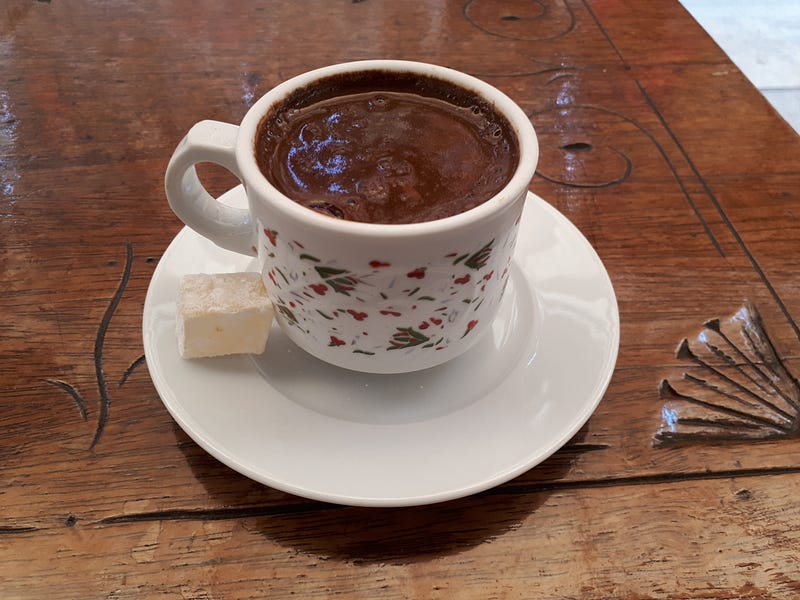
In the center of the courtyard is a coffee shop which is well-known amongst the locals for their Turkish coffee. It’s a lively atmosphere populated with the low tables and stools that are central to Turkish culture.
To be honest, I’d had better coffee than the one I tried here, but it’s an experience that one should try when visiting Izmir for the atmosphere alone.
Day Trips
Pamukkale and Hierapolis
One of the best things about spending a month in Izmir was that I had time to check out the city as well as take a few day trips, and Pamukkale was one of the places that I was adamant about visiting during my time in Turkey.
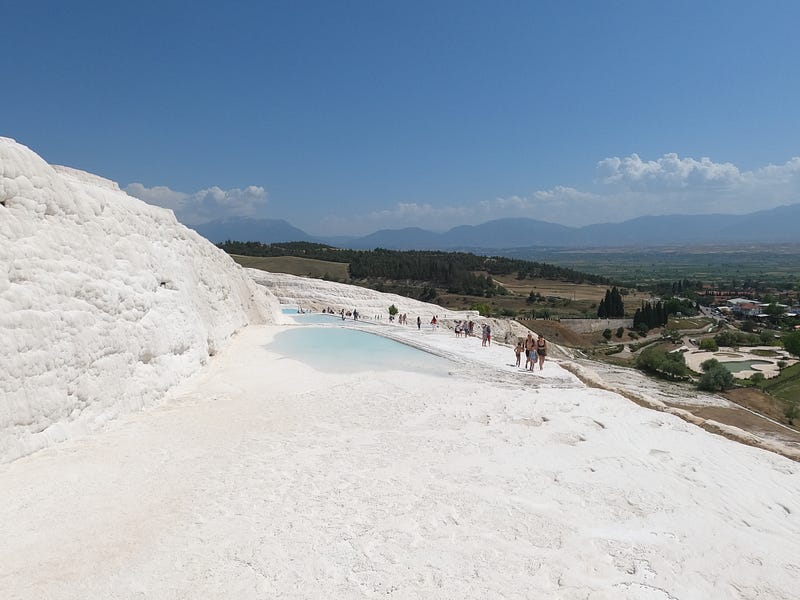
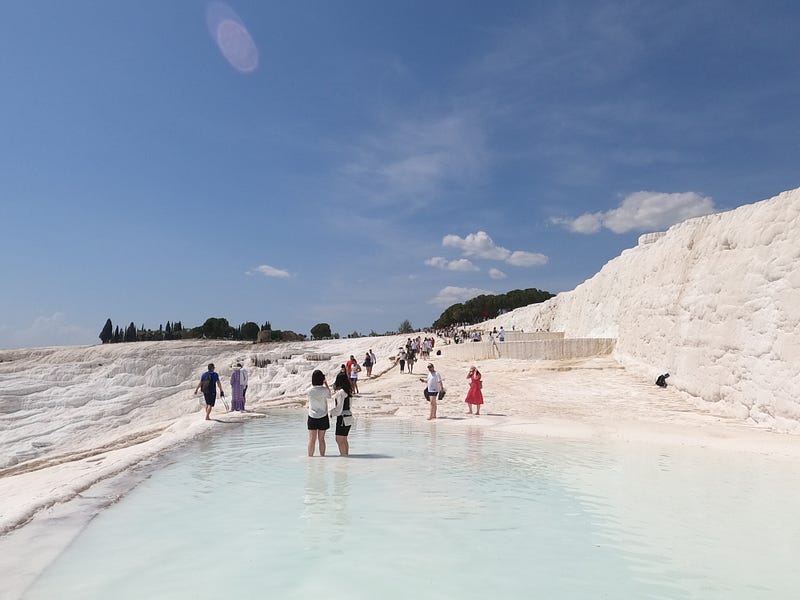
The contrast of the blue water and white limestone walls of the Pamukkale travertines, added to the contrast of the town of Pamukkale nestled in the green valley below surrounding a lake, was spectacular!
I’d waited a long time for this.
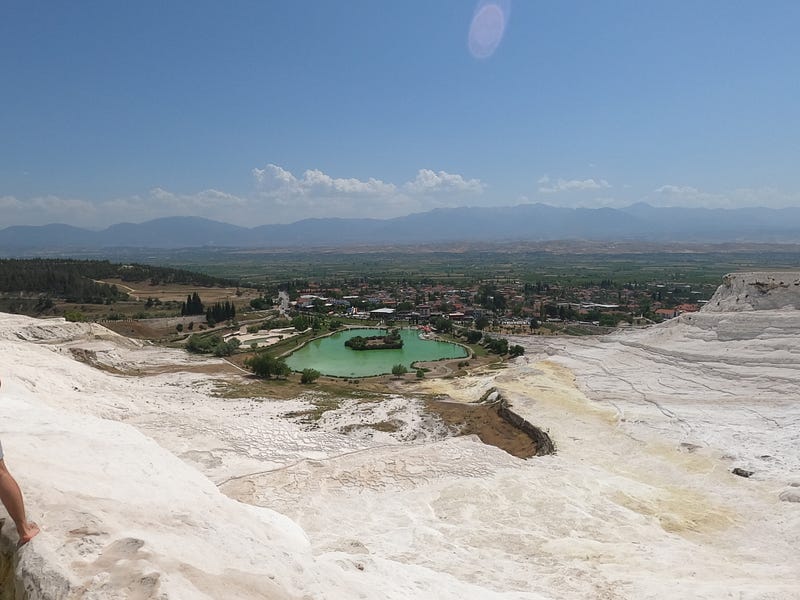
The mineral water of the hot springs — there are seventeen but some only fill in winter — deposits calcium carbonate as a soft gel which eventually crystallizes into travertine, a form of limestone.
As I was there in spring and the day was hot, the water was divine. I languished in the squelchy mud of one of the pools and watched the people having fun as they frolicked in the water or picked their way down the slippery limestone paths.
The Pamukkale Travertines are nestled in the ancient Greek city of Hierapolis and amazing ruins are everywhere.
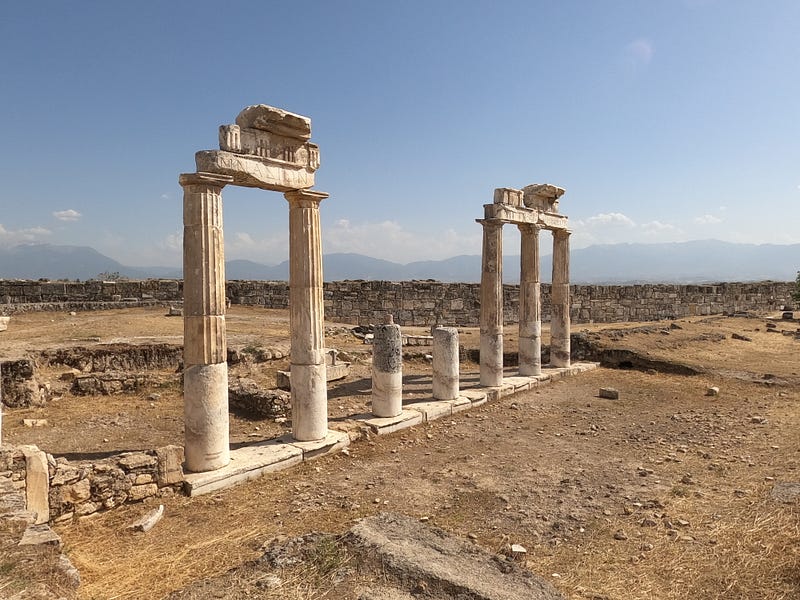
The museum was the best part for me as I love a good sarcophagus… morbid I know, but the carvings get me every time.
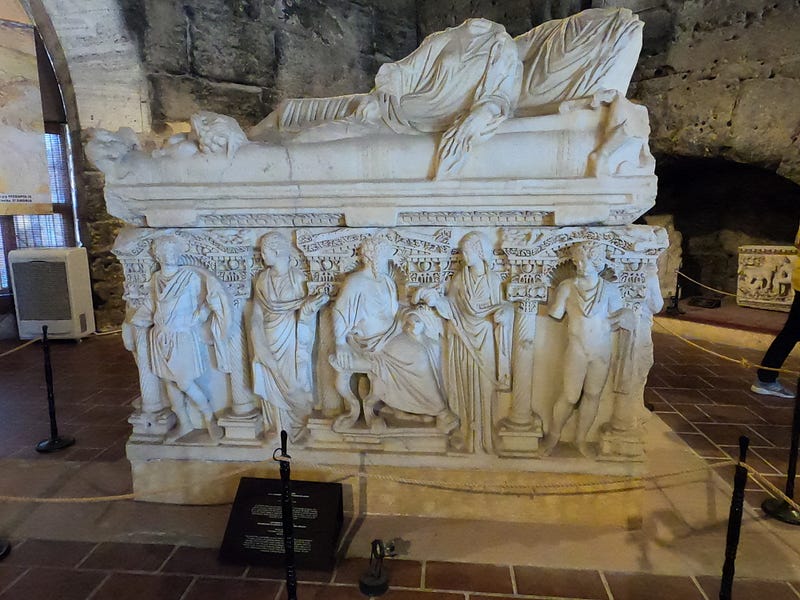
These sarcophagi are from the 2nd century AD and I thought they were incredible. Sometimes the owner’s portrait was carved into the stone. Many of the sarcophagi have carvings of Medusas which symbolize the protection of the tombs, or garlands which symbolize the transition to the other world.
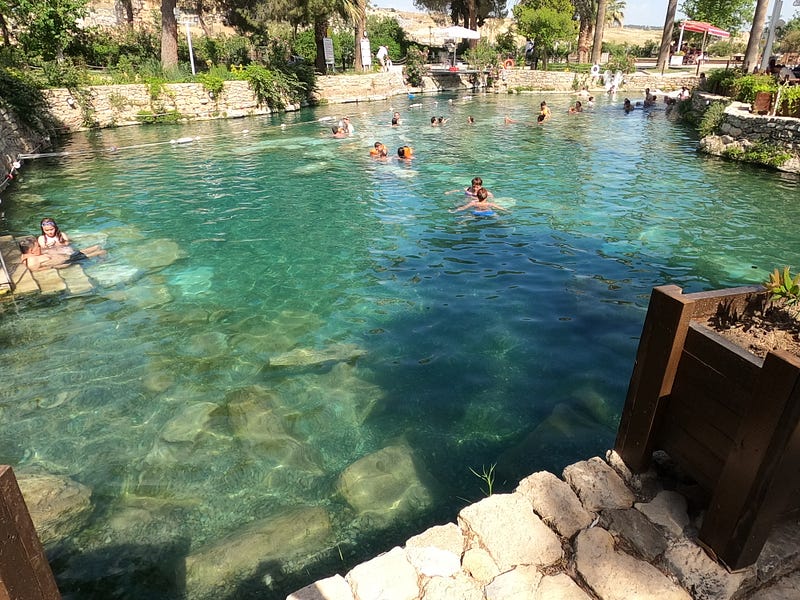
One of the most well-known features in the Pamukkale-Hierapolis historic site is Cleopatra’s pool, or the antique pool. I really wanted to swim in it but as I was on a one-day tour, I ran out of time.
Ephesus and Şirince
My housemate decided to come with me to Ephesus and insisted that we also spend some time in Şirince, for which I am eternally grateful.
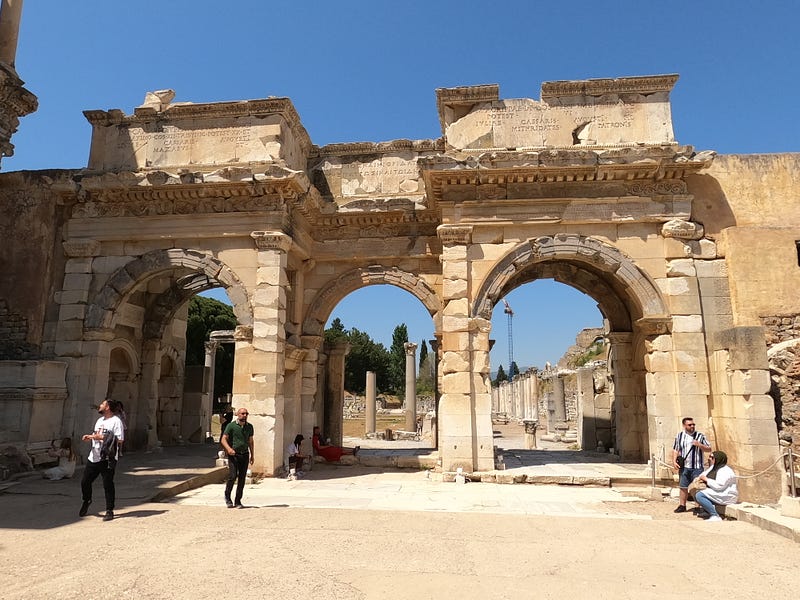
Ephesus was an ancient Greek city built in the 10th century BC and went through many changes as it survived different historical periods, including the Hellenistic, Classical Roman, and Byzantine periods, becoming the most important city second only to Constantinople in the 5th and 6th centuries AD. By 1090 AD, it was all but a small village.
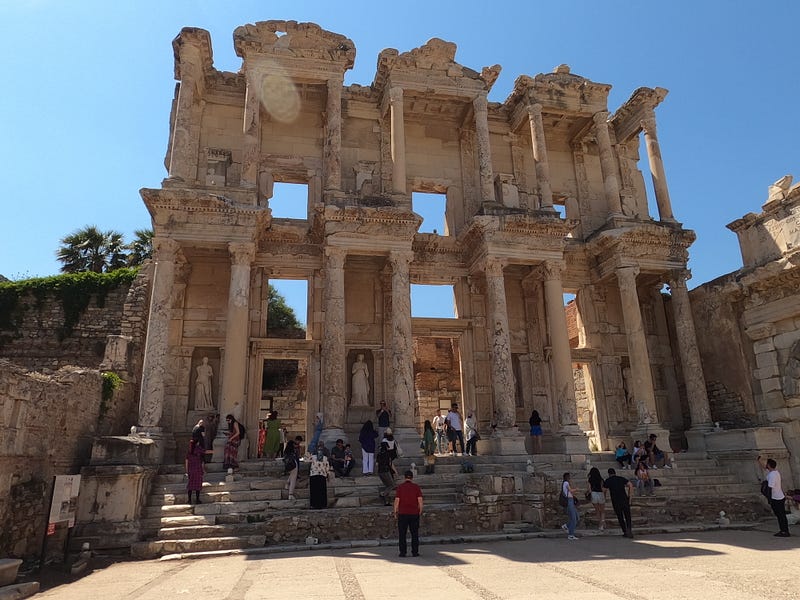
The most famous — and perhaps the most impressive — ruin in Ephesus is the Library of Celsus and is truly spectacular. It was the third-largest library in the Roman world and was destroyed circa 270 AD by an earthquake in the region. The ornate carvings in the stone took my breath away.
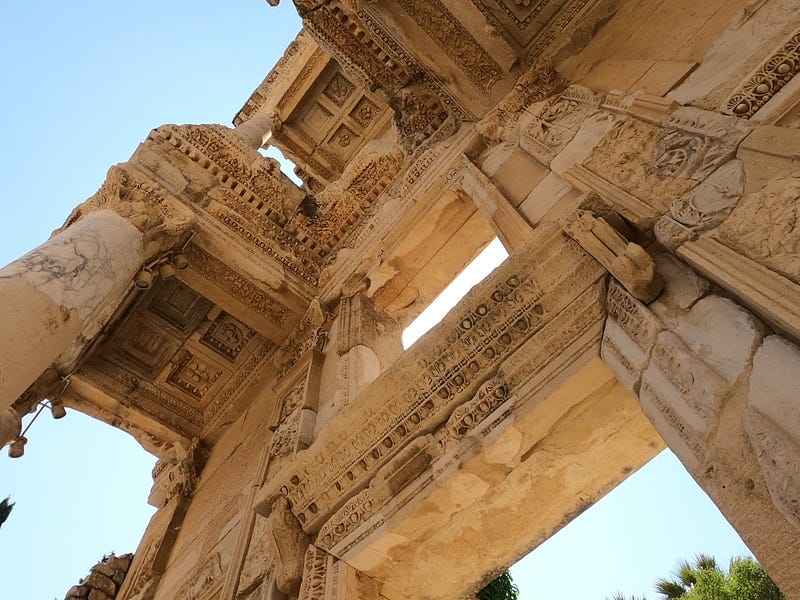
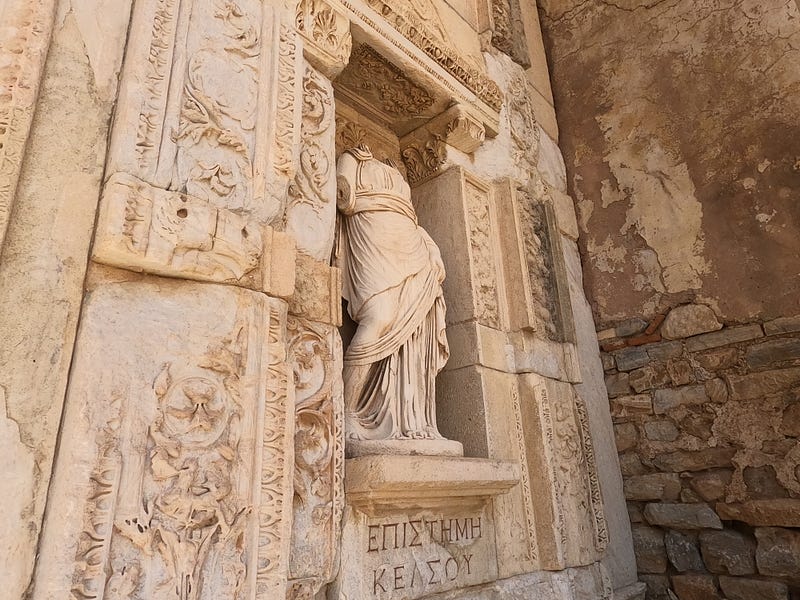
There are statues of the female personifications of the virtues of wisdom, knowledge, intelligence, and excellence set into alcoves of the library.
The personifications of knowledge, or Episteme (left), and excellence, or Arete (right), are shown here.
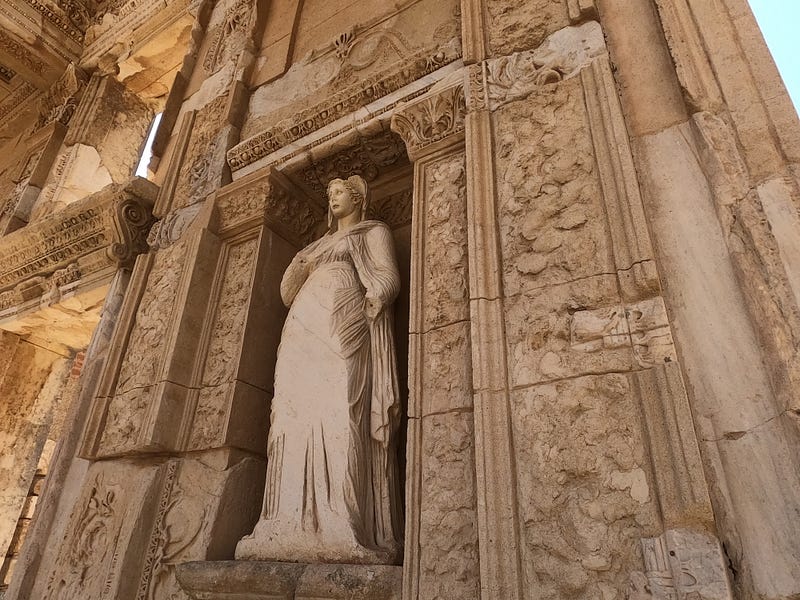
Then we headed to the gorgeous little village of Şirince on a local mini-bus caught from Selçuk.
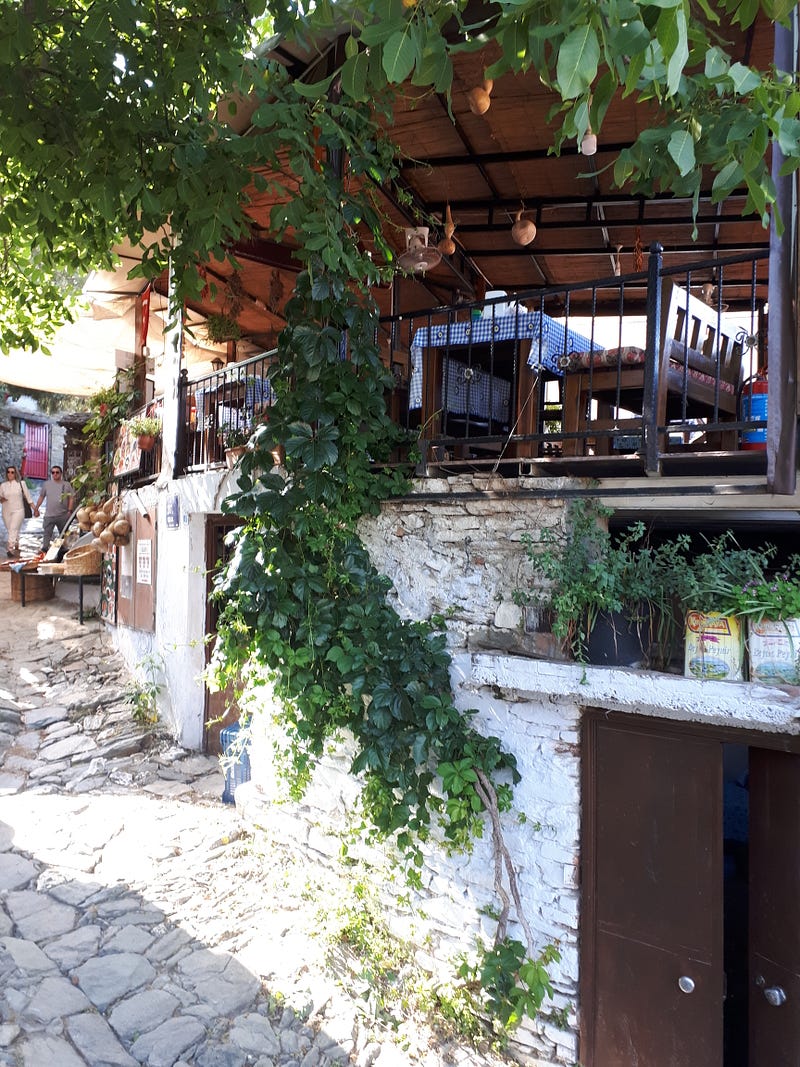
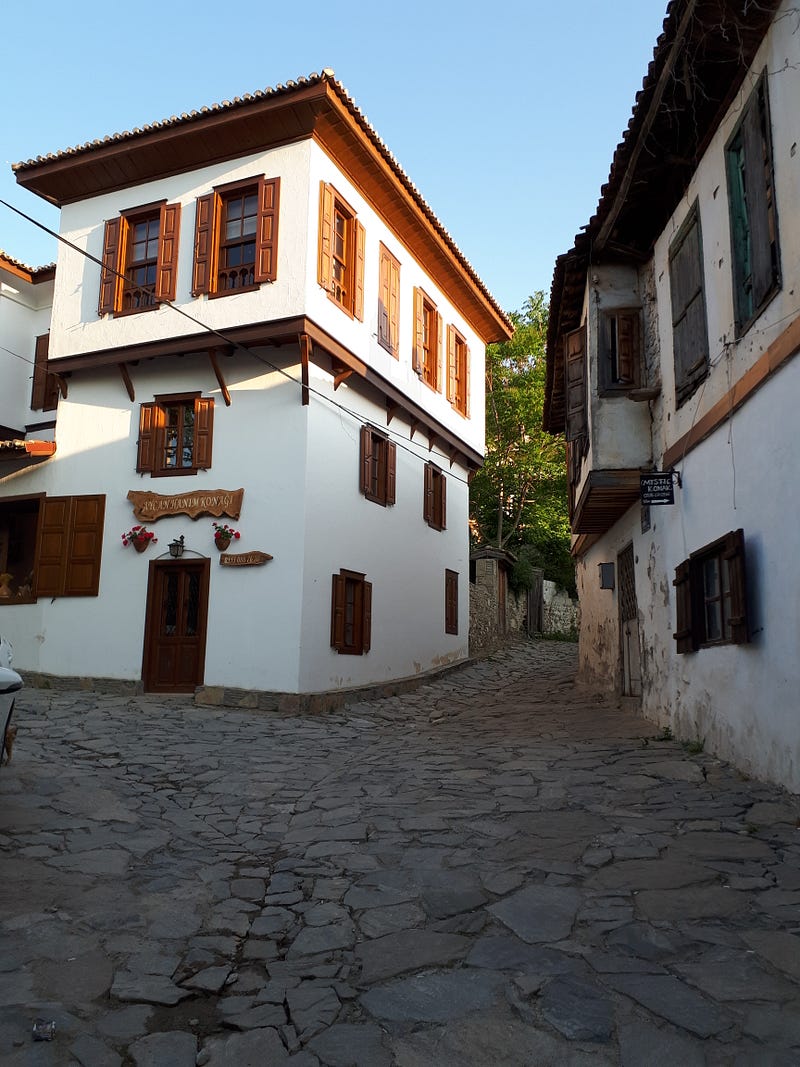
The town is known for winemaking and is filled with cobblestone streets, quaint little restaurants, and interesting artisan stores. I loved the village and wanted to spend a lot more time there but we were limited if we wanted to catch the last train back to Izmir.
This is one place I will definitely return to in the future.
There is so much more to see and do in the region. I wasn’t able to see House of the Virgin Mary and the Temple of Artemis near Ephesus due to time constraints. I also wanted to spend more time in Pamukkale, enjoying the travertines and seeing more of Hierapolis. Both on my “return to” list for future visits.
Next time I’ll also visit Alaçatı and some of the villages on the outlying coastal areas around Izmir but will need a car (or at least a friend with a car) to get there easily.
I hope you enjoyed my time in Izmir and will put this amazing area on your bucket list for future travels.
Jillian Amatt - Artistic Voyages, I expedited this article from my drafts just for you. Happy “Turkish Treating!”


