
I’ve Written 400+ Blog Posts in the Past Three Years — Here’s 6 Techniques I Use to Generate Content Ideas On Demand
How To Never Run Out of Content Ideas

Becoming a prolific writer on the internet is easier than you think.
You don’t need five years of experience or a $10M seed round.
All you need is an idea.
It sounds simple on paper, but many put it off due to that last part.
It’s either they wanna write and don’t start, or they start and give up.
The excuse is usually the same –
“I don’t know what to write about!”
For starters, that’s a lie…
You do know what to talk about; you just don’t know who it’s helping.
For example, if you got an email from someone your age in your area asking you what they need to do to open a bank account, you’d know exactly what to say, right?
Exactly.
When you know who you’re helping, coming up with ideas of what to write about is simple.
So first, you gotta get clear.
When you’re clear, these six frameworks will help you never run out of ideas…
1. Steal like an artist
My entire consensus behind content creation is simple:
Do what works.
If an idea is proven to work, don’t reinvent the wheel — just put your spin on things.
There’s a few ways to do this, but one of my favorites is to find big creators in my area of expertise and look at what they’re talking about.
If something works for them, I’ll do the same but put my spin on it…
For example, a few weeks back, Eve Arnold wrote A Day in the Life of a Part-Time Online Writer…
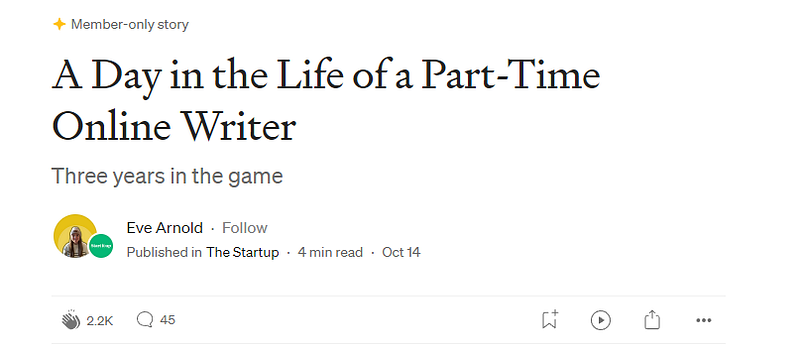
I saw it got a lot of engagement and adapted it with my spin on things – A Day in the Life of a Full-Time Online Writer.
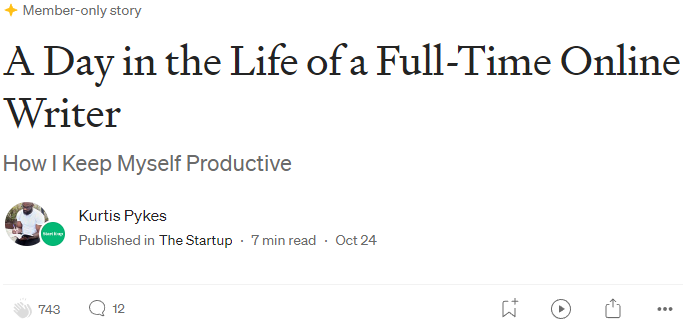
Sure, we’re not serving the same people, but it’s close enough.
The engagement she got told me people were interested in the topic, and by the response I got, I was right.
All I care about when I come up with ideas is “What do people actually want?”
If you’re creating content that’s proven to work, you’re not guessing what people wanna consume.
Every newbie should start here when they begin their journey.
Not only would it save you from guessing, but it will also get eyeballs on your work… FAST!
But there’s a catch…
If you’re always waiting for someone to create content and then for it to get validated, you’ll always play second fiddle.
You’ll never be seen as the authority.
People may like your perspective, but they’ll always return to the authority when they need their problem solved.
Once you’ve got a lot of eyeballs, you’re in a position to start shifting the narrative, so at some point, you’ve gotta shift your approach.
2. Mentor your past self
I didn’t know how to do cold outreach six months ago.
Now, it’s made me thousands of dollars.
This is grounds for content.
Mentoring your past self approach means you from the past are the target audience.
All you do is create the content you wish you had in the past.
Here’s a few examples…
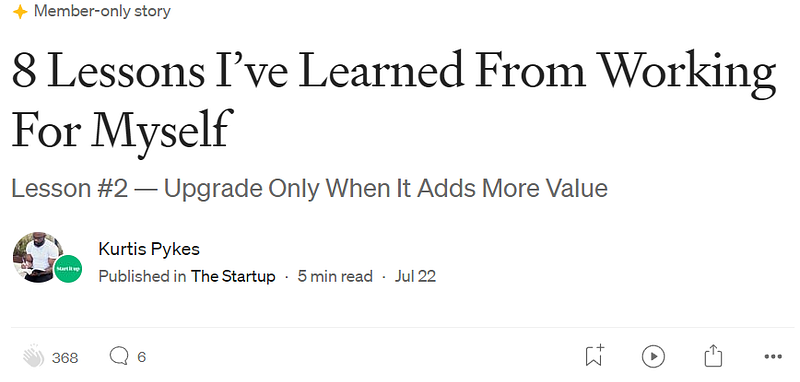
This targets someone who would be interested in working for themselves but isn’t sure of what to expect.
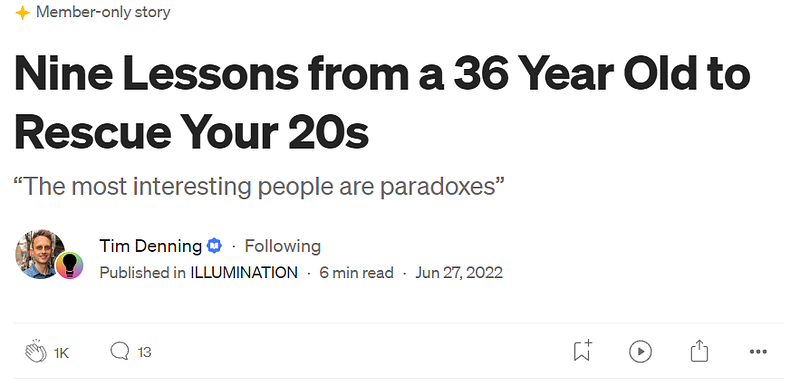
If you’re in your twenties, this is for you.
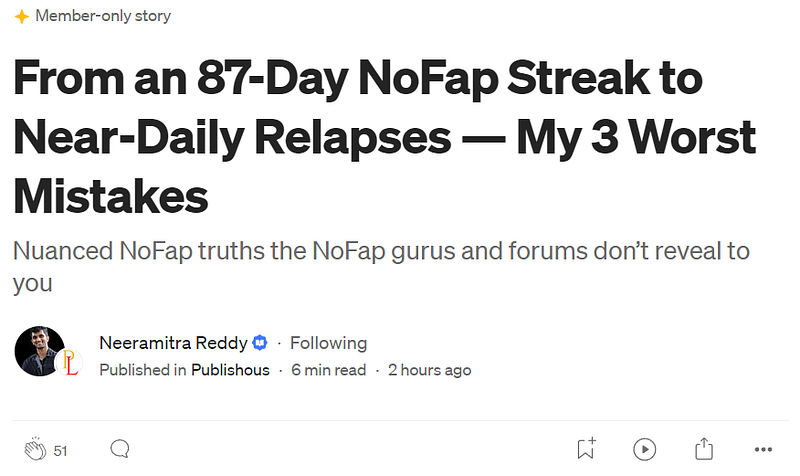
Those into NoFap would be all over this one…
Mentoring your past self works cos you’re instantly an expert — no one can tell you what you experienced.
All you gotta do is think about the things you couldn’t do in the past but can now, then share it to help others.
There’s guaranteed to be other people who are in a similar situation to what you were in a few days, weeks, months, or years ago.
The shorter the timeframe, the fresher your perspective.
This puts you in the best position to relate since your experience is fresher.
For example, when I was going into secondary school, I didn’t ask my parents what it would be like even though they were more than qualified to give me advice since they’d been before…
I found people who were 1–3 years ahead of me and asked them — they had the freshest perspective on what to expect.
But…
Using this approach too often can come across as arrogant or self-absorbed.
Just think about it… We all know that person who always makes everything about themself; This is the equivalent when overused.
3. Curate someone else’s ideas
Don’t: aimlessly wander the net looking for the next dopamine shot.
Do: browse the net with the intention of bettering yourself.
If something sticks out to you, curate it.
The fact it was able to grab your attention means it’s likely to have the same effect on someone else.
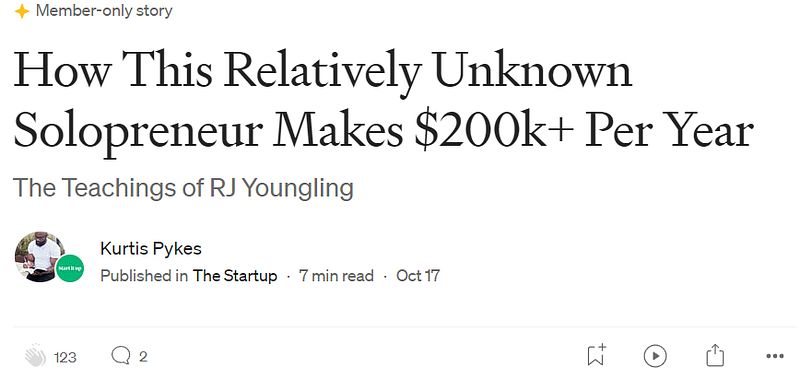
This is precisely what I did with “How This Relatively Unknown Solopreneure Makes $200k+ Per Year.”
Tim Denning did a similar thing with his story “Ava Bookbear Started a Substack That She Now Lives Off (6-Figures). I Studied Her Unconventional Path.”
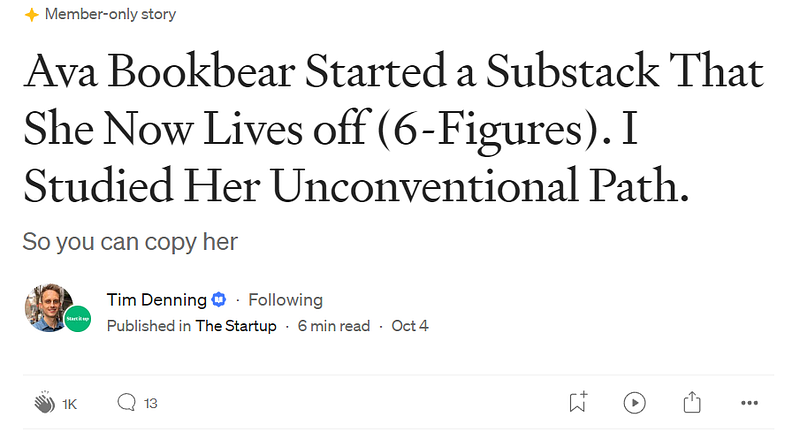
The idea behind curation is simple…
Select a relevant piece of high-quality content and arrange it in a meaningful order.
When you add context or commentary, you make it easier for others to understand why you appreciate the thing so dearly.
The catch here is that you’ve gotta have expertise in the area you’re speaking about for people to care.
For instance, I hardly watch mainstream news anymore…
Instead, I watch TLDR.
TLDR focuses on discovering, analyzing, filtering, preserving, and sharing the most relevant information on a specific topic (like in the one above).
Their goal isn’t necessarily to sell you a way of thinking; it’s to give you different perspectives by covering a topic from as many angles as possible.
The point I’m making is you’ve got to care deeply about the topic to get the depth and create the engagement required for people to stick around.
4. What worked in the past? (Data-driven approach)
As I said already…
I care about validated ideas.
If the people want it, why change it?
The only difference between this and the steal-like-an-artist approach is it depends on content YOU created in the past — if you’ve never created content, it won’t work.
It may sound weird, but sometimes readers may only wanna read specific topics from you…
It’s your job to discover what those topics are and double down on them!
I often find myself digging through my stats to see what people appreciated in the past.
The metric I use to judge is claps, and my process is extremely simple...
If a story has fewer claps than 200, it’s not validated; thus, I won’t create content on the same topic in the near future.
If a story has more than 200 claps, I’ll create the exact same story, but I’ll tell it in a different way.
Note: 200 claps is a relative metric; it changes on a monthly basis.
For example, let’s look at my output from September…
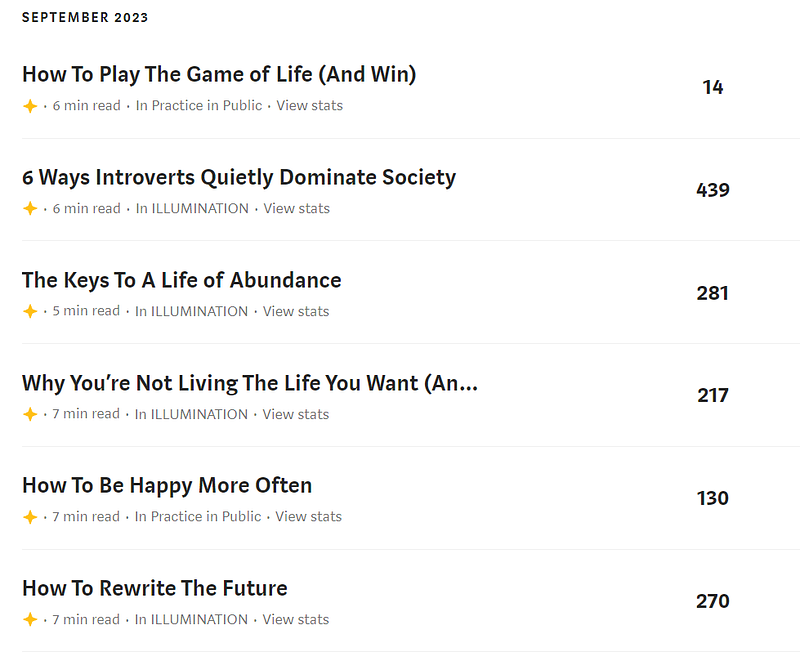
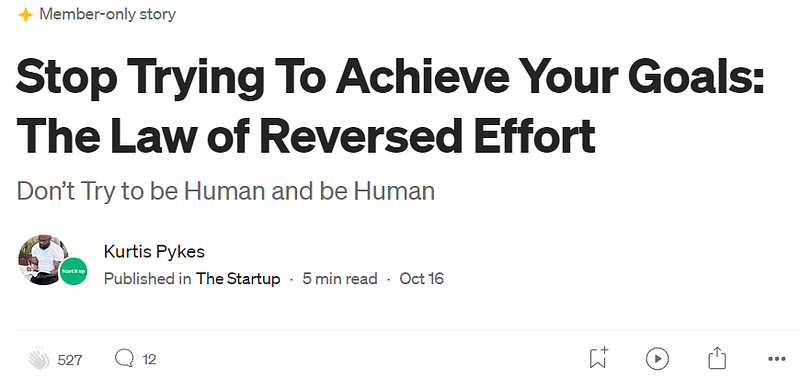
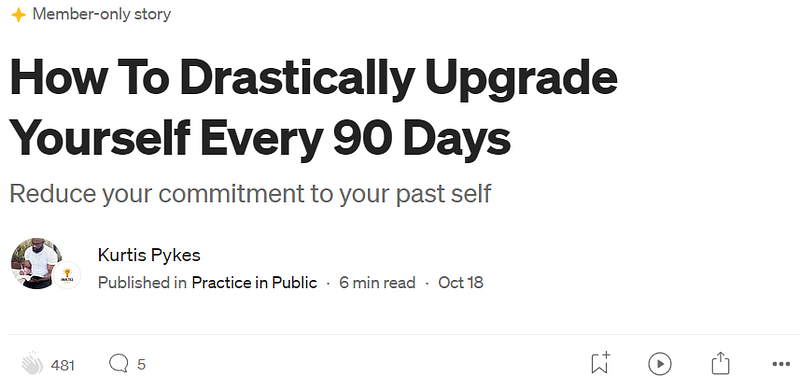
I know for damn sure I won’t be creating content on the games of life, but there’s definitely room for me to talk more about introversion (something I was exploring), mindset, and goals.
And guess what… That’s exactly what I did in October!
Here’s an article I wrote on abundance:
And here’s one I created on life design:
Here’s a more detailed example: I created an article called “I Wanna Build A Business But Can’t Think of Ideas” — Here’s What To Do…
It got the initial injection of views when I first published it in July, but it was nothing major.
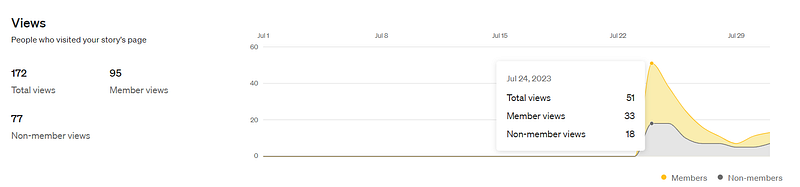
The following month, nothing happened again…
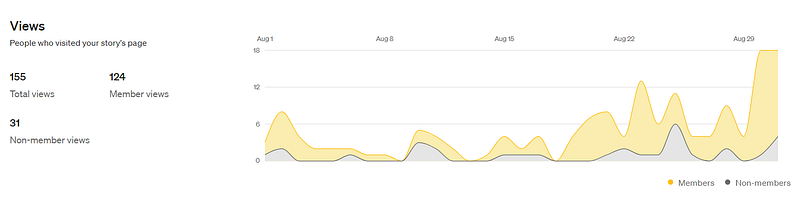
All of a sudden, it took off — I’m guessing it was included in one of Medium's newsletter emails cos that’s where the majority of external traffic comes from.
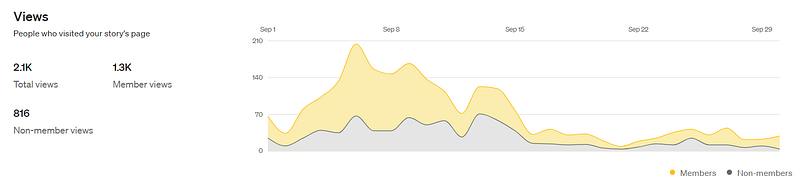
This told me people wanted to read more of this type of content, so all I had to do was double down.
However…
The main problem with this approach is it requires you to have content.
If you’re new to content creation, you don’t have any data to determine what people wanna read.
This is called the cold start problem in the data science world.
5. Log questions people ask
Content is merely a solution to a reader's problem.
Another way to think of it is as an answer to a reader's question.
That’s how this article was birthed…
A coaching client said to me the reason they haven’t created content is that they don’t know what to write about.
This inadvertently means if they knew what to write about, they would create content.
In other words, they were asking me how to come up with ideas.
The point I’m getting at is people may not ask questions directly, but you can infer what they mean.
There’s three main ways I find questions: 1) in the comments of my own stories, 2) in conversation and 3) in the comments section of other writer’s stories.
If you haven’t got a lot of engagement or friends, just find a big creator and stalk their comments.
Here’s an example…
Zulie Rane recently wrote A Complete Beginner’s Guide: How to Earn From Content Writing.
In the comments section, someone said this:
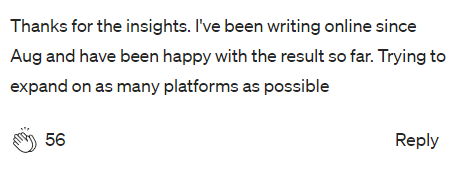
I assume “trying” means “doing but not succeeding,” so I step in…
Note: I didn’t do this for this example.
First, I’ll answer the comment given by the reader with an insightful response (i.e., this is how you expand on to other platforms).
If it gets good engagement, then I’ll expand on the article in a blog post.
“But why do you do it like this, KP?”
Cos I want all my ideas validated.
If I’m gonna spend 2–3 hours behind a computer screen, turning my brains inside out, I wanna be sure people give a damn before I create the content.
That said…
A question is grounds for content.
It may not always look like a question at first glance, so you’ve gotta train yourself to look into the deeper meaning of things.
The only downside to this one is it’s time-consuming — especially when people aren’t direct.
6. The content matrix
I took the content matrix method from Justin Welsh’s LinkedIn OS course (that’s an affiliate link), but it’s actually a popular marketing tool.
The purpose of it is to visually represent your content strategy and simplify the process of finding ideas to create content.
How it works is simple…
You have your content styles in the columns and your topics in the rows.
To come up with an idea, you pick a style from the columns and a topic from the row.

Here’s some examples of ideas I’ve generated using this approach:
- Productivity / Listicle: Secrets Ultra-Productive People Don’t Want You To Know About Getting More Done
- Goals / Contrarian: Don’t Just Set Goals. Build Systems
- Writing / X vs. Y: Here’s How My Thinking Changed When I Got Serious About Writing
- Mindset / Anthropological: Everything You Need to Succeed is Hidden in Plain Sight
- Self-improvement / Actionable: How to Rewrite The Future
The big downside of this approach is you’re ultimately guessing.
If you’re new to content creation and don’t know what works, through data or intuition, it’s probably not the best method to start with as you don’t know what
The best way to use this approach is to pair it with something such as the data-driven approach so you’re creating content on validated ideas.
Final thoughts
Becoming a prolific writer on the internet is easier than you think…
All you need is an idea.
When you know who you’re helping, coming up with ideas of what to write about is simple.
So first, you gotta get clear.
When you’re clear, copy these six frameworks I use to never run out of ideas…
Thanks for reading!
Join my email list with 700+ people to get a FREE eBook on the most effective way to achieve your goals.