
I’ve Worked 14-Hour Days, 7 Days a Week, for 8 Months Straight
Here’s what I learned
Author’s note: If you’re thinking of joining Medium to read more articles by me and other great writers, you can sign up through my link here. Your subscription will directly support my work!
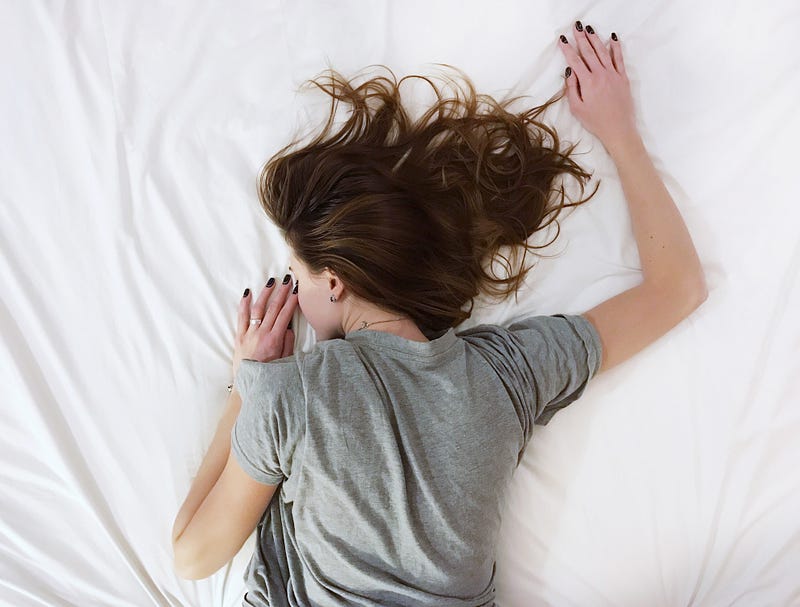
My day starts at 5:30am. Not with a shower, or a cup of coffee, but by leaping directly into work. It ends at 7:30pm, when I faceplant onto my couch. Sometimes, I get a 30-minute lunch break in the middle of the day. Usually, I don’t. This is true every day, Monday through Sunday. I haven’t had a day off in eight months.
This means I have two hours each day to take care of all my human needs. If that sounds reasonable, remember that this includes everything that isn’t work: eating, showering, exercising, using the bathroom, reading the news, sex (if only), prayer, exercise, socializing, writing, staring in silence at a blank wall in an attempt to recover from the day. Even if each of these takes just fifteen minutes, I have time for only a handful of them—much less a chance to read a book or watch a TV show. Not if I want to sleep, anyway.
You can imagine the tradeoffs: eat or brush my teeth? Exercise or bathe? Sleep or write? Call my depressed mother or talk to my stressed husband?
You might assume that I am an incurable workaholic, or a business owner struggling to keep thing afloat, or a freelancer cobbling together multiple jobs to pay my rent. No. I’m none of these. I’m a regular, comfortable, upper-middle-class person with a normal day job as a writer.
I just also have kids.
Let’s start by defining work: work is a task that you could easily get paid to do — whether or not you actually get paid to do it — and that you also must do, regardless of whether or not you feel like doing it. For example: showering, eating, commuting, sleeping, reading, knitting, and leisure baking do not count as work, but day jobs, childcare, and scrubbing your bathroom do.
Perhaps you feel like this is cheating: childcare and housework are just life, that’s not work!
To you, I say: that belief—so core to the ethos of America—is what’s busting this country apart at the seams right now. I love my children, but watching them is hard. I can’t think of another activity where one is expected to get repeatedly kicked in the face and react gently. It’s work. What’s more, it’s work that I do for you.
I don’t raise children as part of a conniving plan to gestate caretakers for my future senile self. I had my children simply because I wanted them to exist. I believed their lives would, on balance, be a good thing. Not just for them or me, but for my parents, my community, the future. Adding more kind people to the world benefits everybody, and I’m willing to play my part in that.
But I signed up for this expecting that other people, too, would realize their stake in my kids and pitch in. I was betting on grandparents, playdates, babysitters, and schools. I never once imagined that my husband and I would be doing this alone.
If you’re thinking this is going to be a lesson in resilience, or a list of productivity hacks, it isn’t. If you think I’m going to end this by saying something like but my love for my children keeps me going in these tough times, or it’s incredible what the human spirit can accomplish, I won’t.
This is not an uplifting story. At least, not in that way.
My hair is rapidly graying. I’ve gained weight. I bought a night guard so that I don’t crack my teeth in half while I sleep. Sometimes, spikes of rage just take me over. I never understood the phrase seeing red until now—but I do, actually, physically, see red. The color. As in, I get so angry now that my optic nerve malfunctions—sometimes just because I stubbed my toe, or I can’t find the shirt I’m looking for.
The human body is simply not built to withstand this kind of stress and sleep deprivation. I am falling apart, and it is not within me to pull myself back together. The only thing that will really help me is actual help, from actual other people—specifically, large-scale help from the government in the form of mask mandates, funding to reopen schools safely, and more work protections for parents—which, so far, has not been forthcoming.
But you probably want a silver lining. Okay. Here it is: at least this painful lesson has taught me one thing that I don’t think I would have learned any other way.
Before I had kids, I was a teacher. I worked for an urban public school; most of my students were poor. It wasn’t unusual for a child to let me know they were staying with an auntie because their power got cut off, or sharing a bedroom with three other kids, or had lost a parent suddenly to prison or violence. It also wasn’t unusual to hear about children getting “a whooping” at home from an exhausted and short-tempered parent, and to see how terrified the kids were of these thrashings.
In other words, I saw what was happening in the community. I was aware.
Yet, somehow, I still didn’t see it. I regularly gave useless and absurd advice at parent conferences: Have you tried doing the homework together? (She has three jobs and two other kids.) Could we implement a reward system? (Who is going to track this? And who’s buying the rewards?) Can we try a more consistent routine? (They depend on a shift job that changes hours every week.)
I convinced myself that with enough effort, these families could create a healthy environment for their kids. And, a few superhuman caretakers did—much as a few superhuman parents, now, are handling this pandemic fine—which gave me cover for this fantasy.
After all, the alternative was to accept that that the situation in the community was fundamentally untenable, grand and expensive systemic change was required, and whatever efforts I made as a teacher were like a bandaid on a slashed artery. It’s a depressing thought, and, at first, a paralyzing one.
But, I know now, it’s also the truth.
I’m a fairly good-looking, educated, professional white woman. I’ve had problems in my life, sure, but I’ve always had the ability to get others to pay attention to them. People are just subconsciously trained to listen when I talk, and to help me if they can. I can ask for the manager, as it were.
I never mean to take this for granted, but it’s hard not to.
For the first time, I’m on the other side: in a position of intense suffering, desperately needing help, and shouting into the wind. People offer lip service—parents are amazing, this is such a tough time for families!—but nobody is actually doing anything. Half the country won’t even put on a mask, even though just six weeks of mask-wearing could reopen schools.
For the first time, I understand what it feels like to be invisible. For my pain to be invisible. And I’m ashamed that I’ve spent so much of my life subjecting other people to what I feel now.
Because the stress and the rage and the exhaustion that I have been feeling for eight months is still less than what other communities are feeling now—less, even, that what those communities have been feeling for generations. I can pay my bills. I have health insurance. I’m not afraid for my safety. I’m lucky.
And all these years, while these communities have been shouting at the top of their lungs for help, all I’ve heard is the wind.
When this is over, it will be so easy to go back to the way I was. Instincts are like gravity; they always pull you back to where you started.
That’s why I’m making changes now, while the pain is here, in the hope I can force my future self to be better. I’m changing where my money goes—far more to nonprofits and politics than I ever have before, automatically each month so it’s harder to stop—and I’m building new habits around what media I consume, who I listen to, what I read. I’m trying to rebuild my life so that, in the future, it’s much harder for me to ignore other people’s pain, even when paying attention is unpleasant. For all the damage this time is doing to me, I hope, at least, it makes me better in this small way.
So no, right now, I don’t have the inner strength to withstand what’s happening in my life. I cannot bootstrap myself out of this. But perhaps the future, I will have the strength to reach out and support the people who are feeling the pain I feel now.
Hopefully, we all will.
If you’re thinking of joining Medium to read more articles by me and other great writers, you can sign up through my link here. Your subscription will directly support my work!