
I’ve Spent 5,000 Hours Creating Marketing Campaigns — Here’s How I Get Reliable Results
You’ve probably been tackling creative projects the wrong way all along. Let’s change that.

Picture this.
You’re about to embark on a new creative marketing project for your business or your client.
That project can be:
- Creating an advertisement
- Writing copy
- Building a landing page
- Writing sales emails
- Writing an article for content marketing
- Really any marketing project
You’ve got a blank canvas in front of you and the possibilities seem endless.
But as you dive in, you find yourself struggling to make progress, constantly second-guessing your decisions, and feeling overwhelmed by the sheer number of options available to you.
Sound familiar? If so, you’re not alone.
Many of us have been conditioned to believe that creativity thrives in an environment of total freedom and spontaneity.
But what if I told you that the secret to unlocking your full creative potential lies in embracing a certain level of rigidity in your process?
Seems ironic, doesn’t it?
Through my own experience of working on 250+ growth marketing campaigns, I’ve discovered that incorporating structure and discipline into my creative projects is essential. It has not only made me more effective and productive but has also led to more consistent results.
Today, we’ll explore the benefits of rigidity in creative marketing projects, and I’ll share actionable tips to help you become more effective and productive in your own creative endeavors.
So, if you’ve been struggling and you’re ready to:
- Challenge your preconceptions about creativity
- Unlock new levels of success and output
- Develop a consistent, repeatable strategy that gets results
- Improve your creative output
Then keep reading.
This one’s for you.
Rigidity can be powerful
As a creative professional, I’ve always been on the lookout for ways to improve my productivity and effectiveness. One of the most valuable tools I’ve discovered is the use of swipe files for all my creative projects.
Swipe Files
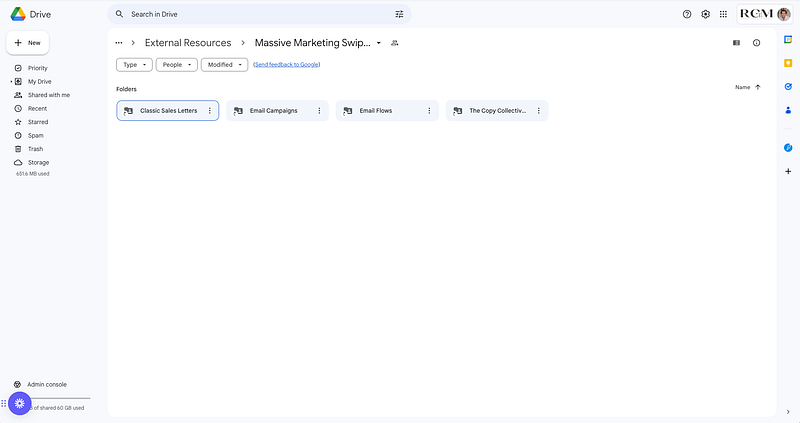
Swipe files are collections of previous material that has been used and celebrated, such as content examples, ad examples, landing page examples, sales script examples, blog examples, and more.
Here’s what mine looks like:
This is my favorite:
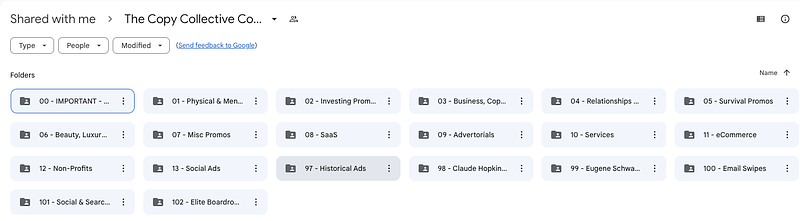
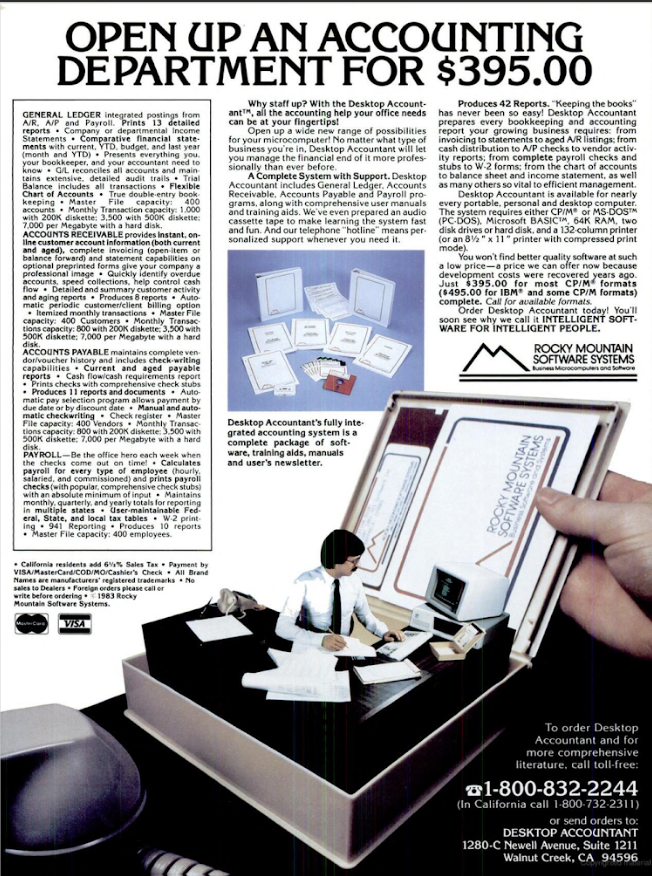
Yes, I have a collection of old ads.
Don’t judge me. I spent 5 years collecting all of these!
I also have more modern ones as well. Think: landing pages, copywriting scripts for sales pages, VSLs, existing funnel URLs, etc.
Check out this example:

I look at this daily.
I can confidently say it has helped me 2x-3x my output and my marketing effectiveness.
Not by copying them but by learning from them.
These collections serve as a treasure trove of inspiration, helping me overcome creative blocks and develop new ideas based on proven strategies.
By incorporating swipe files into my creative process, I’ve found that I can maintain a certain level of rigidity that leads to more consistent results.
This rigidity comes from having a structured approach to gathering and organizing examples, which allows me to quickly reference and draw inspiration from them when needed.
In turn, this structure helps me stay focused and disciplined, ultimately making me more effective and productive in my creative endeavors.
Especially when I create an outperforming ad or landing page, I load that into my swipe file as well.
Not just for inspiration but for achievement purposes. It’s good to remind yourself what you’ve accomplished.
Frameworks
In addition to swipe files, another key aspect of maintaining rigidity in my creative projects is the use of frameworks.
Frameworks provide tried and true blueprints for writing high-quality copy, developing blog posts, creating effective ads, and more.
Here are some frameworks that have been particularly helpful in my own work:
- AIDA Framework: Attention, Interest, Desire, Action. This framework is commonly used in copywriting and helps structure your content to grab the reader’s attention, generate interest, create desire, and prompt action
- PAS Framework: Problem, Agitate, Solution. This framework is often used in sales copy and helps you identify the customer’s problem, agitate it to create a sense of urgency, and then present your solution
- 4-Point Content Framework: This framework, developed by Neil Patel, focuses on hooking your readers and doubling their time on site. It consists of four key points: hook, story, solution, and call to action
By incorporating these frameworks into my writing process, I can maintain a level of rigidity that ensures my content is well-structured, engaging, and effective.
This, in turn, leads to more consistent results and helps me achieve my goals in a more productive and efficient manner.
How this can work for you
Whether you’re a business owner/entrepreneur, copywriter, marketer, revenue leader, or executive— you’re going to have to be creative.
There’s no way around it.
Instead of reinventing the wheel every time you embark, consider these creative hacks.
Creative Hacks
Here are some ways you can ‘hack’ the creative process.
- Develop a regular schedule: Set aside specific times each day or week for creative work. This will help you establish a routine and stay accountable to your goals.
- Embrace mini-sessions: Break your creative work into smaller, manageable chunks. During my time off, I love to take walks. This will help you avoid burnout, reduce cognitive load, and help you stay focused on the task at hand.
- Handy swipe folder: Have your own swipe file conveniently located to make sure you never start from a blank canvas. Over time, continue to add ‘swipes’ to your arsenal.
- Find your framework: If you’re in advertising, use Ogilvy’s magic lantern strategy as a guide for creating effective ads. Find the framework that works best for you.
- Use personal experience as a guide: If you’re working on a building project, draw on your personal experience to complete it faster and better. Use what you’ve learned from past projects to inform your current work.
- Make it your own: Create a folder and make it easy to find and use them. For me, I have a Google Drive folder with all of my frameworks and swipe files. Thus making it extremely easy to find inspiration.
By incorporating these action steps into your creative process, you can maintain a level of rigidity that leads to more consistent results.
I’ve found this is the best way to achieve your creative goals in a more productive and efficient manner.
Conclusion
Remember, the key to success is finding the right balance between rigidity and flexibility in your creative process.
By using these strategies, you can maintain a level of structure and discipline while still allowing room for spontaneity and exploration.
So, whether you’re a writer, advertiser, builder, creative director or simply pursuing a general creative venture, consider incorporating these principles into your own work and see the results for yourself.


