
Fear
I’ve Never Felt More Unsafe in My Life
The specter of gun violence shaped my encounter in Los Angeles
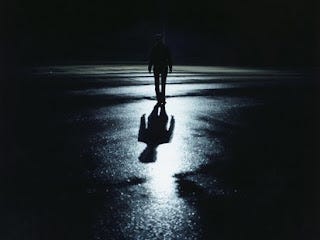
I stepped across the threshold of the hotel door and inhaled crisp, clear California air.
It was 9:30 pm on a balmy Saturday night in the Theatre District of Downtown Los Angeles.
I was free to roam for a while.
Ordinarily, these streets would be quiet, but the concrete vibrated in anticipation of the Grammy Awards to be held less than two miles and a day away.
I casually looked left and right. My neck rotated slowly like an aimless weather vane. I went right.
I walked a block and a half, surprised by how quickly the crowded street thinned out. I noticed bookbags, bicycles, and bodies littered on the sidewalk like the unkept bedroom of a teenage boy.
There was a boldness to the presence of people living on these streets. A sense of propriety. A matter-of-factness that spoke for itself, “Where the hell else are we supposed to be?”
The data says there are about 70,000 people experiencing homelessness in Los Angeles County. About 10,000 of them live in Downtown LA’s 50-block Central City East neighborhood, better known as “Skid Row.”
My hotel was a few blocks from Skid Row. During the daytime, I saw at least 50 people that appeared to be unsheltered on the few blocks surrounding the hotel. Most of them kept to themselves. They didn’t bother interloping visitors as long as we didn’t bother them.
After all, in Downtown Los Angeles, so-called homeless folk outnumbered the rest of us on any given street, any given day.
Anyway, I decided to double back toward the hotel, walking an adjacent street with better lighting yet fewer crowds.
As I walked through an intersection to the well-lit street, I looked to my left and saw the sidewalk in front of the theatre attached to my hotel. The street was full of people exiting a performance. But, within two steps of crossing the intersection, I felt totally alone.
I don’t know how else to explain it.
It was like I stepped into a time and space portal. The street behind me percolated with laughter and chatter. The street ahead of me was an expansive and quiet concrete meadow.
I was relieved to see one person walking on the other side of the wide four-lane, one-way street. And, on my side of the street, at least a football field away, I saw a person walking ahead of me.
Or, were they walking toward me?
I couldn’t tell because although the street was well-lit, there were shadows between the light poles. I saw the figure moving — intermittently — about every other 10 feet in front of me.
Eventually, I could tell the person was walking in my direction, not away from me. This person appeared to be a man. And, he seemed to be energetic.
More like frantic.
We walked toward each other at a steady pace. Not fast, not slow. Just steady.
He walked in and out of the light; like a good person on the verge of breaking bad. His arm gestated wildly as if he was making a strong point in an argument. But, there was no one walking with him and he wasn’t talking.
My skin started tingling. Something was wrong.
I thought, ‘Maybe this is someone with mental illness. Don’t be judgemental. Just keep walking, Ed.’
I looked around the street — left and right — my neck straighter and tighter; more like a timekeeping clock than an aimless weather vane.
A few cars drove toward me on this one-way street, but not as many as one would think on Grammy weekend. The car headlights would briefly illuminate the erratic one — and me — and then they would pass.
It seemed to be darker and lonelier when they passed. Then there were no cars to be seen whatsoever. I couldn’t even see cars ahead of me for two blocks.
‘Maybe there was a lull in traffic,” I thought. ‘Or, maybe the lights were timed and kept traffic to a minimum for the time being.‘
Across the street, the one person I saw walking earlier was gone. There was no one else on the street.
I was alone now. Just me and my frantic friend.
He was closer now. I could see his ragged clothing and scraggly, electrified beard. I could also see that he wasn’t just waving his hand. His finger wasn’t that long. He waved something black, but I didn’t want to jump to conclusions.
Just a few more steps.
The closer he got to me, the better I could see him in the light. Clearly, he was either mentally ill or inebriated. His behavior was becoming more erratic or just more evident to me with each step he took.
Oh shit. He had a long-barreled gun in his hand!
He was no more than 30 yards —nearly a red zone — away from me. My inner voice started talking to me.
“You ain’t going out like this.”
“You don’t want your kids to grow up without you like this.”
“You’re not going to be the one they talk about on the news. Not like this.”
Apparently, my inner me is less concerned about dying than dying like this. Not when I could still do something about it.
I haven’t made a 180-degree pivot turn since I was a Second Class ranked Boy Scout, but I surely did it at this moment.
‘About, Face!’
In one fluid motion, I was speed walking back the way from which I had come. I felt like I was a near jog away from him, just to exceed the rate he walked toward me. Maybe faster.
My 6'4, 200-pound frame moved with urgency, even as I looked over my shoulder.
Despite the fear rising in me — or maybe because of it — I was immediately aware that a large black man running down any street in America is a threat in and of himself.
I was in double jeopardy.
I peeked over my shoulder as I prepared to round the first corner to get back to my hotel.
He was there.
I rounded the corner and took off running full speed for half a block until I arrived at the corner of my hotel. The front door of the hotel was not more than 40 yards away from me and about 50 people were hanging outside the theatre.
I saw happy people chatting safely with caffeine and cigarettes in their hands.
I don’t smoke cigarettes, but I would have gladly lit one up right then.
I stood on the street corner, peeking back in the direction from which I had just come. I expected to hear someone yell or to hear cars honking warning horns in alarm because of the madman waving a gun in downtown Los Angeles. But, I heard nothing.
I suppose I lost him in the time and space portal.
I was glad to lose him. Troubled, but glad.
I calmly walked through the small crowd on the street. They all looked so happy and at peace.
I smirked, relieved as I stood at the entrance of the hotel.
I glanced left toward the theatre people, then turned my head slowly, toward the taco truck to my right.
The weather was still perfect, but my nerves were shot.
I left Los Angeles feeling like I had discovered an agitated nerve in my body that I didn’t even know existed.
I’ve never felt more unsafe in my life.
Honestly,
Ed.
Post-Script
The Soft White Underbelly video series by Mark Laita is hardcore. It is not for the faint-hearted, but it is a critically important time capsule of Skid Row and places like it, unlike any other storytelling platform in our generation. It is not sugar-coated. It features real people who are going through real things: killers, prostitutes, addicts of all sorts, and much more. It is their voices, quite literally right off the streets.
Some of the videos are mini-series where we can see the progress or backsliding of real people in real time. Like Amanda’s progressive, agonizing, and ultimately inspiring story.
I am a poet, essayist, and civic strategist based in Birmingham, Alabama. Let’s stay connected via HonestlyEd on LinkedIn, Medium, or Instagram.


