
I’ve Been Writing on Medium for 5 Years. Here’s Everything I Learned.
Avoid my mistakes to thrive faster.
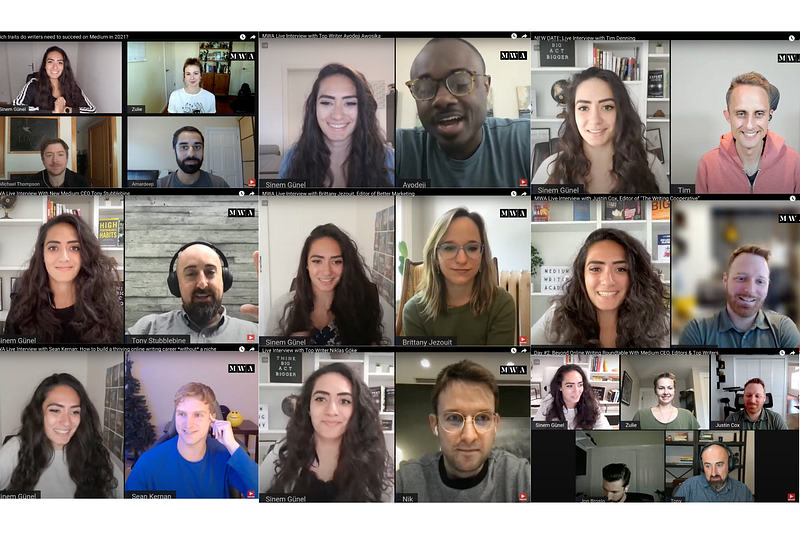
I recently celebrated my fifth anniversary on Medium and won’t deny I get a little sentimental when I look back at everything I did and learned on this platform.
There are very few things I’ve done for five straight years in my life, and I couldn’t be more proud of myself for choosing writing as one of them.
Admittedly, writing on the internet is also the smartest thing I ever did because it helped me:
- Build a career I love that allows me to make 6-figure profits per year while working less than 25 hours per week.
- Grow a community with tens of thousands of members.
- And connect with the coolest, most inspiring people I ever met.
Over the last five years, I:
- Published over 600 articles online (mainly on Medium)
- Reached millions of readers
- Built two email lists with tens of thousands of subscribers
- Launched and killed a paid newsletter
- Sold digital products ranging from $7 to $2,000
- Hosted over 30 live streams on Facebook and YouTube
But most importantly, just like anyone, I made lots of mistakes on that journey. And I’m writing this piece hoping you’ll be able to avoid some of them.
Let’s go:
If you hate change, leave Medium. Or the internet.
Medium announced significant changes to its algorithm and payment model earlier this year. And writers freaked out.
But you know what? I’ve seen major changes each year since I joined the platform.
When I signed up back in 2018, earnings for writers were calculated based on claps. When the system changed, writers freaked out.
And I’ve seen the same pattern repeat for five years.
Here’s a harsh truth: If you hate changes, stop trying to build an audience online.
Algorithms and platforms change all the time. Not just on Medium but everywhere.
Even if you rely on paid advertising, you’ll face changes because rules and regulations change just like algorithms.
Most people believe they’re entitled to success when they get things right once.
They have a few viral pieces, make decent money for a few months, and rage when things change because they can’t play the same game anymore.
I hate to break expectations, but Medium is not your employer. It’s not a platform you should rely on for your income.
You’re supposed to use Medium as a platform with opportunities, but explore different monetization options to build a reliable and sustainable creator business.
To start with, you need:
- An email list (to ensure you can contact your audience independently).
- Several monetization options, so you can make money using your mind and skills even if algorithms don’t work in your favor.
Publications (and editors) are your (best) friends.
New writers often think editors don’t want them to be published. They believe rejections are mean and cruel.
In reality, rejections usually mean that a specific piece isn’t good enough for a particular publication (yet).
Or you might’ve submitted an article that just doesn’t fit the publication’s range of topics.
I recently took on the role of editor of one of Medium’s largest publications, Better Marketing, and here’s the truth: We receive a lot of submissions and reject the majority because they completely miss our quality and style guides.
Sometimes, we can accept pieces with minor edits. But in most cases, the submissions are unacceptable.
The idea is boring, not fleshed out, or unclear.
The writing is sloppy.
The formatting is completely off.
There are too many calls to action or too much self-promotion.
We’re desperately looking for more writers to support and more great stories to publish each week, but we don’t want to sacrifice the quality just to post more.
And we know that editors of many other well-established publications experience the same.
Publications and editors are your friends.
You both have the same goal: You want to see a piece succeed and reach as many readers as possible.
We don’t reject you because we want to be mean or disrespectful.
But with thousands of stories being published on Medium every day, popular publications are looking for the best of the best.
Keep in mind that most publication editors are volunteers. They’re not getting paid for the work they do. And it’s not their job to give you detailed feedback on your work. Their #1 concern is delivering great stories to their readers.
If you face rejections regularly, you have to dig into the submission guidelines, analyze the feed of the pub you want to work with, come up with unique stories, and write pieces that are above average (particularly keeping the latest Boost guidelines in mind).
It’s easier said than done, I know.
But let’s be honest: Extraordinary results require extraordinary effort.
Medium is a reading platform — not a writing platform.
So many writers join Medium thinking it’s a platform for writers, full of writers. They give writing advice without ever having written anything significant or having reached a substantial amount of readers because they think Medium is all about writing.
Well, it’s not. Medium’s primary stakeholders are readers.
It’s curious minds who want to learn something new and read meaningful stories. Medium’s whole business model is built with readers in mind: There are no ads and readers pay for high-quality content. That’s a unique model that rarely works, and yet, the number of new subscribers has been going up lately.
Of course, writers are a crucial part of the game, but as an author, your primary audience is readers. You need to understand how to stand out and serve those who pay to get access to your stories.
Your #1 concern as a writer should be this: How can I write stories that are worth paying for? (I discussed this in detail in my last interview with Medium CEO Tony Stubblebine.)
“Books are made out of books.” — Cormac McCarthy
And great articles are made out of a combination of books, research papers, articles, podcasts, real-life experiences, and much more.
As a writer, you’re allowed to get inspired by other writers’ work and ideas. Most of your stories won’t be based on groundbreaking ideas, and that’s okay. We’re all just a mashup of the content we consume and the experiences we make.
What matters is that you give credit when credit’s due.
Learn from others. Pick your heroes and favorite resources. Stay inspired.
But create something that’s uniquely yours.
Nobody is excited about following someone’s copy.
Be you.
Tell your own story.
Share your own experiences.
That’s the only way to stand out and build an audience that loves you for who you are.
Editing is 90% of the game.
I’m not a fantastic writer, but I mastered two skills that helped me get ahead of 99% of my competition:
- Understanding human psychology and how it’s applied to online marketing.
- Editing my writing for clarity.
Building an audience of readers and growing a digital writing business isn’t just about being a decent writer.
It’s about clearly articulating your ideas and relentlessly editing your work to be clean, clear, and compelling. ✨
And the most challenging part of great editing is that you need to spot and admit your own flaws.
I see so many new writers who skip editing because they’re impatient and sloppy.
When they’re done writing a piece, they want to publish it as soon as possible. They don’t want to spend an extra hour editing.
And I get it — you’ve made a great effort, and you want to be done.
But frankly, you won’t get rewarded (or paid) for publishing a piece you wrote.
You get paid for writing stories that are worth reading. And you rarely write a great story without editing.
Usually, great writing is a combination of having a good idea, writing with care, and ruthless editing to ensure you end up with the best possible story for your reader.
As Octavia E. Butler once wrote:
“You don’t start out writing good stuff. You start out writing crap and thinking it’s good stuff, and then gradually, you get better at it.”
Consistency matters, but not like you think.
“Be consistent” might be the most frequently shared piece of writing advice.
And there’s a point: If you want to make a living as a writer, you must write and publish consistently.
But consistency doesn’t equal daily.
There’s no point in writing or publishing daily if that schedule doesn’t allow you to produce your best work.
Luckily, Medium’s newest updates acknowledge this. Because of Boosting and the current distribution standards, it’s harder to build an audience or make a significant amount of money just by showing up consistently. And it’s fair.
Content creation and entrepreneurship shouldn’t be about doing more. It’s about creating value for a specific group of people.
As a writer, you should get paid for writing impactful stories, not for writing more.
Don’t get me wrong: Consistency still matters.
You become a better writer by writing frequently. And you want to show up consistently to stay on top of the minds of your readers.
But you don’t have to freak out about writing or publishing daily. You can take time to produce your best work in silence and share it with the world when it’s ready.
Instead of forcing yourself to write more, write deliberately.
You can still make money writing on Medium. And you still shouldn’t rely on it.
I made close to $200,000 just by writing for Medium’s Partner Program over the last three years and wrote about how much money you can make on Medium back in 2020.
Granted, a few things have changed.
While I could regularly write viral listicles or how-to pieces that casually hit four-figure earnings in 2020–2021, that’s hard to replicate today.
The recent updates discourage generic viral listicles. And that’s good.
After a long period of losing paying members, Medium’s recent changes led to an increase in new members.
Medium CEO Tony Stubblebine talked about this in his recent keynote about the State of Medium.
Anyone claiming that “Medium is dead” basically means “Medium is dead for me because it doesn’t work in my favor anymore.”
There are two main lessons for writers here:
- Since it’s harder to consistently make a significant amount of money through the Partner Program, a lot of writers give up, which leads to less competition for those who’re here for the long run.
- An increase in paying members grows the pool of possible earnings for writers who stay committed and keep showing up. Plus, the discontinuation of the referral program might grow the potential earnings pool for writers too.
While the previous algorithms and payment models were beneficial for writers with a good sense of marketing, reader behavior, and basic human psychology, the current model enables more people to get paid for their writing without encouraging them to constantly replicate viral stories.
As Gary Vee preaches:
“We have to start looking at these platforms like shows, not like channels.”
Use Medium as your show and create the best possible show you can.
But don’t rely on it for monetization.
Build your email list. Grow a loyal audience. And monetize your ideas and expertise through various additional ways.
You NEED an email list — even if you don’t know how and why.
You’ve probably heard this a thousand times, but I’ll repeat it: If you’re serious about building an audience and a career as a writer, you need an email list.
Why? Because with an email list, you can:
- Send your newest content to your readers
- Have genuine conversations with your biggest fans
- Sell your products and services
- Monetize your efforts through paid advertising
- Get a book deal from a major publisher or get invited to speak on (virtual) events
Granted, these only apply if you have a substantial amount of email subscribers.
But that’s not the point.
The point is that you should start now.
If you don’t have an email list and a regular newsletter yet, create your Convertkit account as soon as possible. It’s the software I’ve been using and loving for the past three years, and I can’t recommend it enough.
You can start on their free plan, and they have incredible resources for beginners to help you get ready to send your first email.
Screw being “a real writer.” Just Write.
There are two types of writers:
- Those who think they’re “real writers”
- And those who make a lot of money through their writing
Usually, “real writers” judge successful entrepreneurs like myself for not being real writers. They’re mad about listicles and marketing strategies that help you reach more readers. But they’re also mad about not getting paid and not being seen.
If I have to choose between being a real writer and running a thriving digital writing business that allows me to live life to the fullest, I’ll always choose the second option.
I have zero interest in labels. I write because it’s fun, rewarding, and profitable. Not because I believe writers are superior.
Here’s the good news: You don’t have to be a “professional” writer to succeed on Medium.
When I published my first story in 2018, I had zero experience. I didn’t know how to write. I’m not even a native English speaker. And here I am — having written stories and emails that were read by millions of people around the globe.
Screw labels like being a “real writer” and focus on writing stories that’ll be useful to your readers.
Be clear about what you want and relentless about acquiring the skills you’ll need to get there.
Stop “supporting” other writers (Or: do it the right way).
I started one of the first Facebook communities for Medium writers back in 2018.
It’s one of the largest and most useful groups you can find because we have strict rules about content promotion and spam.
Most writers think that clap-for-clap or follow-for-follow are great support and necessary to grow your audience, but they’re not.
Clapping for other writer’s work without reading it has never been a good idea, but with the latest updates, it does more harm than good.
If you really want to support other writers, form accountability groups and share genuine feedback on each others’ work.
Team up with a few like-minded writers and set up clear rules for weekly updates and feedback.
Clapping for each other's stories is cute, but it doesn’t help. What helps is honest feedback and ideas for improvement.
Fall in love with the process, not the outcome.
Most writers give up because they don’t see the results they desire fast enough.
What they miss is that this is not a sprint. It’s a marathon. Maybe even an ultra-marathon.
Building an audience, successfully monetizing your writing, and turning your work into a proper business takes time and stamina.
That won’t change even if you have access to the most valuable resources and get supported by amazing mentors and coaches.
Learning how to write for internet readers takes time. Understanding platforms takes time. And gaining trust and credibility takes time.
If you don’t enjoy the process, you’ll likely give up (too) soon.
When you create on platforms like Medium, you play a numbers game: Most of your content gets an average number of views. The average usually sucks.
But some pieces are outliers. They go viral and reach the masses.
In the new era of Medium that focuses on genuine, human storytelling, most viral stories will be boosted stories.
If you want a higher chance to get boosted, stop playing the quantity game and play the quality game. Be extra careful about the ideas you turn into stories. Spend some extra time editing your piece. And make sure you meet the official quality criteria.
Don’t learn from someone whose strategy you don’t want to use.
I might get some haters for saying what I’m about to say, but that’s okay — here we go: There are dozens of “Medium coaches” who suck at writing, audience building, and digital marketing.
They built their audiences by publishing an enormous amount of stories and using sensationalized titles about the platform itself. Some go as far as publishing several short, low-quality pieces per day.
They never share their numbers or earnings because they suck. They typically don’t get boosted because their stories don’t meet the quality standards. They just reach a lot of people by being omnipresent and writing a lot.
And yet, they make money selling ebooks, courses, and even coaching to teach new writers how to use Medium.
It’s disgusting.
Here’s my advice: Don’t pay someone if you don’t want to replicate their strategy.
If someone publishes new content daily to stay relevant, she’ll likely teach you how to do exactly that: Publishing a lot and relying on quantity over quality.
I don’t know about you, but I’ve never been interested in a business that forces me to show up every single day.
I started my own business because I wanted to enjoy freedom and not constantly stress over churning out new content for external platforms.
You don’t make money on Medium by writing about how to make money on Medium.
Your competition is loud but not great.
Tens of thousands of writers publish new stories on Medium every day. And just like on any other content publishing platform, 99% of that content sucks for various reasons:
- Most of these writers are new to the game. They are writing their first few stories, and give up if they don’t become millionaires overnight.
- Most stories are generic, repetitive, poorly written, and not edited.
- Most stories aren’t published in popular publications or tagged with the right topics to help increase discoverability.
Long story short: Lots of people publish lots of stories on Medium, but very few are worth paying attention to.
If you make an effort, consistently improve your craft, and take enough time to properly edit your stories, you’ll be ahead of 99%.
You’re a writer, so you have a personal brand.
Every time you publish something online, you’re growing or damaging your brand.
And yes, you have a brand, even if you hate terms like “personal branding.”
Branding isn’t about logos or websites. It’s what others think about you.
And your content shapes what they think.
If you’re not consciously building your brand, you might end up with one that doesn’t fit your expectations.
It’s not just about “giving more value.”
If you’re looking for advice on how to grow your audience, 90% of the ideas you’ll find will tell you to create more value.
And it makes sense. Of course, you have to create value. Why would anyone pay attention to your work if it’s not valuable?
But value is only half of the battle.
Everyone knows you should create value. And most people do create valuable content.
But it’s not just about the value.
It’s about emotions and stories.
Someone might read one of your articles because it’s valuable. But she won’t turn into a fan of your work if there is no storytelling or emotions involved.
You can “create value” within seconds by using tools like ChatGPT. It’s child play. What you can’t replicate is human connection, emotions, and personal stories.
This isn’t true for all niches, but it makes sense for most.
With millions of pieces of content published daily, value isn’t enough anymore. Readers expect more.
If you don’t care about your audience, you don’t deserve one.
Be clear about who you want to attract and use the “Taylor Swift Method” to build an audience of raving fans.
Write with a book in mind.
This is an idea Medium CEO Tony Stubblebine shared with me in an interview back in early 2021, and we talked about it again last December.
There are a few things that might happen when you start to write your stories with a book in mind (this is particularly relevant to non-fiction writers who educate through their writing):
- When you write with a book in mind, you naturally restrict yourself. You go less broad and more deep into a topic because you know a book can’t be about anything. It has a clear beginning and an end.
- By going deeper into one subject, you end up ahead of 90%. You become an expert on your topic, even if your expertise is based on research, not personal experience.
- You naturally narrow your target audience by writing for an ideal reader who’d enjoy your book.
There are 3 ways to write on Medium, but only one makes sense in 2023.
Win through simplicity
The most successful online writers aren’t the most sophisticated ones. It’s the writers who allow themselves to keep things simple.
You don’t need fancy tools, an extraordinary workplace setup, or groundbreaking ideas to grow an audience and income online.
You need a consistent idea-generation system and an online writing process that you enjoy sticking to.
3–2–1 Go!
I know this is a lot of information to digest, but I hope some of those ideas will make your journey easier and more rewarding.
Most importantly, keep in mind that you got this.
I started writing online with zero writing experience as a non-native English speaker.
I won’t say anyone can do what I did because it’s not true. Very few people are willing to stick to a habit like writing online when there’s no guarantee for success.
And there isn’t.
I can’t promise that you’ll succeed online. A lot of people start to write and give up after a few weeks or even days.
But I can encourage you to give it a try because the upsides are so much greater than the downsides.
If you’re a brand-new writer:
>>> Download my Complete Beginner’s Guide on How to Start Writing on Medium.
>>> Get access to my video training on how to gain your first 100 followers.
If you’ve been writing for a while but feel stuck:
>>> Grab my Cheatsheet with 15 Tips to Improve Your Writing.
>>> Download your free ebook with advice from 10+ Top Online Writers.


