
I’ve Been Breathing Wrong My Entire Life.
An evidence-based guide for rediscovering your breath.
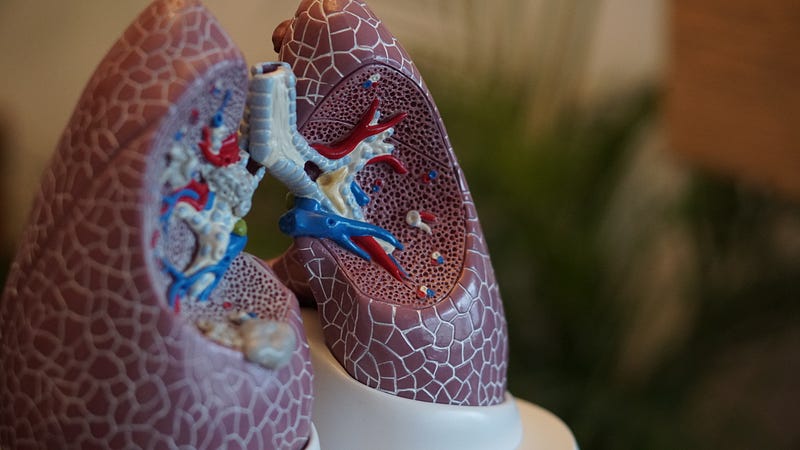
I recently wrote an article on how breathing may be the most powerful weapon we can wield due to its effects on stress. Since then, I’ve been fascinated by the breath, and the immense potential it holds. As I dug into more evidence-based literature, I came across Dr. Belisa Vranich, a world-renown breathing expert. Upon reading her work, I came to the humble realization that I’ve been breathing wrong my entire life.
Not only have I been disconnected from my breath, but I’ve been missing out on a plethora of health benefits. I mean everything from elevated sleep hygiene and back health, to lower depression and anxiety.
Here’s how.
“There’s no way to stress-breathe and be calm — they’re intrinsically linked” -Dr. Belisa Vranich
Take a breath right now.
Notice how you take that breath. What parts of the body are you using? How are you holding yourself? How long is the inhale? What about the exhale?
Let’s unpack those last few seconds, and shift our mindset to breathing for health and longevity, and not just survival.

What’s going wrong.
Nine out of ten people breathe vertically. This means that they’re using the top of their lungs and contracting the traps and shoulders to get small bouts of air in. Yes, before you blame sitting or sleeping for tight neck and shoulder muscles, considering blaming your breath. This practice not only under-utilizes your main breathing drivers (the diaphragm and intercostals) but also sends you into a panicked state.
Your vagus nerve, the longest cranial nerve, will immediately turn on a fight-or-flight response if you’re breathing vertically. Why? We were never designed to breathe this way, and it’s a signal to the brain that you’re stressed. Even if you’re watering the garden or dancing in daisy fields, your body will receive feedback from your breath and release cortisol.
By using this vertical approach, our capacity to take a deep breath goes out the window… and we’re left in a constant state of shallow, stressed respiration.
When did it all go wrong?
We haven’t always breathed this way, in fact, look at your toddler or dog and notice how they’re breathing correctly. The issue lies in learned behavior over time. There are three primary drivers for why our quality of breathing diminishes as we age:
1) Miseducation. Many of us are simply taught to breathe vertically. We listen to a misinformed yoga instructor, or we see an advertisement online. Go to your doctor, and I almost guarantee he or she will ask you to take a deep breath while touching your upper rib cage.
It’s not like we’ve abandoned any learned principles, we were just never taught how to breathe properly in the first place.
2) Sitting. As sedentary behavior increases, so does prolonged sitting. This has a direct correlation to poor breathing. As we sit longer, our posture gets lazier, resulting in the activation of weaker postural and respiratory muscles.
Posture alone alters the quality of your breathing by up to 30%. Sit tall and roll those shoulders back. Consider taking a break and walking around for a few minutes. In the world of breathing, a healthy sitting practice can go a long way.
3) Myth, culture, and vanity. Through our society, we’ve been taught to suck in and “look our best” at all times. The result? We tuck in. We guard. We’re afraid of letting our bodies go. This causes us to tighten up the diaphragm and take little baby breaths from the top, striving to look as ‘slim and fit’ as possible.
Furthermore, our culture is moving faster than ever. We’re constantly moving quicker, and completing tasks with less quality and intentionality. All of these factors lead to a short, tight, panicked style of breathing.
What you can do.
Your diaphragm is your friend. It is not a small pancake muscle that sits under your ribs. It’s a massive dome-like structure that has up to 5 inches of movement — if only you’d let it get there.
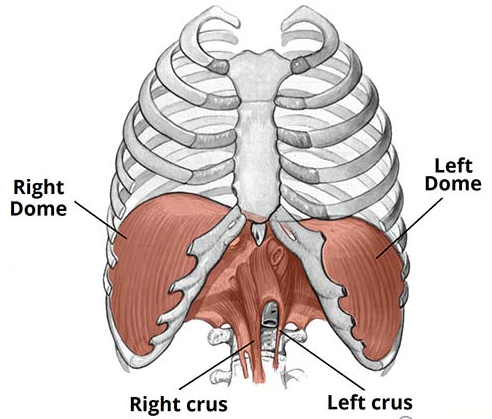
Try this. Place your hands at the bottom of your ribs. On a large inhale, lean slightly forward and allow your hands to be pushed outwards horizontally. On the exhale, lightly draw the belly in and sit tall. As you breathe, ensure that your neck and shoulders are completely relaxed and neutral. Look, you’re using your diaphragm!
To nail down these steps, try box breathing. Inhale for four, hold for four, exhale for four, and hold again for four. Repeat for one to three minutes, and see how good it feels to use the respiratory muscles that have been long forgotten.
Why is this shift important?
Breathing is not just related to stress relief. It has a direct correlation to sleep hygiene, back health, digestion, memory, and anxiety. Additionally, it affects the health of the esophagus, pelvic floor, immune system, and more. It’s almost unbelievable. Nearly every corner of your body is influenced by a single breath. The most beautiful thing is that you have control over that breath.
You have control over your body.

Just breathe.
Life is busy. Life is stressful. You may find yourself tense up every once in awhile, and that’s ok. The good news is that you now have the tools to breathe properly. Let the muscle guarding go. Take a deep, long, horizontal breath. Not only will you experience immediate benefits, but you’ll be on your way to living a longer, healthier life.
We come into this world with a certain amount of breaths. We can take them quickly to live a short lifespan, or we can take them deeply and slowly, and live a long life span. — Ancient Yogi
– DavidLiira.Kin

You just read another post from In Fitness And In Health: a health and fitness community dedicated to sharing knowledge, lessons, and suggestions to living happier, healthier lives.
If you’d like to join our newsletter and receive more stories like this one, tap here.