It’s Time to Stop Whitewashing Jesus
We don’t allow whitewashing in film, why do we allow it at church?
The United States is going through a period of extreme civil unrest. For too long, systemic racism has been allowed to flourish at the very root of our society. Racism damages the strength of our nation by creating an inequitable system that undermines the greater ideals on which our country was founded.
Religion is a fundamental pillar with the power to quell social unrest in pursuit of the peace and harmony that is of indisputable benefit to all. Now, more than ever, we need the church to stand up and make an effort to heal the division that has taken root in the hearts and minds of our citizens. Putting an end to the tradition of whitewashing depictions of Jesus in places of worship would be a strong blow to institutionalized racism.
What is whitewashing?
Whitewashing most commonly refers to film and the common practice of casting white characters in non-white roles. Today the practice is routinely denounced, but there are still instances where studio executives become dazzled by the draw of bankable stars over any adherence to historical accuracy.
Film has a power, and one of the detrimental results of whitewashing is that when the achievements of minorities are appropriated, uncharitable social perceptions about race are reinforced.
Whitewashing can also entail unflattering stereotypical behavior, but it’s problematic even when an actor’s portrayal aspires to authenticity or sincerity.
Infamous examples of whitewashing
There are many truly egregious examples of whitewashing that, thankfully, never came to pass. In 2019, there was a widely circulated report that Hollywood executives wished to cast Julia Roberts as Harriet Tubman. Today, many actors and actresses of stature have the wherewithal to speak out against such revisionist casting choices, but that was not always the case.
In 1956, John Wayne was cast as Ghengis Khan in ‘The Conqueror.’ The film was a massive flop and most of the cast contracted cancer because shooting took place near a site used for nuclear testing. One particularly horrible example of whitewashing comes from 1961 when Mickey Rooney was cast as Mr Yunioshi in ‘Breakfast at Tiffany’s.’ Today, watching his portrayal is enough to make you turn off the movie and throw it in the garbage.
In 2015, Emma Stone took a hit when she was cast as a character of Asian and Hawaiian heritage in ‘Aloha.’ This example represents a case where the filmmakers attempted to sidestep accusations of whitewashing by writing in a few lines about the character’s unique background. However, this explanation was quickly denounced as a transparent excuse meant to justify the casting of whatever actress they wished for the part. This article provides several more examples of roundly derided whitewashing in film.
Why isn’t the church held to the same standard?
Today, filmmakers rightfully tread with caution when it comes to how they represent race in modern studio releases. If a racist casting choice is made, the media and the public rise up in criticism, and accusations of whitewashing have ruined careers in some cases.
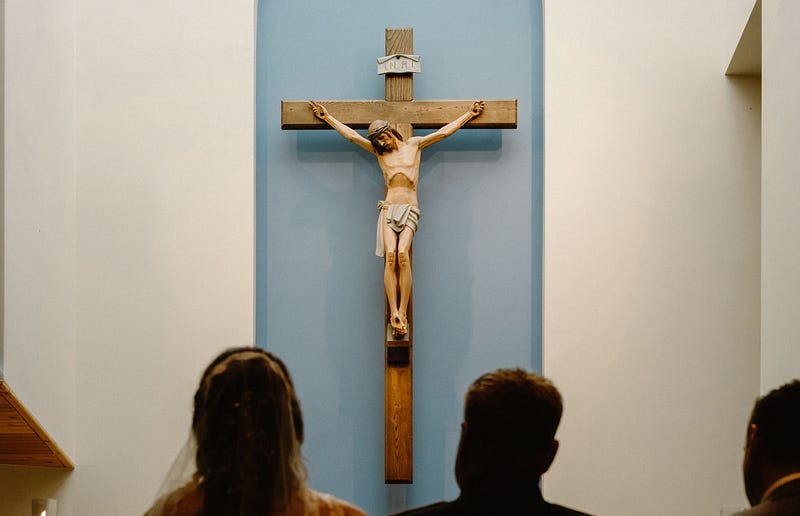
However, to this day, almost every depiction of Jesus shows a man of Anglo-Saxon heritage even though it is a known historical fact that Jesus was a dark skinned, Middle Eastern Jew. For those that believe the Bible to be a work of divine origins that represents the only defense against an eternity of torment, you’d think there would be a strong incentive to get the facts right.
Instead, most of the time when you mention the true ethnicity of Jesus, you either suffer instant dismissal or are met with angry criticism.
How the truth about Jesus can cure America
It is a sad fact that religion is often used as a tool of racism. People unapologetically engage in racist thought and the behavior by clinging to a precedent of tradition. Religious institutions have contributed to this precedent by capitalizing on an inaccurate, Anglo-Saxon depiction of Jesus.
It is to the benefit of our society that individuals engage in humble prayer and self-reflection. How much more of a benefit could be achieved if this moment of personal meditation was done under the depiction of an accurate image of Jesus? Widespread representations of an accurate Jesus would help to combat commonly held beliefs that are inaccurate, unfair, and fundamentally racist.
Ask your church to change
The United States is always in the need of spiritual guidance. In recent days, there has been a strong movement to topple statues that represent slave owners or other agents of oppression.
Depictions of a white Jesus are no less an image of institutionalized racism. Historically accurate images in places of worship would serve to tumble unconsciously held prejudices. Inaccurate depictions of an Anglo-Saxon Jesus have the unfortunate effect of supporting and reinforcing deeply rooted prejudices.
The removal of whitewashed religious imagery could become and important component in healing the unfair and prejudicial beliefs that many people hold in their hearts. The purpose of our religious institutions is to be a spiritual leader. It would be of great benefit to the spiritual well-being of our country if churches across our nation would take this simple action to help better apply their vast influence to the objective of strengthening the bonds of brotherhood between all the children of God.


