
NEW VIEW 2020
It’s Time to See Girls for More Than Their Physical Beauty
Let’s celebrate them for their strength and intelligence
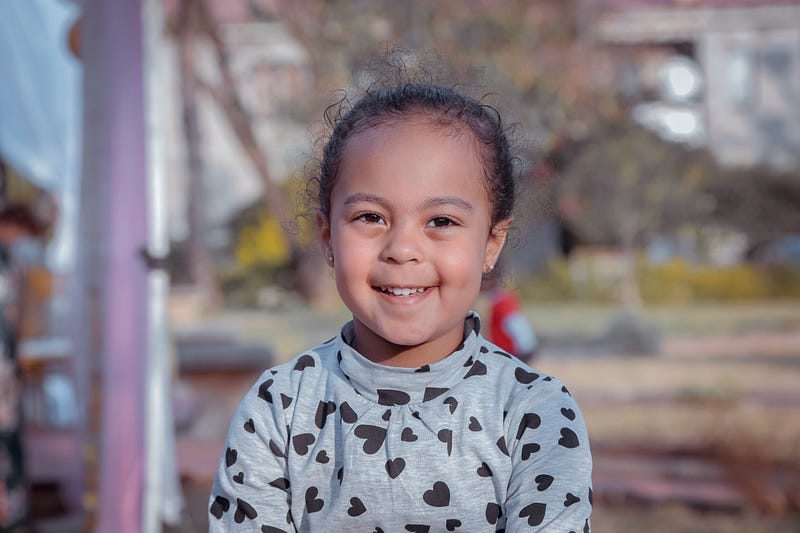
Every auntie thinks her niece is special. I’m no exception. My niece Angel — her name fits her perfectly — is unique in my eyes. Her mother is the mother I wish I had growing up. She raised Angel to be empathetic, independent, and kind. She’s also smart — so smart, she attends gifted classes at her school. She’s a pretty child, although her greatest gift is her mind. I’m amazed daily at how one so young can have so many insightful topics to share.
I love talking to her. She’s childlike in many ways, and her small voice belies the intelligence behind her words. However, the words she speaks are ones of a child much smarter than her years would suggest. She uses words most ten-year-olds wouldn’t know yet. She’s funny. That’s not to say that I smile indulgently at her cute comments. She’s quick-witted, and her barbs take me by surprise. Then I laugh along with her, in awe that she is such an amazing human being.
Thankfully, she’s still innocent. She hasn’t encountered the pain of racism in any sense that she fully understands. Her mother relays stories to me of racist teachers and students. While these encounters hurt Angel’s feelings, she doesn’t relate them to her skin color, at least not yet.
Her mother shelters her. I know she wants to protect Angel from experiencing the hurt of racism and the sting of discrimination. We both know it’s only a matter of time before she’s rudely awakened into a world that rarely lets Black people rest. I’m surprised she’s still mostly unaware at ten years old. I know it’s coming. I dread the phone call, her tears . . . the story. I don’t want to hear about her initiation into that world. I can only be there when she needs me.
Angel reminds me of myself. I, too, was academically exceptional — an excellent student who also attended gifted classes. It’s a wonderful feeling to know you’re that smart. I loved the attention. I basked in the praise from my teachers and classmates. Most of my teachers loved me. I was a well-mannered and attentive student.
Outside of school, I was a Black girl in a small town of mostly White people who had little interest in me. I rarely felt that they saw me as anything special. I see the same thing when Angel, her mother, and I visit local attractions around the city. Last year, we went to the zoo. Angel ran from exhibit to exhibit, excitedly describing what she saw. In her exuberance, she accidentally ran into an older White woman. Angel, her voice small with embarrassment, whispered, “Sorry.” The furious woman started to say something and stopped when she saw Angel’s mother and me staring at her as if to say, “Don’t even think about ruining her day.” She closed her mouth, scowled at Angel, and walked away without a word. Angel slowly walked back to us.
“I said sorry,” she whispered, her voice even smaller.
I replied, “I know. You did a good job. She’s not a nice person.”
Am I sure this woman would have broken the protective bubble in which my niece’s mother has so carefully surrounded her to insulate her from hate? No. But I wasn’t taking any chances. I won’t give anyone the benefit of the doubt where my niece is concerned. I want to see Angel’s free spirit and easy smile as long as I can. I could tell this woman didn’t try to see what I did — an excited little girl spending the day exploring. Instead, she probably saw a girl who annoyed her, who didn’t know her place . . . who wasn’t worth the effort.
I think about my own difficulties as a young girl in the 1970s. I was expected to cross my legs when sitting, respond politely, and speak softly. I loved dresses, but that’s where my stereotypical feminine characteristics ended. I was loud and opinionated. I had a quick temper and a sharp mind. And I was criticized for talking back even though I was oftentimes defending myself against undeserved disapproval. My niece takes after me — thankfully minus the temper. She’s strong-willed and not afraid to challenge anyone. She’s a girl who enjoys lively and high-energy activities usually associated with boys. The idea that she is any less female because she doesn’t exhibit all the characteristics we consider feminine is ridiculous.
I’ve expanded my thoughts about femininity to prevent myself from falling into the trap of correcting Angel when she’s boisterous and energetic. Previously, my first instinct was to tell her to calm down. I no longer act on this instinct. If she were a boy, I wouldn’t think twice about her behavior. I won’t allow her to feel trapped by her sex. I want her to be herself, without effort or question. My love for her will never be based on antiquated ideas of how girls should behave.
When I was growing up, girls were mostly seen for their beauty. While it was fine to be studious, it was better to be pretty. Though not unattractive, I wasn’t beautiful. I didn’t grow into my looks until my twenties. Even then, I was unaware that I was considered pretty. I was too busy fulfilling my dream of happiness and independence.
I learned the value of marriage early on, the idea that a husband was all I required to be whole. I railed against that notion and married late in life only to divorce eight years later. Even as I fought against the idea that my worth was tied to marriage, I was thrilled at my mother’s happiness when I announced I was getting married. Neither my undergrad nor graduate degrees brought her nearly as much happiness. She bragged to everyone about my upcoming marriage. She told no one when I divorced.
What does this say about women who aren’t blessed with beauty? Or the ones who don’t place value on their ability to land a husband? What about the beautiful ones who gain privileges simply based on their looks? I wonder if those women focus so much on the outside, they fail to rise to their potential on the inside. I suspect they do.
I won’t visit this warped thinking upon my niece. No little girl should grow up under such low expectations as beauty. It’s time for us to become a village of people who raise our daughters as we raise our sons. Support their strength, intelligence, and assertiveness. In fact, we should celebrate it. Don’t allow girls to fall into the trap that they shouldn’t embrace these “masculine” qualities. Let’s move away from the ideas of what is feminine and masculine. Let’s see girls for who they are, not the notions of what we think their sex tells us they should be.
Now’s the time to pledge to support them unconditionally. Let’s allow them to develop into anyone they choose without our criticism. Let’s love and honor them without basing their worth on their beauty. Instead, let’s be worthy enough of these girls to simply love them.


