
It’s Time Teachers Retire Multiple Choice Questions
Distance learning is the perfect opportunity to transition to all open-ended questions

Student 1: “Dude, what’s the answer to number three?” Student 2: “It’s D” Student 3: “And number seven?” Student 2: “It’s A” Student 4: “Sir, I’m done!”
This is a common occurrence in the classroom. Ask any teacher and they will tell you this happens too often. Unfortunately, multiple-choice questions continue to be used in the classroom, on state exams, at the university level, our elections, and beyond. Before the school year begins this August, it is time teachers retire multiple-choice questions for good.
Why Do Teachers Continue Using Multiple Choice Questions?
The first question to answer is why teachers continue using multiple-choice questions. The answer is simple: it’s easier to grade! Teachers only have so many hours in the day to grade, call parents, attend meetings, eat lunch, go to the restroom, and make copies. Sorry, that was all in forty-five minutes, not hours.
When a teacher grades a fifty-question multiple-choice test, it is efficient to compare the answer key to the student responses. Teachers go one by one, indicating which are correct and which are incorrect. When a teacher grades fifty open-ended responses…
Why do students like multiple choice questions?
For the same reason you’re reading this article! It doesn’t require you to think about the answer. Here’s an example question from the U.S. History STAAR exam given to Texas students in eleventh grade:
Which government positions were held by Hillary Clinton?
I am a history teacher and I have no idea. In multiple-choice format, it is easy to guess through the process of elimination what job titles she held. She was the First Lady to Bill Clinton and the Secretary of State. All the other choices are rubbish.
In the event a student doesn’t remember the answer to the question, they only have two choices: guess or cheat. They can turn to view the test of the person next to them or circle a random letter and move on. No matter how hard the student tries, they won’t remember something they don’t know the answer to.
The other reason students like multiple-choice questions is their fear of writing. Every time a teacher asks a student to write, they are usually met with this response: “do we have to answer in full sentences?” Students who are not used to criticism fear it. Too often have I seen teachers color essays in red because students can’t spell or write properly, instead of focusing on the message the student is trying to convey. The student knows what they want to say, but often has difficulty putting it to paper. Multiple-choice questions don’t convey that challenge, which is why they enjoy it more than open-ended questions.
Students Don’t Benefit from Multiple Choice Questions
It is bewildering that there is a question on a state exam that asks what government positions Hillary Clinton held. No one f***ing cares! This requires a student to remember pointless facts that will not matter ten years from when they took the test or the class. Students are not going to enter a voting booth ten years later and pick the candidate that can remember what positions Hillary held.
Let’s be honest here. Most of you don’t remember when the Civil War took place. If you do, congratulations! You can remember another pointless fact. What matters is not the years it took place or who held what government positions. What matters is why. What matters is how. What matters is what if.
When students are presented with these kinds of questions, they focus more time on learning than they do memorizing pointless facts. Instead of asking when it took place, teachers should ask these questions. Why did the Civil War take place? How did the result of the Civil War affect the U.S.? What if the South had won?
Classrooms Will Be More Productive By Eliminating Multiple Choice Questions
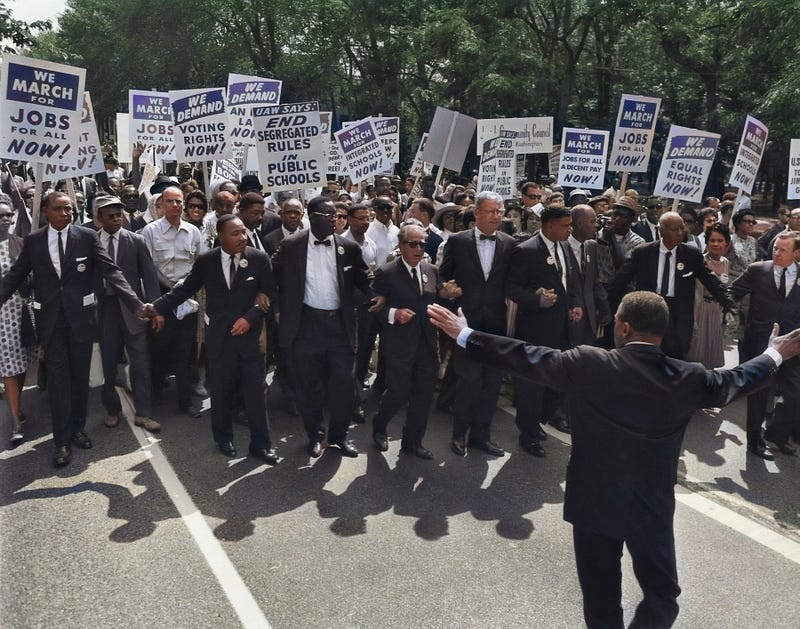
Take this as an example. On a test about Civil Rights, common questions would be what Martin Luther King Jr. fought for, what Rosa Parks did, or when the Civil Rights Act was passed. In a multiple-choice test, they would have basic answers. They fought for equality and the law was passed in 1964. There’s no thinking involved in this process other than memorization.
Imagine this scenario where the teacher asks the students why Martin Luther King Jr. fought for equality. The students will answer by saying minorities could not use the same restrooms, same drinking fountains, or the same schools as white people. The teacher poses a challenge to the students: isn’t it the right of a business to refuse service to someone? Here’s where students become stuck. Because their minds are rarely challenged, they won’t know how to counter this question.
The proper answer would be since schools are government-funded, they are required to treat all its citizens equally under the fourteenth amendment. But then, what about businesses? Since businesses are not government funded, can they refuse service based on the color of a person’s skin? These kinds of questions push students to think. Now the teacher can pose that question directly to students.
If you were a business owner, would you deny service to someone based on the color of their skin, their gender, or their sexual orientation? The Civil Rights Act of 1964 is significant since it prohibited all public places from discriminating and called for the end of segregation.
Open-ended questions create discussion in the classroom, which, ten years from when they took the class, will allow those students to question themselves not on whom they’re voting for in the next election, but why they’re voting for that candidate. They won’t remember what year the Civil Rights Act was passed. They shouldn’t. However, they will remember its significance, and they will remember the importance of voting for candidates who support the values they expressed in the classroom ten years ago.

How Could Distance Learning Benefit?
Schools nationwide will be starting the school year in about a month. Teachers cannot form the same types of connections through virtual learning as they would in a classroom. This situation will be driven worse if teachers continue offering multiple-choice questions. There will be little to no interaction between the students and the teacher if all the assignments are multiple-choice.
If a teacher issues an article with twenty multiple-choice questions regarding the Korean War, you will be surprised at the number of students who don’t read the article. Instead, they will Google the answers to the questions and submit them. They probably didn’t spend more than ten minutes searching for the answers.
If a teacher instead issues the same article with five open-ended questions, it’s unlikely students will find any direct answers unless they read the article. Take this as an example: should the United States become involved in wars that don’t directly threaten the lives of the people of the U.S.? After all, the reason the U.S. fought in the Korean War was to prevent the spread of communism in Asia. In no way did it directly threaten American lives; it instead threatened the ability to conduct trade and economic deals with those countries. When a question like this is posed to students, it requires them to pose their own opinion, which will drive teachers to not only learn about their students but also to learn from them.
This open-ended question will push students to think about our current predicament. Believe it or not, the U.S. is still in Afghanistan. Those who support staying in Afghanistan claim terrorism will rise and that the U.S. will be in danger if the U.S. pulls out. Will it though? And who is making those claims? Whom are they working for? These are the kinds of questions students should ask. Once they start asking these questions, they will grow and become better informed. This will create a more informed electorate that votes based on values, not propaganda.
Conclusion:
If teachers choose to eliminate multiple-choice questions in the classroom, students will be rewarded immensely. They will learn to communicate effectively, express their opinion publicly, seek knowledge, engage in discussions and debates, and become better writers. Most importantly, they will become part of an informed electorate that is desperately needed. People should not vote based on propaganda or be forced to pick between A or B on the Presidential ballot. Instead, they should vote to uphold their values.
If you’re a first year teacher, consider reading my article here where you can find out what you need to know before distance learning starts this year.
Click here if you’d like unlimited access to more of my writing and everything else on Medium. Note this is an affiliate link, and I will receive a portion of your membership fees, which helps support my writing!


