It’s Time for an American Soul Retrieval
What Will It Really Take to Restore the Soul of America?
Listening to Joe Biden speak of this time in our nation’s history as a time of healing, I felt my heart expand with an unequivocal YES! I join many of my fellow citizens in the knowledge that not just this country, but humanity as a whole must change now, or die. We have for years been in the throes of what complementary health practitioners call a “healing crisis,” in which symptoms pile up until the motivation is achieved to put time and energy into healing their cause. In this year of seemingly endless stress, trauma, and isolation, few people would argue that healing isn’t deeply needed, both individually and collectively.
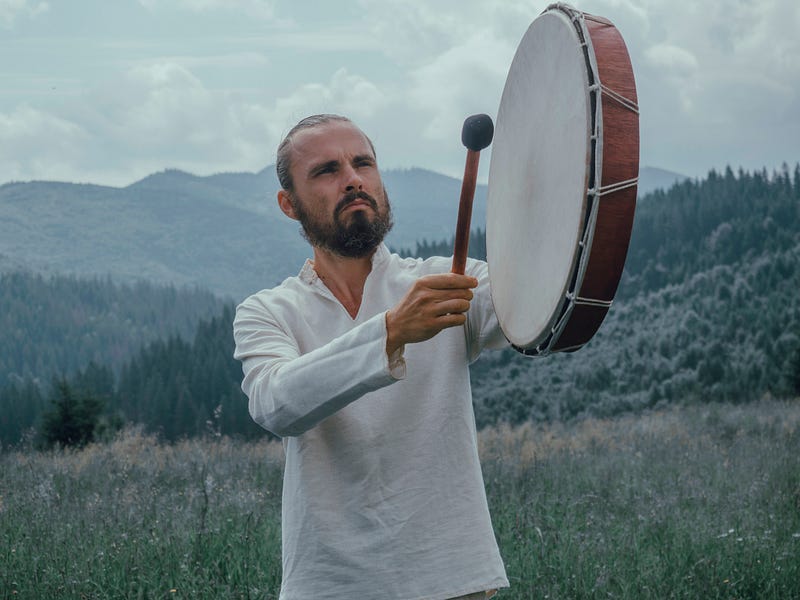
Listening to him speak of restoring the “soul of America,” I couldn’t help but think that as a country, what we need more than anything right now is a soul retrieval. If you’re not familiar with this, it is a shamanic healing technique in which a shaman helps someone retrieve “pieces of their soul” that have been lost, thereby restoring not only that person’s physical health, but their sense of agency as well. Soul retrieval understands trauma as “an event held hostage in time,” as spiritual teacher Thomas Hubl, who specializes in healing collective trauma, so elegantly puts it. In soul retrieval, a person returns to wholeness by witnessing their trauma in a safe space and consciously returning it to present time.
In my experience, healing is always a return to the wholeness that is the birthright of each of us. Some call this the divine blueprint — the potential of perfection that exists both individually and collectively. If we want to see this manifested collectively in our nation, I know that as Yael Wolfe explains so eloquently here, we must do the work to manifest it individually first.
Life In The Emotionally-Stunted States Of America
It could be convincingly argued that the American psyche has always suffered from severe trauma, from a near-crippling loss of soul. Just think about it for a moment: this nation was built on land violently stolen from its original inhabitants, who were slaughtered and assimilated without mercy, often in the name of God (an especially thorny bit of karma). Those wounds remain largely unaddressed to this day.
As Umair Haque has so brilliantly observed in numerous articles, our entire economic system was built on the labor of slaves and, more acutely in recent times, on the enslavement of nature Herself. More and more people are becoming aware that America’s founding fathers were, more than anything, primarily concerned with the preservation of the fabulous wealth that this violence and oppression afforded them. Their echelon drove home to poor Whites the idea that they were superior to people of African descent on the basis of race alone, thus deeply dividing two groups who, had they been united instead, might have posed a threat to the status quo. That legacy of racism only grew with time, and became visible in a new way this year.
Now, the more than seventy million Trump supporters who are so bitter, angry, disempowered, and entitled that they would literally burn this planet down in flames — I’m speaking from California here, where unprecedented wildfires in each of the past three years can be linked to decades of climate denial by such people — will continue to seethe and perhaps produce an even worse candidate than Trump in four years, unless the rest of us do something. The question is, what?
As many have observed, those who support Trump and his policies are, by and large, emotional decision-makers. They are traumatized, both directly and indirectly, by the culture they are raised in, in which emotional expression is not tolerated, especially for men. The jaw-dropping arrogance that many of them exhibit is rooted in a deep, terrifying sense of insecurity — their (largely unconscious) thinking is that, “Trump is a White man who says he’s right, therefore he must be, and if I agree with him then I’ll be right too. And being wrong is the worst thing that can happen to me.” Because they are predominantly White and male, they enjoy a level of privilege that buffers them to some degree from experiencing the effects of their trauma. But even if they say they’re happy, trust me, they’re not. Do you think Donald Trump himself, or anyone in his circles for that matter, is a happy person? They have no idea what true happiness even means, much less that it could ever be possible for them.
In many cases, Trump supporters are additionally traumatized by the emphasis in conservative Christianity on their ‘sinful’ nature, which tells them that only (male) authority figures and the Bible are trustworthy. This in itself — to be told repeatedly from the day you are born that you are inherently bad and therefore cannot trust yourself — is one of the biggest traumas there is for a human being. And in a very real sense, our entire culture is built on it, whether we identify as Christian or not (more on that in a future article).
For a child growing up in this environment, it is a matter of psychological survival to suppress your truth, your empathy, your compassion, and most of all your humility. These are qualities of your true Self — your soul — but the environment you are born into demands that you forgo them in favor of a carefully-constructed false self (ego) whose preservation depends upon the denial of truth. (I should note here that this identification with ego is a general feature of the human condition, but as with all such features there is a spectrum). This is what led Bertrand Russell to quip that, “Most people would rather die than think, and many of them do,” which is evidenced by the fact that such people have consistently voted against their own interests for decades, and that COVID-19 surged most dramatically in recent weeks in counties that voted for Trump.
But in a post-truth age of confirmation bias bubbles, in which people see and hear only what they already believe, what can be done? How can those of us who see the need for healing reach those who so desperately need to be healed, when, as Yael Wolfe observes in this excellent article, they won’t even talk to us?
There Is No “I” In Trauma, But In Healing There Is
I’ve pondered this question a lot in the past few days, and it’s brought to mind the early days of the Trump administration, when many of my friends on the spiritual path and I grappled with the knowledge that, no matter how we might want to deny it, Trump was our president, too. That is, we knew that somewhere deep down, there must be a part of us that was reflected in him; otherwise how could he exist? There is no “I” in trauma: his pathologies may be off the charts in their expression, but that didn’t mean they didn’t also exist to some degree in me. I must believe this if I know the truth of oneness. It’s down to the whole ‘you can be a good person, and still be a racist’ thing; just because I would never consciously say or do something racist, does not mean I do not participate in racism unconsciously — it’s just part of the ocean we’re all swimming in here.
The Indian sage Papaji, when asked by a disciple how we should treat others, famously answered, “There are no others.” This is echoed by many who live from unity consciousness, from an experience of no separation between themselves, others, and the world. But what does it mean in practical terms?
If there are no others, then everything “outside” of me must reflect something “inside” of me. This is great news, because what’s inside of me is the one thing I have the power to change! The recognition that Trump was also ‘my president’ deepened my commitment to ferret out every last vestige of judgment in my own heart, knowing that my individual healing adds to the healing of the world. While Trump was president, I poured more time and resources into my spiritual growth than I ever had before, and witnessed miracles in my own life and the lives of others as a result.
What I’ve come to realize is that, while our growth is never over as long as we have human bodies, we are also divine beings, and it is when we learn to focus on our divinity that things really begin to change. A Christian pastor I respect illustrated this point beautifully with the following parable:
A certain man planted a rose, and watered it faithfully. Before it blossomed he examined it. He saw a bud that would soon bloom; he also saw the thorns and thought, “How can a beautiful flower come from a plant burdened with so many sharp thorns?” Saddened by the thought, he neglected to water the rose, and before it could bloom, it died.
So it is with people; within every soul, there is a rose. The God-like qualities planted in you as a rose, are done so at birth, growing amidst the thorns of our faults. Many of us look at ourselves, and we only see the thorns, the defects. We despair, thinking that nothing good could possibly come from us. So we neglect to water the good within us, and eventually, it dies. We never realize our potential that was there all along. Some don’t see the rose within themselves, and it takes someone else to show them. One of the greatest gifts a person can possess is to be able to reach past the thorns, and find the rose within others.
Just sit with this for a moment, and let the truth of it sink in. This divine spark, this rose, exists within each of us, no matter how obscured it may be by thorns. To my mind, the most imporant point of this parable is that we have to start by choosing to focus on our own rose, not our thorns. Judgment within only creates judgment without, when what is really called for is compassion. The rose, in this case, is not our supposed “good qualities,” which only the ego is concerned about: it is the pure divine spirit that is who we truly are, that which cannot be born and never dies. In my experience, simply making the choice to learn to focus on this is a powerful force for soul retrieval all by itself.
It’s Never Too Late to Tend Your Rose
The conclusion I’ve come to is this: in an election with record overall turnout, in which each candidate received more than seventy million votes, there must be many families in which political loyalties are divided, and this is where the work must be done. At first I wanted to believe that teaching critical thinking more effectively in schools might be the solution, but while it certainly wouldn’t hurt, my own experience growing up in a predominantly White community that valued education is that schools ultimately cannot make up for what happens at home.
Besides “tending your rose” and praying for our country’s healing in whatever way speaks to you, I’ve come to the conclusion that the single most important thing we can each do to heal this country’s divisions is to open dialogue with those in our families whom we know to be “on the other side.” Better yet, leverage your relationships with your young relatives to expand their minds and teach them that there is so much more to the world than what their families may have shown them.
When a young person has a trusted adult in their lives that they know loves them unconditionally, they can feel safe enough to eventually seek healing from the toxic culture they are being raised in, and they will be in a better position than anyone else to influence their parents. There has been a planetary awakening underway for some time now, and there are many highly evolved souls incarnating today — if you commit to being there for them, they will show you their true colors. Sometimes a really dedicated teacher can build that kind of bond with a student, but when it comes from someone in their family it feels more reliable — few teachers stay in touch for life, after all (though apparently Kamala Harris’ first-grade teacher is an exception to that).
We’ve all seen this dynamic at work, and many of us have benefitted from it ourselves. You do not have to confront the adults directly; in fact, you shouldn’t if you know it’s unlikely to be productive. Just know that the choice to heal will ripple through the generations, and when it really picks up speed, you may be shocked to find people who you never thought would change having a change of heart seemingly out of nowhere. But it isn’t out of nowhere: it happens because we’re all connected, and this connection is especially strong in families, whether we like it or not.
Maybe this is how we retrieve the soul of America: by first tending our own rose and choosing to walk in the light ourselves. We are then prepared to engage with “the other” as we are able, one conversation, one relationship at a time.