
It’s the Sign of the Times….
What visiting history can tell us about today’s refugee crisis in Europe
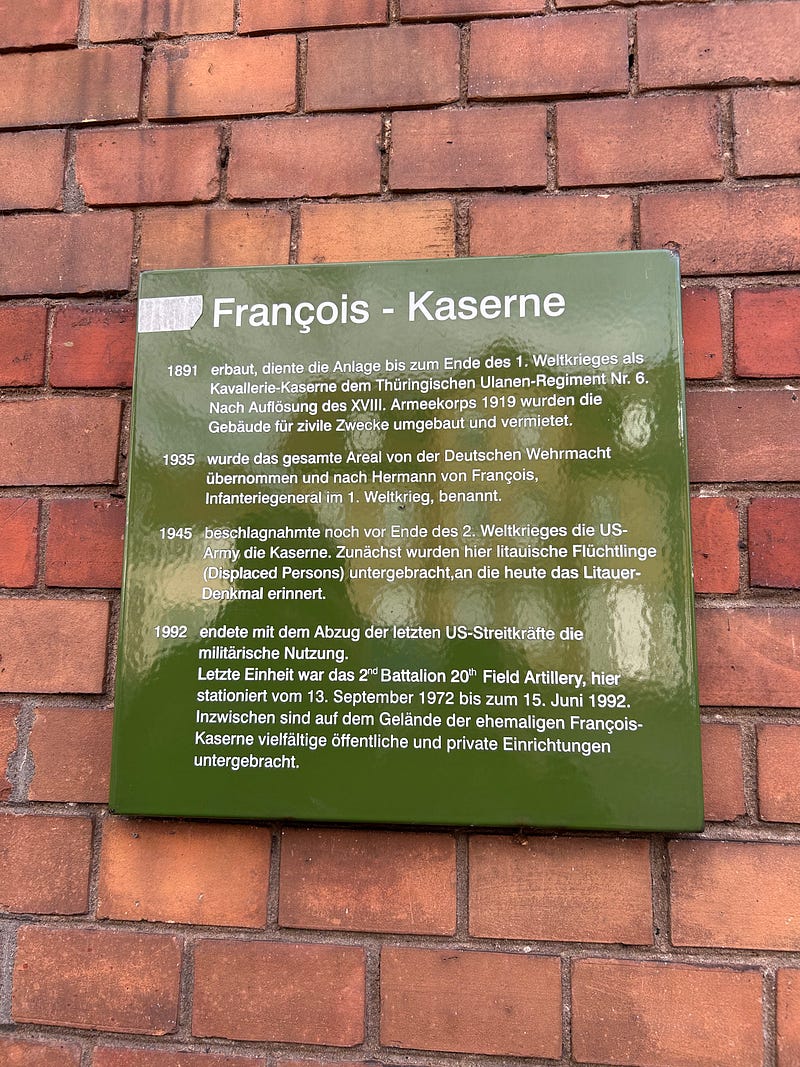
Displaced Persons in European History and Today
Is this a sign or a plaque? Or is it both? I recently returned from a trip to Belgium and Germany to do some research on my Ukrainian parents’ journey from forced laborers in the Third Reich to immigrants in the United States for a book I am writing. In between liberation and immigration, they each spent time in a multitude of Displaced Person (DP) camps that had sprung up all over Germany and Western Europe to house, temporarily, those who found themselves far from home at the war’s end and had asked for political asylum in fear that their communist governments would punish them for being kidnapped by the enemy and forced to work for them under deplorable conditions. Unfortunately, it happened far too often.
Few of the remnants of those Displaced Persons (DP) camps exist today, as many of them were makeshift wooden structures put up by Nazi Germany to house concentration camp workers, prisoners of war, or forced laborers but, some of them still exist today if anyone has the interest to explore a little-documented time in history that has been repeating itself since World War II with every new conflict — the latest the War in Ukraine. During WWII, over ten million people were left displaced in Germany alone; today, there are estimates of six million Ukrainians displaced since February 2022.
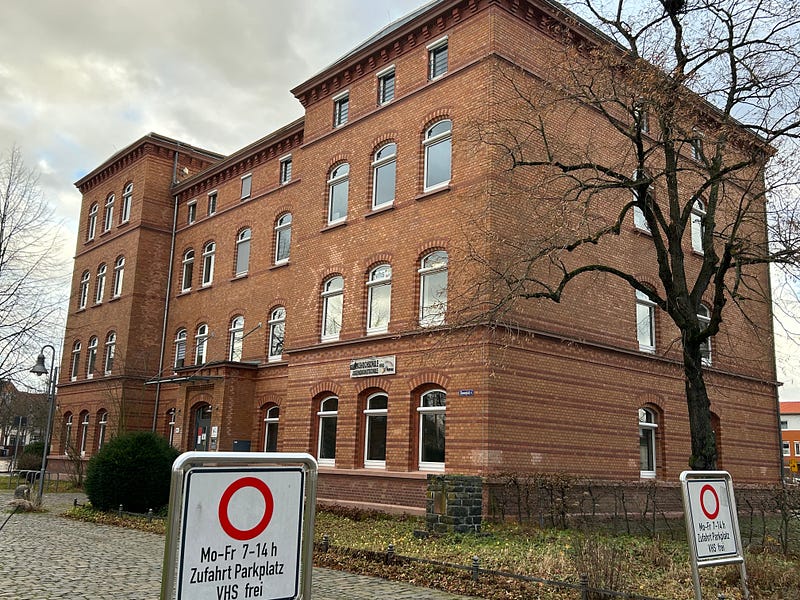
Which DP camp remnants remain to be visited and explored in Germany? The buildings with a sign on them called “Kaserne” or “Barracks” tend to be the ones to have survived the test of time. These buildings are usually made of stone or brick and were once used to house the military before being used to house displaced persons or refugees. I visited two former camps — Hanau and Aschaffenburg, last week outside of Frankfurt, Germany. I was able to cover them in a single day since they are not too far from each other. Both camps are mostly still in good order having been renovated and used for other purposes today.
My visit to Hanau, Germany
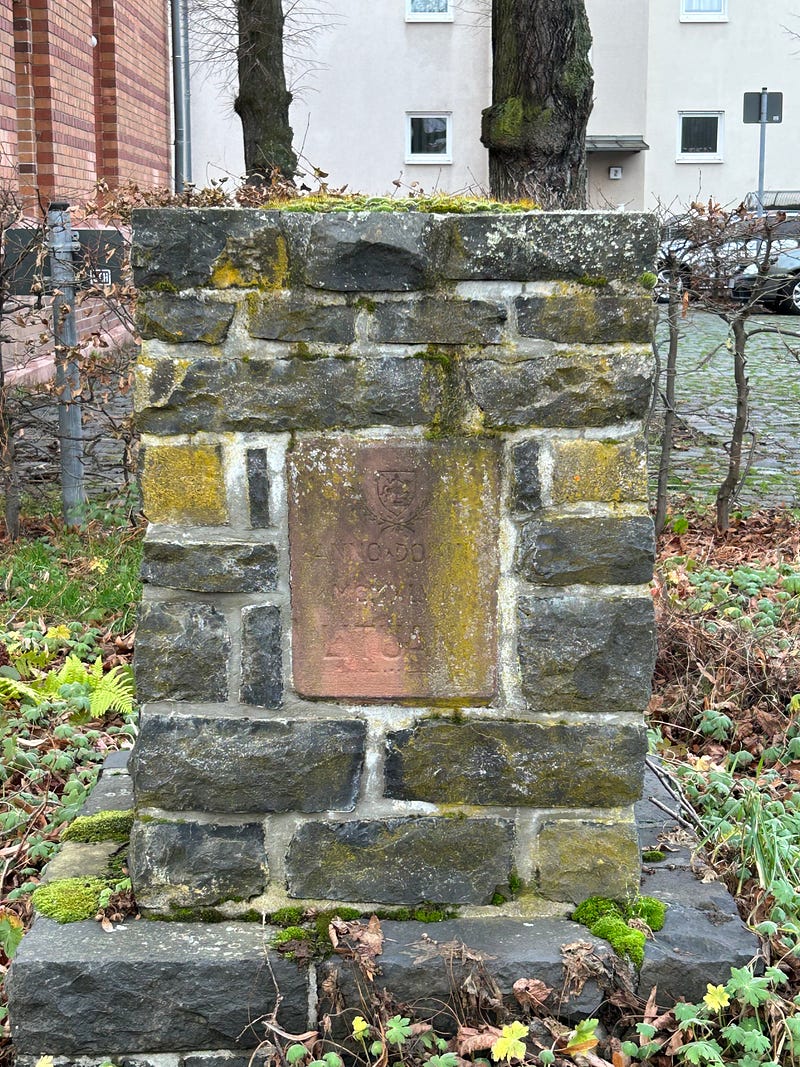
My first stop last week was to the town of Hanau, home of my mother’s DP camp from 1945 to 1947. This town about a 30-minute drive from Frankfurt is an industrial suburb. It does not have much more to see other than those well-preserved barracks and memorials placed in memory of the Lithuanians, Latvians, Poles, Ukrainians, and other Displaced Persons who spent their days living in these buildings hoping for the day they would find a permanent home. I walked around the buildings and courtyards imagining my mother walking about and taking in the cold-swept days in January 1946, with a smile on her face knowing she was free from Nazi terror and planning a future of so much promise.
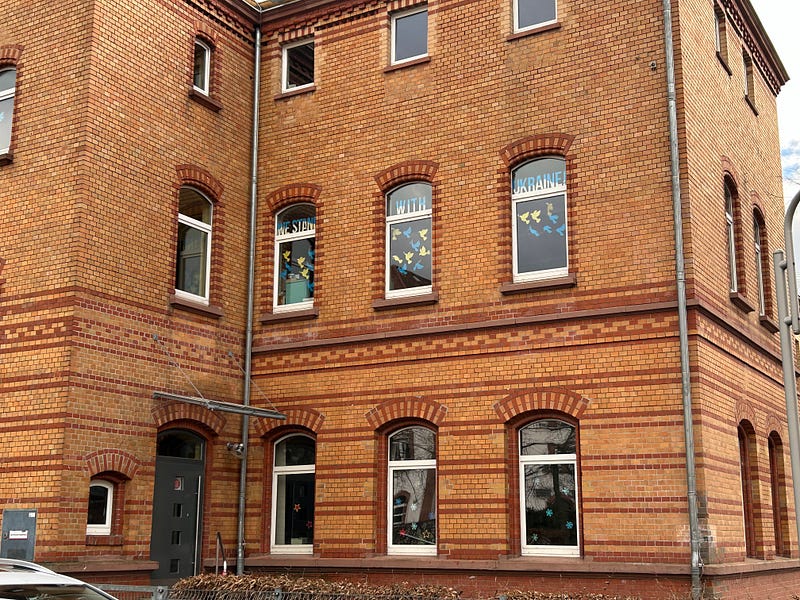
I considered the many businesses that now utilized those renovated red-brick buildings like a “Biergarten” but two buildings in particular stood out from the others because they were housing schools. I wondered if the teachers taught their students the history of these buildings. As I contemplated this, looking up I smiled to see another sign in the window of the elementary school’s second floor. It said “We Stand with Ukraine” which gave me hope these students understood the legacy of the hallowed halls in which they walked and the importance of them to today’s events in Europe.
My Visit to Aschaffenburg, Germany
My next stop was Aschaffenburg where my father had spent a year from June 1946 through June 1947 before he was recruited by the United Nations Relief and Rehabilitation Administration (UNRRA) to immigrate to Belgium to work in the coal mines of Wallonia. There were once six separate DP camps in Aschaffenburg near each other with the name Kaserne, so they were former military barracks made of brick and stone. Unfortunately, many of these were either destroyed for new condos and parks, renovated as office buildings, or left fallow with no seemingly further use for them. My father’s Pionier camp had been destroyed to build green space for the town. While I was a little disappointed his camp no longer existed, it was nice to see the area teeming with green space for the residents to enjoy.
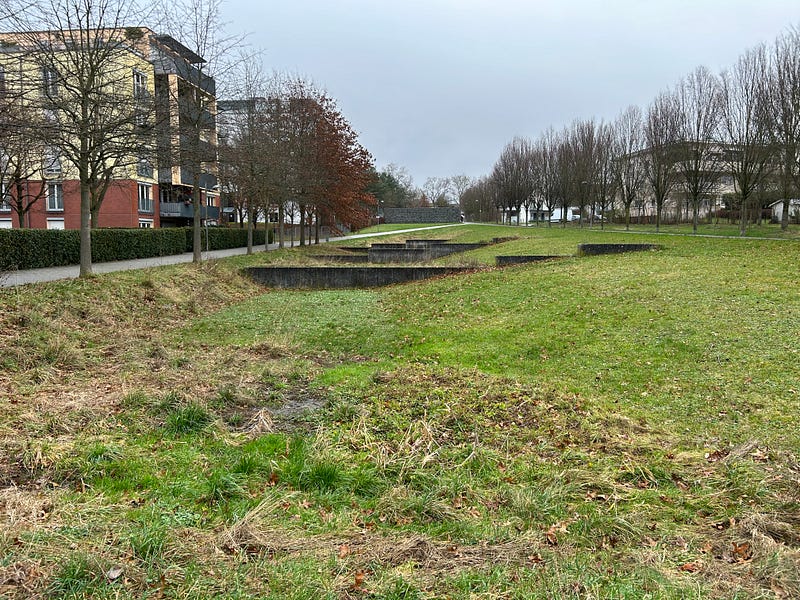
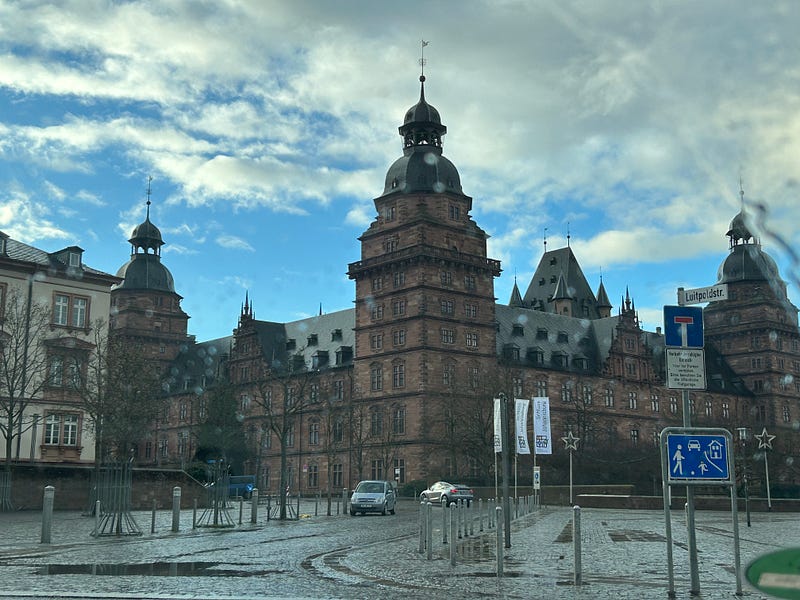
While I couldn’t find any signs or plaques to commemorate the history of the area, it was obvious from the buildings that they once were used as barracks housing hundreds of people each. After exploring the area, my companions and I went to see the famous Aschaffenburg castle and old town which gazes over the Main River daily. Both the castle and old town have been well-preserved and worth a visit on their own.
After returning to Frankfurt, I looked at some old photos of my fathers from his time as a DP in Germany and noticed one photo of a building that looked very much like the buildings I had just seen in Aschaffenburg. In fact, I had taken photos of buildings that made up the old Jager-Kasserne and found one building that easily matched the one behind my father in his old photo!
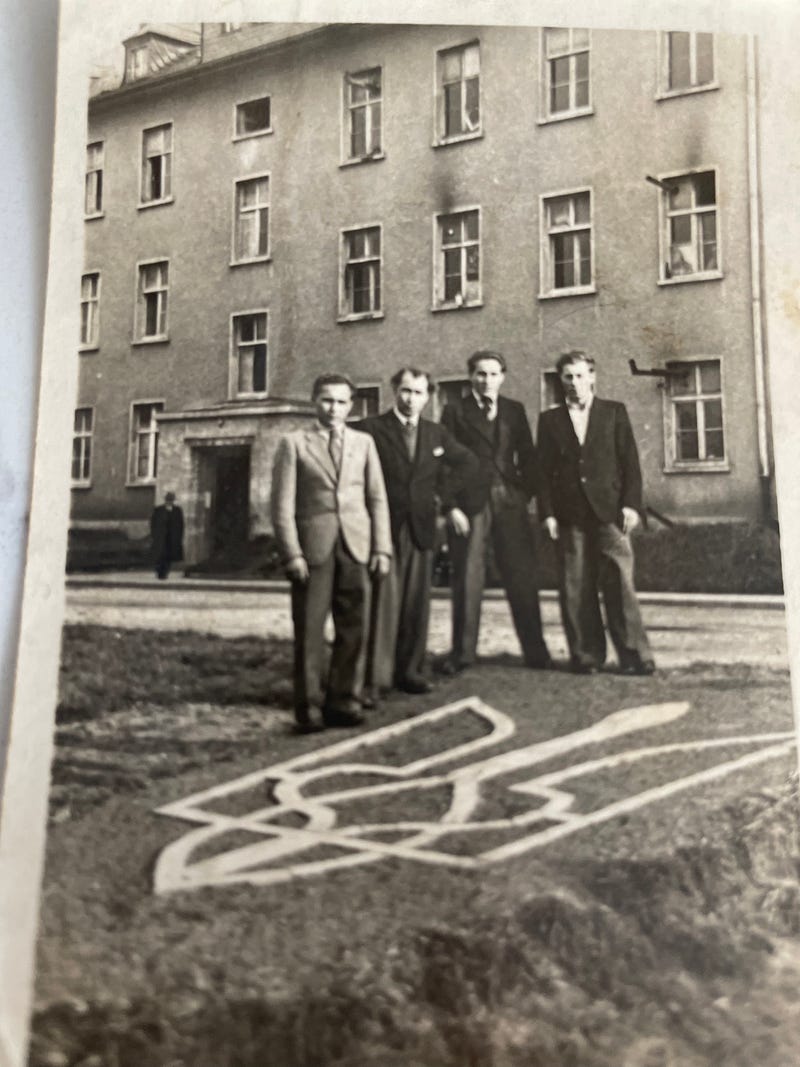
The old photo had a large sign on the grass of an old Ukrainian symbol called the “Trizub” or “Trident”. Even though I hadn’t found the exact building where my father lived, I had found one where he had walked and stopped for a photo with DP friends.
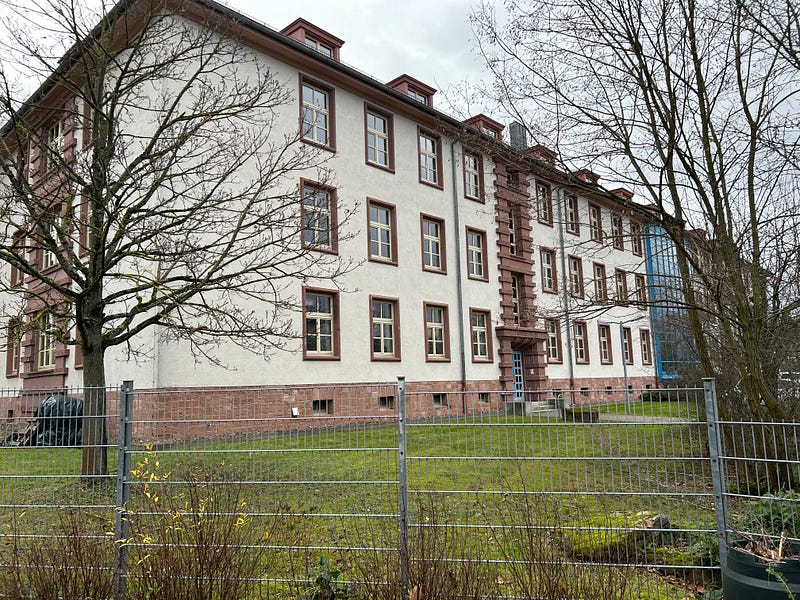
I had not only accomplished my mission of walking in my parents’ footsteps that rainy day in Germany last week, but I was also joyful to see Europe’s current DPs, Ukrainians, not forgotten by the school’s children through their sign. It made me proud to think about what this future generation of Germans might accomplish!
For other stories about meaningful signs, I recommend the following:
Brad Yonaka returns to Egypt after a long absence in the Sign of Tutankhamun.
Adrienne Beaumont does a whole tour of signs in Romania.
I would also recommend joining the challenge introduced by Anne Bonfert.


