
It’s the Irony of the Thing that Strikes Me
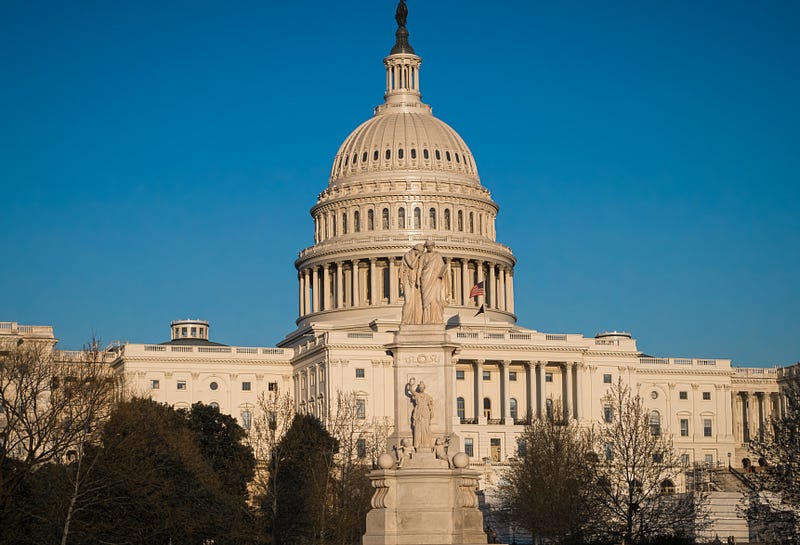
Earlier this month there was news of a Federal civil lawsuit brought by the NAACP on behalf of Hon. Bennie Thompson, a member of the House of Representatives, against Donald Trump, Rudy Giuliani, the Proud Boys and the Oath Keepers, arising out of the January 6th attack on the Capitol.
The suit is based on a statute from 1871 called the Ku Klux Klan Act, and (in short) alleges that the named defendants conspired with each other and with others to prevent or interfere with Congress doing its Constitutional duty to count the votes of the Electoral College — a basic ceremonial act that is part of our Presidential electoral process and what is supposed to be one of the last acts toward a peaceful transfer of power to a newly-elected administration.
There is already plenty of legal and political buzz and analysis out there as to whether the lawsuit will get any traction, so I won’t really do a detailed legal analysis of the viability of the predicated statute. For what it’s worth, I think it will go forward and create real legal problems for the defendants.
In thinking about it though, it occurred to me that one of the likely defenses — possibly at the objection stage (more on this below) is, ironically, both possible and (if successful) points to a really bizarre and scary truth about Trumpism, the lost and misguided GOP, and the dangers of a cult of personality. I’ll describe this in detail below. First, though, for the non-lawyers out there, a thumbnail sketch of Civil Procedure would be helpful.

Even non-lawyers are likely already familiar with a Complaint, and the basic parties — Plaintiff and Defendant, so I’ll skip that and move on to the basic premises attributed to the opposing sides in every lawsuit: Defendants want to avoid Discovery, and get the case killed as quickly as possible; while the Plaintiffs want the case to proceed naturally through all stages to an eventual trial or settlement.
It is the Defendants’ desire that causes them to — from the first day — assess the various defenses which might be available to them, and to possibly assert them in a legal objection to the pleading, hopefully before they have to file a responsive pleading (Answer). In many jurisdictions, one calls this legal objection a Demurrer; but under the Federal Rules of Civil Procedure (FRCP) the demurrer was replaced long ago with rules around a motion to dismiss or for judgment on the pleadings.
Whatever the thing is called, it is based on the following general notion: the facts as pleaded (which are assumed to be true and are not challenged at this stage by contrary — or “alternative” facts, Ms. Conway) are legally insufficient to allow the suit to proceed; in essence telling the court that even if the Plaintiffs prove each fact alleged, the Complaint would have to be dismissed because no applicable law supports it — i.e. it fails to state a cause of action as pleaded.
While there are scads of other details and issues, that — in a very small nutshell — is enough to go on with. If the court agrees after hearing on Defendant’s motion, that can spell the end of the litigation, though sometimes and under specific rules, Plaintiff is given an opportunity to file an Amended Complaint; in which case the legal objection phase renews itself.
On the issue of the permissible objections, one refers to the rules for the jurisdiction — in this case the Federal Rules. It is not necessary for us to consider them all…just the one that struck me and prompted this article. Specifically, Defendants are likely to assert a “fact” that is helpful to both sides…that under no circumstances could there have been any outcome of the counting of the Electoral College votes other than what ultimately occurred. Said another way, neither Mike Pence nor Congress could have changed the outcome of the election, no matter what Defendants (and certain Senators) said or did. The power to do so simply did not exist.
Most defendants would eschew making this argument, but we are dealing with Donald Trump and like-minded people, so the “shotgun” approach; and deflection and projection, and depositing supporters (and other defendants) under the bus is de rigueur. Incidentally, given that the interests of the named defendants diverge at potentially dozens of places, it will be interesting to see how that conflict plays out as the litigation proceeds — and how many different defense lawyers there ultimately are.
In fact, it was in large part the truth referenced above that, because Trump and his supporters could not and did not (and some still do not) admit, was a substantial factor in the attack on the Capitol! In yet another object lesson in the dangers of uncritical thinking as well as bizarre cult worship, Trump supporters believed what their hero and others told them — that he had won the election, that it was being stolen, and that they could alter the outcome in his favor or at least gum up the works such that Trump somehow would stay in office. If they had not believed this, January 6th would have been an entirely different day.
Aye, and this is where the irony comes in…in making this particular defense, and using Plaintiffs’ own factual allegations and evidence in support (which are taken as true), Trump et al might have a colorable argument at least in part — but they would also be essentially admitting (for purposes of their legal objection) something they would all in other circumstances cut off their own right hands before admitting.
Of course, such defense (which would not be the only one, of course), even if on the cusp of validity in that context, would not help to thrust them off the horns of the dilemma they are caught on. The “facts” taken as true at the legal objection phase apply in the context of all defenses asserted in a motion to which they are germane, so there is a further irony: simply bringing the motion causes the accepted facts to color the objection in light of those facts…Defendants will likely not prevail and — horror of horrors, the ultimate of horrors — Discovery will commence, the very thing these defendants simply cannot have.
That’s the dilemma for the defendants: a) bring the motion which will almost certainly fail, causing the matter to proceed to Discovery on a Complaint that has survived legal objections and is therefore strengthened; or b) forego the motion, file an Answer, and have Discovery commence anyway. The British would call this a sticky wicket, among other colorful things.
Imagine: subpoenas for documents; depositions for all the speakers at the “Stop the Steal” rally; deposition of Mike Pence — who would certainly testify in conformity with his letter that so enraged Trump, and also in conformity with the video evidence; dozens of depositions of Proud Boys and Oath Keepers; Trump cannot claim Executive Privilege, and if he does, multiple exceptions come into play.

January 6th was an awful, awful day in the history of America. But it also shows, once again that: no matter how strong the attack on America and Democracy, and no matter how weak, cynical and selfish the individual human guardians and stewards, our forefathers did indeed bring forth a new and strong nation; and a living and breathing Constitution of real vigor — and a People of serious strength and resilience. There is, therefore, Hope.
Be well, stay strong…and please remember the folks in Texas, and the many of us who are still struggling, and those whose struggles ceased over the past year. I spoke of Hope…there remain Faith and Charity to ponder as well. Faith, Hope and Charity…three sisters who are overwhelmingly strong when together.


