

It’s the demand, stupid
Markets, and indeed most of the interactions between people that involve some form of exchange, are about supply and demand. Economics treats both as equals and is mostly concerned with the equilibrium between the two, but from a human nature perspective, one tends to dominate the other. But which one?
You don’t need to be an economist to know, or at least know of, the law of supply and demand, which captures the relationship between how much a good or service costs, the amount of which is on offer, and the amount of which is demanded. It expresses how, if the supply exceeds the demand, prices will tend to fall, which may both cause demand to rise, and supply to fall, until both are in balance. Conversely, if demand exceeds supply, prices will rise, which may both suppress demand, and increase supply — again, until both are in equilibrium. From this perspective, supply and demand are independent, equal factors in the market, tied together by the market price. A change in one will lead to a change in the other, mediated by the price.
In practice, however, we tend to perceive an imbalance between powerful suppliers — retailers, manufacturers, media companies — calling the shots, and ordinary people who passively consume what they are fed: supply leads demand in the choices we make. That perception may not be entirely accurate, though, as three sources that I came across last week suggest.
Healthy or not, here I come
This Twitter thread summarizes a study from New York University economist Hunt Allcott and colleagues. It investigates the phenomenon in the US of ‘food deserts’ — areas with comparatively little supply of healthy food (such as fresh fruit and vegetables) — as the alleged cause for nutritional inequality, the fact that wealthier people have a healthier diet than the poor. Significant resources are being spent by policymakers at municipal and federal level on supply-side measures to address this perceived issue, notably subsidizing grocers in underserved areas, typically low-income neighbourhoods.

The researchers make a couple of interesting observations. First, the arrival of a new supermarket has only a small effect on the purchase of healthy groceries. The actual difference in supermarket density between areas of high and low household income explains only around 1.5% of the difference in healthy eating. The reason is that, even in poorer areas, most people drive quite some distance for shopping. This willingness to travel challenges the very notion of a food desert, and the main benefit of increasing local supply is more variety and lower travel costs, not a healthier diet.
Second, they also find that a move to an area where people eat comparatively more or less healthily does not materially affect a household’s own healthy eating patterns. Here, the difference is of the order of 3%. Even if the supply conditions in all areas were fully equalized, the researchers estimate that this would reduce the difference in healthy eating by at most 10%. In contrast, they calculate, a targeted, means-tested subsidy to low-income consumers could bring their consumption of healthy food up to the level of that of high-income households for only 15% of the budget currently spent on supply-side interventions.
No mind control
The second source is an article in which philosopher Dan Williams at the University of Sussex examines the “societal panic” which portrays misinformation as a contagious virus, causing the population to make poor decisions and adopt conspiracy beliefs. The supply of misinformation is seen as “the driving force behind everything from vaccine scepticism to support for right-wing demagogues”. This perspective, in which the citizens are vulnerable organisms whose ‘healthy’ adherence to the truth is threatened and attacked by misinformation ‘pathogens’ is the basis on which policy makers seek to eradicate misinformation, through reducing visibility and indeed censorship. In other words, the focus is on the supply (naturally, nobody demands to be ill).
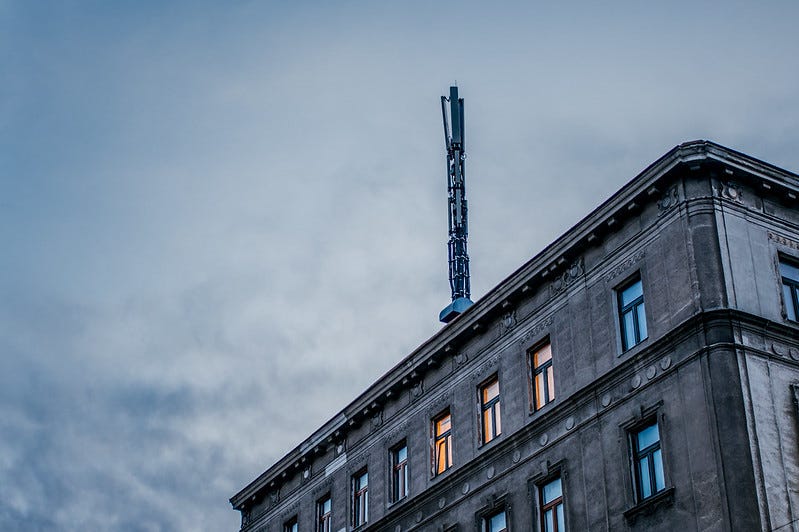
But there is little evidence that individuals are as gullible as they are susceptible to viruses. The fundamental misconception, argues Williams, is that truth is as easy to establish as health — the absence of disease. But the truth is often complex and counterintuitive. Our innate intuitions, honed over thousands of generations, give us a sense of disgust or fear for things like vaccines, adding animal genes to plants, nuclear power, invisible radiation of 5G mobile communication, of distrust in those who wield power and so on. Overturning those intuitions in cases where it is warranted means people must change their mind, and that is harder than simply confirming existing beliefs. Moreover, accuracy and truth are not necessarily the highest good people pursue. It is often more important to show allegiance to tribes, to denigrate opponents, and to demonize the elites, than to seek the truth and base one’s views of sound evidence.
That means people express a demand for narratives that support their pre-existing intuitions, rather than for those that inform and educate them, and that might make them abandon earlier beliefs (thus jeopardizing their tribal memberships). The supply of such narratives is the consequence of that demand. Misinformation is not the disease, it is one of the symptoms. Seeking to suppress it will not make people magically desire the truth once again.
In a similar vein, Christopher Wlezien, a political scientist at the University of Austin, investigated the association between news coverage (notably, what is being reported, and how) and public opinion. While it is widely assumed that news coverage causes public opinion, Wlezien argues that there is at least also a causal link in the other direction. Moreover, he analyses three different instances (in the US) of public opinion evolution over time — the perceived state of the economy, candidate support in the 2016 presidential election, and policy preferences (budget expenditure on defence, welfare and health). This analysis suggests that public opinion causes coverage in every case, with the reverse being also true, but less frequently, to a lesser degree, and with the effects isolated to specific events (e.g., party conventions). Here too, demand mostly leads supply.
Demand has the upper hand
These three examples challenge conventional wisdom about the role of supply and demand, especially when there are perceived societal problems: nutritional inequality as a result of not having access to healthy food, bad decisions as a result of being fooled by misinformation, and opinions being shaped by astute media moguls. This analysis is characterized by a somewhat condescending assumption that poorer, or more gullible, people are the hapless victim of those who control the supply of goods or information — of the economic neglect by ruthless businesses, or of ideological exploitation and manipulation by scheming characters with evil intentions.
But as the examples show, it is not so much the supply, but the demand that drives the corresponding dynamic. There is a compelling underlying logic to this. If there is supply without demand, the supply is pointless and will soon cease. Conversely, if there is unmet demand, then somehow the opportunity to meet it will be spotted: the supply will come into existence, and find a way to meet the demand. This happens for unobjectionable transactions, but just as much for transactions that are, to some at least, more problematic. Whether it is the purchase of junk food, the consumption of misinformation, the subversion of public opinion, or indeed the drugs trade, prostitution, or the trafficking of refugees across the Mediterranean or the English Channel — it happens because that is what (some) people want.
It is tempting (and comforting) to see the existence of undesirable activity as the result of naivety of one side, that powerful villains take advantage of. But to understand what happens, we should really focus on the decisions and choices that lead to the demand. If there is a genuine problem that needs fixing, that is where we should look first.
Originally published at http://koenfucius.wordpress.com on December 22, 2023.
Thanks for reading this article — I hope you enjoyed it. Feel free to share it (the ‘share’ button below or at the top has direct options for Twitter/X, Facebook and LinkedIn) or simply copy and paste this link. See all my other articles featuring observations of odd human behaviour (I have been publishing one every Friday since 2016) here. Thank you!


