avatarJennifer Geer

Free AI web copilot to create summaries, insights and extended knowledge, download it at here

1764

Abstract

b69"><a href="https://www.space.com/china-denies-moonbound-rocket-stage">China</a>, however, says, no way, it’s not from them.</p><p id="ebb9">Regardless of what China claims, multiple astronomers seem to believe it’s from China. Jonathan McDowell, an astronomer with the Center for Astrophysics Harvard and Smithsonian, told <a href="https://www.npr.org/2022/02/15/1080827033/rocket-moon-crash-spacex-china">NPR</a> there is a 90% chance the rocket debris is indeed China’s.</p><h2 id="3a05">What will happen when the space junk crashes?</h2><p id="a993">McDowell said the debris will be destroyed, and “a huge plume of moon dust is going to go up where it hit and then settle down over a wide area of the moon.”</p><p id="107f">Once the dust settles, it will reveal a new moon crater. Other than the new crater, astronomers say this crash shouldn’t cause changes to the moon.</p><h2 id="09b9">Why is space junk an increasing problem?</h2><p id="4fde">There are currently over <a href="https://www.nasa.gov/mission_pages/station/news/orbital_debris.html">27,000 pieces of junk</a> hurtling around space that the U.S. Department of Defense is keeping track of. There is even more debris in the near-earth space environment that’s too small to track yet, “large enough to threaten human spaceflight and robotic missions,” according to NASA.</p><p id="3f80">Vishnu Reddy, who studies near-Earth objects at the University of Arizona told <a href="https://www.space.com/china-denies-moonbound-rocket-stage">Space.org</a>, that there is most likely around 200 large pieces of debris around the moon, but it’s impossible to know for certain.</p><h2 id="846c">Here is why things are likely to get worse</h2><p id="e163">According to the article from <i>Space.org</i>, the

Options

re are around 50 planned missions from various countries including, the U.S., Russia, China, and also private companies, targeting the moon’s surface and its orbital space.</p><p id="965e">This activity will likely send more space junk hurtling towards the moon.</p><h2 id="779b">What is anyone doing about it?</h2><p id="148b">Aside from the tracking done by the U.S. Department of Defense, Reddy and his colleagues have been awarded $7.5 million by the U.S. Air Force Research Laboratory to find better ways of tracking space junk around the moon.</p><p id="e10b">The <i>Space.org</i> article explains that aside from knowing what is out there, by cataloging each piece of space junk, liability can be determined if something goes wrong, such as a piece of space junk pummeling itself into someone’s expensive piece of equipment they’ve set up on the moon.</p><p id="d56f">Although this particular piece of space junk shouldn’t cause any problems for the moon or the earth, perhaps it should serve as a wake-up notice. We’re trashing space just as badly as we’ve trashed our planet.</p><div id="3cfd" class="link-block"> <a href="https://jennifergeer.medium.com/membership"> <div> <div> <h2>Join Medium with my referral link — Jennifer Geer</h2> <div><h3>As a Medium member, a portion of your membership fee goes to writers you read, and you get full access to every story…</h3></div> <div><p>jennifergeer.medium.com</p></div> </div> <div> <div style="background-image: url(https://miro.readmedium.com/v2/resize:fit:320/0*vxyPZfh7iaMKf3nD)"></div> </div> </div> </a> </div></article></body>

It’s Not Just the Oceans We’re Trashing: Now Space Junk Is Hurtling Towards the Moon

China denies the debris is from them, and we know it didn’t come from SpaceX
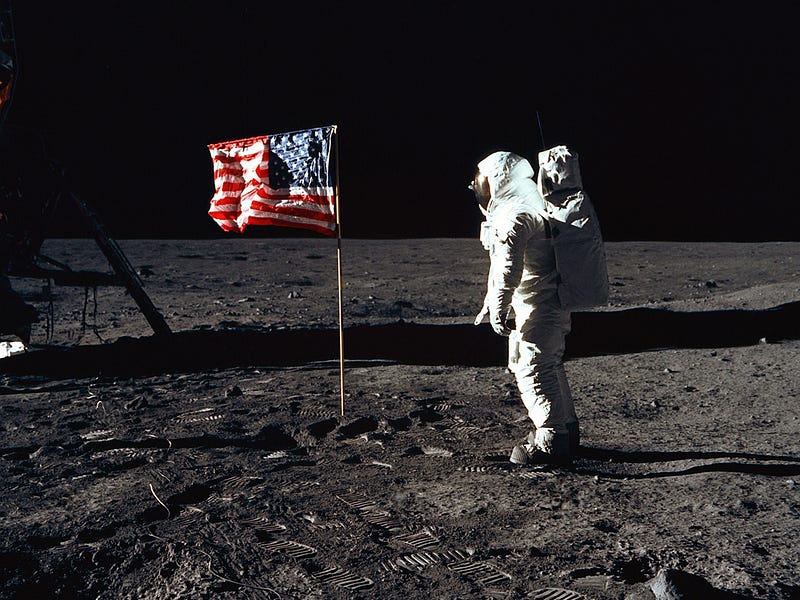
Photo by NASA on Unsplash

Nobody wants to take responsibility for a piece of space junk that is racing to collide with the surface of the moon.

On March 4th, space debris from a discarded rocket booster will hit the far side of the moon, specifically the Hertzsprung Crater. It’s the first time trash from humans will have inadvertently ended up smashing into the lunar surface.

Unfortunately, it’s not likely to be the last time.

This item is not a small piece of trash. Astronomers say it weighs four tons, is the size of a school bus, and is traveling at the speed of 5,600 miles per hour. The impact is likely to give the moon a new crater.

Where did the space junk come from?

At first, experts blamed the space debris on Elon Musk’s SpaceX Falcon 9 rocket, but they later determined that it’s most likely from the Chinese Long March 3C rocket that launched back in 2014.

China, however, says, no way, it’s not from them.

Regardless of what China claims, multiple astronomers seem to believe it’s from China. Jonathan McDowell, an astronomer with the Center for Astrophysics Harvard and Smithsonian, told NPR there is a 90% chance the rocket debris is indeed China’s.

What will happen when the space junk crashes?

McDowell said the debris will be destroyed, and “a huge plume of moon dust is going to go up where it hit and then settle down over a wide area of the moon.”

Once the dust settles, it will reveal a new moon crater. Other than the new crater, astronomers say this crash shouldn’t cause changes to the moon.

Why is space junk an increasing problem?

There are currently over 27,000 pieces of junk hurtling around space that the U.S. Department of Defense is keeping track of. There is even more debris in the near-earth space environment that’s too small to track yet, “large enough to threaten human spaceflight and robotic missions,” according to NASA.

Vishnu Reddy, who studies near-Earth objects at the University of Arizona told Space.org, that there is most likely around 200 large pieces of debris around the moon, but it’s impossible to know for certain.

Here is why things are likely to get worse

According to the article from Space.org, there are around 50 planned missions from various countries including, the U.S., Russia, China, and also private companies, targeting the moon’s surface and its orbital space.

This activity will likely send more space junk hurtling towards the moon.

What is anyone doing about it?

Aside from the tracking done by the U.S. Department of Defense, Reddy and his colleagues have been awarded $7.5 million by the U.S. Air Force Research Laboratory to find better ways of tracking space junk around the moon.

The Space.org article explains that aside from knowing what is out there, by cataloging each piece of space junk, liability can be determined if something goes wrong, such as a piece of space junk pummeling itself into someone’s expensive piece of equipment they’ve set up on the moon.

Although this particular piece of space junk shouldn’t cause any problems for the moon or the earth, perhaps it should serve as a wake-up notice. We’re trashing space just as badly as we’ve trashed our planet.

Space
Environment
Science
News
Illumination
Recommended from ReadMedium