avatarJanice Macdonald

Free AI web copilot to create summaries, insights and extended knowledge, download it at here

2558

Abstract

ment of news about Putin, the Orange One, some dipshit politician and maybe another mass shooting. I’m disgusted, sad and fearful that the world is going to hell in a handbasket — or is already there — and then, already in a bad mood, I realise there’s no bread, meaning I must walk up to the boulangerie.</p><p id="a65a">It’s crowded, which doesn’t improve my mood. An old guy fumbles in his pocket for change, holding up the line. He looks at his paper-wrapped baguette on the counter, fumbles some more and shakes his head. I try not to think about work on my desk not getting done. Then, without a word, a kid (pierced and tattooed) reaches over the old guy’s shoulder and drops some euros on the counter. Big smiles all around.</p><p id="cb68">I’m awed. Maybe the world isn’t such a bad place after all.</p><p id="d707">That didn’t happen. I would be awed and pleasantly surprised if it did. But, who knows, maybe it could. Feelings of awe <a href="http://While many of us associate awe with dramatic, life-changing events, the truth is that awe can be part of everyday life. Experiencing awe comes from what Dr. Keltner has called a “perceived vastness,” as well as something that challenges us to rethink our previously held ideas.">can challenge us to rethink our previously held ideas.</a></p><p id="7cfc">Awe also has physiological benefits. Clusters of neurons in the spinal cord that regulate heart rate, digestion‌ and breathing are activated positively when we experience awe. The nervous system is calmed down, oxytocin is released.</p><p id="10a0">Oxytocin, aka the <a href="https://www.health.harvard.edu/mind-and-mood/oxytocin-the-love-hormone">love hormone</a>.</p><p id="5f70">If that’s not reason enough to start feeling awed, here’s another benefit. That voice in your head always yammering on about how stupid, lazy and basically worthless you are? <a href="https://www.nytimes.com/2023/01/03/well/live/awe-wonder-dacher-keltner.html">Awe can help quiet that negative self-talk.</a></p><figure id="669e"><img src="https://cdn-images-1.readmedium.com/v2/resize:fit:800/1*CTuEb249zpDARmwBH3M--Q.jpeg"><figcaption>Awed by a rose that bloomed despite my neglect</figcaption></figure><p id="ee4c">I think I understand. If I’m puttering around in the garden, for example, awe-struck by the beauty of a single rose unfolding its pale pink petals in the winter sunlight, I’m less likely to be beating myself up for not finishing the book I wanted to write, or lunching on Little Debbies when I resolved to start eating yoghurt instead.</p><p i

Options

d="f86f">Although I suppose it also follows that if I feel awe for the force of nature that caused the rose to bloom in less than ideal conditions — gasping for water. I’m less likely to beat myself up for neglecting the garden — which might be good for my mental health but probably not for the garden.</p><p id="49cf">Still, on the whole, awe sounds like a good thing to cultivate. And you don’t even have to look far to find it. When inmates in <a href="https://www.nytimes.com/2023/01/03/well/live/awe-wonder-dacher-keltner.html">San Quentin</a> were asked about awe they said they found it in “. . .the air, light, the imagined sound of a child, reading, spiritual practice.”</p><p id="0e3c" type="7">‘. . .just take a breath and look around.’ It doesn’t require privilege or wealth; awe is just around us,” NYT</p><figure id="3d78"><img src="https://cdn-images-1.readmedium.com/v2/resize:fit:800/1*gjki0CSRvue3EDVB_qE2Hg.jpeg"><figcaption>Languedoc vineyard (author’s photo)</figcaption></figure><p id="93f9">I’m sold. Consider that gnarled old vine in the picture above for example— as creaky and arthritic-looking as I feel some mornings (<i>not</i> awe-inspiring) but there’s life in those limbs. In a few weeks, buds will appear, then leaves followed by great clusters of purple grapes. They’ll be picked and made into wine and the whole cycle will start again.</p><p id="6b8f">Awesome.</p><p id="86af">I feel better already.</p><h2 id="0eca">I hope you enjoyed this story. Nothing makes me happier (well almost nothing) than to read your responses to my Medium stories. Really, it’s a big part of the pleasure of writing on this platform.</h2><h2 id="4e73">Claps are good too. Hold your finger down and press, you can go all the way up to 50. I’ll be thrilled and you’ll get a little exercise. Win-win.</h2><h2 id="dc8a">Stay tuned . . .more stories to come.</h2><div id="2861" class="link-block"> <a href="https://janicemacdonald.medium.com/membership"> <div> <div> <h2>Join Medium with my referral link — Janice Macdonald</h2> <div><h3>As a Medium member, a portion of your membership fee goes to writers you read, and you get full access to every story…</h3></div> <div><p>janicemacdonald.medium.com</p></div> </div> <div> <div style="background-image: url(https://miro.readmedium.com/v2/resize:fit:320/0*27V-9IU9BDCOe45D)"></div> </div> </div> </a> </div></article></body>

PSYCHOLOGY

It’s Not Even Noon And I’ve Already Gone Through The Six Basic Human Emotions

Do I really need a seventh?
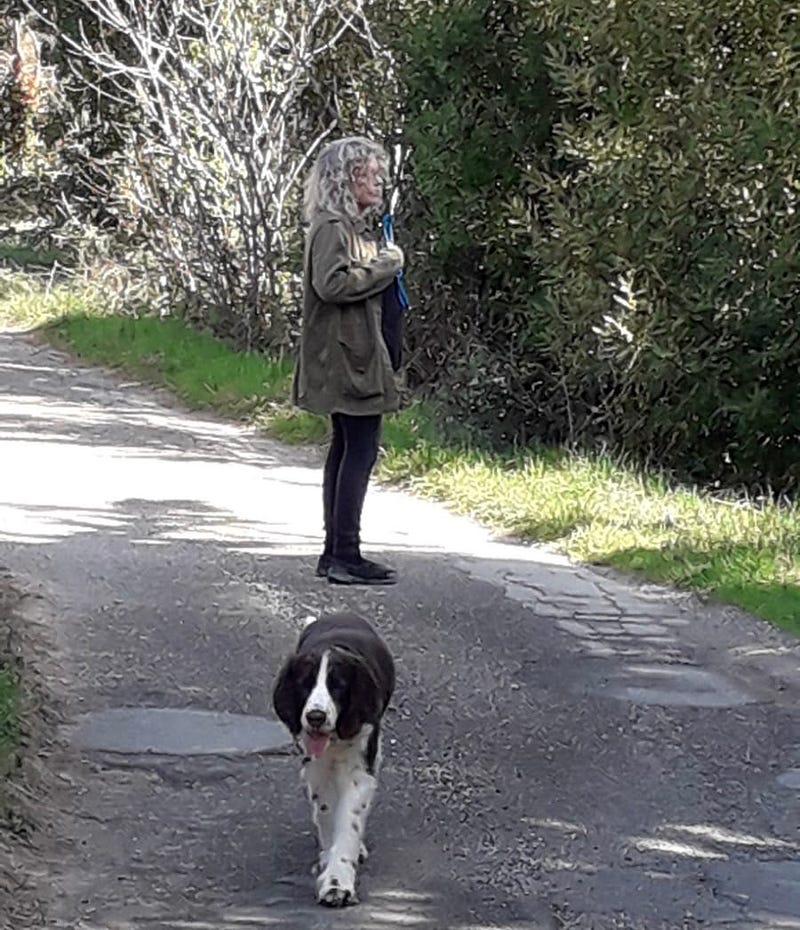
Author with dog, canine emotions unknown

I didn’t know there were six basic human emotions until I read it in the New York Times — the font of all my knowledge. In case you didn’t know either, here they are:

Anger. Surprise. Disgust. Enjoyment. Fear. Sadness.

Just by reading the New York Times this morning, I zipped through all six of them. Anger and disgust are my dominant emotions about most of the newsUkraine, politicians, right-wing pundits. I’d certainly experience surprise if, say, the fossil fuel industry apologised for its role in polluting the planet and announced it was donating all future profits to finding solutions.

But whatever enjoyment I might feel from reading that would be offset by the fear that I had finally and completely lost touch with reality. Or perhaps senility had set in. In either case, I’d be very sad about the state of my mental health

He’s sad, I’m not.

But those six basic human emotions were identified back in 1972 and there’s been a lot of research since then. A seventh emotion has been singled out: Awe. And awe sounds like good news —so enjoy because good news is surprising.

Maybe awe makes you think mostly of monumental landmarks or life-changing events — the Grand Canyon, a first grandchild, etc.—but think again. Research suggests that awe can be part of everyday life.

Suppose, for example, I’ve just finished reading today’s front page: an assortment of news about Putin, the Orange One, some dipshit politician and maybe another mass shooting. I’m disgusted, sad and fearful that the world is going to hell in a handbasket — or is already there — and then, already in a bad mood, I realise there’s no bread, meaning I must walk up to the boulangerie.

It’s crowded, which doesn’t improve my mood. An old guy fumbles in his pocket for change, holding up the line. He looks at his paper-wrapped baguette on the counter, fumbles some more and shakes his head. I try not to think about work on my desk not getting done. Then, without a word, a kid (pierced and tattooed) reaches over the old guy’s shoulder and drops some euros on the counter. Big smiles all around.

I’m awed. Maybe the world isn’t such a bad place after all.

That didn’t happen. I would be awed and pleasantly surprised if it did. But, who knows, maybe it could. Feelings of awe can challenge us to rethink our previously held ideas.

Awe also has physiological benefits. Clusters of neurons in the spinal cord that regulate heart rate, digestion‌ and breathing are activated positively when we experience awe. The nervous system is calmed down, oxytocin is released.

Oxytocin, aka the love hormone.

If that’s not reason enough to start feeling awed, here’s another benefit. That voice in your head always yammering on about how stupid, lazy and basically worthless you are? Awe can help quiet that negative self-talk.
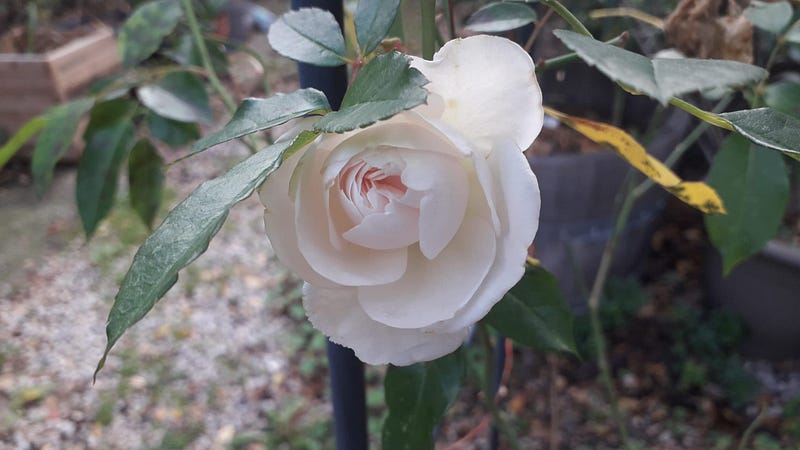
Awed by a rose that bloomed despite my neglect

I think I understand. If I’m puttering around in the garden, for example, awe-struck by the beauty of a single rose unfolding its pale pink petals in the winter sunlight, I’m less likely to be beating myself up for not finishing the book I wanted to write, or lunching on Little Debbies when I resolved to start eating yoghurt instead.

Although I suppose it also follows that if I feel awe for the force of nature that caused the rose to bloom in less than ideal conditions — gasping for water. I’m less likely to beat myself up for neglecting the garden — which might be good for my mental health but probably not for the garden.

Still, on the whole, awe sounds like a good thing to cultivate. And you don’t even have to look far to find it. When inmates in San Quentin were asked about awe they said they found it in “. . .the air, light, the imagined sound of a child, reading, spiritual practice.”

‘. . .just take a breath and look around.’ It doesn’t require privilege or wealth; awe is just around us,” NYT
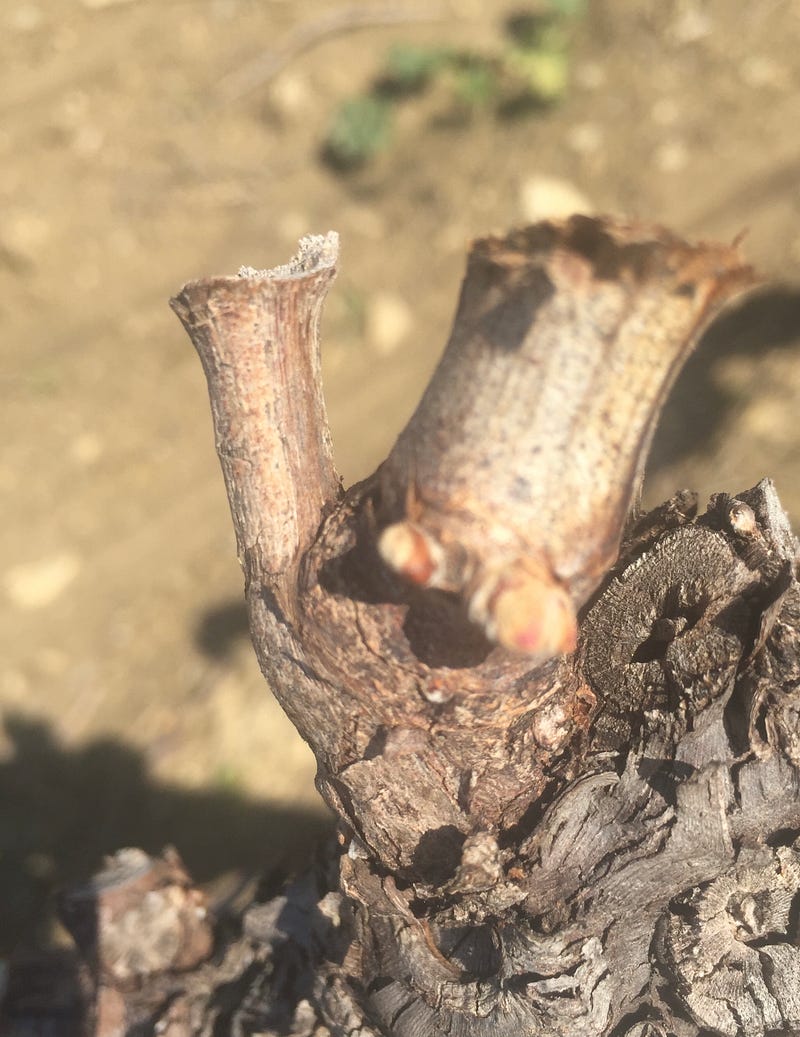
Languedoc vineyard (author’s photo)

I’m sold. Consider that gnarled old vine in the picture above for example— as creaky and arthritic-looking as I feel some mornings (not awe-inspiring) but there’s life in those limbs. In a few weeks, buds will appear, then leaves followed by great clusters of purple grapes. They’ll be picked and made into wine and the whole cycle will start again.

Awesome.

I feel better already.

I hope you enjoyed this story. Nothing makes me happier (well almost nothing) than to read your responses to my Medium stories. Really, it’s a big part of the pleasure of writing on this platform.

Claps are good too. Hold your finger down and press, you can go all the way up to 50. I’ll be thrilled and you’ll get a little exercise. Win-win.

Stay tuned . . .more stories to come.

Psychology
Mental Health
Emotions And Feelings
Wellbeing
Oxytocin
Recommended from ReadMedium