
It’s Not Ecological Transition; It’s Fear of Being Without Power
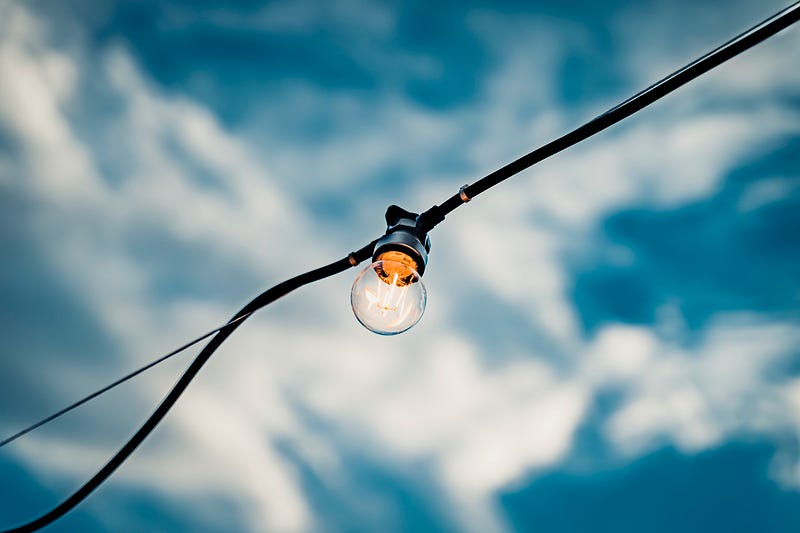
In Portugal, just like the rest of Europe, the day woke up with the shadow of a power cut. And yes, shadow indeed, because the fear of a general blackout is already in the air.
The TV news went into the streets to tirelessly ask citizens what they thought of potential power cuts and what this could bring. Many spoke of the fear of insecurity due to the power cuts that may exist at night in shop windows. Others spoke what many say: “what are we going to do? It is what it is”.
People’s responses are the reactions of those who have no idea why this is all happening. It’s as if half the population is separated from all the events that have been happening this year as if the Ukraine war is a fictional event. This somehow is understandable since television also makes it as if they were daily announcing a new thriller in cinemas.
This story has also had its greater glory days. It is already starting to be forgotten. We are letting Putin be Putin, and we are leaving Ukrainians abandoned to their fate.
Of course, the power cut comes directly from the cuts Russia is about to make, particularly in access to gas. Now, Europe, with such rigorous winters, especially in the North, cannot lead a minimally comfortable life without central heating to warm its houses, which are, let’s say, sometimes too warm—sorry for this unpopular opinion.
In Portugal, central heating is for the richer. Rare is the heated houses, and those who may think it’s not cold in Portugal, let me tell you, how wrong you are. Where I live, although the snow has disappeared because there is no rain, the temperatures in winter reach negative values ( Celcius).
At the peak of the cold, we can have -5 degrees Celcius in houses where the cold is felt as in a few other places. That’s how our houses are, with very little insulation, with single-glazed windows where the heat and cold come in, and if in summer they cook us inside, in winter they freeze us like ice cream.
We have to resort to fireplaces if there are any, or to electric heaters and five blankets on the bed. It’s not the ideal life, but we manage. Is it a more primitive life? Maybe, but you survive.
There’s a lot of exaggeration in what comes to heating in many houses in rich Europe, like Luxembourg, Switzerland, etc., where the heating is on 24 hours a day and where people wear T-shirts inside their homes, used to a life that is decidedly not eco-sustainable. I know you may think this is an exaggeration, and I don’t know what cold is. But I have lived in Northern France and saw how heated the houses were all day long…
Not to mention the waste that my friend who lives in Luxembourg says exists. Shoes, appliances, new clothes in the rubbish. Some of her furniture from home was picked up like this. It’s as if Luxembourg is a place of wealth apart from the rest of the planet.
Now with the power cuts, we can only see how people used to such unbridled comfort will cope.
But aside from that, I want to note many newspapers' fallacy of governments’ willingness to transition to a greener economy.
Please, what a load of crap.
We are well aware that these words are appropriate to be said at a time when many people are suffering from the climate crisis, but it’s not really the real reason behind these cuts. But for governments, it comes in handy to use that as an excuse.
Strangely enough, the ends will benefit the environment — I hope — but the means to get there and the reasons for it are not about ecology.
They are purely and simply about the non-existence of resources, about having to save what little there is; in short, about having to tighten one’s belt in terms of scarcity and having to save money.
Everything always revolves around the same thing, doesn’t it? Money!
How beautiful it would be if human beings really acted by ethics, by what’s right to be done and by the need to really have to do it, but if there’s so much human of acting by ethics, there’s also the side of greed, of fear of no longer being comfortable.
I don’t know what’s coming, but either I’m mistaken, or history will repeat itself, and once again, those who will pay the bill are the poorest.
Hello, I’m Araci, a female writer from Portugal. I like to write about my country, Portugal. But I also enjoy pop culture, American culture, and cultural differences. I hope you’ve enjoyed this article!
You can also find more about me here:
If you have enjoyed this article, maybe you would like to buy me a coffee here https://ko-fi.com/joanaaraci. I don’t drink coffee that much, but food is getting ridiculously expensive, and I need to put it on the table.
There are other ways to help me out:
Are you considering joining Medium for only 5$ a month? Your membership fee directly supports me. This way, you are helping me out while you’ll also get full access to every story on Medium.
If so, consider doing it through my referral link.
Thank you for reading me.