
Travel. Svalbard. Northern Europe.
It’s Illegal to Be Born or Die Here
9 Things You Need to Know about Svalbard
1. Polar Bears or People?
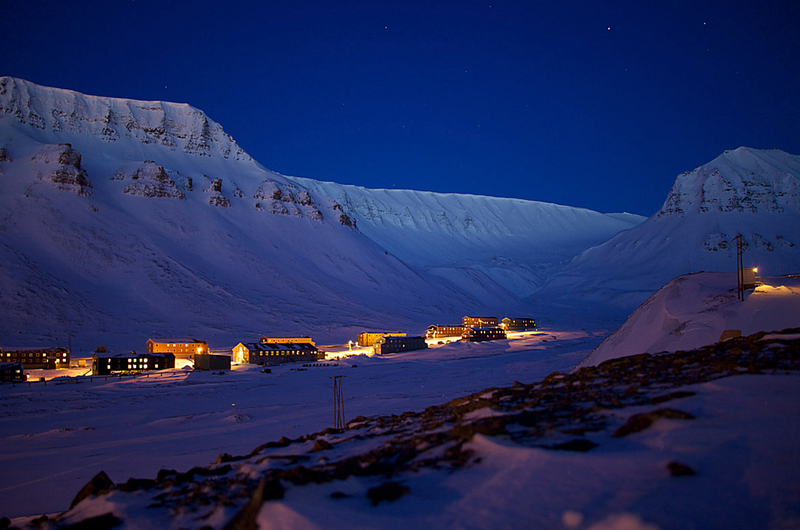
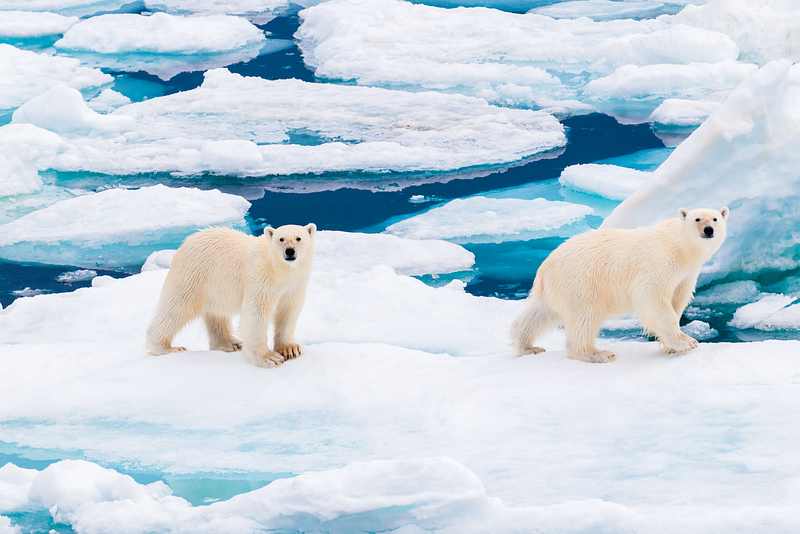
Perhaps the most exciting, endearing, and possibly dangerous fact depending on your general feelings toward bears and carnivorous animals — Svalbard (the northern Norweigan archipelago) has more polar bears than people.
The polar bear population in the Svalbard archipelago is around 3,000. The human population lands just around 2,300. Polar bears sightings are very common, which is why —
2. You Gotta Pack Heat
And while it is freezing on Svalbard, and you need to dress warm — you also need to carry a gun. Longyearbyen is the only settled area of the archipelago, and when you leave the settlement, you are required by law to carry a gun or be escorted by someone with a gun.
After all, the last thing you want is to run into a blood-thirsty mama polar bear and her cubs. While in town, your firearm must remain unloaded, and you are not allowed to bring firearms into stores and shops. Speaking of which —
3. Where Exactly is Longyearbyen?
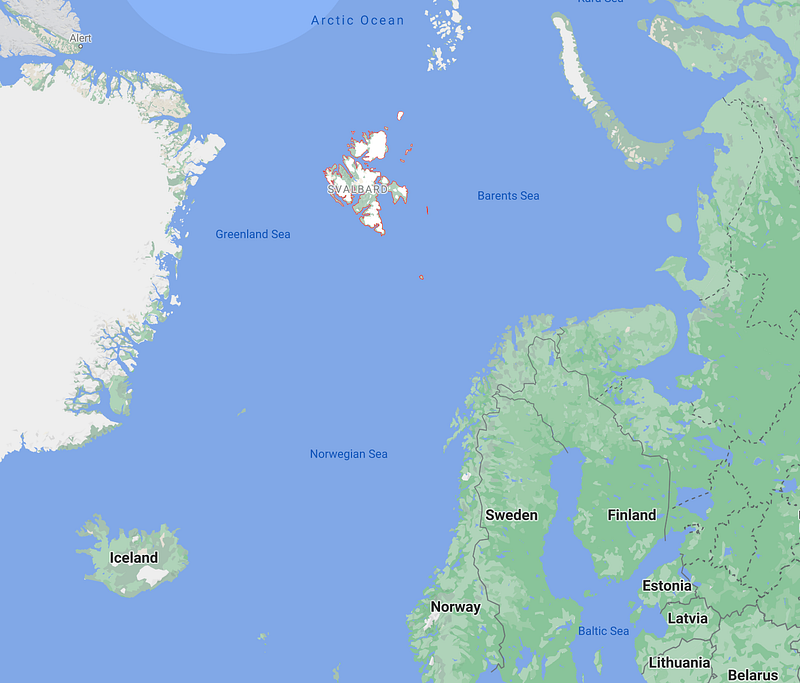
The main settlement on Svalbard is Longyearbyen. Isolated from just about everything, it’s the world’s northernmost permanent settlement, at 78 degrees north.
4. Who Lives There?
Over 40 nationalities are living in Longyearbyen, settled midway between mainland Norway and the North Pole. The majority of non-Norweigen residents were from Russia, Ukraine, Poland, Germany, Sweden, Denmark, and Thailand. Until the 1990s, Longyearbyen was considered a hub for mining, but research, tourism, and additional education programs have found great interest in the archipelago in more recent decades.
5. Where There’s Mining, There’re Ghosts
Mining seems to maintain a similar pattern, no matter where it takes place. A material is discovered, a boom or rush occurs, people relocate and work until the sources have dried up, and then flee.
What’s left behind is often the skeleton of a once-bustling town that has become one of the top-ten globally ranked ghost towns. Pyramiden is a coal-mining town that the Soviet Union acquired.
After WWII, Pyramiden saw its heyday, but about 20 years ago, the settlement was abandoned entirely. Today, the town has become a tourist attraction for the daring tourists willing to go off the beaten path.
Inside the auditorium facilities at the settlement, one might catch a glimpse of what is believed to be “the northernmost monument to Lenin, the northernmost swimming pool, and the northernmost grand piano.”
6. Out With the Old, In With the New
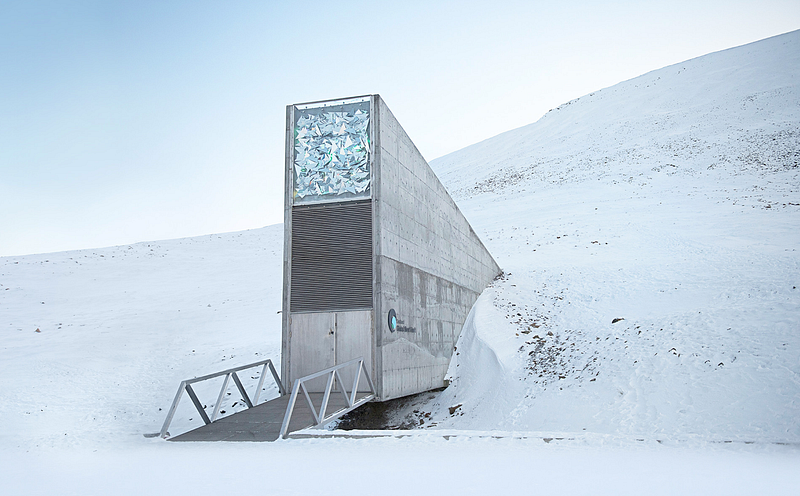
Since coal-mining has become less prominent on Svalbard, many scientists flock to the archipelago for research purposes. Also, Svalbard is home to the Global Seed Vault. The vault’s “purpose is to help humanity reboot in the event of a major global disaster.”
However, this vault has already proved useful today, as scientists on Svalbard helped Syrian scientists duplicate seed variations. The vault is nestled deep into the side of a mountain. On the Crop Trust website, they explain that,
Permafrost and thick rock ensure that the seed samples will remain frozen even without power. The Vault is the ultimate insurance policy for the world’s food supply, offering future generations options to overcome the challenges of climate change and population growth. For centuries, it will secure millions of seeds representing every significant crop variety available in the world today. It is the last backup.
7. You Can See the Northern Lights During the Day
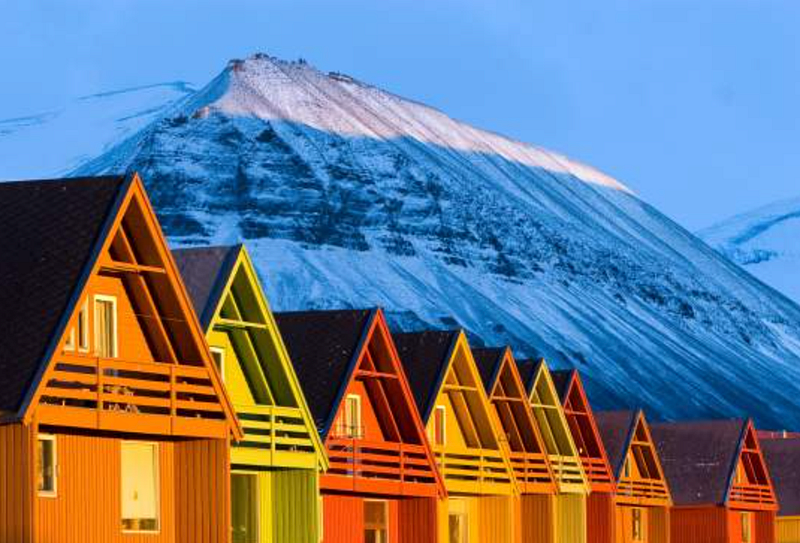
Now that we already have a sense of just how north this island is, it should come as little surprise that there aren’t “normal” daytimes and nighttimes. When the sun sets on October 5th each year, Longyearbyen doesn’t see the light again for 155 days until March 8th. This makes it one of the only places in the world where you can see the Northern Lights during the daytime.
8. You are not allowed to die on Svalbard
Because of the permafrost on Svalbard, burial isn’t possible as bodies won’t decompose. However, there is a small cemetery, but it stopped accepting ‘newcomers’ in the 1950s. One of the reasons was the fear that the preserved bodies may still contain traces of a flu virus that killed seven miners decades before. Known as the Svalbard Death Law, this legally prohibits people from dying and being buried at the settlement. If you’re close to death, you’re forced to leave.
9. You cannot give birth on Svalbard
There’s no such thing as the circle of life this far north. Just as you can’t die, you can’t be born on Svalbard either. There is no hospital or maternity ward on the island. When a pregnant woman has two weeks remaining before her due date, she must travel to Tromsø to give birth.

Sign up for our new newsletter to stay informed with up-to-date curations from our editors:👇