
It’s Harder Than You Think to Enjoy a Dark Night
This is what happens when retired people decide to stargaze.
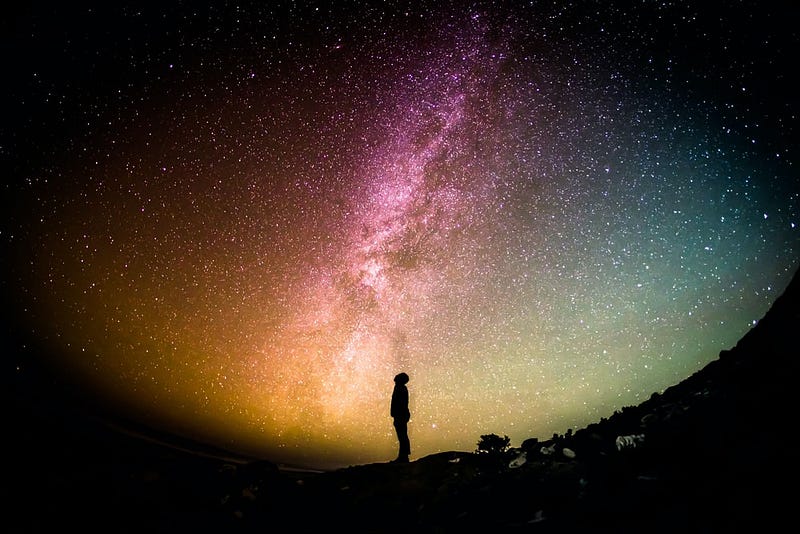
My husband and I like to look at stars, but the other night our shared interest took us on a twisted path to nowhere.
He was the one who got into stargazing first. He downloaded an app that shows where the stars and planets are. All he has to do is point his phone skyward, and we know what we’re looking at.
When nights are clear, he brings his phone, I grab the blankets, and we settle into lounge chairs on the deck to see how many comets we can spot.
But there’s one major impediment to our new hobby: light pollution. Excessive artificial lighting in populated areas obscures the stars.
When I was a child, I used to see billions of stars twinkling in a dark, velvety sky. Nowadays, lights from docks, houses, and nearby towns blot out most of them. We can still find Venus. The planets shine brightly. But when we gaze into the galaxy, we see hundreds of stars instead of thousands.
According to the International Dark Sky Association (yes, there is such a thing), 99 percent of the people in the U.S. and Europe can’t experience natural night. Artificial lights are disrupting day-night patterns and shifting the balance of our environment.
But unlike other kinds of pollution, light pollution can be reversed by creating and preserving Dark Sky areas.
My Great Idea
This is what led to my great idea. My husband was watching Reacher, and I was Googling stargazing when I ran across the Dark Sky Association.
“Did you know there are dark places we can visit?” I asked.
“Dark places?” It took him a minute to transition from Reacher.
“There’s something called The International Dark Sky Association. They recognize places that take steps to protect the night sky.”
Then I had my brainstorm. “We need to go to one of those places.”
A Vacation Plan
I researched a bit more and discovered a Dark Sky Place in central Idaho described as the “perfect place for a stargazing road trip.”
It sounded like a wilderness with lots of hiking, but more importantly, lots of stars.
“You really want to do this?” He asked.
“Yes! It will be fun! Let’s go for our anniversary in May.”
Within 30 minutes, my husband had rented a Winnebago. We have never been in a Winnebago. I looked at pictures and saw an interior with two cots, a toilet, a microwave, and something akin to a shower. At least, it resembled a shower, only without the shower stall.
This would cost us $245 a day, which is more than what we pay for a motel room with a real shower. But so what? I was getting excited.
“You really want to do this?” He repeated.
“It will be an adventure!”
Next, he booked airline tickets. My husband prefers to do our bookings because he talks to numerous people for long periods of time to get the best prices, while I book things instantly without doing a comparative cost analysis.
But despite his search for the best price, airline tickets were over $1000. “That’s $1000 each!” he said. “It must be the increased fuel prices.”
“It’s our anniversary,” I replied.
Next, he Googled Idaho temperatures in May and announced, “It’s going to be 30 degrees.”
“We better take plenty of coats and blankets!”
But his last discovery was the caveat that led us to change our minds. He found out the Dark Sky Park was closed.
“Why? Covid?” I asked. We have gotten used to canceling trips and plans due to Covid.
“That, and the park is under construction.”
“Construction in a Dark Sky Park?”
Suddenly the whole idea didn’t seem so great. Costly. Covid. Cold. Construction.
“We’ll have to park the Winnebago and walk to the park, in the dead of night, and we’re going to freeze our asses off,” my husband said.
We mutually agreed to cancel our reservations, and that’s what we spent the next 45 minutes doing. It’s a lot easier to make reservations than it is to cancel them.
But it wasn’t a complete exercise in futility. I haven’t given up. Some day when the parks are open, the weather is warm, and gas prices are down, I want to visit a Dark Sky Park.
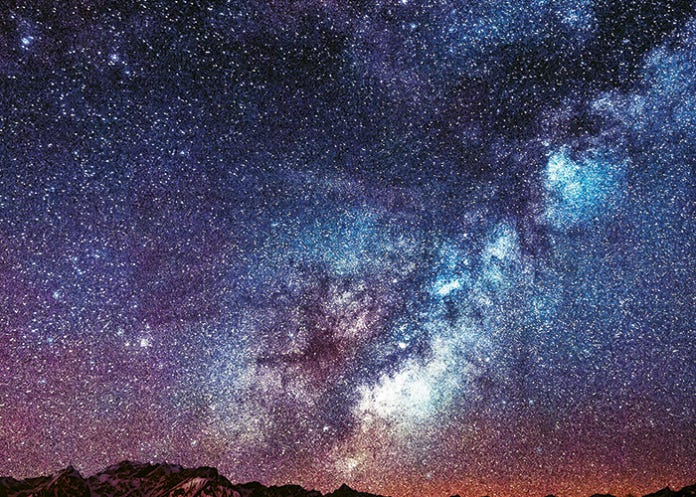
According to my research, there are ten great places to see stars in the United States: Grand Canyon National Park in Arizona, Cherry Springs State Park in Pennsylvania, Dead Horse Point State Park in Utah, Steinaker State Park in Utah, Canyonlands National Park in Utah, Anza-Borrego Desert State Park in California, Headlands in Michigan, and Craters of the Moon National Monument in Idaho.
And if you want to travel outside the United States, the Dark Sky Association has an interactive map of locations to choose from.
It’s exciting that light pollution is entirely reversible and people are doing something to preserve our dark skies.
I’m ready to plan another trip.
Thanks so much for reading!
Bebe Nicholson is a former editor, journalist, newspaper editor, book publisher, flight attendant, retail manager, and nonprofit director. Currently, she’s a mom, grandmom, and freelance writer. If you want to have unlimited access to everything on Medium for $5 a month, you can sign up here.


