The Great Hike
It’s Good to have a Cameraman on Kilimanjaro
19 341 feet: Kilimanjaro Part XIV
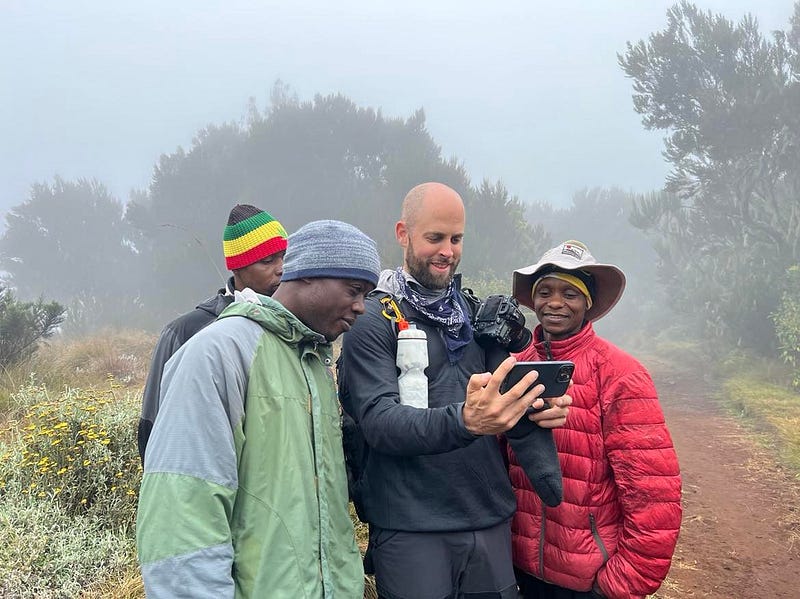
“Just when I think you couldn’t possibly be any dumber,” Stan says. He’s standing in front of me, scolding me. “You go and do something like this . . . AND TOTALLY REDEEM YOURSELF!”
This is how we communicate on Kilimanjaro. Every single thought I have on this mountain can be captured by quoting one of the twenty-five movies that my cousins and I watched seventeen-thousand-and-three times as children.
Claire doesn’t appreciate our sophisticated understanding of the minutiae of Jim Carrey’s work in the mid-1990s. It’s as if Stan, Dr. Quinn, and I are suddenly speaking another language, from English to Cinema-hili, and any hope she might have of keeping up with the cousins is lost. Or maybe she just hates when we all start making the most annoying sound in the world:
For most, a childhood spent memorizing Jaws and Happy Gilmore is an untroubled waste of time. For Stan, his obsession with film sparked a career. He has spearheaded projects as varied as pieces on pro athletes, journeys down the Mississippi River, and the harrowing story of Jonathan Pitre, a boy born with ‘the worst disease you’ve never heard of’.
He’s now been hired to capture the experience of climbing Kilimanjaro for Marangu Hotel. We had to conceal this fact from the park wardens after they discovered Stan’s cameras and assumed he was making a movie on the mountain.
The park wardens were correct, of course, but filmmakers are supposed to pay $1000 USD to the Tanzanian Film Board if they want to climb the mountain with their equipment. So, we lied.
A lie, a bribe, and a smile go a long way in Tanzania.
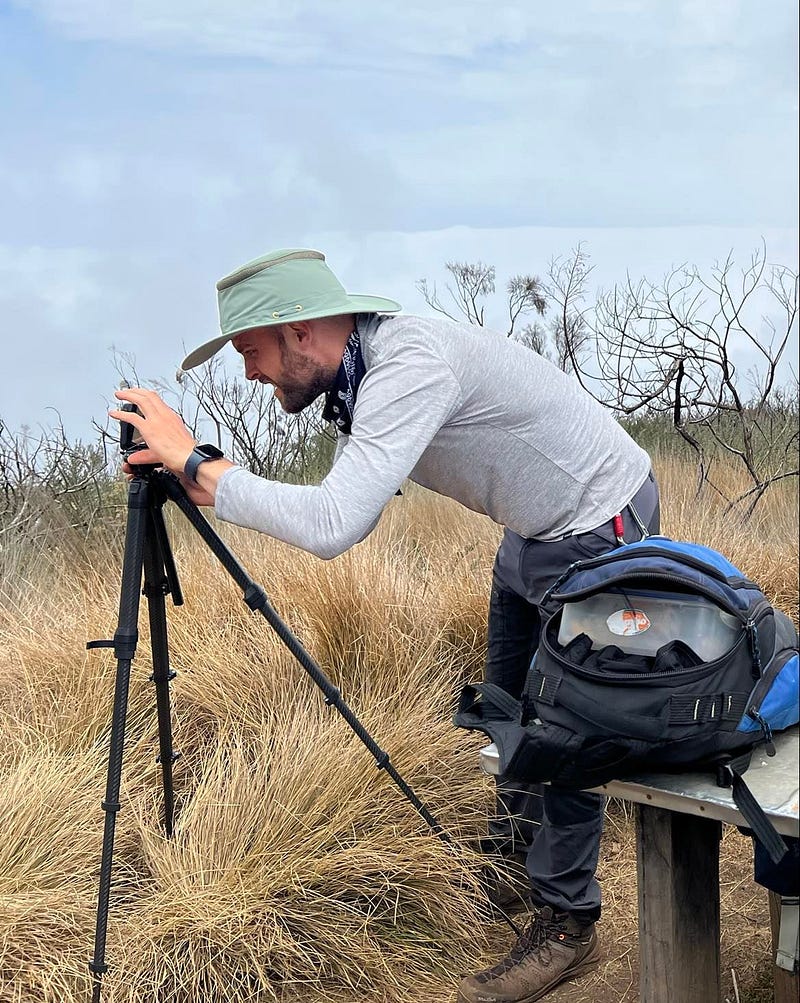
Stan is a content creator. Unfortunately, that expression conjures up the image of a self-obsessed social media hack, snapping selfies with an iPhone 14 and throwing Instagram’s Moon filter over top.
I prefer to think of Stan as a documentarian. A multi-faceted artist, who takes pictures and videos, conducts interviews, writes narration, and carefully considers how to set it all to just the right score. He’s a one-man film crew, whose shots all too often cause casual viewers to stop and gape.
My pictures don’t get anybody to stop and gape. More often than not my pictures elicit polite remarks and a change of subject. “That’s neat . . . what’s for lunch? Are you hungry?”
I feel infinitely fortunate to be climbing this mountain with Stan. First, because he understands my Forest Gump references. Second, and more importantly, with Stan by my side, I don’t have to worry about archiving my experience with an iPhone. I can now enjoy — or suffer through — each and every step toward the summit, knowing that the burden of updating my Facebook page can be fulfilled by asking for an Airdrop at the end of the day.
Perhaps I should employ a documentarian to follow me for all the big moments of my life. Maybe even for the not-so-big moments, just to see if a keen eye can make my trip to buy ten pounds of Russet potatoes at the Save Mart seem epic.
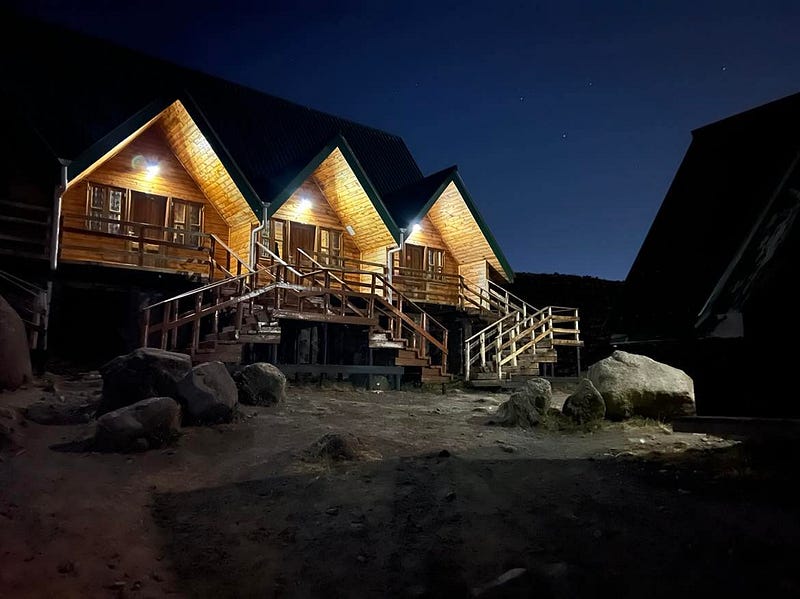
After dinner at Horombo Hut, I join Stan as he sets up his tripod and captures the beauty of this makeshift village halfway to the top of Mount Kilimanjaro. There are nearly two hundred climbers, porters, and guides here tonight. Those of us who are climbing up the mountain has an irritating, enthusiastic bounce in our step. Those who are coming down look like they have a hundred years behind their eyes.
Standing in the frozen dark, waiting for Stan’s time-lapse, I see the peak of Kilimanjaro for the first time. It’s still more than ten miles away, a little white diamond in the distance, but there it is. Our end.
I’m finally paying witness to a world that only a very few will ever see.
To see Stan’s photography, check out his Instagram page here:
Ross “Bist” Rheaume (@bestofbist) • Instagram photos and videos
Catch Part I in my Kilimanjaro adventure here:
Also, this is a great travel read from James Baxter: